
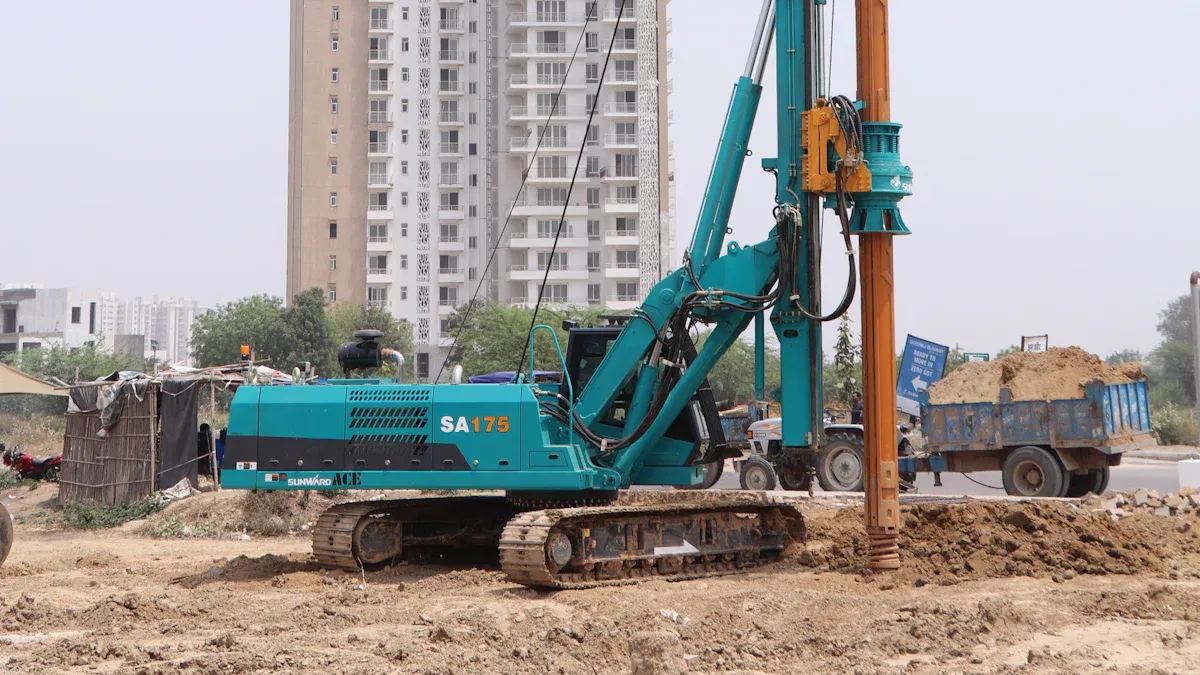
You need precision to keep your horizontal directional drilling machine on track. Advanced CNC controls, sensors, and careful calibration help you get 0.01mm precision. CEGC gives you market-standard specs and custom solutions for each project. Directional Drill Machine 0.01mm Precision Stops Miss explains how precision stops bore deviation and crossing failure.
Key Takeaways
-
Getting 0.01mm precision in directional drilling helps your machine stay on the planned path. This lowers expensive mistakes and stops project delays.
-
Checking and fixing your drilling machine often is very important. It keeps the machine accurate and stops problems from happening.
-
Using new tools like AI-assisted path planning and real-time tracking can make drilling much more exact and fast.
Precision Requirements In Directional Drilling
What 0.01mm Precision Means
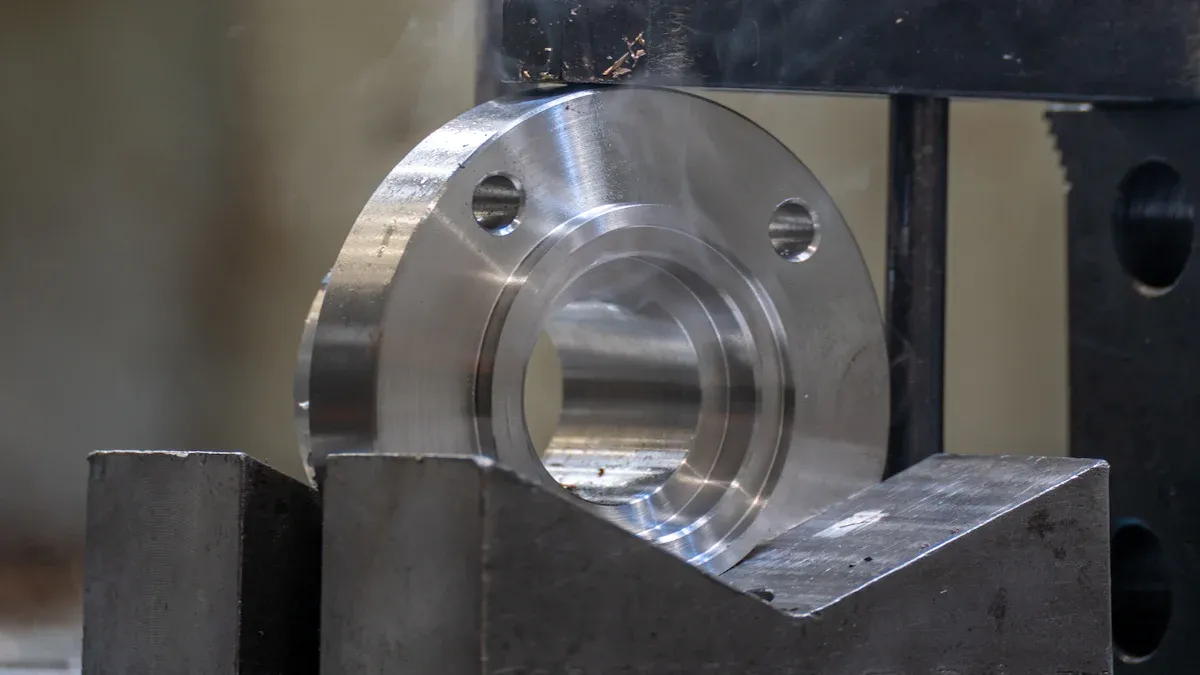
You need to be very exact to guide your horizontal directional drilling machine. A tolerance of 0.01mm means you can control the drill path with almost no mistakes. This high level of accuracy helps you avoid errors that cost a lot to fix. You can trust your machine to follow the right path, even when drilling under roads or rivers. Being precise lets you match the bore path to the project plan. You get the same accurate results every time you start a new crossing.
Impact On Bore Deviation
Precision keeps the bore from going off track. When you use a directional drilling machine with tight tolerance, the drill head stays on the planned route. You avoid crossing failures and do not get penalties for bores that are off-grade. Precision also keeps your project from being delayed. You can finish crossings under railways or utilities without extra work. CEGC gives you market-standard specs and custom choices to help you reach strict accuracy goals.
Industry Demands For Precision
B2B contractors, utilities, and EPCs all want precision for every job. The global horizontal directional drilling market is growing fast and will be over $14.5 billion by 2030. There is more need for fiber-optic and gas pipeline installations. Environmental rules make open trenching harder, so you need precision drilling. Operators have problems like high starting costs and not enough skilled workers. You can use AI-assisted path planning, remote monitoring, and predictive maintenance algorithms to help improve precision.
|
Drivers |
Challenges |
|---|---|
|
More need for fiber-optic and gas pipeline installations |
High starting costs for advanced rigs |
|
Strict environmental rules make open trenching harder |
Not enough skilled operators in new markets |
-
AI-assisted path planning
-
Remote monitoring
-
Predictive maintenance algorithms
Technologies For Improving Accuracy And Precision
Advanced CNC And Sensors
You need special CNC machines to get 0.01mm precision. CNC gantry drilling machines and CNC wood drilling machines can do this. These machines use strong parts and careful design for high accuracy. You can see what they do in the table below:
|
Equipment Type |
Precision Capability |
Applications |
|---|---|---|
|
CNC Gantry Drilling Machine |
0.01mm |
Aerospace, Automotive |
|
CNC Wood Drilling Machine |
0.01mm |
Woodworking |
Sensors are important for better accuracy and precision. They collect data while you drill. This helps you cut in the right place. Sensors use machine learning to find problems early. They also help you see what is happening as you drill. Here is how sensors help:
|
Role of Advanced Sensors |
Description |
|---|---|
|
Sensors collect different types of data right away. |
|
|
Intelligent Monitoring |
Machine learning checks drilling data and warns you early. |
|
Enhanced Precision |
Sensors help you know drilling conditions more clearly. |
CEGC’s horizontal directional drilling machine uses load-matched control and a strong frame. These features help you keep your work accurate and fast. You can change the specs for each job. This lets you match torque, thrust, and rod system to your bore and ground.
Calibration And Setup For Precision Hole
You must calibrate your machine tools for good precision. Follow careful steps to keep your machine steady and correct. Here is a simple list of calibration steps:
-
Let the screw reach working temperature for 1-2 hours.
-
Tighten all bolts to the right torque with a torque wrench.
-
Clean the screw raceway and nut with a clean cloth and solvent.
-
Make sure there is a thin layer of grease for lubrication.
-
Check radial alignment with a dial indicator; fix if runout is over 0.002mm.
-
Check axial alignment with a laser tool; fix if it is over 0.01mm/m.
-
Adjust preload to stop backlash, keeping backlash at or below 0.001mm for C1-C2 grades.
-
Test the screw with real loads and check positioning accuracy.
You need to check thermal stability and tool offset. These steps help you keep tight tolerances and cut correctly. CEGC’s machines use strong parts and careful design to make calibration easier and more dependable.
Tracking And Data Logging
Tracking systems help you watch precision while drilling. You can use real-time bore tracking and mapping for better accuracy. Digital records make project reports easy. Good communication between drill operators and locators gives high accuracy. Here are some tracking parts you might use:
|
Component |
Description |
|---|---|
|
Flexible and productive guidance for directional drilling. |
|
|
Gyro Module |
High-accuracy surveying for different rig sizes. |
|
Steering Tool |
Combines steering, surveying, tracking, and logging. |
|
Pressure Module |
Real-time pressure monitoring to minimize risks. |
|
P2 AC Wire Guidance |
Checks pilot bore survey accuracy and fits jobsite needs. |
|
Beacon Tracker |
Wireless tracking for pilot bore location. |
|
At-Bit Inclination Assembly |
Measures bit angle to lower steering mistakes. |
|
Magnetic Intersect |
Lowers annular pressure and helps drill longer. |
|
RivCross Software |
Puts tracking and survey data together for users. |
Data logging helps you control the process and stay accurate. You get real-time data from LWD and MWD technologies. This lets you change drilling settings right away. You can check the reservoir and keep your drill bit on the right path. CEGC’s horizontal directional drilling machine uses tracking and data logging to help you stay accurate and precise.
Tip: Use tracking and data logging to keep precision and finish your project goals.
Operational Practices For Directional Drill Machine 0.01mm Precision Stops Miss
Operator Techniques To Minimize Error
You must use good habits to keep your directional drill machine 0.01mm precision stops miss working right. Begin by checking the site fully. Look at the soil and find all the utilities before drilling. Be gentle with drill rods. Clean the threads and use the right amount of force. Watch the drilling fluid pressure so you do not have blowouts. Use tracking tools to help steer and keep the right depth. Talk with your team to stop mistakes. Real-time checks show you the spindle’s spot, how deep you are, and the hole size. This helps you keep tight tolerances and stay at the planned drilling depth.
|
Description |
|
|---|---|
|
Site Assessment |
Scan utilities and check soil for surprises. |
|
Drill Rod Handling |
Clean, inspect, and use correct torque. |
|
Fluid Pressure |
Test mud and watch pressure. |
|
Steering & Depth |
Use tracking and keep steady depth. |
|
Equipment Maintenance |
Clean and inspect often. |
|
Manufacturer Guidelines |
Follow specs for tolerance levels. |
|
Communication |
Talk with crew for accuracy. |
Maintenance For Improving Accuracy And Precision
You need to keep your directional drill machine 0.01mm precision stops miss in great shape. Clean the machine a lot. Oil moving parts so they do not wear out fast. Check and change fluids like hydraulic oil and coolant. Look at bolts and tighten them. Watch for worn parts and swap them before they break. Test the electrical system. Update the software to help with accuracy and precision. Calibrate and line up the machine to keep tight tolerances. Test safety features. Write down all maintenance and drilling depths.
-
Clean all parts so dirt does not build up.
-
Oil moving parts so they work well.
-
Check and change fluids for steady drilling depth.
-
Look at and tighten bolts for a strong machine.
-
Check for worn parts and replace them for a good hole.
-
Test electrical systems for steady power.
-
Update software for better accuracy.
-
Calibrate and line up for tight tolerance.
-
Test safety features for safe drilling.
-
Write down all maintenance for later checks.
Navigator software helps you make smart choices every 90 feet. It uses old well data to help with drilling depth and hole size. This keeps your directional drill machine 0.01mm precision stops miss working with high precision.
Quality Assurance For Precision Hole
You need quality checks to keep your directional drill machine 0.01mm precision stops miss working well. Use laser interferometry to measure hole size and depth very closely. Optical tools help you check blind holes and their depth. Machine vision lets you look at hole size and keep tight tolerances. Quality checks give you real-time steering and stop mistakes. They check survey data and lower risks. You get better drainage and avoid hitting other things. CEGC’s anti-stall powertrain, overload protection, and fluid controls help you keep drilling depth steady and keep the hole good.
Tip: Use laser and vision tools to check hole size and depth. This keeps your directional drill machine 0.01mm precision stops miss on target and within tolerance.
You get precision by using advanced CNC controls and sensors. Strict calibration helps you stay accurate. You keep quality by following each step carefully. You check your work at every stage. CEGC lets you change drilling tools for each project. You get good equipment, advice, and training. Market-standard specs help you keep quality and precision. See the tables below:
|
Service Type |
Description |
|---|---|
|
Customized Equipment Manufacturing |
Tailored equipment solutions for tunnelling, port, and mining projects. |
|
Service Consulting |
Expert consulting on project planning, equipment selection, and operational optimization. |
|
Jobsite Assembly |
On-site installation services including assembly and performance testing. |
|
Trenchless Support |
Engineering support for HDD, pipe jacking, and microtunnelling projects. |
|
Training |
Programs on equipment operation, maintenance, and safety protocols. |
|
Spare and Wear Parts |
Rapid delivery of genuine parts to minimize downtime and maintain equipment performance. |
|
Specification Type |
Details |
|---|---|
|
Quality Management Standards |
Must meet ISO 9001:2015 |
|
Safety Compliance |
Comply with OSHA safety guidelines |
|
Hydraulic Systems |
Include certified hydraulic systems |
|
Emergency Mechanisms |
Must have emergency stop mechanisms |
|
Pipeline Standards |
Support API 6A or ASME B31.8 standards |
|
Minimum Torque Output |
2,500 ft-lbs for medium-depth boreholes |
|
Accuracy |
±1° deviation over 100-meter runs |
|
Steering Feedback Systems |
Real-time steering feedback systems |
|
Soil Type Performance |
Proven track record in clay, sand, rock |
|
Total Cost of Ownership (TCO) |
Evaluate over a 5-year period |
|
Drilling Cost Comparison |
Compare per-foot drilling cost |
|
Operational Safety Compliance |
Automatic overload protection and anti-torque locking systems |
Custom drilling tools help you drill with more precision. You get tight tolerances and high-precision machining. This makes less vibration and wear. You keep quality and precision in every drilling job.
FAQ
What does 0.01mm precision mean for your drilling project?
Your drill follows the plan closely. This high precision stops expensive errors. It helps keep your bore in the right place.
How do you keep your directional drilling machine accurate?
-
Calibrate your machine many times.
-
Use tracking tools that show real-time data.
-
Do regular maintenance on your machine.
-
Update software to get better control.
Can you customize CEGC’s horizontal directional drilling machine for your project?
|
Option |
Benefit |
|---|---|
|
Torque/Thrust |
Works for your bore needs |
|
Rod System |
Good for your ground type |
|
Control Package |
Makes your drilling more exact |


