
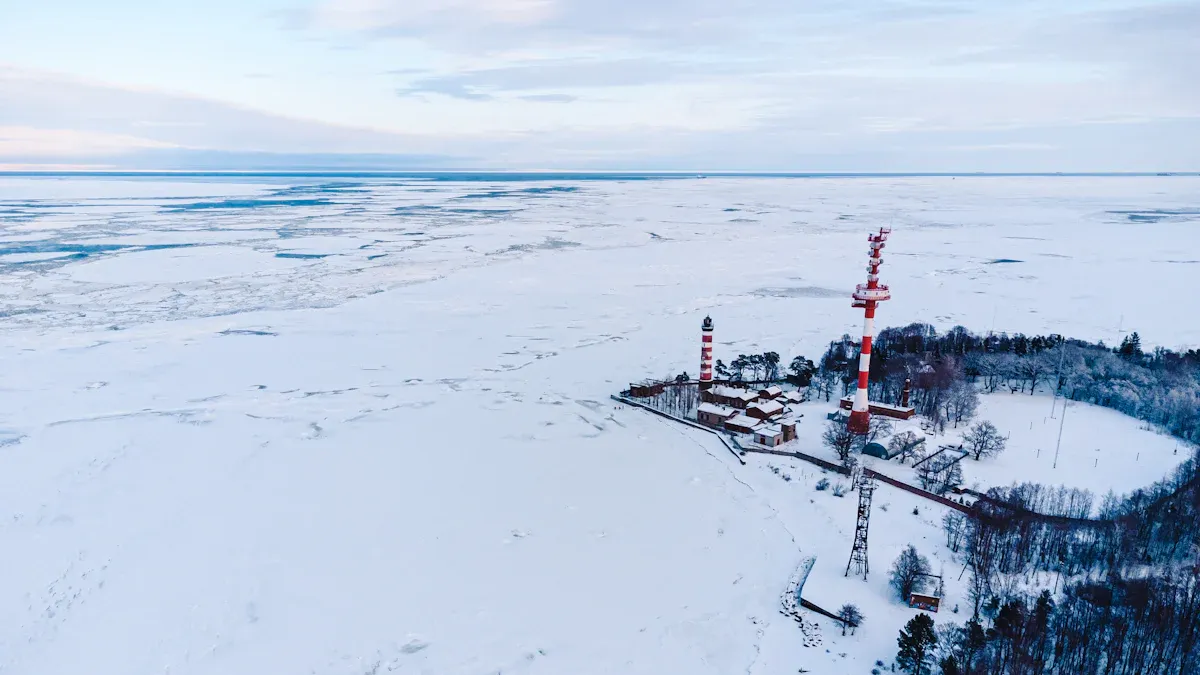
Finding resources and building infrastructure requires robust equipment, especially in challenging environments. From the frozen ground of the Arctic to the vast expanses of desert sand, these terrains present significant obstacles. However, the latest advancements in horizontal directional drilling machine technology, such as those offered by CEGC, are transforming these difficult conditions into opportunities. This innovative drill rig is specifically engineered to conquer both frozen ground and desert sand, ensuring project success where traditional methods falter. The CEGC horizontal directional drilling machine is a testament to engineering prowess, designed to perform reliably in two of the planet's most demanding environments.
Key Takeaways
-
Modern drill rigs use special methods to work in frozen ground. They use cold drilling mud to keep the ground frozen. They also use strong casing and special fluids that do not freeze.
-
Drill rigs use smart ways to work in desert sand. They make the sand strong so holes do not fall in. They also use special tools that do not wear out fast from the rough sand.
-
CEGC's drill rig is built for tough places. It has a design that moves easily. It uses smart sensors to watch drilling. It also has strong power to prevent problems.
Drill Rig Conquers Frozen Ground: Special Ways
Drilling in frozen ground is hard. Permafrost, ice, and melting cause problems. Modern drills use special ways. They get past these problems. These ways help drilling succeed. This is true even in very cold places.
Stop Permafrost Thaw & Keep Holes Stable
Drilling makes heat. This heat can melt permafrost. Melting permafrost causes issues. These include unstable wells. It also makes big holes. Pipes can get stuck. To stop this, cold drilling mud is used. This mud keeps permafrost frozen. It also keeps the hole strong. Early Arctic drilling showed this. Studies by Kutasov et al. (1988) proved it.
Air moving near ice also affects stability. This creates big temperature changes. It also causes stress. These things can make the hole close. Or it can fall apart. This often happens from breaking. Ice sheets get warmer deeper down. This also affects hole stability. Drilling can even melt permafrost underwater. This is from long-term heat. It comes from wells on the seabed. It also comes from damage to frozen layers. Scientists have seen this during drilling.
Better Casing & Grouting for Cold
Special casing and grouting are key. They are used in frozen ground. These ways help keep the hole strong. They stop it from falling apart. They make it stable for a long time. The materials must handle extreme cold. They must not crack. They must not lose strength. This is very important. It is for permafrost that melts and refreezes.
Fluids That Don't Freeze & Heat Control
Drilling fluids must work well. They must work in freezing cold. Fluids that don't freeze are needed. Low-molecular-weight dimethylsiloxane oils are examples. Fatty-acid esters are another. These include ethyl butyrate. Others are n-propyl propionate. Also n-butyl butyrate. And n-amyl butyrate. And hexyl acetate. These fluids do not conduct electricity well. Their heat transfer is less than water. N-propyl propionate cools best. It works at very cold temperatures. Another choice is aliphatic synthetic ester. ESTISOL™ 140 is one. It has good thickness. It is not dangerous.
Water-based drilling fluids are also treated. They use NaCl and ethylene glycol. Thickeners like xanthan gum are added. Hydroxyethyl cellulose is also used. Carboxymethyl starch reduces fluid loss. Polyetheramine stops shale from swelling. These fluids can freeze at -32 °C. They also have low heat transfer. These special fluids are key. They help a drill rig conquer frozen ground.
Equipment Changes for Extreme Cold
Drilling equipment needs special changes. This is for cold places. Strong hydraulic systems are vital. They must stay smooth. They must respond well in cold. This stops delays and problems. Engines need special parts. Block heaters or glow plugs help them start. This makes them work well in cold. Better batteries are also important. Electrical systems too. They must handle low temperatures. Battery warmers can be used.
Heated cabins are needed. They keep workers safe and warm. This allows work in harsh weather. The bottom part of the drill must be strong. Traction features too. They need to handle snow or ice. Tracks or special tires help. They give better grip.
Special tools are also important. Sonic drilling uses fast shaking. It is between 50 Hz and 150 Hz. This pushes casings for freeze holes. The drill string turns slowly. This is in harder ground. It spreads energy evenly. It also spreads bit wear. Workers change the shaking speed. This matches the drill string's natural speed. This helps it dig best. It sends high energy to the bit. It also moves soil sideways. This way is good for taking samples. It does not need flushing. It can go through obstacles. It works in different conditions. It has reached 500 feet deep. It needs no flush in loose soil. It needs little flush in rock. This makes it good for nature.
PDC bits use fake diamonds. They are for cutting edges. They stay sharp. They stay strong in cold. Titanium or steel alloys are best. They are for the bit body. These materials are very strong. They resist impact in cold. More cutters in PDC bits help. They last longer in ice and frozen ground. Better cutter shapes help dig. They dig in frozen and hard ground. Impact protection stops breaks. This is in freezing cold. Anti-balling designs stop ice or mud. They stop it from building up on the bit. This is very helpful in wet snow.
Conquering Desert Sand: Adaptive Strategies
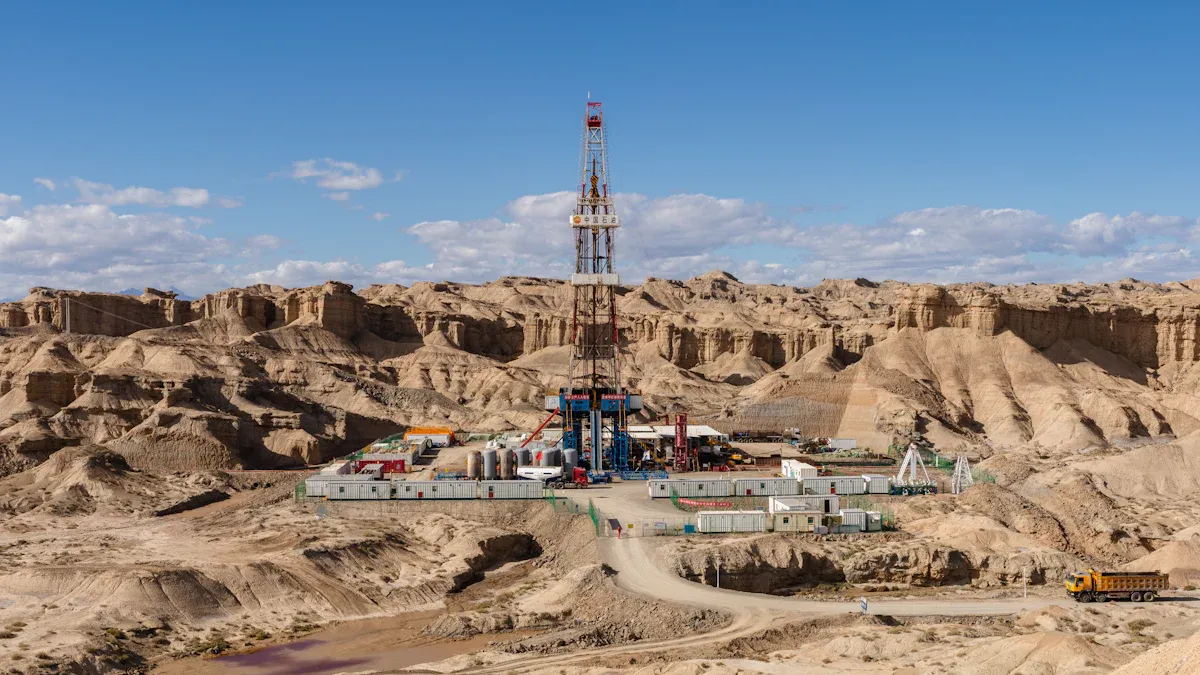
Drilling in desert sand is hard. Sand is rough. It is not stable. Water is scarce. Modern drills use smart ways. These ways help in tough places. They make sure work gets done.
Sand Stabilization & Collapse Prevention
Loose desert sand is risky. It can make holes fall in. Stopping this needs good ways. Engineers use different things. These include cement. They also use cement-by-pass dust. Bentonite is another. Coal fly ash helps too. Asphalt and lime are used. GGBFS is also good.
GGBFS and lime make sand better. GGBFS acts like cement. It has silicates. It has alumina-silicates. It has calcium alumina-silicates. It makes strong stuff with calcium hydroxide. GGBFS needs activators. Lime or cement speed it up. Lime is a common stabilizer. But sulfates in soil can hurt it. Sulfates can cause swelling. Mixing lime and GGBFS helps. GGBFS lessens swelling. It also makes soil less leaky. This process makes C-A-S-H gel. It also makes hydrotalcite. These make soil stronger. They also make it less leaky. This makes soil good for holding water.
Many things affect stabilization. Soil type matters. Its properties matter. The stabilizer used is important. How much is used matters. What the soil will be used for matters. How it is mixed matters. Cost is also a factor.
Abrasive Wear Mitigation & Tool Durability
Desert sand is very rough. It wears down drill tools. This costs a lot of money. Tools need to be changed often. Knowing how wear happens helps. Engineers can make better tools.
Abrasive wear removes material. Hard particles do this. Sand particles are often harder. They can dig into tools. This quickly wears them down. Plowing is one type of wear. It changes shape without removing material. Cutting removes material. It makes chips. Microfracture happens in brittle things. It breaks them quickly. Fatigue wear happens from repeated stress. This is from sand particles.
Polishing is another way. It happens with soft abrasives. Microcutting is from hard sand. These dig into steel. Quartz in sand causes microcutting.
CEGC fixes this. They have a special package. It works with many reamers. These include blade reamers. Fluted, rock, and barrel reamers too. Smooth power delivery helps. It stops shaking. It stops uneven wear. This makes tools last longer. Easy access helps maintenance. This means less downtime.
Water Management & Dust Control
Water is scarce in deserts. Drilling needs water. It is for mixing fluids. It is for stopping dust. Good water use is key. It uses less water. It controls dust. This helps the drill rig. It works in tough places.
Recycling water is important. Some mines reuse 80% of their water. Good dust control saves water. Removing water from waste helps. New ways separate water. Less water goes to waste. Watching water flow helps.
Automated dust stoppers work well. These systems use special chemicals. They stick to soil. Tiny nozzles make fine water drops. This stops dust well. These systems are automatic. They use 80% less water. They are made for deserts.
Less waste is also important. Better drilling helps. Good equipment helps. Eco-friendly additives help. They reduce drilling mud. Advanced ways treat mud. These include heat treatment. Bioremediation is another. This allows safe disposal. Or it allows reuse. It uses fewer new materials. This also stops heat stress. It helps equipment and people.
Precision Guidance for Sandy Formations
Sandy ground can make drills go off course. It can also cause failures. This is because it is very porous. It has many small channels. These make it prone to frac-out. Frac-out is when drilling fluids are pushed in. The pressure is too high. It breaks the soil. Fluid escapes. This causes erosion. It harms the environment. It delays projects.
Drilling fluid gets thicker. This happens with more sand. Bigger particles also make it thicker. For example, 100-mesh sand is thicker. It is thicker than 200-mesh sand. Coarser sand makes it thicker. The fluid's ability to cut shear forces weakens. This happens when sand is 4% or more.
Drilling fluid overflow is frac-out. It happens when fluid pressure is too high. It is higher than the soil's strength. This breaks the hole. It also moves the ground.
CEGC has a special system. It guides precisely. It keeps things stable. This system stops drills from going off course. It makes sure it is accurate. It uses matched control. This controls thrust. It controls pullback. It controls rotation. It controls feed. A strong frame helps. Carriage alignment reduces shaking. It also reduces movement. Tracking system is ready. It has optional data logging. It has process control.
The Mud Integration Solution helps. It fixes bad fluid performance. It lowers frac-out risk. Pump sizing guidance helps. It looks at flow and pressure. It looks at length and diameter. It looks at the ground. A good circulation path is key. Filtration readiness is crucial. Good mud program is vital. This includes mixing goals. It includes monitoring. It includes regular changes.
All-Terrain Rig Design: Synergies for Extremes
Modular Design & Mobility for Diverse Terrains
Modern drill rigs move easily. They use modular designs. Factories build parts. Workers put them together fast. They take them apart fast. This makes moving easy. Strong, light steel is used. Machines make parts fit perfectly. Robots fix things quickly. This means less waiting. Rigs can be on skids. They can be on trailers. They can be on trucks. This helps them move. This design helps the drill rig conquer frozen ground and desert sand.
Advanced Sensor Technology & Monitoring
Better sensors help drill rigs. They watch many things. They watch them right now. Sensors track depth. They track speed. They track twisting force. They track spinning. KDK head pressure is watched. Data goes from underground. Mud flow meters watch mud. Sensors check mud thickness. They check mud density. Gamma ray sensors map ground. Resistivity sensors map ground. Cameras show inside the hole. IoT sensors watch equipment. This makes things better.
Anti-Stall Powertrain & Overload Protection
CEGC's drill rig has special power. It stops pipes from sticking. It stops sudden twists. The power system gives strong twist. It works at many speeds. Hydraulic sensors watch load. They control pressure. The system starts smoothly. It stops smoothly. This protects rods and tools. A "rock package" is optional. It is for very hard ground. It has better cooling. It has strong parts. CEGC offers standard specs. They customize for projects.
Human Expertise & Safety Protocols
Skilled people are important. Strict safety rules are vital. They make drilling safe. Companies check for risks. They plan how to control them. Emergency plans are ready. They have tools and trained staff. Safety training is a must. It covers gear. It covers dangerous stuff. Daily safety talks happen. They review tasks. They review dangers. All workers get training. They get refreshers. Following OSHA rules is key. It helps with noise. It stops falls.
Modern drills are very new. They work well in frozen ground. They also work well in desert sand. This shows new ideas. It shows strong designs. People who know a lot use these drills. These drills help get resources. They work well. They are strong. They help get past nature's problems.
FAQ
How do drill rigs stop permafrost from melting?
Drill rigs use cold mud. This mud keeps permafrost frozen. It also keeps the hole steady. This stops melting and wobbling.
What problems does desert sand cause for drilling?
Desert sand is rough and shaky. It wears out tools. It makes holes fall in. Not enough water and dust are also big problems.
How does CEGC's drill rig deal with rough sand?
CEGC's drill rig has special tools. It works with different reamers. Smooth power makes less wear. Easy access means faster fixes.


