
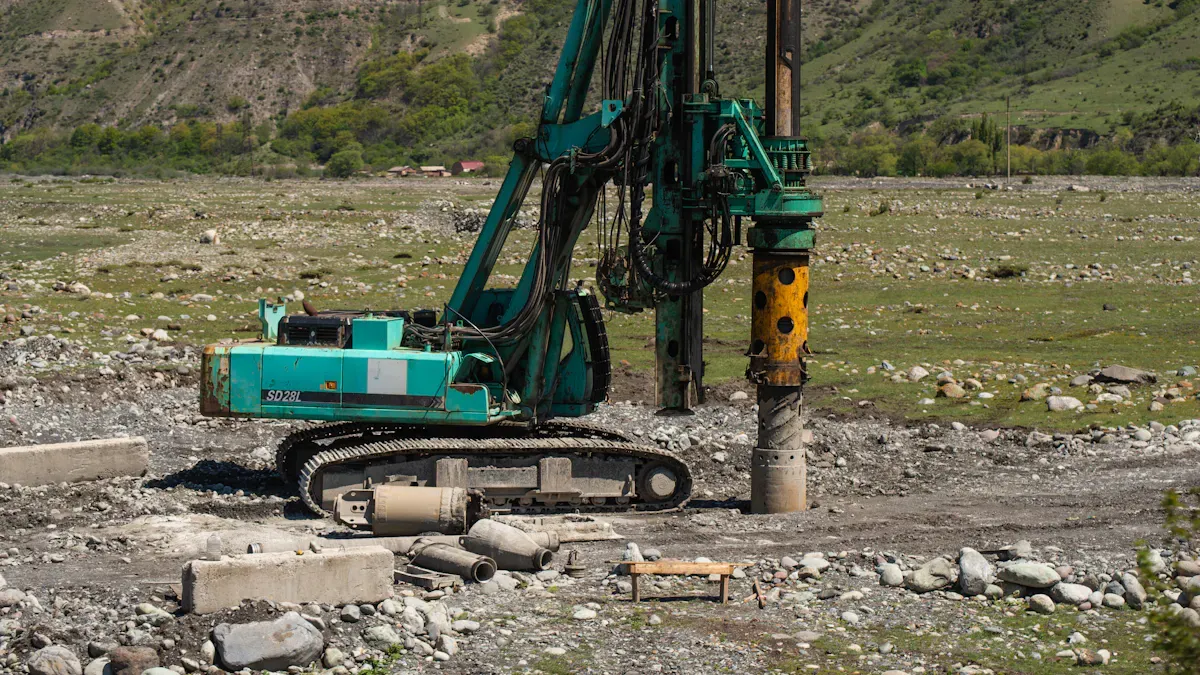
You need drilling equipment with high strength to tackle tough jobs like CEGC projects. Rotary drills, DTH hammers, and CNC machines stand out for this work. Drilling Equipment 220MPa Strength Handles Work means you must select the right tool for rock or metal to get the best results.
Key Takeaways
-
Pick drilling equipment that fits the material's strength. Use tungsten carbide or diamond-tipped bits for 220MPa rock. This helps the tools last longer and work well.
-
Take care of your drilling tools often. Clean and oil them to make them last longer. This keeps your work fast and smooth. Look for damage before each job to stop delays.
-
Use the right drilling method for each job. DTH drills work best for hard rock. CNC machines are good for drilling metal with accuracy. This gives you the best results.
Requirements for 220MPa Drilling Equipment
Essential Features
When you pick drilling equipment for 220MPa materials, you need to look at some key features. High torque helps you drill through hard surfaces. Machines should give steady power and good control. The motor and gears must be strong so the equipment works well under stress. Tools should handle heavy loads and not break. Cooling systems stop the equipment from getting too hot. Vibration control is important. It makes your work better and keeps you safe.
Tip: Always check the specs for torque and power. Good machines show these details clearly.
Material Considerations
The material of your drill bits and cutting tools matters a lot. Tungsten carbide and diamond-tipped bits are best for 220MPa strength. These bits last longer and stay sharp. Do not use low-quality steel bits because they wear out fast. Heavy-duty tools give better results and save time. Lightweight tools may be easy to use, but they are not good for hard materials. Special drill bits make your holes better and your job easier. Always match the bit to the material for the best results.
Rock Drilling Equipment Comparison
Rotary Drills
You use rotary drills for many rock drilling jobs. These machines work by spinning a bit against the rock. Rotary drills can handle hard rock drilling, but you may notice they move slower in rocks with a compressive strength of 220MPa. The bit must be strong and sharp to keep up with the demands of rock drilling. You often see rotary drills in shallow to moderate-depth rock drilling projects. The bit grinds away at the rock, and you need to keep an eye on the bit’s condition. If you use a weak bit, you will spend more time changing bits and less time drilling. The bit’s material matters a lot. Tungsten carbide bits last longer and stay sharp, which helps you finish your rock drilling job faster.
The rate of penetration for rotary drills in hard rock drilling can be slow. You may see a rate of about 0.69 meters per hour. Sometimes, the rate drops to 0.35 meters per hour or rises to 1.27 meters per hour. The bit’s quality, the rock’s hardness, and your drilling technique all play a part. You want to use a bit that can handle the pressure and heat of rock drilling. If you use the right bit, you will get better results and spend less time on maintenance.
DTH and Top Hammer Drills
DTH (Down-the-Hole) drills and top hammer drills are two other main types for rock drilling. DTH drills use a hammer at the end of the drill string. The bit strikes the rock directly, which makes DTH drills very good for hard rock drilling. You get straight holes and good energy transfer. The bit in a DTH drill takes most of the force, so you need a strong bit made from tungsten carbide. This bit can handle the stress of rock drilling and keeps its shape longer.
Top hammer drills use a hammer at the top of the drill string. The energy travels down the rods to the bit. You can use top hammer drills for small-diameter holes in rock drilling. The bit in a top hammer drill must also be tough, but you may see more wear because the energy drops as it moves down the rods. In deep rock drilling, top hammer drills lose some power, and the bit may not work as well. You may also see more hole deviation in hard rock drilling with top hammer drills.
DTH drilling operates directly at the rock face, allowing for minimal energy loss as the impact occurs at the bottom of the hole. This results in nearly all energy from the air compressor being used to break the rock, making DTH the preferred choice for challenging geological formations. In contrast, top hammer drilling loses significant energy as shock waves travel down the drill string, making it less efficient for deeper holes.
Specialized Bits (PDC, Roller Cone, Hammers)
The bit you choose for rock drilling makes a big difference. You have several options for hard rock drilling. PDC (Polycrystalline Diamond Compact) bits use diamond layers to cut through rock. These bits are very hard and last a long time. You use PDC bits for tough rock drilling jobs where you need speed and durability.
Roller cone bits use rotating cones with teeth to crush and grind the rock. You see these bits in many rock drilling rigs. The bit’s teeth can be made from tungsten carbide, which helps the bit last longer in hard rock drilling. You need to check the bit often because the teeth can wear down.
Hammer bits are used in DTH and top hammer drills. These bits take a lot of force and must be made from strong materials. Tungsten carbide is a top choice for these bits. The bit’s design helps it break up the rock quickly and keeps the drilling process smooth.
Tungsten carbide bits are made from a tungsten-cobalt alloy. The cobalt gives the bit more strength and toughness. You want a bit with high cobalt content for hard rock drilling. This bit will not bend or break easily. You can drill into rocks with 220MPa strength and keep the bit sharp for a long time. The bit’s durability means you spend less time changing bits and more time drilling.
Pros and Cons
You need to weigh the pros and cons of each rock drilling method and bit type. Here is a table to help you compare:
|
Drilling Method |
Performance on Hard Rock |
Efficiency |
Cost-Effectiveness |
|---|---|---|---|
|
DTH Drilling |
Superior precision and efficiency, ideal for hard rock formations |
Excels in medium to deep applications, maintains consistent efficiency |
Lower initial equipment costs and operational expenses |
|
Rotary Drilling |
Effective but slower in hard rock, demands more effort |
Higher efficiency in shallow to moderate depths |
Higher initial investment compared to DTH |
You can also look at the pros and cons in a list:
-
DTH Drilling:
-
Pro: You get superior hole straightness and excellent energy transfer. This makes DTH drilling ideal for hard rock drilling.
-
Con: You need powerful air compressors, which can make the setup more complex and costly at first.
-
-
Top Hammer Drilling:
-
Pro: You get a versatile tool that works well for small-diameter holes in rock drilling.
-
Con: You lose energy with depth, and you may see more hole deviation. This limits its use in hard rock drilling.
-
When you pick a bit, you want one that matches your rock drilling needs. Tungsten carbide bits work well for heavy-duty rock drilling. These bits can penetrate hard rock drilling jobs with ease. The bit stays sharp, so you do not have to stop and change bits often. This saves you time and money. The bit’s durability also means less downtime for repairs.
You should always match the bit to the rock drilling job. If you use a weak bit, you will spend more time fixing problems. A strong bit, like one made from tungsten carbide, will help you finish your hard rock drilling job faster and with less trouble.
Metal Drilling Equipment Comparison
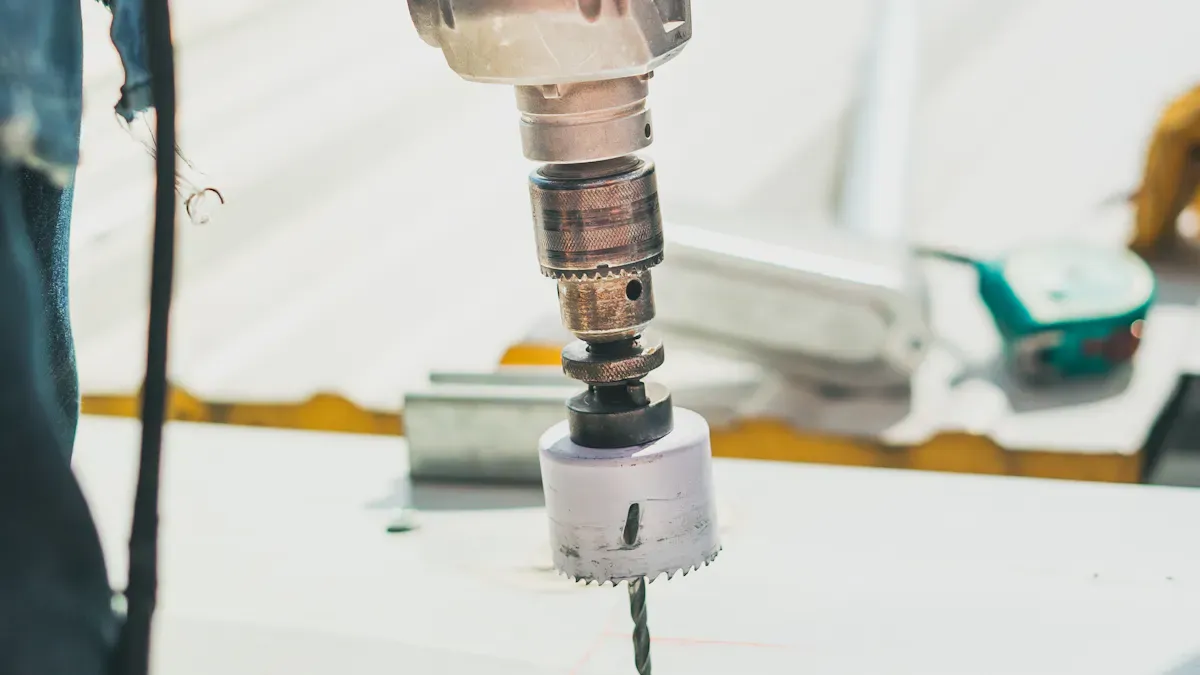
CNC Machines
You use CNC machines when you need high accuracy and repeatability in metal drilling. CNC stands for Computer Numerical Control. These machines follow programmed instructions to drill holes in metal. You can set the depth, speed, and position with great precision. CNC machines work well with high-strength metals like steel and titanium. The machine holds the drill bit steady and moves it exactly where you want.
CNC machines let you drill many holes with the same size and shape. You do not need to worry about human error. The machine does the hard work for you. You can use carbide or tungsten bits in a CNC machine. These bits cut through tough metal without losing their edge. You get clean holes and smooth finishes. CNC machines also have cooling systems to keep the bit from overheating.
Tip: Use CNC machines for large batches or when you need every hole to match exactly.
Magnetic Drills
You use magnetic drills for drilling into thick metal plates or beams. These drills have a strong magnet at the base. The magnet holds the drill steady on the metal surface. This helps you drill straight holes without slipping. Magnetic drills work well on construction sites and in workshops.
Magnetic drills give you high accuracy and good hole quality. The spindle accuracy stays below 0.05 mm. This means you get precise hole positioning every time. You can see the details in the table below:
|
Specification |
Details |
|---|---|
|
Spindle Accuracy |
Below 0.05 mm |
|
Importance of Precision |
Ensures accurate hole positioning |
|
Hole Diameter Consistency |
Must meet specified requirements |
You can use magnetic drills for both small and large holes. The drill keeps the hole diameter consistent. You do not have to worry about the bit wandering off the mark. This makes magnetic drills a good choice for high-strength metals. You can use annular cutters or twist drills with these machines. The magnet keeps the drill in place, even on vertical or overhead surfaces.
Note: Always check that the magnet is strong enough for the metal thickness. A weak magnet can cause the drill to slip.
Carbide and Tungsten Tools
You need strong tools for drilling into metals with 220MPa strength. Carbide and tungsten tools give you that strength. Carbide is a mix of tungsten and carbon. These tools stay sharp longer than regular steel bits. You can use them at higher speeds without losing cutting power.
Tungsten tools resist heat and wear. You can drill more holes before you need to change the bit. These tools work well in both CNC machines and magnetic drills. You get clean, round holes in tough metals. Carbide and tungsten bits cost more, but they last longer. This saves you money over time.
You should always match the tool to the job. Use carbide or tungsten bits for hard metals. Do not use regular steel bits. They will wear out fast and make rough holes.
Pros and Cons
You need to compare the main types of metal drilling equipment before you choose. Here is a quick look at the pros and cons:
|
Equipment Type |
Pros |
Cons |
|---|---|---|
|
CNC Machines |
High accuracy, repeatability, fast for large jobs |
High cost, needs programming skills |
|
Magnetic Drills |
Portable, precise, easy to set up |
Limited to ferrous metals, not for mass production |
|
Carbide/Tungsten Tools |
Long life, cuts hard metals, clean holes |
Higher price, can chip if misused |
-
CNC machines give you the best accuracy and speed for big projects.
-
Magnetic drills help you work on-site and in tight spaces.
-
Carbide and tungsten tools let you drill tough metals without stopping often.
Remember: Choose your equipment based on the job size, metal type, and how many holes you need. The right tool makes your work faster and easier.
Drilling Equipment 220MPa Strength Handles Work: Performance & Durability
Lifespan & Maintenance
When you use drilling equipment 220MPa strength handles work, you want long-lasting drilling tools. Hydraulic rock drills often last longer than basic drills. You need to check your drilling tools often for wear. Clean and oil them to keep them working well. If you use carbide or diamond bits, you will see less wear and fewer changes. This helps you keep up your productivity. Always follow the maintenance guide for your drilling equipment 220MPa strength handles work. Good care means fewer breakdowns and more time drilling.
Speed & Efficiency
You want high productivity when you drill hard materials. Hydraulic rock drills give you fast drilling and steady power. CNC machines and magnetic drills also help you finish jobs quickly. The right drilling tools make a big difference. Sharp bits and strong motors boost your productivity. If you use dull or weak drilling tools, you will slow down and lose productivity. Always match your drilling equipment 220MPa strength handles work to the job for the best results.
Cost Factors
You need to think about cost when you pick drilling equipment 220MPa strength handles work. Strong drilling tools cost more at first, but they last longer. This saves you money over time. Hydraulic rock drills may cost more, but they give you better productivity and fewer repairs. Look at the table below to compare:
|
Equipment Type |
Initial Cost |
Maintenance |
Productivity |
Lifespan |
|---|---|---|---|---|
|
Hydraulic Rock Drills |
High |
Low |
High |
Long |
|
Rotary Drills |
Medium |
Medium |
Medium |
Medium |
|
CNC Machines |
High |
Low |
High |
Long |
|
Magnetic Drills |
Medium |
Medium |
Medium |
Medium |
Tip: Choose drilling equipment 220MPa strength handles work that gives you the best mix of productivity, cost, and lifespan. This will help you get the most from your drilling tools.
Application Scenarios & Recommendations
Mining & Quarrying
Mining happens in many places worldwide. These jobs need strong drilling equipment for hard rock. Rotary drills and DTH hammers help break tough layers. Rocks in mining can have 220MPa strength. You must pick the right bit to stay safe and work fast. It is important to check equipment often. Using tungsten carbide bits keeps mining smooth. Weak tools slow down mining a lot. Heavy-duty machines help mining stay efficient. Good maintenance is needed for mining to go well. Always plan with the right tools for mining. Success comes when you match equipment to the rock.
Construction
Many construction sites need drilling in concrete or stone. Rotary drills are good for shallow holes. DTH drills are better for deep holes. Check the material before you start drilling. Safety for your team is very important. Use bits made for hard materials. The right equipment helps you finish faster.
Metal Fabrication
Metal fabrication happens in factories and workshops. CNC machines drill precise holes in metal. Magnetic drills work well on large beams. Pick carbide or tungsten bits for strong metals. You want holes that are clean and smooth. Sharp tools give you better results.
Equipment Selection Tips
-
Check how strong the material is before picking equipment.
-
Use heavy-duty bits for hard rock or metal.
-
Keep tools clean and sharp for best results.
-
Plan your work so you do not get delayed.
-
Ask an expert if you are unsure.
Tip: Using the right equipment keeps your job safe and quick.
You get the best results with DTH drills for hard rock and CNC machines for tough metals. Choose tungsten carbide bits for durability. Check your project needs before buying equipment. Focus on performance and cost. Ask experts if you need help. 🛠️
FAQ
What drill bit works best for 220MPa rock?
You should use tungsten carbide or diamond-tipped bits. These bits stay sharp and last longer in hard rock.
Can you use regular steel bits for tough metals?
No, you should not use regular steel bits. They wear out fast. Choose carbide or tungsten bits for strong metals.
How often should you check drilling equipment?
You need to check your equipment before each job. Clean and oil tools often. This keeps your equipment safe and working well.


