
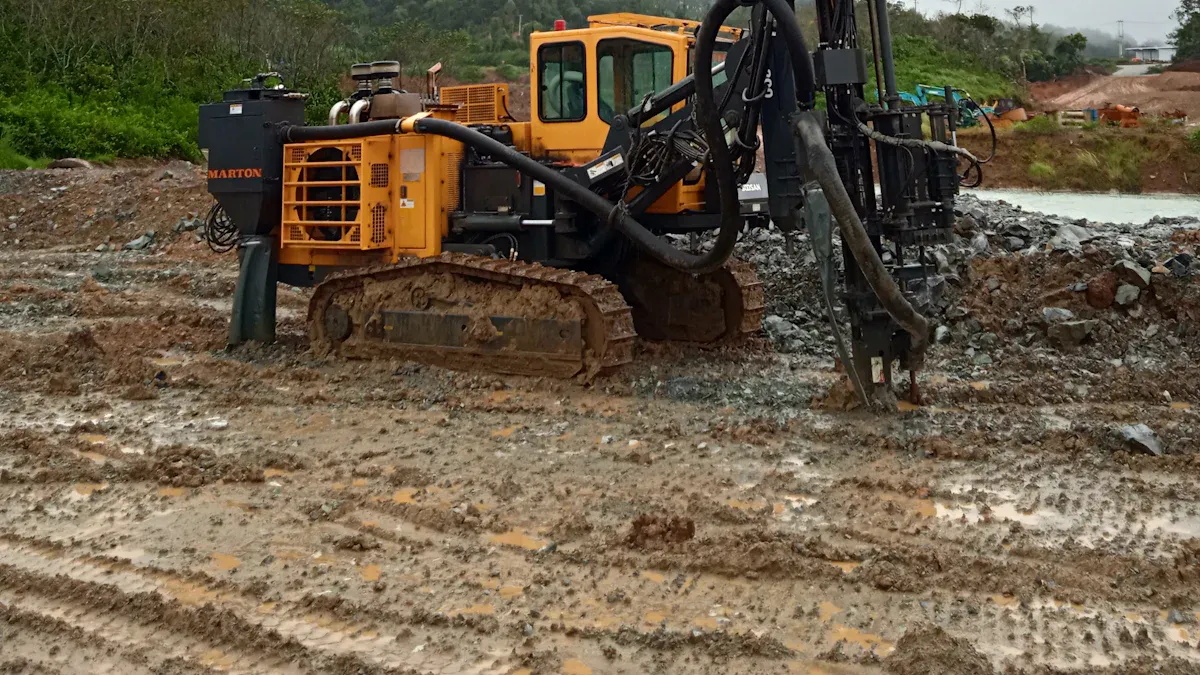
Modern drilling rigs from CEGC are engineered to excel when encountering challenging ground conditions like granite, clay, and gravel mix. These materials present unique drilling problems. Granite, for instance, significantly slows down drilling progress and necessitates the use of robust drill bits. Clay can lead to machine clogging, while gravel can cause premature tool wear and breakage. Successfully navigating these conditions requires specialized tooling, intelligent methodologies, and meticulous planning. A powerful CEGC drilling rig is specifically designed to address these challenges, ensuring efficient and reliable operation even when Drilling Rigs Handle Granite Clay Gravel Mix.
Key Takeaways
-
Modern drilling rigs, like those from CEGC, use special tools and smart methods to drill through tough ground such as granite, clay, and gravel.
-
These rigs have strong engines and accurate systems. They also use special fluids to keep the drill working well and the hole stable.
-
Careful planning and checking the ground before drilling helps make sure projects are safe and successful.
Understanding Mixed Ground Challenges for Drilling
This part talks about problems. Mixed ground makes drilling hard. These problems change how we drill. They also change how well we drill.
Granite and Gravel: Abrasive and Hard Layers
Granite and gravel make drilling tough. Granite is a very hard rock. It is also very dense. Its crystals slow down drilling. Special tools are needed for hard rock. Gravel, especially cobble, is different. It has stones and pebbles. It has many rock types. Drilling in rocky areas is hard. Different materials make the drill bit move. Keeping the drill straight is hard. This needs more steering. Hard rock layers are tough. Fine granite or cemented gravel are examples.
Clay: Cohesive, Adhesive, and Swelling Properties
Clay causes other problems. It is sticky. It also swells. This makes things clog. Clogging happens when sticky stuff sticks. It sticks to cutting tools. This makes digging hard. It also slows down work. Clay with high plasticity clogs a lot. Bentonite is an example. It swells a lot. Even clays that don't swell can clog. Kaolin is one such clay. Drilling tests check for clogging. They also test things to stop it.
Unpredictability in Heterogeneous Geological Layers
Unpredictable ground creates risks. Rock strength changes. How rough it is changes. How easy it is to drill changes. This makes the drill go off path. The drill bit can move. Drilling in broken rock is complex. Putting in casing is hard. They can get stuck. This is due to uneven paths. Cementing also suffers. Good bonding is hard. Separating zones is hard. Checking the ground is tough. Tools can get stuck. Data can be bad. Finishing and producing also have issues. There are stresses on pipes. Good drilling must change. It must adapt to these changes. Knowing the ground is key. It helps operations succeed. This shows how complex drilling is. It is complex through mixed ground.
Better Rigs for Mixed Ground
Modern drilling rigs are strong. They can handle tough ground. These machines are good. They work well in mixed ground. Horizontal Directional Drilling (HDD) rigs are examples. They have special designs. These designs solve mixed ground problems. They use power. They use precision. They use smart tech. This makes drilling work well.
HDD Machines Are Flexible
Horizontal Directional Drilling machines are very flexible. They work in many soil types. They change for different grounds. This includes soft clay. It also includes hard rock. These machines use a special system. It controls pressure well. This stops holes from caving in. It keeps the best pressure. This happens during drilling. Special drill bits are also key. These bits are sharp. They have unique shapes. They cut through sticky soils. Clay is one example. Bigger bits have open designs. They move easily through loose gravel. Strong torque gives needed force. This force helps push through sticky soils. It also stops the drill bit from getting stuck. Drilling fluids make things smooth. They oil the drill bit. They oil the borehole. These fluids lower rubbing. They stop clay from sticking. Workers can change settings. They change torque, speed, and pressure. This makes things work best. This helps when soil changes. Good sensors watch the soil. They see changes in soil. This allows quick changes. These changes help drilling work.
Power for Tough Drilling
Modern drilling rigs stop problems. They stop stuck pipes. They stop sudden torque. They have anti-stall engines. They have overload protection. These systems give high torque. This happens at many speeds. This power helps the rig. It pushes through hard layers. Hydraulic sensors are important. Pressure control is also key. They change power delivery. This is based on ground resistance. This stops sudden shocks. It protects the system. Controlled start and stop reduce stress. This is on rods, swivels, and tools. This stops damage. It lowers downtime. For very tough spots, CEGC has a "rock package." This package has better cooling. It has better filters. It has extra torque. It has strong parts. This makes sure the drilling rig can handle hard rock. This is important. It helps when drilling rigs handle granite clay gravel mix.
Accurate Drilling Systems
Making accurate holes is vital. This is true when crossing roads. It is true for railways. It is true for utilities. Modern drilling rigs use special systems. These systems guide the drill. They keep it stable. They make sure the drill stays on path. Load-matched control helps. It links thrust, pullback, and rotation. It links feed. This makes the drill move smoothly. It moves accurately. A strong frame helps. Good carriage alignment helps. They reduce shaking. They reduce unwanted movement. This design keeps the hole straight. The rigs can also use tracking systems. This allows real-time checks. It allows data recording. Workers can use process control. This makes accuracy repeatable. This lowers the risk of going off path. It lowers the risk of crossing failure.
Special Tools for Drilling in Mixed Ground
You need special tools. These tools help you drill. They work in mixed ground. These tools include special bits. They also include reamers. Other tools go down the hole. They help with granite, clay, and gravel.
Picking the Right Drill Bit
Picking the right drill bit is key. Different ground needs different bits. For hard rock like granite, use strong bits. These bits have carbide parts. Softer clay and gravel need other designs. The right bit drills well. It also lasts longer.
Reamers for Cleaning and Making Holes Bigger
Reamers clean holes. They also make them bigger. Workers need many reamers. This is for mixed ground. Some reamers mix features. They work in different grounds. A barrel reamer works in all soils. It makes pilot holes much bigger. Fly cutter reamers control hole size. They have blades you can change. These reamers are good for exact jobs.
Strong Tools Last Longer and Cost Less
Strong tools save money. Tungsten carbide is a great material. It is very hard. It resists wear well. This makes it good for tough places. Cobalt drill bits are harder. They resist heat well. Carbide drill bits cut very hard things. Diamond drill bits are the hardest. They are good for rough stuff. Coatings also make tools better. Titanium coatings make them last longer. They help during long drilling. CEGC has custom rods. They have custom tool joints. They also protect against wear. This makes tools work together. It makes them last. It stops shaking. It stops uneven wear. This happens during drilling.
Optimizing Drilling Performance and Fluid Management
Good drilling performance needs careful plans. It needs good work. This is true when drilling rigs handle granite clay gravel mix. Workers must use special ways. They must manage fluids well. This makes sure the drill goes in well. It makes holes stable.
Techniques for Effective Penetration in Mixed Strata
Drilling well in mixed ground needs special ways. Thick mud helps a lot in gravel and sand. It stops mud from going in too much. This keeps the hole from getting smaller. This mud also makes walls strong. It stops the hole wall from moving unevenly. This makes it more stable. Thick mud makes things more stable. It makes slurry particles stick better. This stops liquid from leaking. For thick gravel, up to 7.3 meters, mud should be 25–30 seconds thick.
Making mud the right weight is also key. This keeps the hole stable. For example, a weight of 1.14–1.18 g/cm³ works well. Special mud mixes can get the right weight and thickness. One mix uses water, clay, bentonite, CMC-Na, and carbonate. They are in certain amounts (800:110:90:2:0.5).
When there are pebbles, use different tools. Use different ways. For small crushed pebbles (20mm-100mm), use a drilling bucket. It needs Bauer or B47K teeth. This bucket needs a high skirt. It needs side picks for cutting first. Medium crushed pebbles (100mm-500mm) need a double-layer barrel drill. This drill has a high inside barrel. It has a low outside barrel. This design makes drilling easier. It pushes less. For large crushed pebbles (>500mm), use barrel drills. Or use other special drill bits.
Be careful when drilling through pebbles. Workers must lift and lower the drill slowly. This stops scratching the hole wall. It stops collapse. They drill slowly. They use high torque. They flush fast with clean mud. Control how deep each bucket goes. This stops drilling problems. Make sure the water flow hole is long and thin. For lots of gravel, use a double-layer rock-embedded drill. For single stones, use short spiral drill bits to loosen them. Then, use pick-tooth drills to take them out. Do not start fast when lifting the drill. Do not reverse the power head fast. This stops damage. Do not drill hard if it gets too tough. Instead, turn the drill back and forth. This loosens pebbles. If it drills slowly, lift the drill. Then lower it again. This starts drilling on a fresh surface. Seal the drill bucket's hook. Use a steel plate. This stops pebbles from getting stuck. It stops unhooking.
Stopping drill suction is another key way. Workers lift and release the drill slowly. This does not disturb the hole wall much. Limit how deep each bucket goes. It should be about half the barrel height. Add water holes. This moves mud up and down. For wall protection in pebble areas with clay, use thick, heavy mud. Add sawdust, pulp, and cottonseed chips to the mud. This makes very thick mud. This is good for impact drilling. Keep mud head height over 1.5 meters. This is above groundwater. This is if no thick silt/clay layer is there. If no thick silt/clay layer is there, mud weight should be over 1.3.
Mud Integration and Fluid Management for Bore Stability
Good mud use and fluid control are key. They make bores stable. They stop frac-out risks. Drilling fluid traits greatly affect the wellbore.
|
Impact on Collapse Area |
Impact on Fracture Pressure |
|
|---|---|---|
|
Poroelastic |
Increases by 5% |
Decreases by 15% (from 20.4 to 17.4 MPa) |
|
Thermal (Cooling) |
Minimizes by 80% |
Decreases by 30% |
|
Thermal (Heating) |
Enlarges by 140% |
Increases by 15% |
|
Chemical (Higher Salinity) |
Decreases by 20% |
Increases by 15% |
|
Chemical (Lower Salinity) |
Increases by 10% |
Decreases by 7% |
Making drilling fluid cooler helps. It makes the mud window wider. Saltier mud makes ground more stable. It raises fracture pressure. It lowers pore pressure. Less salty mud can raise pore pressure. It can lower fracture stability. Making mud salinity right helps. Managing temperature carefully helps. This makes ground more stable. It lowers wellbore risks.
Engineered fluid systems keep wellbores stable. They make them better. The industry now uses 'loss prevention material.' This is instead of 'lost circulation material.' This is for active management. Wellbore strengthening methods support weak areas. Software helps find fracture width. It finds the best mixes for sealing cracks. Developers make 'flat rheology' synthetic muds. These work the same at different temperatures. They work the same at different pressures. Micronized barite stops sag. It lowers ECD changes.
Peresich says Baker Hughes' software helps a lot. It helps with the whole stabilization process. This is true for special fluids. It is true in tough places. "Our software correctly guesses hydraulic forces. These can be made better. This keeps the wellbore stable. This is true in very hot or high-pressure places. It is true in deepwater wells with big temperature changes," he adds.
This shows how important advanced software is. It helps manage fluid movement.
Specific Considerations for Water Well Drilling in Mixed Ground
Water well drilling in mixed ground has special problems. The goal is a stable wellbore. This lets clean water come out. Workers must manage drilling fluids carefully. This stops water sources from getting dirty. They also make sure the well lasts long. Good water well drilling needs exact fluid control.
When water well drilling, the mud plan must balance things. It needs to lift cuttings well. It must oil the drill bit. It must oil the borehole. It also protects ground from falling in. The right mud thickness is key. The right gel strength is key. These make sure the hole is clean. They stop fluid loss into porous ground. Start slowly in clay. This lets the auger dig well. This stops clogging. It makes drilling start smoothly. Pump size guidance is important. It matches flow and pressure. This is for length, diameter, and ground type. A good circulation path is also vital. Ready filtration is vital. They keep mud good. Mud plan rules are important. This includes mixing goals. It includes checking. It includes regular changes. This makes fluid work well always. This is very important in mixed ground. Conditions can change fast during water well drilling.
Site Check and Planning for Good Mixed Ground Projects
Good projects in mixed ground start with checking the site. They also start with careful planning. These steps make things safer. They make work better. They help the drilling work go smoothly.
Ground Study for Good Ground Information
Ground studies give important facts about the ground. They help engineers know about soil and rock conditions. Different ways show what is under the ground. A truck with a drill takes samples of soil and rock. A skid drill works in hard-to-reach spots. Floating tools help drill over water. Soundings find how deep rock is. They also find unstable soil. They do this without taking samples. Other ways include ground radar. Detailed ground surveys are also used. Engineers also dig test holes. Or they drill holes for samples. They test these samples in a lab. This shows what they are made of. It shows how strong they are. It shows the soil type. Drilling holes deep gets samples. These samples show what is in the ground. They show how stable it is. Tests measure how much soil resists. These studies are very important. They help understand the complex soil and rock conditions. This is before any drilling starts.
Drill Path Design to Lower Dangers and Work Better
Designing the drill path carefully helps avoid problems. Ground studies are key for this design. They drill holes. They check samples. This helps understand the soil and rock. It also finds water levels. It finds things that might be in the way. This information helps check how stable the ground is. It helps pick the best drilling method. It helps pick the best tools. The design makes problems smaller. It lowers project risks. Good thrust control helps guide the drill bit. Slower turning speeds stop the drill from stopping often. This is when drilling through hard-to-guess rock formations. The AutoTension feature keeps the reamer in the middle. This makes holes cleaner. It makes work better when the reamer passes.
Changing Horizontal Directional Drilling Rigs for Project Needs
Horizontal Directional Drilling rigs can be changed. This is for specific project needs. Different rig types fit different project sizes. They fit different ground conditions. Small HDD rigs are for small jobs. Medium HDD rigs are for mid-size work. Big HDD rigs are for large jobs. This includes putting in pipes. These rigs can use special tools. Mud motors use water power. They turn the drill bit. This works well in hard rock formations. Special cutting heads are also ready. Tricone bits break hard rock. PDC bits work for very hard ground. Coring bits are for mixed ground. This includes cobble and gravel. High-power drill rigs are needed. They go through tough rock. They keep going steady.
Modern drilling rigs work well. They handle tough ground. This includes granite, clay, and gravel. Strong rigs help. Special tools help. Smart drilling ways help. They make drilling good. Good plans also help drilling. Pick CEGC's special rigs. Use their smart plans. This makes projects work.
FAQ
Can modern drilling rigs handle granite, clay, and gravel mixes?
Yes, they can. Modern drilling rigs are strong. CEGC's Horizontal Directional Drilling machines are good. They drill through granite, clay, and gravel. They use special tools. They use smart ways.
What tools help drill through mixed ground?
Special tools help. Carbide-tipped drill bits are one. Many reamer designs also help. They cut hard rock. They handle sticky clay. They manage loose gravel well.
Why is site assessment important for mixed ground drilling?
Site assessment gives key ground facts. This helps engineers. They design the best drill path. They pick the right tools. They choose good methods. This makes projects work well.


