

Drilling Rigs Minimal Error Guarantees Accuracy, ensuring precise results for your projects. With advanced guidance systems and robust engineering, CEGC delivers market-standard specs and offers project-based customization to meet your specific needs. B2B contractors value drilling accuracy because it reduces costs and maintains borehole stability. Sleeve stabilizers keep the tool in contact with the wall, minimize friction, and extend tool life, further supporting reliable performance.
Key Takeaways
-
Precision guidance systems help your drill stay on track. This lowers mistakes and saves time on projects.
-
Pick the drilling rig that fits your site conditions. Choosing the right rig cuts down errors and helps it work better.
-
Calibrating often and training operators is important. These steps make fewer mistakes and boost drilling accuracy.
Precision Guidance for Drilling Accuracy
High-Accuracy Underground Drill Rig Alignment
You need accurate drill rig alignment for good results. CEGC machines use guidance systems that let you change direction as you drill. These systems keep the drill on track and lower bore deviation. Strong frames and proper alignment help stop vibration and keep the drill steady. If you align the drill rig well, you avoid extra work and fines from mistakes. Bore deviation can happen from steep angles, wrong assembly, or magnetic interference. CEGC Trenchless Drilling Rig uses tracking systems for real-time mapping. GPS helps cut down human mistakes and gives updates, so you can move the drill head fast. This method makes work faster and cuts downtime.
-
Precision guidance systems let you:
-
Change the drill’s path as you work.
-
Improve accuracy and keep the drill on course.
-
Use bore path checks to make smart choices and reduce errors.
-
Site Survey and Rig Selection
You must check the site before drilling starts. The survey helps you pick the best rig for the ground. CEGC lets you customize rigs for your site. Different ground needs different rigs:
-
Hard, rough rock: DTH rigs drill deeper and straighter.
-
Mixed or cracked ground: DTH rigs keep things stable and lower errors.
-
Shallow, even rock: Top hammer rigs drill faster and cost less.
-
Soft ground or loose dirt: Rotary rigs work well.
You avoid mistakes and bad bores by picking the right rig. CEGC machines have standard specs and options for torque, thrust, rod system, and controls. This means you get the best setup for each job.
Calibration and Operator Training
Calibration is needed for fewer errors in drilling. You must use good calibration to keep the rig aligned. CEGC supports many calibration methods to help steer and plan the drill. The table below lists common calibration methods:
|
Calibration Method |
Description |
Source |
|---|---|---|
|
Model-based Controller |
Estimates attitude, curvature, and position for steering |
Demirer et al., 2019, 2020 |
|
Automated Directional Drilling Advisor |
Watches the environment and gives advice in real time |
BA et al. (2022), Liu et al. (2024) |
|
Multi-stage Event-triggered MPC |
Makes corrections based on dogleg severity |
Morabito et al. (2020) |
|
Adaptive Two-degree of Freedom Controller |
Uses a trained model for better control |
Häusser et al. (2023) |
|
Minimum Curvature Method |
Old method for planning the drill path |
Sawaryn and Thorogood (2005) |
|
Constant Toolface Curve |
Keeps steering ratio and toolface steady to lower twists |
Guo et al. (1992), Schuh (1992) |
You also need training for operators to keep things accurate. Trained drillers make fewer mistakes and save time. Companies that train workers spend less on repairs and rigs last longer. Good training makes drilling better and lowers errors. Certified teams follow rules and earn trust from clients. CEGC supports always learning and improving. You collect and study data on hardware and drilling sites, which helps you make smart choices and work better.
Tip: Regular calibration and training help you keep the drill rig aligned. This practice gives you fewer errors and reliable results every time.
Real-Time Monitoring and Stability Systems
Data Logging and Process Control
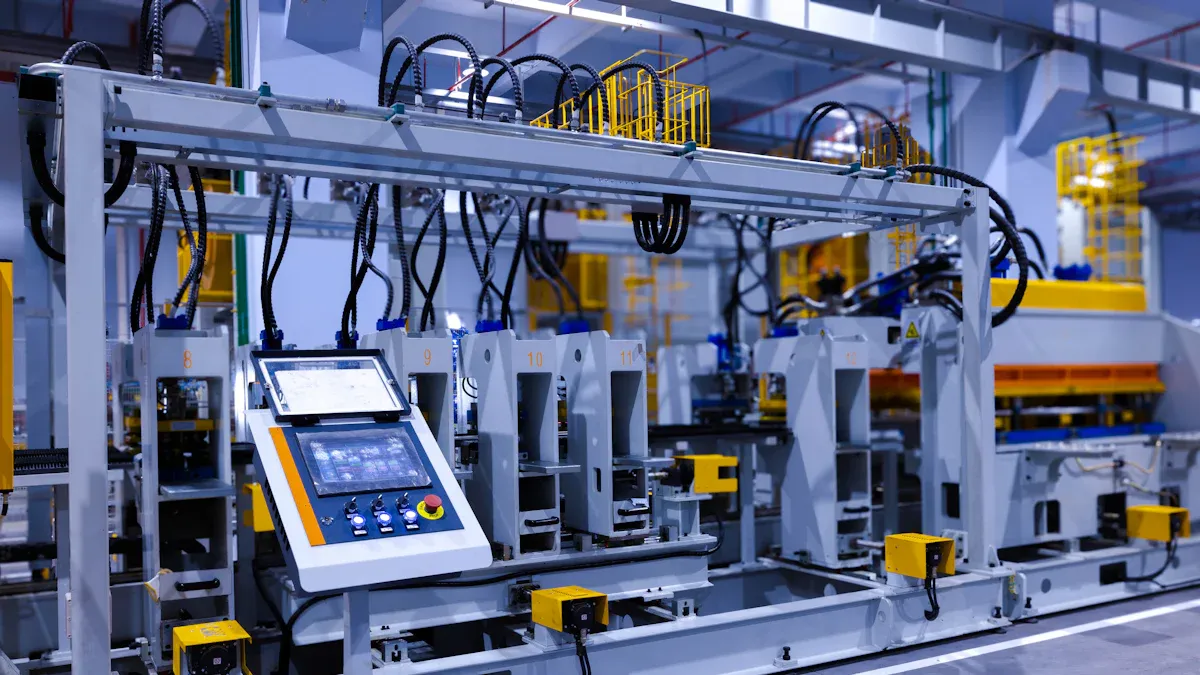
You can get drilling rigs minimal error guarantees accuracy by using smart monitoring and control. Smart sensors watch things like vibration, heat, and pressure. These sensors help you find problems early and keep drilling accuracy high. When you use real-time monitoring, you have less downtime and avoid expensive repairs. Data logging saves every step of your drill path. You can look at the path, find mistakes, and fix them fast. Process control software puts all alarms and alerts in one place. This setup helps you pay attention to the most important drilling jobs and lowers the chance of mistakes. Automation of repeated tasks also makes work steady and keeps your drilling accuracy at a high level.
|
Section |
Description |
|---|---|
|
Cover Page |
Company, client, well ID, job type, date, operator names |
|
Executive Summary |
Job goals, results, volumes, pressures, key events |
|
Equipment and Sensor Config. |
Sensors used, calibration dates, system setup |
|
Time-Based Plots |
Parameters over time, job phases, notes |
|
Depth-Based Plots |
Parameters vs. depth, formation tops, features |
|
Volumes, rates, pressures, job time |
|
|
Alarm and Event Log |
Alarms, events, timestamps, operator responses |
|
Operator Comments |
Notes and observations |
|
Certification and Signatures |
Data accuracy statements, signatures |
|
Appendices |
Calibration certificates, safety docs |
Anti-Stall Powertrain and Overload Protection
You need a steady hdd drill rig to keep your drill path smooth. Anti-stall powertrains and hydraulic load sensing systems change power when needed. This keeps your drilling accuracy steady and stops torque spikes. Overload protection works fast if the drill hits a hard spot. It cuts power and stops damage to your hdd drill rig. Companies with these systems have fewer safety problems and less downtime. You can trust your horizontal directional drilling machine to handle tough ground and reservoir challenges.
Tooling Compatibility and Fluid Management
Tooling compatibility helps you pick the right tools for the ground. This makes your drill path better and keeps drilling accuracy high. Good fluid management means you use the right mud for each job. The right fluids lower friction, cool tools, and clean out solids. This keeps your hdd drill rig working longer and slows tool wear. You save money and finish jobs faster. When you manage fluids well, you make your horizontal directional drilling better and protect your equipment. You can use data and tests to check fluid quality and change it if needed. This way, drilling rigs minimal error guarantees accuracy for all underground drilling, even in oil and gas wells. You can count on your hdd drill rig to give exact results, even when the ground and reservoir are hard to work with.
You get fewer mistakes and better accuracy by using precision guidance, real-time monitoring, and smart technology. Buying advanced rigs helps you in many ways. You get good soil tests, work faster, have strong machines, and follow the rules:
|
Benefit |
Description |
|---|---|
|
Accurate Soil Analysis |
Advanced retrieval keeps samples safe and unchanged. |
|
Operational Efficiency |
Easy-to-use designs make setup and drilling quicker. |
|
Durability |
Strong metals and materials help rigs last longer. |
|
Compliance |
Follows U.S. and Canadian rules. |
You get better results when operators use daily checklists, safety meetings, and digital job notes. The best companies use strong safety rules, machines that do tasks by themselves, and check their work often. CEGC’s custom solutions use AI and special scanning tools for each project. You can count on CEGC to give you accurate and steady results for every horizontal directional drilling job.
FAQ
How do CEGC drilling rigs help you reduce bore deviation?
You use precision guidance systems and strong frames. These features keep your drill on track and help you avoid costly mistakes.
What makes CEGC horizontal directional drilling machines accurate?
You get real-time monitoring and tracking. These tools let you adjust the drill path and improve accuracy for every project.
Can you customize CEGC Trenchless Drilling Rigs for your site?
Yes! You choose torque, thrust, rod system, and controls. CEGC helps you match the rig to your ground and project needs.


