
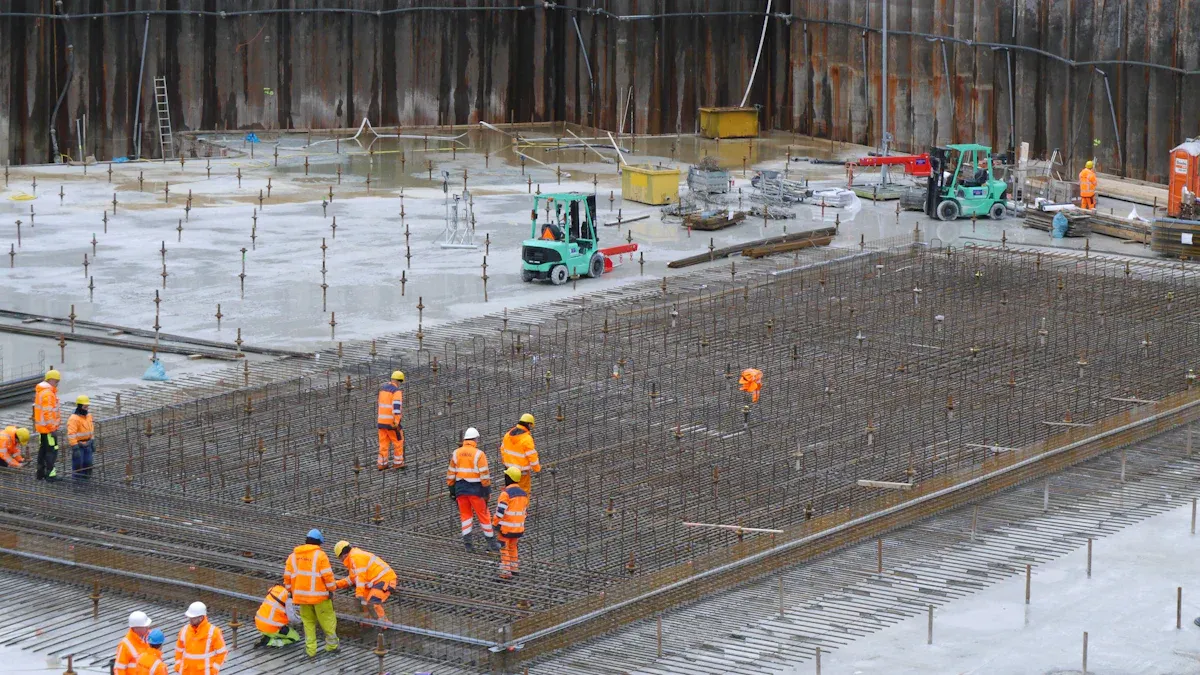
When you drive piles, you need to watch for refusal. This helps you avoid pile damage or weak foundations.
-
Refusal means the pile stops moving, even with hammer hits.
-
Practical refusal is when the pile moves slowly but still goes down a little.
CEGC standards say using a Driven Piles 1600kN Force Prevents Refusal. If you ignore refusal, damage happens more often.
|
Obstruction Type |
Consequence on Pile Damage Rates |
|---|---|
|
Natural Obstructions |
Localized refusal makes you hit more times and can hurt the pile. |
|
Man-made Obstructions |
False refusal bends the pile or keeps it from going deep, making it weaker. |
|
Detection Methods |
Driving records and dynamic tests help stop too much settling. |
Key Takeaways
-
It is important to know what refusal means. Refusal happens when a pile does not move anymore, even though the hammer keeps hitting it. Knowing this helps stop damage to the pile and the foundation.
-
A 1600kN force works well when putting in piles. This force lets piles go through hard soil. It does not make the piles crack or bend. This keeps the foundation strong.
-
Watching how piles move is very important. Changing the force while working helps stop refusal. It also keeps the pile and tools safe.
Driven Piles 1600kN Force Prevents Refusal
What Is Refusal In Pile Driving
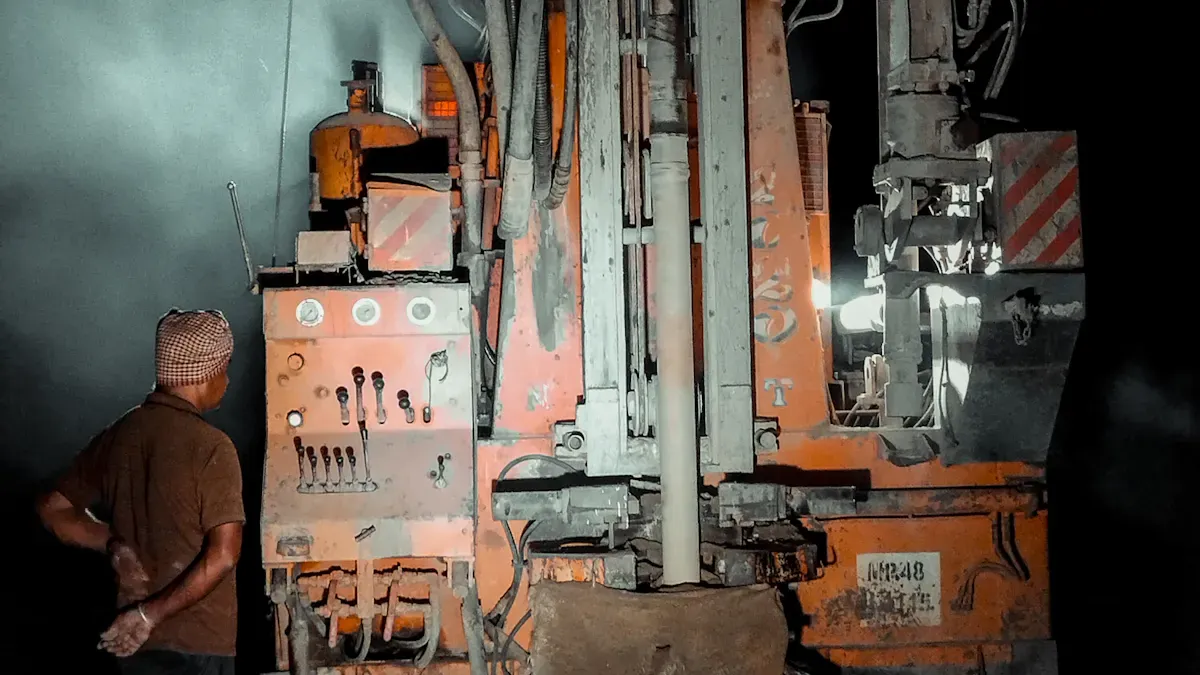
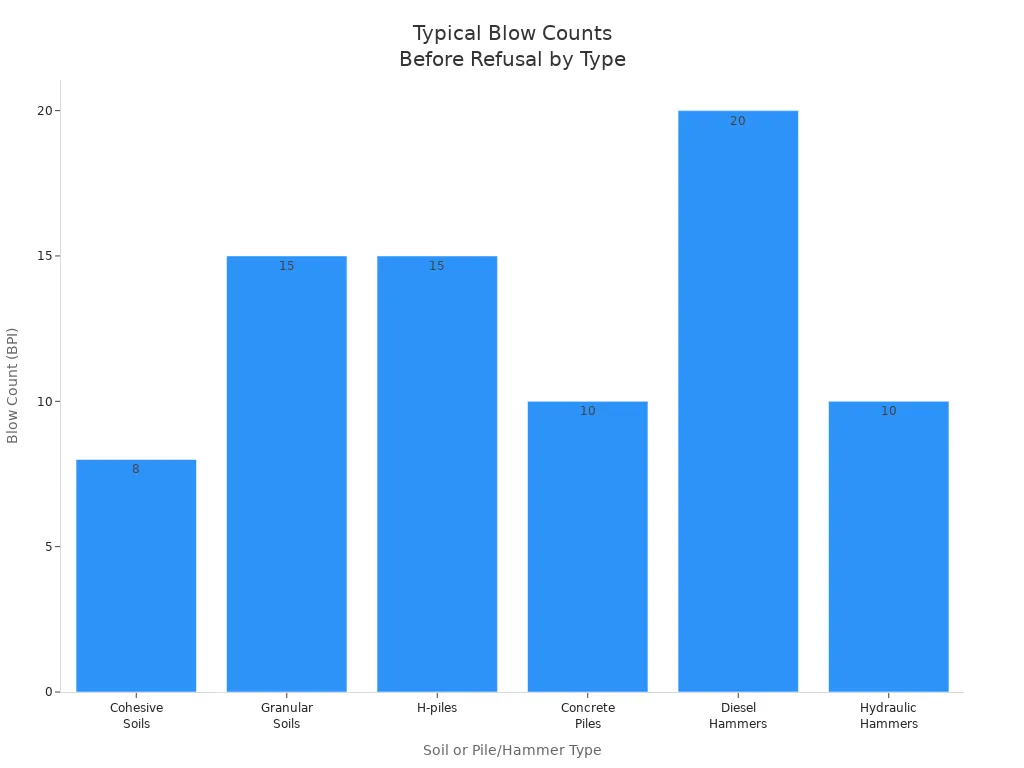
It is important to know what refusal means when driving piles. Refusal happens if the pile stops moving, even though you keep hitting it with the hammer. You check resistance by counting how many times you hit the pile to move it a set distance. If the pile barely moves after lots of hits, you have reached refusal. This tells you the pile cannot go deeper without getting damaged.
Here is a table that shows common resistance values before refusal for different soils and pile or hammer types:
|
Soil Type |
Blow Count (BPI) |
Notes |
|---|---|---|
|
Cohesive Soils |
6-8 |
Shaft friction is most important; too many hits can change the soil. |
|
Granular Soils |
Up to 15 |
End-bearing resistance gets higher as the soil packs tighter. |
|
H-piles |
Up to 15 |
These piles are strong and can take more hits. |
|
Concrete Piles |
Up to 10 |
More hits can crack them; watch closely. |
|
Diesel Hammers |
20 |
They have high force and work well in dense soils. |
|
Hydraulic Hammers |
8-10 |
They give steady energy and have lower hit limits to avoid overload. |
Practical Refusal And Its Significance
Practical refusal means the pile still moves a little, but you need lots of hits to make it happen. You must spot practical refusal to keep the pile and foundation safe. If you keep hitting after this point, you might break the pile or damage your tools.
When you reach practical refusal, you know the pile sits on a strong layer. You also know the pile can hold the weight it was designed for. Stopping at practical refusal keeps you from hitting too much and protects your foundation.
-
Shows that a pile is on a strong bearing layer.
-
Means the pile can likely hold the design load.
-
Stops over-driving, which can hurt piles or tools.
Driven Piles 1600kN Force Prevents Refusal by helping you reach the right depth without hurting the pile. You get a strong foundation and avoid expensive repairs. You also follow safety rules and make your project better.
1600kN Force In Pile Installation
Why 1600kN Is Chosen
You need to pick the right force for pile installation. Engineers use 1600kN because tests show it works well in many soil types. Static tests found that when you apply 1600kN, the pile moves about 8.5 to 9.5 millimeters. This movement is safe and does not damage the pile. The force is strong enough to push piles through tough soil but not so strong that it causes cracks or bends.
You can see how engineers decide on this force by looking at important installation data:
|
Evidence Description |
Relevance to 1600kN Force |
|---|---|
|
Installation data such as torque progression, embedment depth, and alignment |
These parameters are critical for achieving the intended load capacity, which includes the 1600kN force. |
|
TorcSill acts as an engineering partner during installation |
This partnership ensures that the installation aligns with the structural demands, including the 1600kN force. |
|
Load paths, helix configurations, and target torque criteria are defined |
These are tailored based on site-specific data, ensuring the design can support the 1600kN force. |
|
Controlled procedures and real-time monitoring during installation |
This approach helps in achieving the necessary conditions to support the 1600kN force effectively. |
|
Proper planning and monitoring provide confidence in achieving intended capacity |
This includes ensuring that the piles can handle the 1600kN force over the long term. |
You follow these steps to make sure the pile can hold the weight of the building or bridge. Driven Piles 1600kN Force Prevents Refusal by giving you a safe and reliable way to install piles.
Overcoming Soil Resistance
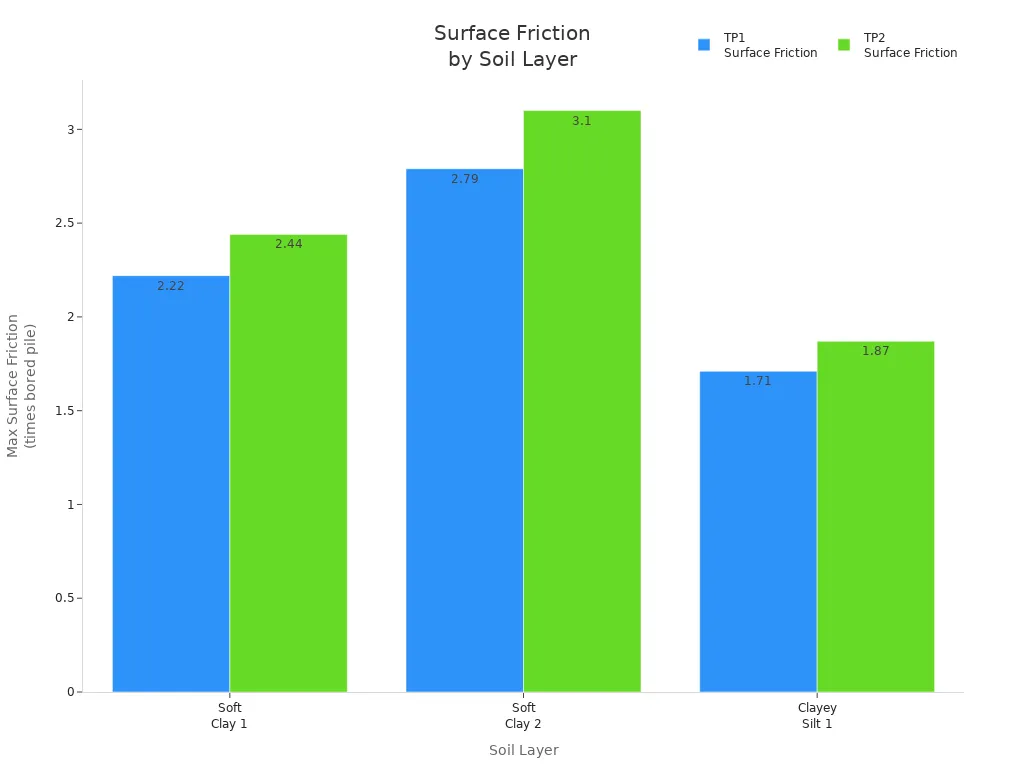
You face many types of soil when you drive piles. Each layer pushes back with its own resistance. The 1600kN force helps you push through these layers without getting stuck. Here is a table that shows how different soils resist the pile:
|
Soil Layer |
TP1 Maximum Surface Friction (times bored pile) |
TP2 Maximum Surface Friction (times bored pile) |
|---|---|---|
|
Soft Clay 1 |
2.22 |
2.44 |
|
Soft Clay 2 |
2.79 |
3.10 |
|
Clayey Silt 1 |
1.29 - 2.13 |
1.42 - 2.31 |
|
Silt |
N/A |
N/A |
|
Soft Clay 2 |
N/A |
N/A |
|
Silty Clay |
N/A |
N/A |
|
Clayey Silt 2 |
N/A |
N/A |
You can see that soft clays and silts have high friction. The 1600kN force helps you overcome this friction and keeps the pile moving. When you use this force, the pile moves smoothly, and you avoid refusal. The pile does not get stuck, and you do not need to hit it too many times.
When you use 1600kN, you also keep the pile behavior steady. The pile stays straight, and the force spreads out evenly. If you use more force, the pile can bend or break. If you use less, the pile might not go deep enough. Driven Piles 1600kN Force Prevents Refusal by giving you the right balance.
Preventing Refusal Mechanism
You want to avoid refusal because it can damage the pile or your equipment. When you use 1600kN, you keep the pile moving at a safe rate. Studies show that at this force, the pile acts in a straight line, and the soil around it stays strong. If you push harder, the soil can lose strength, and the pile can slip or bend.
Tip: Always monitor the force and the pile movement during installation. This helps you stop before you reach refusal.
You can see how the pile behaves at different forces in this chart:
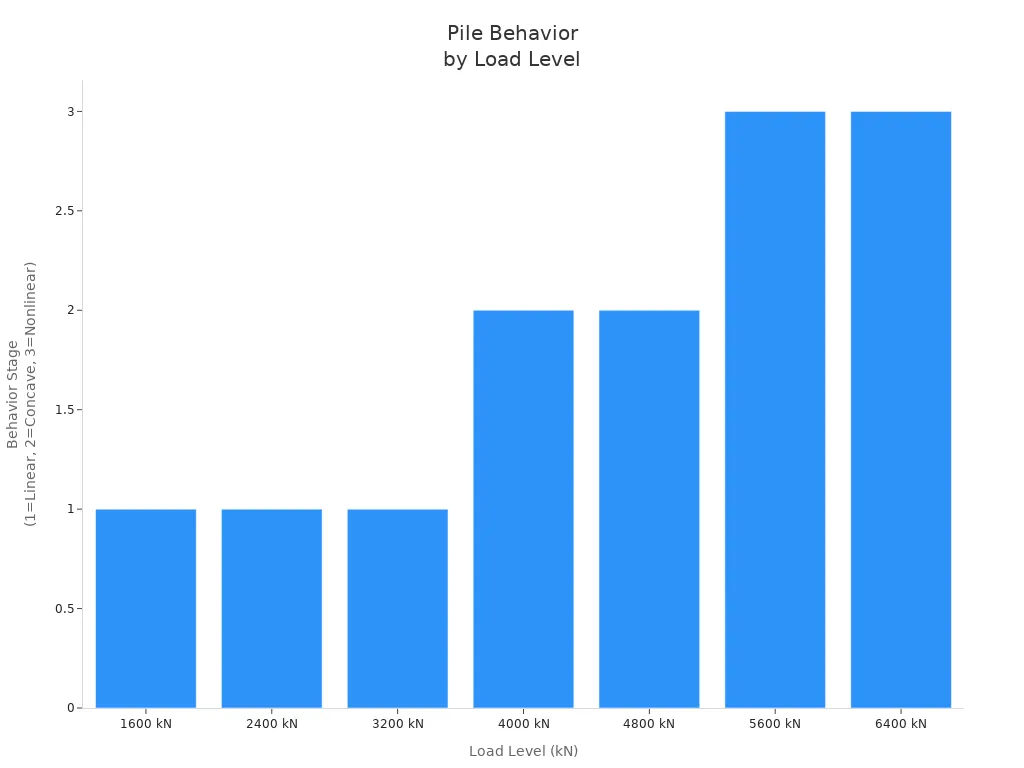
At 1600kN, the pile stays strong and straight. As you increase the force, the pile starts to bend, and the soil gets weaker. You want to stay at or below 1600kN to keep everything safe.
You also need to watch the pile as you drive it. Monitoring helps you see when the pile slows down or stops. You can adjust the force or stop driving to avoid damage. Here are some things you should do:
-
Check the energy transfer and how fast the pile moves.
-
Watch for changes in soil layers.
-
Make real-time adjustments to keep the pile safe.
-
Use proper equipment and follow safety rules.
When you follow these steps, you make sure Driven Piles 1600kN Force Prevents Refusal. You get a strong foundation, save time, and avoid costly repairs. You also protect your workers and your tools.
Driven Piles 1600kN Force Prevents Refusal by helping you keep piles straight and strong. You protect your project when you use the right force and monitor each step.
|
Factor |
How It Helps Your Project |
|---|---|
|
Keeps piles safe and aligned |
|
|
Impact Energy Management |
Stops pile toe damage |
-
Check soil type before driving.
-
Pick the best installation method.
-
Study the ground for hidden risks.
FAQ
What does "refusal" mean in pile driving?
You reach refusal when the pile stops moving, even after you hit it many times. This means the pile cannot go deeper safely.
Why do you use a 1600kN force for driven piles?
You use 1600kN because it pushes piles through tough soils without causing damage. This force helps you avoid refusal and keeps your foundation strong.
How do you know if you should stop driving a pile?
You should stop when the pile moves very little after many hits. Always monitor movement and force to protect the pile and equipment.


