
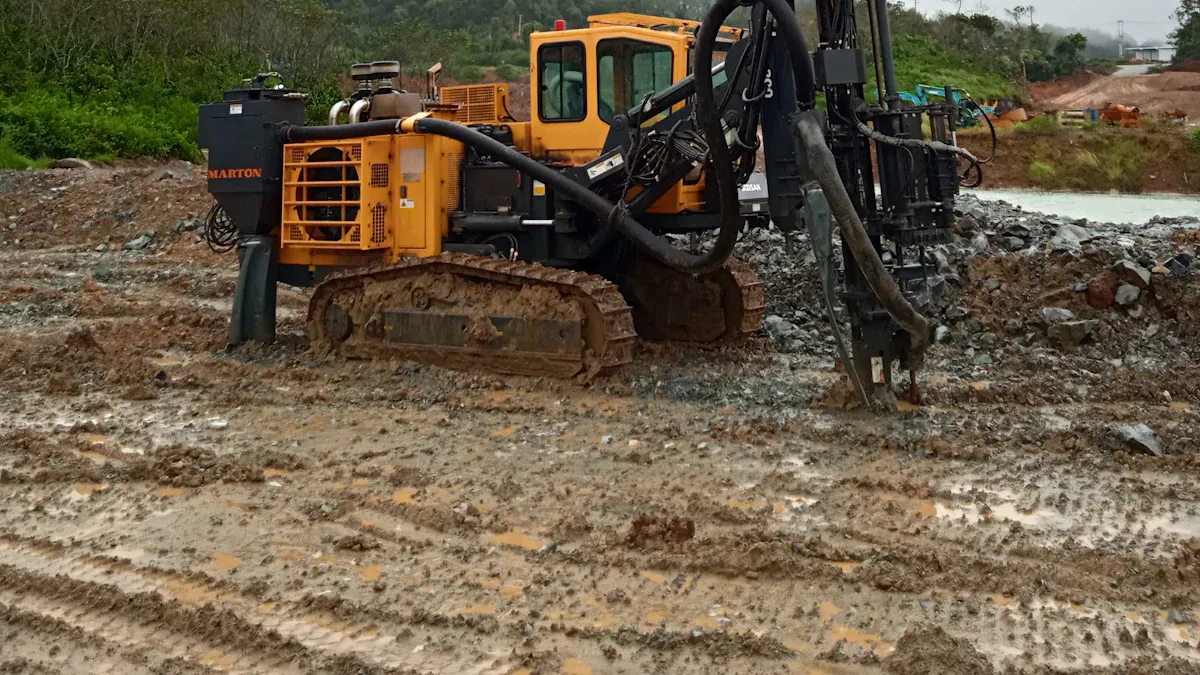
Stability is paramount in horizontal directional drilling. Inclement weather poses significant challenges to these projects. The HDD Drilling Machine Anchor System Beats Weather by ensuring safety and operational continuity for the directional drilling machine. Cold temperatures affect fluid properties, necessitating robust anchors for consistent directional drilling. This article highlights CEGC's resilient design and components, which optimize directional drilling performance regardless of weather conditions.
Key Takeaways
-
CEGC's anchor system uses strong materials and smart design. This helps it work well in bad weather.
-
The system uses special anchors and coatings. These stop rust and keep the drilling machine steady.
-
Sensors watch the anchor system as it works. This helps keep the drilling safe and exact.
How the HDD Drilling Machine Anchor System Beats Weather: Core Design
Weather Challenges for Directional Drilling Rigs
Operating a horizontal directional drilling rig has many challenges. Weather is a big one. Extreme weather makes drilling hard. It affects how the machine works. It also affects how stable it stays. For example, cold temperatures thicken hydraulic fluid. This slows the machine. Hot temperatures overheat the engine. High winds push the rig. This makes it less stable. Heavy rain causes problems. It affects machine performance. It also affects stability. These conditions slow down directional drilling projects. They can even stop work. A strong anchor system is vital. It ensures continuous directional drilling.
Material Selection for Extreme Durability
CEGC's hdd drilling machine anchor system beats weather. It uses strong materials. These materials are very durable. They handle tough environmental challenges. Moisture causes rust. It also weakens material bonds. High heat weakens chemical bonds. This causes parts to slip. Repeated stress creates tiny cracks. Hard impacts cause parts to slip. They can also detach.
CEGC uses special materials. Fiber Reinforced Polymer (FRP) is strong. It resists corrosion well. This suits harsh places. Durability is key for long-lasting work. FRP and bonding materials must stay strong. They must endure tough conditions.
Corrosion resistance is important. Materials must keep strength. They must resist rust. Stainless steel types 303/304 work well. Type 316 is for tougher jobs. It resists corrosion better.
CEGC uses advanced coatings. Rust Grip® is one. It is metallic polyurethane. It passed long salt fog tests. No rust showed after 15,000 hours. This is like 30 years. Rust Grip® protects from UV rays. It protects from moisture. It stops water from entering. This prevents corrosion. This coating handles acids. It handles salts. It handles strong chemicals. It works submerged in nitric acid. Rust Grip® gets deep into material. It blocks air and moisture. This stops rust. It lasts over 20 years. It needs no recoat in tough environmental settings. This coating was rated number one. Experts studied drill pipes for eight years. It saved money. It stopped corrosion. This shows its success. It works in directional drilling. It works in underground construction.
Load Distribution and Redundancy in Anchor Design
CEGC's anchor system design is smart. It spreads weight evenly. This is load distribution. It makes the system stable. Redundancy means backups. If one part fails, another takes over. This adds safety. This design helps maintain precision. It helps during directional drilling. It ensures wellbore stability. This is important for successful projects. Especially in tough places. Like water crossings. Or environmentally sensitive areas.
CEGC's anchor systems meet standards. They can be customized. This flexibility helps them. They handle different ground types. They handle different conditions. This keeps the horizontal directional drilling rig firm. Even when drilling for oil and gas pipelines. Or other underground construction projects. This advanced drilling technology ensures safety. It ensures efficient directional drilling. It helps complete complex construction jobs. This robust drilling technology is key. It is part of successful directional drilling.
Advanced Parts and Methods for All-Weather Stability
CEGC's horizontal directional drilling rig uses new parts. It also uses smart ways to put them in. These things make the machine strong. It can handle all kinds of weather. This keeps the directional drilling project steady. Special parts work in very cold places. They meet tough cold-weather rules.
Special Anchors and Ground Use
Picking the right anchor is key. It depends on the dirt and the job. CEGC uses different anchors. Each one works best in certain spots.
-
Screw anchors are like big screws. They have a steel rod with blades. They twist into the ground. They work well in soft dirt. They do not need holes drilled first. This means less dirt is moved. Their grip comes from twisting. You can make them stronger. Just make the blades bigger. Or add more blades. The dirt type matters. Its condition matters. How deep the anchor goes matters. These all affect strength.
-
Expanding plate anchors need a hole first. Workers put the anchor in the hole. Then, they push plates out. These plates go into untouched dirt. This makes the anchor hold tight. A problem is needing a strong drill. It is also hard to know. Are the plates fully open?
-
Deadman plate anchors are good for hard ground. They are also good for rocky ground. They spread the weight. This makes them very steady. It also makes them hold more. Deadman anchors often stop sideways movement. This is common in walls. It is also common in pipe jobs.
Here is a quick look at anchor types:
|
Anchor Type |
Best Use |
|---|---|
|
Deadman Anchors |
Stops sideways push in walls. Or in pipe setups. |
|
Helical Anchors |
For weak or changing dirt. When you need to install fast. |
When picking an anchor, many things matter:
-
Dirt conditions
-
How much weight it needs to hold
-
How it is put in
-
Project details
To make an anchor hold even better, you can:
-
Make the anchor bigger.
-
Bury the anchor deeper.
-
Make the dirt stronger. Make it denser.
These special anchors help the hdd drilling machine anchor system beats weather. They give a strong base. This is for directional drilling. This is true even in tough environmental spots.
Moving Tension and Live Checking
CEGC's drilling technology checks things smartly. This system watches the anchor. It checks it as it works. This helps keep the horizontal directional drilling rig steady. It also makes sure it is exact. This is during directional drilling.
The system uses special sensors.
-
Two magnetic sensors find changes.
-
A wire coil helps with checks.
-
A small computer is the main brain.
-
Software handles all the info.
These tools watch many key things. They help stop problems. This is during directional drilling.
-
Twisting force
-
Pushing force
-
Side-to-side shake
-
Up-and-down shake
-
Forward-and-back shake
-
Speed of movement
This constant checking helps change the anchor system. It keeps the directional drilling work safe. It also keeps it working well. This is extra important for hard underground construction jobs. These include crossing water. Or making oil and gas pipelines.
How to Install for More Strength
Good installation makes the anchor system stronger. CEGC follows strict rules. This is for exact installation. This makes sure anchors work right. For very cold places, special steps are taken. Parts are picked that handle low cold. These are called arctic-grade. They stop parts from breaking. They stop them from failing in extreme cold.
Workers make sure anchors are put in right. They check the dirt carefully. They use the right tools. This is for each anchor type. This careful work stops problems later. It helps the directional drilling machine stay firm. This is key for long construction jobs. It also keeps the environmental area safe. This strong drilling technology makes underground construction successful.
CEGC's directional drilling anchor systems keep things safe. Good design is important. Strong materials are important. These materials work in cold. They resist bad weather. Special parts are important too. Careful setup makes directional drilling safe. This strong drilling technology helps projects. It makes them work well. It stops delays. It gets more work done. Even in bad weather, the hdd drilling machine anchor system beats weather. This makes the horizontal directional drilling rig reliable. It is good for building. It is good for underground construction. It keeps the environmental area safe. This is during directional drilling.
FAQ
How does CEGC's anchor system handle cold weather?
CEGC's anchor system uses special materials. They are arctic-grade. These materials stop parts from breaking. This happens in very cold weather. This keeps drilling going. This technology works well. It works in tough conditions.
Why is load distribution important for directional drilling rigs?
Load distribution spreads weight. It spreads it evenly. This makes the rig stable. It helps keep things exact. This is during drilling. This is key for projects. It helps them succeed.
What makes CEGC's anchor system durable against corrosion?
CEGC uses special materials. One is FRP. They also use special coatings. Rust Grip® is one. These protect against rust. They protect from harsh elements. This makes equipment last long.
How does real-time monitoring help anchor stability?
Real-time monitoring uses sensors. It watches the anchor system. It watches it while it works. This keeps the rig steady. It keeps it exact. This technology stops problems. It stops them during construction.


