
Choosing the correct HDD drilling machine bits is crucial for the success of your project. Low resistance in the drilling machine ensures that bits last longer, which also means less downtime for the equipment. How do you select the optimal bit? Given the variety of ground conditions, this choice significantly impacts drilling efficiency. You should consider a directional drilling bit, as it is ideal for horizontal drilling. CEGC can assist you in selecting the best bit for the HDD drilling machine low resistance beats wear in the HDD industry.
Key Takeaways
-
Choose the right drill bit for your ground conditions. Different soils and rocks need specific bits to drill well.
-
Use advanced materials and designs for your drill bits. This makes them last longer and work better.
-
Follow good drilling practices and maintain your equipment. This helps prevent wear and keeps your project on track.
Ground Conditions: Impact on HDD Bit Selection
Understanding the ground you drill through is the first step in choosing the right bit for your hdd project. Different soil and rock types demand specific bits to ensure efficient drilling and prevent premature wear.
Identifying Soil and Rock Types
You must identify the soil and rock types along your bore path. Sand, for example, is very abrasive. It can be harsh on your tooling. When you drill only in sand, a drill bit with a broad front profile helps with steerability. High sand content can also cause the borehole to collapse. You might need special drilling fluid additives to keep the hole stable. Larger sand particles increase drilling fluid thickness. Smaller particles create more shear forces.
For low to medium hardness rock, your bit choice changes. Look at the rock's compressive strength.
|
Compressive Strength (PSI) |
Hardness Range Soil & Rock Types |
Recommended Bit Types |
|---|---|---|
|
0 to 2,500 (Low) |
Dirt, Clay, Cobble, Talc, Shale, Siltstone |
Low Drag or Blade Type (duckbill, spade, etc.) |
|
2,500 to 7,000 |
Unconsolidated Sandstone, Shale, Limestone |
Point Attack, Shear Type (PDC), Milled Tooth & Aggressive TCI Roller Cone |
|
7,000 to 15,000 |
Consolidated Sandstone, Shale, Limestone |
Shear Type (PDC), Aggressive to Medium Formation TCI Roller Cone |
Chisel rock drill bits work well for light rock drills and low hardness rocks.
Assessing Abrasiveness and Compressive Strength
You need to know how abrasive the ground is and how strong the rock is. Abrasiveness tells you how much the rock will wear down your bit. Engineers can measure this by looking at how much energy a bit uses to cut rock. They also use a ratio that compares bit wear to the volume of rock cut. This helps them grade rock abrasiveness.
Compressive strength tells you how much pressure the rock can handle before breaking. This strength helps you pick the right drill bit type.
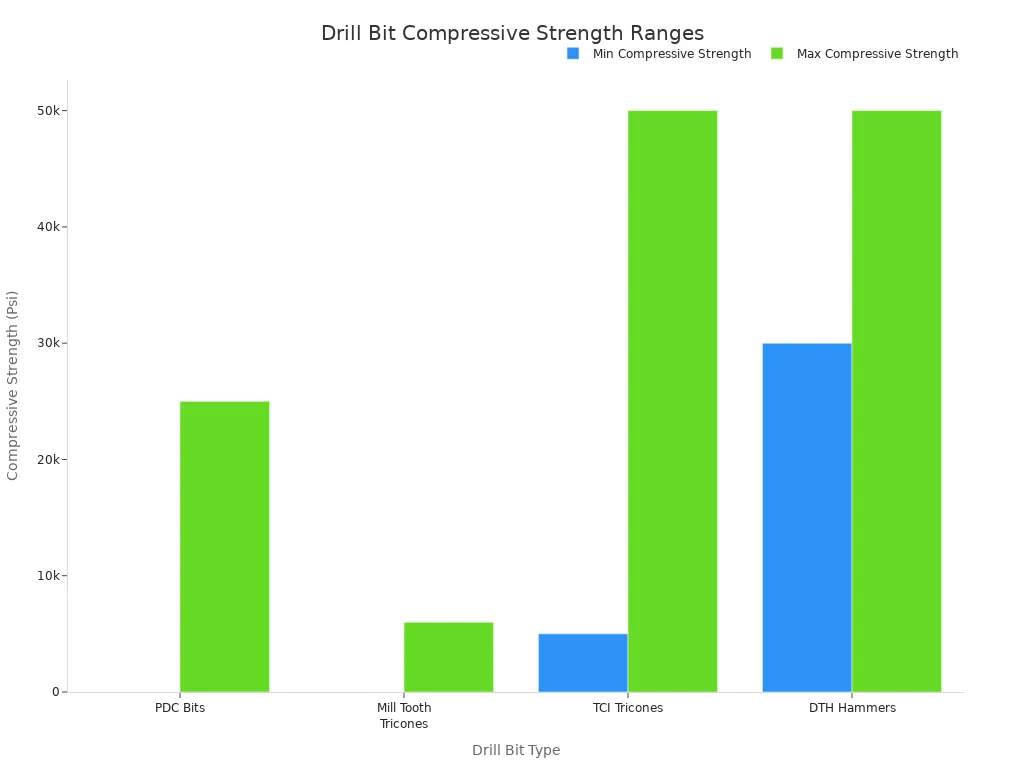
Understanding rock strength helps you choose the best drilling tools and methods. This makes drilling safer and more efficient.
The Role of Geotechnical Reports
A good geotechnical report is very important. It helps you understand what is under the ground. This report should show you the soil types along the bore route. It will point out rock, gravel, loose soil, and hardpan. It also tells you about soil strength, stability, and groundwater. With this information, you can choose the correct drill bit or cutter head for your horizontal directional drilling project.
Key Bit Design Features for Low Resistance
Material Composition and Hardness
The materials in your bit affect how well it works. They also change how much resistance it creates. You need materials that can handle extreme heat. They must also resist wear. For example, Cobalt drill bits are great for drilling hard metals. Cobalt is mixed throughout the bit. This makes it very heat resistant. It also makes it very hard. These bits stay hard even when hot. This is important when you drill tough materials. They last a long time. You can sharpen them to make them last longer. But Cobalt bits can cost more. They can also break easily. So, you must be careful with them.
You can also find carbide-tipped drill bits. These bits are very sharp. They work very well. For less friction, Titanium-coated bits are a good choice. Titanium Nitride (TiN) coatings make the surface very slippery. This lowers friction. It also reduces heat buildup. This coating also makes the surface harder. It resists wear. Titanium Carbonitride (TiCN) is even harder than TiN. It increases wear resistance. This is for tougher conditions. Titanium Aluminum Nitride (TiAlN) forms a protective layer. It does this at high temperatures. This allows for faster speeds. These coatings make tools last longer. But remember, sharpening removes the coating.
Cutting Structure and Configuration
How a bit cuts the ground affects resistance. A good cutting structure removes loose material well. This helps you steer the hdd machine better. It also makes a clearer path.
Think about the gauge length of your bit. A longer gauge makes it more stable. This lowers drilling resistance. But for directional drilling that needs sharp turns, a shorter gauge is better. It responds more quickly. The bit's profile also matters. A deeper profile helps stabilize the bit. This is for vertical drilling. For directional drilling, the profile must allow for big angle changes.
The number of blades on your bit is also key. More blades can help you control the tool better. They reduce uneven torque. But for faster drilling, fewer blades are better. This gives more space for cuttings to escape. Good hydraulic performance is also important. Nozzles on the drill bit create hydraulic energy. This cleans the bottom of the hole. It also removes cuttings. If cleaning is poor, you re-grind cuttings. This lowers efficiency. The space for cuttings to escape is also important. It is called the junk slot area. Steel-bodied bits often have larger junk slot areas. This helps remove cuttings.
New technologies make cutting even better. Ulterra's SplitBlade™ technology splits blades. It creates special paths for cuttings. This ensures quick removal. It also improves tool control. It does this by increasing contact points. Varel International Energy Services' HYDRA™ design uses curved nozzles. These direct fluid to the cutter surface. This improves cleaning and cooling. Halliburton’s Stega™ cutter layout places backup cutters well. This lets backup cutters do more work. It makes cutting very efficient. It also reduces vibration.
Fluid Management and Flushing Ports
Good fluid management is key. It lowers resistance. It also makes sure the bore is clean. The design of flushing ports matters. The hydraulic system on your bits affects performance. Enough fluid flow and pressure are vital. They stop cuttings from building up. This prevents resistance.
Different types of PDC bits have special designs. High-Performance PDC Bits have good junk slot areas. They also have good hydraulic designs. These designs ensure fast drilling. They also make the bit last longer. They help by moving drilling fluid well. This cleans the cutters. It also cleans the bottom of the hole. This stops bit balling. This is when sticky formations cling to the bit. It ensures continuous, low resistance drilling.
Steering Capabilities and Bit Profile
Your bit's profile is vital. Its ability to steer is also vital. This helps keep the bore path accurate. It also reduces drag. Rotary Steerable Systems (RSS) let you drill and steer at the same time. Unlike old ways, RSS lets you drill continuously. You can steer while drilling. This makes it more efficient. It helps you reach tough areas. These systems use computer controls. They are above the hdd bit. They apply horizontal force. Or they bend the drill string. This gives you precise control.
Precise thrust control is also key. You need to keep the most weight on the bit. Do this without frequent stops. This is especially true in unpredictable rock. Technologies like ultra-slow speed control let you drill closer to the limits. You can do this without stopping. This happens by adjusting speed and power. It keeps a constant weight on the drill bit. This better control leads to better steering. It also helps navigation in uneven rock.
The 94Mm Four Wing Arc Angle Drill Bit is a good example. Its arc angle design reduces unwanted side movement. It lessens side cutting. It keeps the wellbore on its path. The four-wing setup works with the arc radius. It gives great stability. This design also spreads force evenly. It does this across the bit face. This leads to more even wear. It also leads to better performance. This improves directional control. It also reduces deviations. The 94mm arc radius also helps steerability. It allows for quick steering in complex ground.
Maximizing Bit Wear Life with Advanced Technologies
You want your hdd drilling tools to last. New technologies help your drill bit last longer. This means you replace them less often. You also spend more time drilling.
Carbide Inserts and Diamond Protection
You can make your bit last much longer. Use special materials. For example, A-Force bits use special carbide inserts. These inserts are for tough drilling. They work better and last longer.
Diamond inserts (DEI) have also gotten better.
-
First, DEI protected the bit from rock. They drilled deeper. They lasted three to four times longer. This was compared to Tungsten Carbide Inserts (TCI).
-
Next, DEI and TCI features were combined. They had curved diamond heels. This design lowered overall wear. It made inserts stronger.
-
The third type used rounded heels. These reduced rubbing and wear in tough drilling. But they sometimes broke easily.
Special diamond cutters (TSPD) work well in hot places. They have three layers. This material resists heat and rubbing. Another technology (CTL) also makes PDC bits better. It helps them drill hard rock like granite. This makes the cutters stronger. They resist hits and wear.
PDC bits are good for soft to medium rock. This is rock up to 25,000 psi. They have many good points:
-
They last longer.
-
They steer better.
-
They have no moving parts.
-
They put less stress on the drill rig.
-
They need less twisting force.
-
They cause less shaking on the drill rods.
-
They make clean, even holes.
-
You can fix them.
Diamond bits are best for very hard rock. Diamonds are the hardest material. They are very hard and resist wear well. Diamond bits stay sharp. They handle tough drilling. This means faster drilling. The tools also last longer. They make smooth holes. Impregnated core bits are strong. They last longer. They also steer better in the hardest rock.
You can also find special carbides. These make roller cone insert bits last longer. This is for hard, rough rocks. Cone-shaped inserts resisted wear eight times better. Round designs resisted wear twenty times better. Small diamond grains in PDC cutters resist rubbing more. Bigger grains are tougher against hits.
Hardfacing and Wear Plates
Hardfacing makes your tools stronger. It makes them last longer. They resist wear better. This makes machines last longer. It also costs less to fix them. This same idea works for your hdd bits.
Many tools use hardfacing to last longer:
-
The T-REX reamer uses strong carbide grit. It is on parts that wear a lot.
-
Ace bits have a plug-style tooth. This covers more area with carbide. It makes them last longer.
-
Gladiator bits use big carbide buttons. This stops them from wearing out too soon.
-
The Gladiator Club bit has special big carbide buttons. These resist wear very well. They are great for rough conditions.
-
Fluted reamers have carbide grit put on by robots. This makes them last longer.
Optimized Bit Body Design
A good bit body design helps it last longer. It also makes it work better. You can look for these things:
-
DOC Limiters: These spread the drilling force. They spread it over a bigger bit face. They stop single cutters from working too hard. They also reduce sudden twists. They control how much rock is cut per spin. This makes twisting force steady. They also stop bit shaking. This makes it more stable. Where they are placed and what they are made of is important.
-
Hydraulic Optimization: Change nozzle sizes and places. This makes fluid flow best. It helps remove cuttings. It also helps cool the bit. More fluid flow cleans the hole better. It also cools the bit better. Make sure it does not cause damage. Watch the Hydraulic Horsepower Per Square Inch (HSI). Adjust it to clean the bit-rock area best.
-
Advanced Bit Design Features: Use better PDC cutter materials. Look for shapes that resist wear. Look for shapes that handle heat well. Make the blade shape and cutter placement better. This helps fluid flow. It also helps remove cuttings. Add anti-whirl parts. These stop the bit from spinning wildly. This lets you spin faster. It does this without bad shaking.
-
Drilling Fluid Optimization**: Add oil to reduce rubbing. Keep the fluid properties just right. This helps move cuttings. It also cools the bit. Be strict about controlling solids. This stops rough particles. It stops them from making the bit wear faster.
CEGC's Tooling Compatibility and Durability
CEGC knows tools need to be strong. We offer a "Tooling Compatibility & Durability Package." This package makes sure our tools work with many reamers. These include blade, fluted, rock, and barrel reamers. Our design makes twisting force smoother. This reduces shaking and uneven wear. You also get easy access for service. This means faster fixes.
CEGC uses standard parts. This makes it easy to find replacements. We also offer custom rod sizes. We offer custom tool joint details. You can get strong wear protection. This matches your ground. It also matches your favorite tools. This package helps you get the most from your hard rock bits and pdc drag bits.
Best Practices for HDD Bit Selection and Operation
You must make smart choices for your hdd project. Picking the right bit and using it well are key. Your choices depend on the ground. They also depend on your drilling rig's power. The path you plan matters too.
Matching Bit Size to Bore Diameter
Always match your bit size to the hole size. This makes drilling work well. It stops extra wear. Auger drill bits are often best for soft soil and sand. They dig well. They also shake less.
Optimizing Drilling Parameters
You need to change your drilling settings. This means rotation speed and push. Find the right mix for the ground. This helps your bits last. They will also work better.
Proper Maintenance and Inspection
Regular checks keep your hdd drill bits in good shape.
-
Check daily before you start. Look for leaks. Check fluid levels. Look at hoses and belts for damage. Check tracks and the bottom parts.
-
Take care of your fluid system. Keep mixers, pumps, and filters clean. Mix fluid right for the soil. Watch how thick the fluid is. Watch the fluid coming back.
-
Be careful with pipes and tools. Follow the bend limits. Turn pipes to spread wear. Use the right thread grease. Clean connections well.
-
You should also look at them closely. Look for chips. Look for dull cutting edges. Look for cracks or color changes. Listen for more noise. Feel for more resistance when drilling. These are early signs of wear.
The Role of the Horizontal Directional Drilling Rig
Your horizontal drilling rig's power is very important. It directly affects your bit choice. A drill string that is too big or heavy can hurt rig parts. This makes them wear out fast. A drill string that is too light might not send power well. This makes the work slow. You must match the drill string and bit to your rig's power. This makes your hdd project work best. Think about sealed, friction bearing, roller cone bits for fluid jobs. Open bearing roller cone bits are for other special uses.
Troubleshooting Bit Wear and Resistance: Low Resistance Beats Wear
You will face challenges during hdd projects. Knowing how to fix common issues helps you keep your hdd drilling machine low resistance beats wear. This means your equipment lasts longer.
Diagnosing Premature Wear Patterns
Sometimes your bit wears out too fast. You might also find it hard to keep the bore path straight. If this happens, you should consider aggressive triangular bits. The Gladiator Saber is a good choice for these tough conditions. It helps you cut through difficult ground more effectively.
Addressing High Torque and Drag
High torque and drag can slow you down. They also cause extra wear on your bits. You can use specialized coatings on drillpipe parts. These coatings, like diamond-like carbon, make friction much lower. Using fixed cutter PDC bits also helps. They offer better control and stability. This reduces torque and drag, especially in deep bores. You can also use real-time monitoring systems. These systems track torque and drag. They give you instant feedback. This helps you adjust drilling settings. Rotary Steerable Systems (RSS) also help. They let you drill and steer at the same time. This spreads torque evenly. It also reduces stick-slip. This leads to smoother drilling.
Preventing Stuck Pipe with Anti-Stall Powertrain
A stuck pipe costs you time and money. CEGC offers an "Anti-Stall Powertrain & Overload Protection" solution. This system gives you high torque. It works across a wide RPM range. It uses hydraulic load sensing. It also manages pressure. This system controls how power ramps up and down. This reduces shock loads on your rods and tooling. This helps prevent pipes from getting stuck.
Improving Fluid Performance and Reducing Frac-Out Risk
Poor fluid performance can cause problems. It can lead to frac-outs. You need close teamwork between your drilling fluids engineer and your drilling team. This helps you get the best cuttings removal. It also helps with fluid reconditioning. A good solids control system is also key. It separates drill cuttings from the fluid. This lowers solids content. It also extends fluid life. CEGC’s "Mud Integration & Fluid Management Solution" helps here. It guides you on pump sizing. It also helps with circulation paths. It ensures good mud program discipline. This helps you manage fluid properties. This reduces frac-out risks. CEGC’s "Precision Guidance & Stability System" also helps. It ensures a stable drilling path. This indirectly reduces bit wear.
You now know how choosing the right hdd drill bits helps your hdd drilling machine low resistance beats wear. Think about the ground. Think about the bit design. Think about how you drill. This helps you drill well. This smart way saves time. It also saves money in horizontal drilling. Keep up with new bits. Learn about the directional drilling bit. This will help you stay ahead in the hdd industry. 🚀
FAQ
What is the best bit for sandy soil?
For sandy soil, you should use an auger drill bit. It provides effective penetration and reduces vibration. A bit with a broad front profile also helps with steering. 🏖️
How do I know if my bit is wearing out too fast?
You will notice rapid bit wear if you encounter difficulty maintaining the bore path. Look for chips, dull cutting edges, or cracks on the bit. Increased noise or resistance during drilling also signals wear.
Can I use one bit for all ground conditions?
No, you cannot use one bit for all ground conditions. Different ground types require specific bit designs. Matching the bit to the ground ensures efficiency and prevents premature wear. 🛠️


