
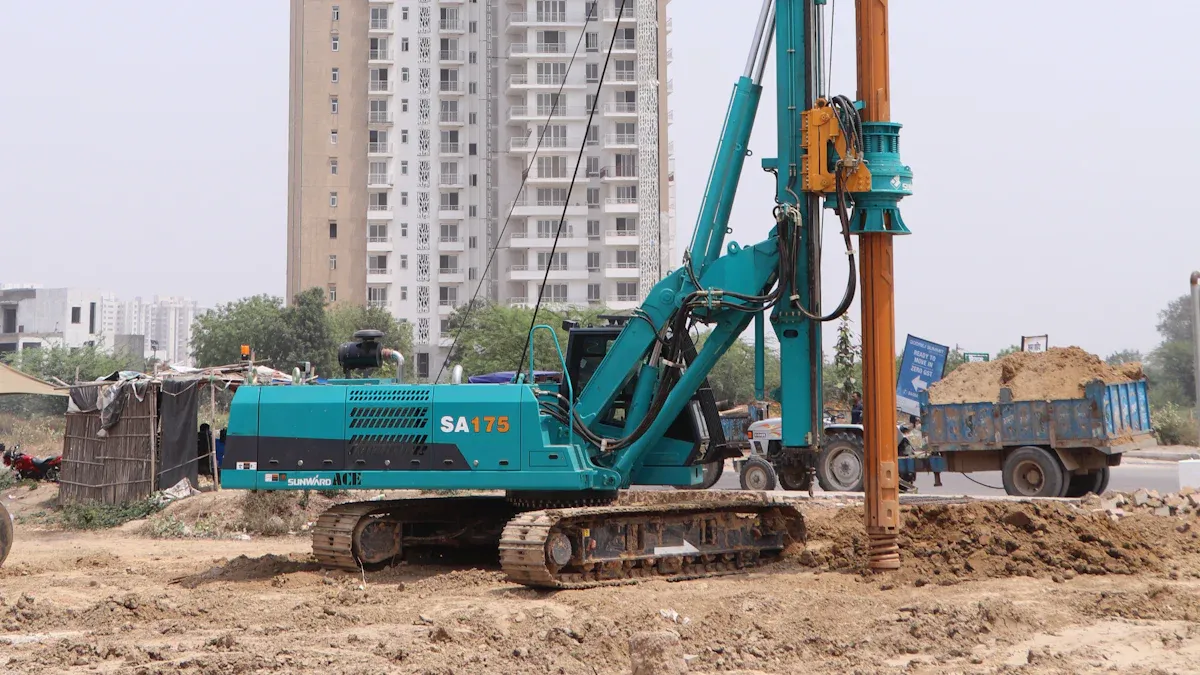
Horizontal directional drilling projects are getting harder due to increasingly tough ground conditions. The HDD Equipment Max Flow System Handles Tough Ground, offering a key, combined approach to tackle these challenges. This new CEGC technology enhances operational efficiency and prevents costly delays, ensuring your HDD success. Selecting the right horizontal directional drilling machine, along with appropriate drilling heads and effective fluid plans, is crucial for navigating tough HDD ground.
Key Takeaways
-
Use the right tools for tough ground. Match your drilling machine, drill heads, and fluids to the soil. This helps you drill better and faster.
-
Check the ground before you start. Knowing the soil helps you pick the best equipment. This stops problems and keeps your project on track.
-
Manage your drilling fluids well. Good fluids keep the hole steady and clean. They also stop leaks, making your drilling smooth and safe.
Assessing Tough Ground for HDD Success
Geotechnical Surveys and Subsurface Analysis
Every good HDD project starts with checking the ground. Geotechnical tests confirm soil conditions. You check the soil's type. You also check its density and how stable it is. These results help pick drilling methods. They also help choose equipment and fluids. This makes sure the bore path is steady. It also makes sure work runs well. New methods like Ground Penetrating Radar (GPR) help. Electromagnetic Induction (EMI) also gives detailed ground analysis. You can also use Electrical Resistivity. Seismic methods are also useful. These tools show what is under the ground.
Identifying Challenging Soil and Rock Formations
You will find many challenging soil conditions. Loose, sandy, and soft soils are not steady. They can make boreholes fall apart. They can also cause fluid loss. Hard rock or rough rock wears tools fast. Porous limestone bedrock also causes problems. It is hard and dense. It wears down equipment. It can also have holes. This makes it unsteady. Underground karst formations create hidden caves. These are hard to find. They are also dangerous. Signs of hard rock include slow drilling. This means the rock is harder. Tools wearing out fast also shows tough ground. This means too much pressure. You might also lose tools underground. These are signs of tough ground formations.
Impact of Ground Conditions on Directional Drilling
Different ground conditions really change your project. They change how well and fast you work. Soft soils are easier to drill. But they can be unsteady. Hard rock wears out equipment more. It also makes work slower. This means you need special drill bits. You also need more time. Bad ground, like cobbles and gravels, is very hard. They make it tough to keep the borehole open. They also affect drilling fluid flow. Good planning is important for HDD. You must know the ground conditions. This helps you pick the right tools. If soil changes, you must adjust. You might need to change tools. Or you might change fluid mixes. This stops slow work. It also stops tools from wearing out too soon.
Selecting HDD Equipment: Max Flow System for Tough Ground
Picking the right horizontal directional drilling machine is very important. It is important for any project. When the ground is tough, your tools must work well. The HDD Equipment Max Flow System Handles Tough Ground. It has special features. These features fix common problems. This part helps you choose the best drills. They will fit your specific needs.
Matching Horizontal Directional Drilling Rigs to Project Demands
You must match your horizontal directional drilling machine. Match it to what your project needs. Think about how long the bore is. Think about its width. Also, think about the ground. A small rig works for easy jobs. It works for short jobs. Bigger rigs handle long jobs. They handle hard rock jobs. New small drills are strong. They are strong but not big. This means more power. It comes in a smaller size.
Makers make machines better. They match drill rod power. Engine power stays the same. This saves fuel. Dual rod drills work even better. They work well in different soils. This includes rock. They cut powerfully underground. This power does not need bigger tools.
Here is a look at some rig specifications:
|
Model |
Thrust/Pullback (lbs) |
Rotational Torque (ft-lbs) |
Engine Power (hp) |
Key Features |
|---|---|---|---|---|
|
Vermeer D23x30DR S3 Navigator |
N/A |
3,000 (outer rod), 800 (inner rod) |
Deutz TCD3.6L4 diesel |
Dual rod technology, compact, 7% downhole steerability, 16,500 lbs weight |
|
Vermeer D40x55DR S3 Navigator |
40,000 |
5,500 |
140 (John Deere diesel) |
Dual rod technology, 500’ onboard rod capacity, 115 fpm carriage speed |
|
Toro DD4050 |
40,000 |
5,000 |
N/A |
Restyled guards, dual-sided rack and four-pinion carriage, forward-mounted track drive motors |
|
Toro DD2226 |
22,000 |
2,600 |
N/A |
Dual rear stabilizers, dual-sided rack and four-pinion carriage, forward-mounted track drive motors |
|
Herrenknecht (Maxi/Mega Rigs) |
180,000 - 1,349,000 |
44,250 - 147,500 |
440 - 1,261 |
Diesel-powered energy supply in sound-proof containers, frame, trailer, crawler, and modular rig options, innovative downhole tools |
You can see how thrust/pullback and rotational torque vary across models:
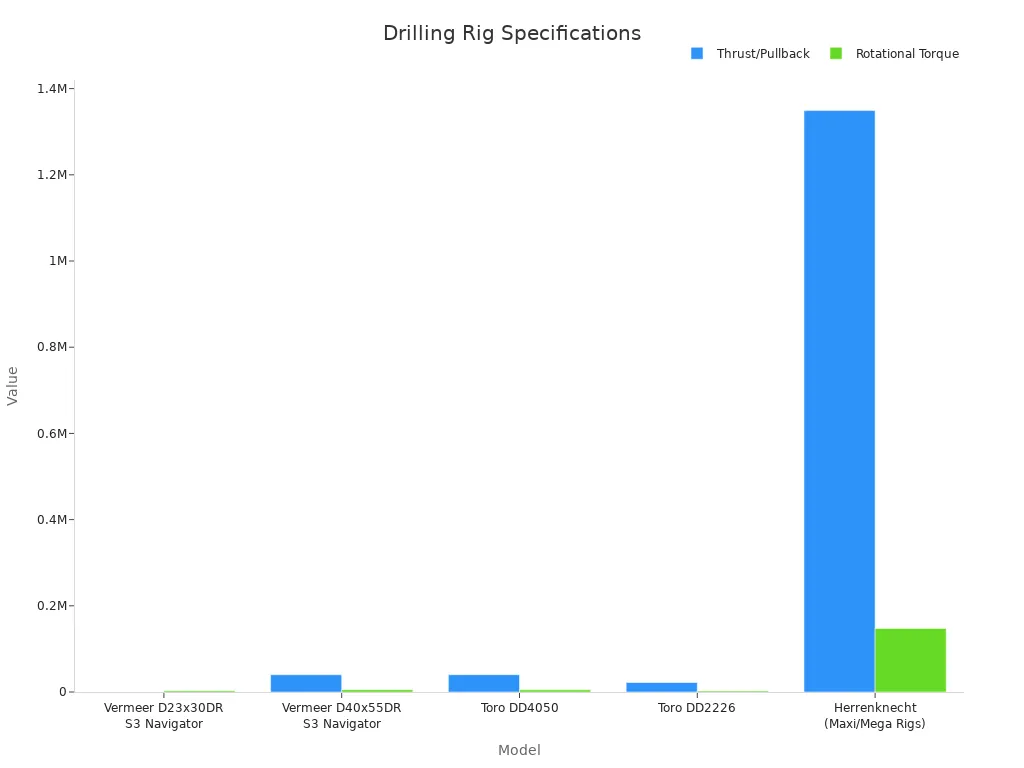
Prime Drilling uses great technology. They make strong drill rigs. These rigs need little fixing. This means they are reliable. They also work best. Herrenknecht rigs are known for power. They are also known for design. They have many choices. These include frame, trailer, crawler, and modular. They also make new tools. Selecting the right drill helps your roi. It also helps your productivity.
Precision Guidance for Bore Stability and Accuracy
Wrong drilling causes more work. It also causes fines. Roads, rails, rivers, and pipes need exact work. Your results often depend on the worker's skill. A good guidance system helps you. It uses matched control. This system controls thrust/pullback. It controls rotation. It also controls feed. A strong frame helps. It keeps the bore straight. This reduces shaking. It also reduces movement. This keeps your bore on target. You can also add tracking. You can add data logging. You can add process control. This keeps your HDD project exact. It helps you avoid big mistakes.
Anti-Stall Powertrains for Uninterrupted Drilling
Stuck pipe costs a lot. It also wastes time. Strong pushes hurt rods. They hurt threads. They hurt tools. Hard ground slows work. An anti-stall system fixes this. It has overload protection. It gives strong power. It has many speeds. Hydraulic sensing is key. It stops sudden overloads. Slow start and stop reduce shock. This protects rods. It protects swivels. It protects tools.
Engine power is key for constant work. It pulls things. It twists things. This is vital for tough ground. Tough ground has many layers. It has stones. This power is needed. Strong power keeps work smooth. It also makes the rig last longer. Torque shows how much the rig can expand holes. It shows the biggest pipe size. Enough torque is needed. It helps make holes bigger. This is needed for big pipes. Horsepower gives the main power. Torque helps with bigger pipes. This is true in tough spots.
|
Drill Type |
Thrust/Pullback Range |
Spindle Torque Range |
|---|---|---|
|
Previous Generation Compact Drills |
5,550 lb to 36,000 lb |
550 ft-lb to 5,000 ft-lb |
|
Today’s Compact Drills |
7,850 lb to 40,000 lb |
900 ft-lb to 5,500 ft-lb |
You can get a "rock package." It cools better. It filters better. It has more torque. It has strong parts. This package is key. It helps you work best. It helps in the toughest spots. It helps your roi. It stops work delays. This system keeps drilling going. It helps productivity. It helps by managing costs.
Drilling Heads for Max Flow in Challenging Formations
Picking the right drilling heads is key. This is true for your horizontal directional drilling machine. It is true when the ground is tough. The HDD Equipment Max Flow System Handles Tough Ground. It gives you the right tools. These tools help with every problem.
Rock Drilling Heads and Air Hammers for Hard Rock
You need special tools. These are for hard rock. Tricone bits break hard rock well. PDC bits are for very hard ground. PDC bits are strong. They have strong cutters. They work well in hot places. Coring bits drill through mixed ground. This includes cobble and gravel. For hard rock, use PDC drag bits. Use them with a mud motor. Tricone bits also work well. Use them with tungsten carbide. Use them with a mud motor. This keeps them turning. It helps them dig in. Chisel tools work best. They are for medium rock. They drill fast. Conical teeth protect your tools. They protect them best in hard rock.
You will find rock sometimes. Air hammers are best then. Down-The-Hole (DTH) hammers use air. They make strong hits. They break rock well. These hammers hit fast. They hit 2,100 to 2,300 times each minute. This makes them dig faster. They make small pieces. These are easy to remove. You can use DTH systems. They fit most drills fast. This saves time and money. DTH hammers need little water. They make less mud to clean. They need little turning power. This helps keep the bore straight.
Specialized Reamers for Abrasive and Mixed Ground
Abrasive and mixed ground needs special reamers. PDC reamers are good for mixed ground. They move water well. They have strong PDC cutters. These reamers work well. They work in different ground types. Rock reamers use tungsten carbide. They also use hard steel teeth. These break up harder ground. Fly Cutter Back Reamers are good. They are for mixed ground. They are for abrasive soil. They have carbide shark teeth. These grind through tough ground. Extra hard parts help. Carbide teeth make them last longer.
Tooling Durability and Compatibility for Reduced Wear
Your tools must be strong. They must handle tough work. Strong parts make them last. This makes your drilling heads last. Your reamers also last longer. You save money. You do not buy new ones often. You also save time. Make sure your tools fit. They must fit your horizontal directional drilling machine. This stops damage. It makes them work well.
CEGC Drill Rig Tooling Interfaces
CEGC makes drill rigs. They have tool connections. These connections are flexible. You can use many drilling heads. You can use many reamers. You can change tools easily. This helps with changing ground. This means you always have the best drills. They are for the job. Our connections work smoothly. They make you work better.
Optimizing Drilling Fluids for Max Flow Performance
Drilling fluids are key. They make HDD projects work. They fix bad fluid flow. They stop frac-out risks. Good fluid care makes work smooth. You need to pick fluids well. You need to manage them. This helps get max flow.
Fluid Properties for Borehole Stability and Cuttings Removal
Pick the right fluid traits. They keep the hole steady. They also remove cuttings. Density is vital. It pushes back on ground pressure. A good range is 8.5 to 12.5 pounds per gallon. You might need more density. This depends on the ground.
Viscosity is how thick a fluid is. It must be thick enough. It carries cuttings out. But it must be thin enough. This stops too much pressure. Normal range is 35 to 100+ seconds per quart. Rheology includes yield point (YP). It also includes plastic viscosity (PV). YP should match the reamer size. This helps suspend things. PV shows solids in the mud. Adjust YP as additives raise PV. This keeps things balanced.
Other fluid traits matter. pH level is one. Hardness is another. Filtration loss helps the hole stay steady. Fluid cake also helps. Gel strength affects how things hang. You need few solids. You need good filter control. The fluid must stop reactive soils.
Fluid choice depends on the ground. Ground is cohesive or non-cohesive. For cohesive soils, use polymers. PHPA is an example. It stops swelling. For non-cohesive soils, use bentonite. It makes a filter cake. Add xanthan gum to suspend things. No fluid works for all. Tailor fluids to the ground. This makes the hole steady. It suspends things well. It uses less thick fluid.
Drilling fluid flow affects cuttings removal. Key flow traits are plastic viscosity (PV). Yield point (YP) is another. Gel strength (GS) and apparent viscosity (AV) also matter. These help move cuttings. More thickness at slow speeds helps suspend cuttings. It stops them from settling. A good yield stress range is key. It makes the cuttings bed thinner. This cleans the hole better. The flow behavior index 'n' shows fluid's give. It changes with speed. Lower 'n' means less thickness at high speeds. This makes pumping easier. It still suspends cuttings at low speeds. Hole cleaning is how well fluid removes cuttings. It works when fluid moves. It works at different angles. We check cuttings bed height. We check cuttings amount. This tells us how well it cleans.
Pressure Management to Prevent Frac-Out
Manage pressure well. This stops frac-out. Frac-out is when fluid leaks. It goes into the ground. This causes problems. Pick the right fluid for the ground. This is very important. Good drilling habits help. Reamer choice helps. Fluid choice helps. Know how much hole volume you have. This lowers risks. Avoid hydrolock. This means losing flow. Balance mud weight. Balance circulating pressures.
Match drilling fluids to ground types. Keep fluid as thin as possible. It must still do its job. This includes gel-strength. It includes fluid-loss control. It controls reactive clays. Make sure gel strength is enough. This suspends cuttings. It moves them. It stops clogs. Pump at good rates. Change pullback speed. Do this based on the ground. For example, use 2-3 times fluid for coarse ground. Use 3-5 times for fine ground. Watch return flow always. Look closely at the exit pit. Adjust back-ream speed. Adjust drilling fluid mix. Pick the right reamers. Use spiral/fluted for coarse ground. Use small surface reamers for clay. They should chop well. Good drilling skill is also key. Pull back and turn the bit. Do this where you steered. This keeps space around the pipe.
Managed-pressure drilling (MPD) controls pressure. It does this precisely. It helps the environment. MPD lowers spills. It lowers blowouts. It needs fewer mud chemicals. It uses simpler drilling fluids. MPD makes drilling better. It cuts wasted time. This is from ground pressure issues. It lowers the drilling carbon footprint. It uses fewer materials. Casing is an example. This happens with better well design.
Integrated Mud Systems for Horizontal Directional Drilling HDD
A good mud system is key for HDD. It manages fluid well. You need several parts for this system.
-
Shale shakers: They handle lots of fluid. They remove big solids.
-
Desanders: They use 10-inch cones. They separate solids. They cut at about 47 microns.
-
Desilters: They use 4-inch cones. They separate fine solids. They cut at about 27 microns.
-
Centrifugal feed pumps: They send slurry. They send it to desander and desilter units.
-
Centrifugal mixing pump with a 6-inch mixing hopper: Use this to make new drilling mud.
-
Mud agitators: They keep mud even.
-
Mud guns: Use these for cleaning. Use them for mixing.
-
Mud tank (11.5 m³): This stores fluid. It processes fluid.
-
Integrated electrical control system: This runs the whole system.
These parts work together. They keep your drilling fluid good. This helps your Max Flow work.
Advanced Strategies for HDD Equipment Max Flow System Handles Tough Ground
Real-Time Monitoring and Control Systems
You need data right away. This data comes from your drill site. It helps you make quick changes. This is for unexpected ground. New HDD rigs have good computers. These systems watch many things. They track torque, location, and pressure. They also track soil conditions. This data helps you drill better. It makes drilling faster. It makes results safer. Walk-over tracking systems use a radio. It is in the drill head. It sends info to a hand unit. You see this data at the drill. This helps you steer better. 'Drill-To' helps you watch the path. This is good in tough spots. This way of working helps projects. It cuts waste. It lowers costs.
Customization for Specific Ground Challenges
You can change your equipment. This is for specific ground. Special drill bits work well. PDC bits are an example. They are for tough ground. Mud motors help change the drill angle. Rotary Steerable Systems (RSS) drill and steer. They do this at the same time. This helps reach hard spots. You can pick different BHA setups. These help with turns. Strong drive chucks are available. Drill pipe and rock tools are too. These choices match equipment to soil. This is key for city jobs.
Proactive Maintenance for Trenchless Drilling Rig Longevity
You should do maintenance early. This helps your rig last. Predictive maintenance uses data. It uses sensors. This finds problems early. It stops unexpected stops. It makes equipment last longer. This helps your roi. AI and machine learning help predictions. This makes drilling better and safer. This plan makes sure your HDD Equipment Max Flow System Handles Tough Ground well.
The HDD Equipment Max Flow System handles tough ground. It uses advanced horizontal directional drilling machine technology. It has precise drilling heads. It also uses smart fluid management. This method makes you more productive. It also improves your ROI. This is important for tough ground projects. CEGC offers strong, custom solutions. This ensures great work. It gives you a strong ROI. It also boosts overall productivity.
FAQ
What is the Max Flow System?
The Max Flow System uses new horizontal directional drilling machine technology. It has exact drilling heads. It also uses smart fluid control. It helps you drill in hard ground.
How do you choose the right HDD equipment for tough ground?
Match your horizontal directional drilling machine to the job. Think about how long and wide the hole is. Also, think about the ground type. Look for anti-stall power. Look for good guidance systems.
Why are drilling fluids critical for Max Flow performance?
Drilling fluids keep the hole steady. They take out dirt. They also control pressure. This stops leaks. It makes drilling smooth.


