
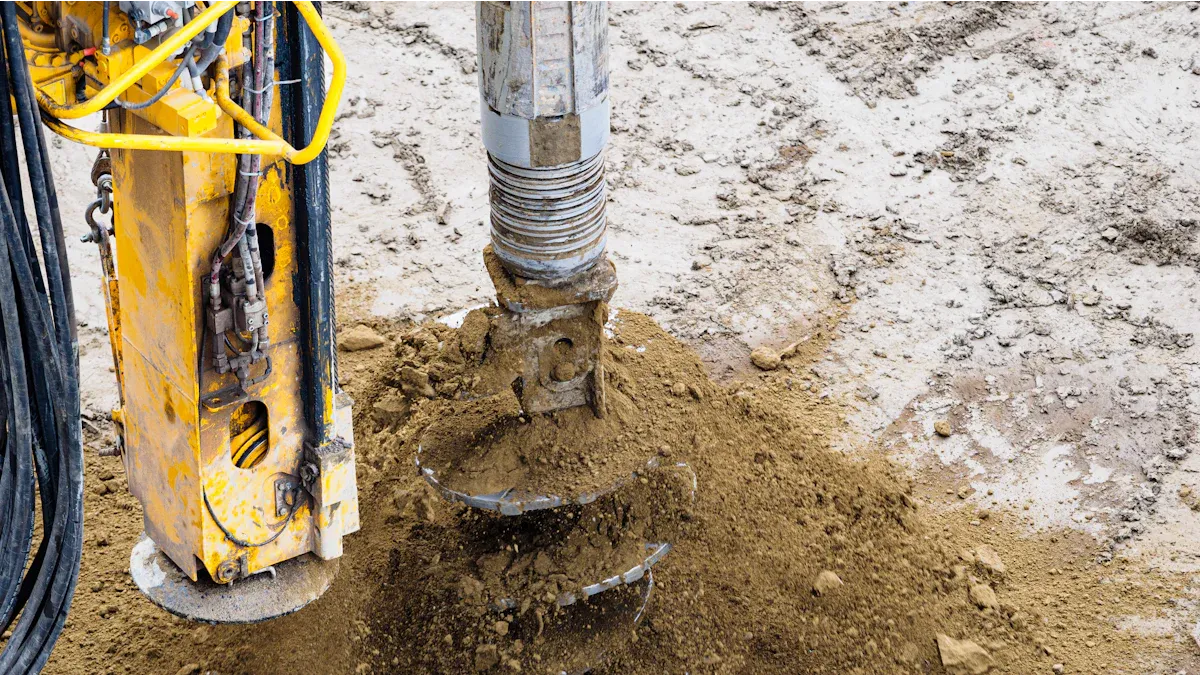
Big horizontal directional drilling machine jobs are getting harder. Blockages can cost a lot of money. They can stop the work. But, a lot of drilling mud stops blockages. This mud keeps the hole strong. It helps drill well. This is true for all big directional drilling machine jobs. CEGC has good drilling solutions. They make drilling work best. They keep the hole steady. This is for every Trenchless Drilling Rig job.
Key Takeaways
-
Using much drilling mud stops clogs. This is for big horizontal drilling.
-
Good drilling mud makes the hole strong. It moves dirt out. It makes drilling easy.
-
Handling drilling fluid well saves money. Recycling it helps nature.
Blockages in Large-Diameter Horizontal Directional Drilling
Why Large-Diameter HDD Projects Face Blockage Risks
Big horizontal drilling jobs are hard. They have special problems. These jobs drill long paths. They put in big pipes. This is for different services. This can cause more problems. We put in pipes for important things. The ground itself can be risky. Some ground types are very bad. These include dry dirt. Also, thick glacial dirt. And hard clay with rocks. These make drilling harder. Bad fluid can cause frac-outs. This means more cleaning. It also means more rules. This affects safety. It also affects building.
Common Causes: Cuttings Accumulation and Borehole Instability
Two main things cause blockages. They are cuttings buildup. Also, unstable holes. Cuttings are dirt and rocks. They come from drilling. If fluid does not return well. These cuttings can pile up. They make a bed. This stops the drill string. Drillers see more turning. Or more pulling. This means cuttings are there. Less fluid return is a sign. Even with steady drilling. High pressure is another sign. Or mud pressure changes. These issues can stick the pipe. This makes drilling stop. Unstable hole walls can fall. This adds more stuff. This makes drilling harder. It also makes pipe fitting harder. Good mud pressure is key. It helps with safety. It helps with rules.
How Big Volume Mud Prevents Blockages in Horizontal Drilling
Big mud helps horizontal drilling. It is a key tool. This fluid stops blockages. It makes work smooth. Mud properties are vital. These include thickness and weight. They also include gel strength. These work together. They keep the hole clear. They keep it strong. Enough mud is important. It moves dirt away. This is true for big drilling jobs.
Cuttings Suspension and Efficient Transport
Drilling fluid carries cuttings. Cuttings are rock and dirt. The fluid holds them up. Then it moves them out. Fluid thickness matters here. This thickness comes from products. It also comes from fine dirt. The reamer mixes dirt with fluid. This makes a thick mix. This mix's thickness depends on dirt. It also depends on how dirt reacts. The first fluid thickness also helps.
But, too much thickness causes issues. Thick mix needs more push to flow. This can cause breaks. This happens in weak ground. It also happens in shallow areas. Too much thickness makes dirt removal hard. It makes recycling less good. Pumps also work worse. This can break pumps. For big drilling, fluid moves slow. It cannot carry dirt well. How much dirt it can carry depends on things. These include flow speed and fluid weight. Fluid flow traits, like thickness, are key. The hole's shape also matters. Heavier, faster fluids carry bigger dirt. This lowers the dirt pile.
Drilling fluids are complex. Their flow is not simple. They get thinner when moving fast. This helps move dirt better. Additives like starch help this. The consistency index also helps. It shows how thick the fluid is. This index changes with stuff. It gets better with starch. Drilled dirt changes the mud. It makes it thicker. Adding dirt makes it thicker. It also makes it stronger. Clay ground affects mud more. It makes the mud thicker. This is compared to other ground. Some bentonite products help. They give good strength. They also control water loss. They do this with little thickness gain. New additives improve fluid. They add little thickness. Chemicals can control thickness. They are used when ground makes mud too thick. More fluid is needed for reactive ground. It is also needed for longer holes. This keeps the fluid flowing well.
Maintaining Borehole Stability and Integrity
Big mud stops the hole from falling. It pushes against the walls. This push supports the ground. It stops loose dirt from falling. Most drilling muds get thicker when still. This is important. It holds dirt when mud stops. For example, when changing a drill bit. This helps the hole stay strong. It stops dirt from settling.
Gel strength is the force needed. It starts fluid movement. It stops dirt from settling. This happens when mud stops moving. Good gel strength helps drilling. It improves holding. It lowers pressure spikes. It makes starting flow easier. Both thickness and gel strength are key. They hold dirt when paused. This helps keep the hole strong. This is vital for all drilling jobs.
Reducing Friction for Smooth Operations
Mud's slipperiness is very important. It lowers wear on tools and pipes. This is during drilling. It provides needed slip. This lowers rubbing. It also lowers heat from drilling. Without good slip, much heat builds. This increases wear on the drill pipe. It also wears the cutting head. This shortens their life. It raises costs for broken tools.
Bad mud can pack dirt. This wastes power. It raises risk of stuck tools. Not enough fluid can overheat parts. This causes problems. It leads to unexpected costs. Big mud helps stop these issues. It keeps drilling smooth. This is vital for any drilling job.
Optimal Filter Cake Formation for Sealing
A good filter cake seals the hole. It stops fluid loss. It also helps keep the hole strong. This is true in porous ground. The filter cake forms a seal. Fluid first goes through pores. Then, solid bits from mud build up. These include bentonite. They block the pores. This makes a barrier. The cake gets thicker. More bits deposit. This slows fluid entry.
This seal works best. Particle sizes match ground pores. This makes a tight layer. It limits fluid loss. This limit balances pressure. It stops too much fluid movement. It also protects the ground. The best filter cake is thin. It is usually a few millimeters. It blocks fluid well. It is also tough. This makes it last. It is slick. This helps pipes move. It is flexible. This lets it fit the wall.
When drilling through empty spots, pressure can push. It can push the drill string. It can push it into the cake. This causes sticking. To stop this, manage mud slip. Ensure a good filter cake. A thin, strong cake helps. It lowers this pressure. This protects against sticking. The "plastering effect" also helps. Casing crushes dirt and cake. It forms a strong wall cake. This thin layer lowers pressure. It lowers sticking risk. This is even for bigger casing. This is a key benefit.
Good Drilling Fluid Management
Good drilling fluid management is key. It helps horizontal directional drilling jobs. This means more than mixing mud. It needs a smart plan. This plan covers fluid design. It also covers volume control. Mixing methods are important. Recycling is also key. These parts work together. They keep the borehole strong. They cut costs. They also help the environment. This is for hard directional drilling jobs.
Making the Right Fluid
Making the right drilling fluid starts. You must know the ground. The rock type matters. So does its temperature. Pressure is also key. What about the environment? Cost is also a factor. Clay minerals are very important. This is true for hard ground. Their type changes fluid behavior. It also affects borehole strength. For example, montmorillonite is used. Palygorskite and sepiolite are too. They are in water-based muds. They make the fluid thick. They help it flow. Special clay minerals are in oil-based muds. They control how well drilling works. They also control cost. They make drilling safe. They manage fluid behavior. They stop shale from swelling.
Different soils need special fluids. This makes them work best.
|
Soil Type |
Component |
Function |
|---|---|---|
|
Non-reactive clay |
Bentonite |
Controls filtering (filter cake) |
|
|
Soap/detergent |
Keeps tools clean |
|
Reactive clay |
Bentonite |
Controls filtering (filter cake) |
|
|
PAC polymer |
Helps control filtering |
|
|
PHPA polymer |
Stops clay from swelling |
|
|
Thinner |
Makes fluid less thick (if too thick) |
|
|
Soap/detergent |
Keeps tools clean |
|
Sand |
Bentonite |
Controls filtering (filter cake) |
|
|
PAC polymer |
Helps control filtering |
|
|
Larger molecular weight polymer |
Helps stuff stay mixed |
|
Cobble |
Bentonite |
Controls filtering (filter cake) |
|
|
PAC polymer |
Helps control filtering |
|
|
Larger molecular weight polymer |
Helps stuff stay mixed |
|
Rock |
Bentonite |
Controls filtering (filter cake) |
|
|
Larger molecular weight polymer |
Helps stuff stay mixed |
|
Fracture rock |
Bentonite |
Controls filtering (cake filter) |
|
|
PAC polymer |
Helps control filtering |
|
|
Larger molecular weight polymer |
Helps stuff stay mixed |
The drilling fluid is water. It has other things added. Bentonite is a clay. It makes mud with water. It is often added. It works well in sand. It also works in gravel. It makes the hole strong. Polymers are also added. They are used with bentonite. This depends on the ground. PHPA polymers stop clay swelling. This is for reactive clay. Big polymers help hold stuff. This is for cobble and rock. Xanthan gum makes mud thicker. It helps hold things up. Water is the main part. Its pH should be 9. Calcium should be low. This helps additives work. Soda ash can change pH. The fluid keeps the hole steady. It cools tools. It makes them slippery. It takes out cuttings. It seals the borehole. It holds cuttings up. It protects the drill pipe. It lowers drilling effort. Good fluid design helps. It stops fluid loss. It uses the right mud weight. It makes good filter cakes. It stops pipes from sticking. It stops ground damage.
How Much Fluid to Use
Enough drilling fluid is a must. The flow rate is also key. Not enough mud causes problems. It makes Equivalent Circulation Density high. High ECD makes the borehole weak. It also makes cuttings pile up. This happens in long wells. Fluid flows up in the annulus. This lifts cuttings to the top. Not enough fluid stops this. Drilling fluid properties matter. These include thickness. They also include yield point. Gel strength is important. They hold small bits. This is when fluid moves. It is also when it stops. Not enough fluid hurts these. Cuttings can then settle.
If cuttings block the annulus. More pressure is needed. This keeps the flow rate. Standpipe pressure goes up. This is more than expected. It means cleaning is bad. This often comes from low fluid. It causes beds to form. Signs include more torque. Or more drag. Cuttings build up. The drill string rubs more. This makes turning harder. It also makes moving it harder. Torque spikes are a sign. Or jerky movement. Torque suddenly goes up. This happens when starting again. It means the drill string hits cuttings. Pulling hard when moving pipe. This also shows cuttings. Pumps must be the right size. This ensures good flow. It ensures good pressure. This is for the hole length. It is for its size. It is for the ground. This stops blockages. It makes sure fluid returns.
Good Mixing Methods
Good mixing makes fluid consistent. This means it is the same. Mixing well is important. It spreads nanocomposites. It spreads additives. This helps manage stress. It removes drill cuttings. It stops clumping. It stops breaking down. Polymers mix well. Nanoparticles spread well. This makes fluid work best. This is true in tough spots.
Best mixing means adding parts one by one. Mix them fast. This makes it even. It makes it stable. Nanoparticles spread well. Water-soluble polymers make a base. This makes it thick. It makes it stable. Nanoparticles spread evenly. Solid additives are added. They use fast mixing. Coating nanoparticles helps. It makes them mix with water. This stops clumping. It helps them spread.
Big HDD holes need lots of fluid. Maxi rigs need it too. These are rigs over 100,000 lb. Managing this much fluid is hard. It is key for long jobs. It is key for big jobs. Strong mixing gear is needed. For example, the MX300 mixer. It mixes lots of fluid well. It works for many holes. This includes big ones. It includes long ones. It has a 23-horsepower engine. It pumps 350 gallons per minute. The MX300D mixer is strong. It has a 24.7-horsepower engine. It pumps 350 gallons per minute. It has two tanks. They hold 750 or 1,000 gallons. This is great for lots of fluid. It is for utility jobs. It is for other big projects.
Smart Recycling Systems
Good recycling systems are key. They save money. They help the earth. They use less fresh water. They use fewer additives. They cut disposal costs. The process has steps:
-
Shale Shaker: It handles all mud flow. It removes big solids. These are over 100 microns.
-
Desander and/or Desilter Hydrocyclones: They remove smaller bits. These are 250 to 100 microns. Desanders are bigger. They are 5 inches or more. They are after the shale shaker. They are before the desilter. They remove sand. They remove bigger solids. These solids get past the shaker. These solids are thrown out. Cleaner mud goes to desilters.
-
High-Speed Decanter Centrifuge: It removes tiny solids. These are 2 to 5 microns. It handles 20% of mud flow.
|
Equipment Type |
Particle Size Removed |
How It Helps Recycling |
|---|---|---|
|
Regular Shaker/Hydrocyclone System |
>100 microns (shaker), 250-100 microns (hydrocyclones) |
Removes big to silt-sized bits. Cleans for first reuse. |
|
High-Speed Decanter Centrifuge |
>2 to 5 microns (tiny solids) |
Cleans much better (6 times). Makes drilling fluid last longer (10 times). Can be used forever. Can get barite back. Can remove all solids. |
Centrifuges target tiny solids. Shakers and hydrocyclones miss them. They can target certain sizes. This depends on speed. But they cannot remove clays. This includes bentonite. These are under five microns. Unless they run at top speed. This is for 2 to 5 microns. Centrifuges need pre-cleaning. This is with shakers or hydrocyclones. Still, they make fluid last four times longer. This saves a lot on waste. A centrifuge with a regular system. It removes tiny solids. Shakers and hydrocyclones miss them. This helps manage fluid weight. In theory, centrifuges let fluid be reused forever. This is great for big projects.
|
Aspect |
Old Way of Disposal |
New Way of Recycling |
|---|---|---|
|
Cost Comparison |
67-150% more costly |
Saves money |
|
Average Disposal Cost (per barrel) |
$12-20 |
$5-8 |
|
Less Freshwater Used |
Not applicable |
40-60% less |
|
Cost Difference in Permian Basin |
Much bigger difference |
Not applicable |
Recycling water saves money. It saves on hauling. It saves on disposal. It also sends less water to wells. This helps well costs. This is for utilities. It is for other projects. Operators can save $50,000 to $300,000. This is per average shale well. This is by recycling water. Getting oil back helps. Even a little oil. It can pay for recycling. New tech gets 90% to 98% water back. Reusing water means less fresh water. It means less trucking. It means less storage cost. Savings grow with more wells. This makes smart fluid management a good choice. This is for any big directional drilling job.
Best Practices for Big Volume Mud Strategies
Good plans are key. They help horizontal drill big volume mud prevents blockage work well. These plans make projects run smoothly. They also keep everyone safe.
Pre-Drill Planning and Geotechnical Assessment
Good planning starts with checking the site. Geotechnical data is very important. It helps guess blockage risks. This info helps make the right drilling fluid plan. A special model uses this data. It looks at water flow, heat, and stress. This model combines many things. It includes how things move. It looks at water flow. It checks heat transfer. It also checks water spread. It includes how things break down. This depends on water. It affects how strong things are. It affects friction. It affects how things stick. A special rule is also used. Info comes from well logs. It also comes from core tests. Samples use a special method. This accounts for rock types. It also accounts for heat. The results show stress. They show how things bend. They show water pressure. They show water amount. This data makes drilling fluid better. It helps stop problems. This is for utilities and infrastructure installation.
|
Sandstone Range |
Mudstone Range |
|
|---|---|---|
|
Elastic Modulus (MPa) |
15640–30960 |
9600–14400 |
|
Poisson’s Ratio |
0.20–0.28 |
0.25–0.35 |
|
Biot’s Coefficient |
0.8–1.0 |
0.6–0.8 |
|
Initial Porosity |
0.12–0.16 |
0.07–0.11 |
|
Permeability (mD) |
2.5–7.5 |
0.0005–0.002 |
Real-time Monitoring of Fluid Properties
Watching drilling fluid is important. It makes sure the fluid works right. Sensors give live info.
-
Mud Parameters Monitored: How well it conducts. How thick it is. How fast it flows (MFO). How fast it moves. How much is in the pit (MPV).
-
Sensors for Flow Information: Drilling fluid flowmeters check mud flow. They check its speed.
-
Sensors for Physical Properties: Special sensors check mud. They check how it conducts. They check its thickness. This live data helps make changes fast. It keeps the borehole steady. It helps with compliance for hdd projects.
Proactive Adjustments and Troubleshooting
Making changes early stops problems. It stops frac-out. It stops fluid loss. Experts use a strong plan. They make boreholes stable. This is before problems start.
-
M-I SWACO suggests 'loss prevention material'. This makes wellbores stable. It works before issues happen.
-
Halliburton’s Baroid studies how things break. This helps guess how wellbores act.
-
M-I SWACO made a full plan. It mixes engineering. It mixes chemistry. It mixes mechanics. This makes wellbores stable. It works in tough ground.
-
This plan uses computer programs. It finds how wide cracks are. It finds the best mix of particles. This fills cracks. It seals them. It stops them from growing. This allows drilling in hard ground. This plan makes things safer. It helps with project compliance for directional installation.
Equipment Considerations for Large Volumes
Handling lots of drilling mud needs special gear. This makes sure it is moved well. It makes sure it is stored well.
-
Reservoir Tanks: They hold lots of drilling mud. They make the drill bit slippery. They carry dirt away. They control wellbore pressure. This keeps mud coming for utilities infrastructure installation.
-
Circulation Tanks: They help mud move around. They cool the bit. They bring dirt to the top. They keep wellbore pressure steady.
-
Blending Tanks: They mix drilling mud. They add chemicals. They add other things. This makes it thicker. It stops fluid loss.
-
Treatment Tanks: They clean drilling fluids. They use tools like shale shakers. This removes dirt. It removes bad stuff. It keeps fluid good.
-
Storage Tanks: These are main parts. They hold drilling mud. They come in many sizes. They are near directional hdd rigs. This makes them easy to reach.
-
Receiving Tanks (Pits): They are under shale shakers. They get used drilling fluids. They get solids. Solids are taken out. They are cleaned or reused.
-
Trip Tanks: They watch fluid amount. This is during pipe trips. They help keep fluid levels right. They help control the well.
-
Clarifying Tanks (Settling Basins): They let dirt settle down. This makes mud work better. It makes it last longer.
-
Active Mud Tanks: They always hold drilling fluids. They keep them moving. This makes sure mud is always flowing.
-
Backup Tanks: They hold extra mud. This is for when more is needed. It makes work more reliable.
Case Studies: Stopping Blockages with Lots of Mud
Good Large-Diameter HDD Projects
Using lots of mud is key. It helps big drilling jobs. It fixes problems like blockages. These examples show how mud helps. It makes sure jobs get done. This is important for pipes and wires.
A company in West Texas had trouble. They drilled a 1,200-foot hole. It was in sand and gravel. First tries failed at 300 feet. The drill twisted too much. This caused problems. After three days and $40,000, M-I SWACO helped. They made a special mud plan. It used special stuff. This mud helped the company. They finished the hole in two shifts. They made it wider in four shifts. The pipe went in on day seven. This shows how special mud helps. It stops blockages. It made the job work. This was after a bad start.
M-I SWACO also uses smart computer programs. They use tools like PC MOD. They use VIRTUAL HYDRAULICS. This is for big drilling jobs. Engineers use these tools. They find the right mud. This cleans the hole. It keeps it strong. This has worked for jobs up to 7,000 feet. These jobs had a 48-inch width. It also works for oil wells. These are over 30,000 feet deep. This shows mud plans are vital. They stop blockages. They make big jobs work. This is for pipes and wires. This careful plan helps. It makes hard jobs easier.
Good drilling fluid care is key. It helps big horizontal drilling. Lots of mud moves dirt well. It keeps the hole strong. It lowers rubbing. This stops costly blocks. Good fluid plans save time. They save money too. This is for hard drilling jobs. CEGC's Trenchless Drilling Rig helps. Always manage fluid well. This protects the hole.
FAQ
What is "big volume mud" in HDD?
Big volume mud is special. It is a lot of drilling fluid. It is key for big horizontal drilling. This fluid stops blockages. It keeps the hole strong.
How does drilling fluid prevent borehole instability?
Drilling fluid pushes on walls. This holds up the ground. It stops dirt from falling. Gel strength holds dirt. This happens when fluid stops.
Why is drilling fluid recycling important for HDD projects?
Recycling drilling fluid saves money. It uses less fresh water. It needs fewer additives. This cuts disposal costs. It helps the earth.


