
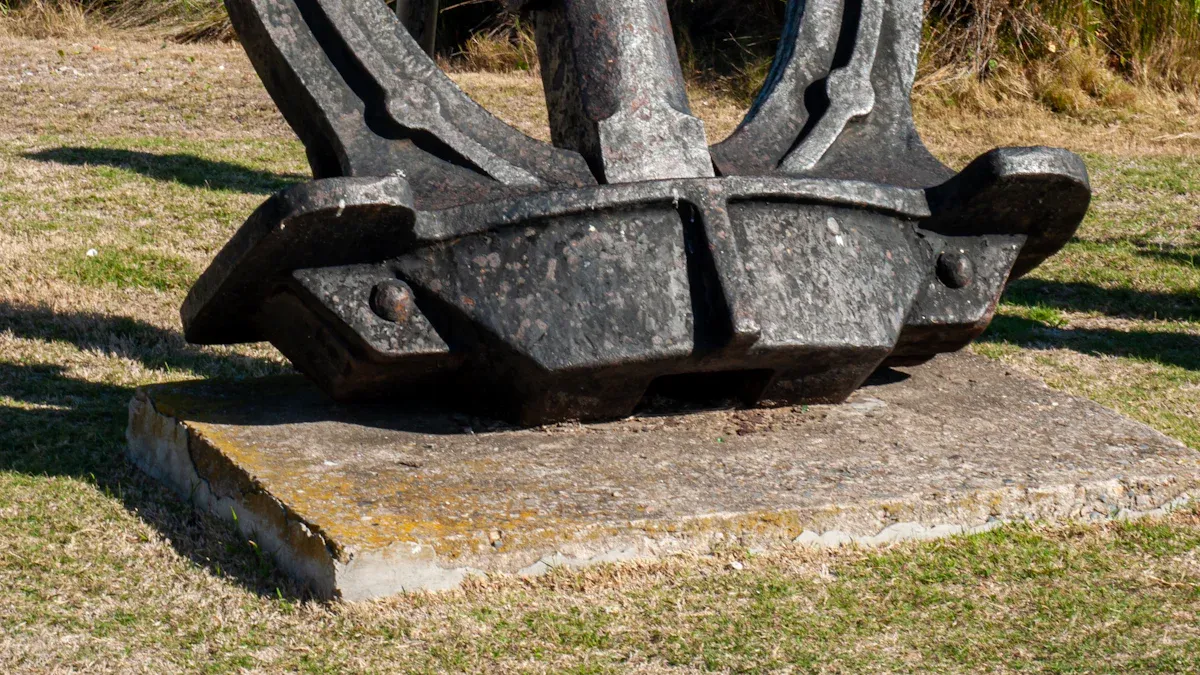
HDD Horizontal Directional Drilling Stable Anchor systems are very important. They stop drilling rigs from moving. This makes sure work is safe. The HDD market is getting much bigger.
|
Metric |
Value |
|---|---|
|
Current Market Size (2024) |
USD 8.18 billion |
|
Projected Market Size (2030) |
USD 16.08 billion |
|
CAGR (2025-2030) |
11.6% |
There are main anchor types. These include ground-based anchors. Examples are earth, rock, and vibro-anchors. There are also specialized anchors. These are concrete and deadman anchors. Picking the right anchor is key. It helps HDD projects go well. It affects how steady the drilling machine is. It also lowers risks. One risk is the bore going off course. CEGC's Precision Guidance & Stability System helps with this. Cleat anchoring systems also make the rig steady.
Key Takeaways
-
HDD stable anchors stop drilling rigs from moving. This makes drilling safe and accurate.
-
Different anchors work best in different ground. Earth anchors work in soft soil, and rock anchors work in hard rock.
-
Choosing the right anchor is important. It helps prevent problems like stuck pipes and keeps the drill on track.
1. Ground-Based HDD Stable Anchors
This part looks at anchors. They get strength from the ground. These anchors are key. They keep a horizontal directional drilling machine steady. They include earth anchors, rock anchors, and vibro-anchors.
1.1. Earth Anchors: Types and Function
Earth anchors go into the ground. They create resistance. This resistance holds the drilling rig in place. Workers drive them in. Or they screw them into the soil.
There are different kinds of earth anchors:
-
Screw Anchors (Helical Anchors): These anchors have steel shafts. They have helix blades. They screw into the earth. They disturb soil very little. This design helps them get full strength. This happens right after they are put in. This makes them good for fast projects. Helical anchors work well in soft soils. This includes clay, silt, or sand. They can handle pulling and pushing forces. Their screw-in method makes them easy to remove. This means they are good for long-term and temporary uses.
Load Capacity Range
Installation Method
Helical Anchors
Moderate capacity
Screwed installation
Ground anchoring moves forces. It moves them from a structure. It moves them into the ground. Anchors are pressed into the earth. Or they are screwed in. They use friction. This is between the anchor body and the soil or rock. They also use tension. This is along the tendon. This keeps them stable. For example, sandy soils need friction. This stops sliding. Harder rock uses a mechanical bond. Anchor design is not the same. It changes for all jobs. Factors like diameter change. Length and surface shape also change. They are made to fit ground conditions. This ensures proper load distribution. It also ensures force transfer.
Anchor Type
Suitable Ground Conditions
Helical
Loose, soft, or mixed soils
-
Plate Anchors: These are flat plates. Workers drive them into the ground. Then, they pull a rod. It is attached to the plate. This turns the plate sideways. It creates a large surface. This is against the soil.
-
Duckbill Anchors: These anchors look like a duck's bill. Workers drive them into the ground. A cable pulls the anchor. This makes the "bill" rotate. It then locks into the soil.
Earth anchors are best for cohesive soils. They are also good for temporary setups. Their main benefits are easy installation. They also cost little. But they do not work as well. This is in loose or rocky soils.
1.2. Rock Anchors: Installation and Applications
Rock anchors go into solid rock. They provide very high resistance. This makes them good for tough drilling jobs.
Installation involves a few steps:
-
Drilling: Workers drill a hole. This is into the solid rock.
-
Anchor Placement: They place a steel bar. Or they place a cable. This goes into the hole.
-
Grouting: They fill the hole with grout. Grout is a special cement mix. It hardens. It bonds the anchor to the rock.
Rock anchors are key in some cases. This includes rocky areas. They are also needed. This is when a Horizontal Directional Drilling Rig needs high pullback force. This is important. It stops stuck pipe. The CEGC Anti-Stall Powertrain & Overload Protection system helps. It manages torque spikes. This protects the rig. This is during high-force work. Rock anchors offer high holding capacity. They also offer durability. But their installation is harder. It also costs more.
1.3. Vibro-Anchors: A Modern HDD Anchoring Solution
Vibro-anchors are a newer choice. They use vibratory methods. This drives the anchors into the ground. The vibration helps pack the soil. This is around the anchor. This increases its holding capacity.
These anchors offer specific benefits. They work well in certain soil types. They can also be installed faster. This is compared to other anchor types. Vibro-anchors play a key role. They make the horizontal directional drilling machine more stable. This helps make the bore precise. A stable HDD Horizontal Directional Drilling Stable Anchor system is vital. This is for successful projects.
2. Specialized HDD Stable Anchors and Selection Factors
This part talks about special anchors. It also tells how to pick the best anchor. This is for any horizontal directional drilling job.
2.1. Concrete Anchors: Use in HDD
Concrete anchors use concrete. These concrete parts can be already there. Or workers can pour new concrete. This makes things steady.
There are different kinds of concrete anchors:
-
Expansion Anchors: These anchors get bigger. They fit tight inside a drilled hole. This happens when a bolt is tightened.
-
Wedge Anchors: These anchors have a wedge. It pushes against the concrete. This happens when the anchor is put in.
-
Cast-in-Place Anchors: Workers put these anchors in. They go into the concrete before it gets hard. The concrete then dries around them. This makes a very strong hold.
Concrete anchors are good in cities. They work well with concrete pads already there. They also work with building bases. These anchors are very steady. They are very trustworthy. Their use depends on what is already built. Or it depends on how long new concrete needs to dry.
2.2. Deadman Anchors: Versatility and Construction
Deadman anchors create resistance. They do this by burying a big object. This object can be logs. It can be concrete blocks. It can also be steel plates. Workers bury these objects in the ground.
This process has many steps:
-
Excavating: Workers dig a ditch. This ditch is deep enough. It is also wide enough.
-
Placing the Object: They put the big object in. It goes into the ditch.
-
Backfilling: Workers then fill the ditch. They use soil. They pack the soil down. This holds the object firmly.
Deadman anchors are useful in far-off places. They are also used when other anchors are not good. This can happen for a Trenchless Drilling Rig.
Here are some rules for deadman anchors:
-
Size and Mass: The object must be big enough. It must be heavy enough. This stops the expected forces.
-
Soil Type and Conditions: The soil around the deadman matters. Soil rubbing and packing affect how well it works.
-
Depth of Burial: The object needs to be deep enough. This makes sure it is steady.
-
Material Durability: The material choice is important. It depends on the area. It also depends on how long it needs to last.
-
Connection Strength: Tiebacks and parts must be strong. They must handle the most weight.
-
Inspection and Maintenance: Checking often is important. This stops the anchor from coming loose. It also stops rust.
|
Type of Deadman |
Description |
|---|---|
|
Concrete Deadman |
Big concrete blocks with metal inside are buried. |
|
Timber Deadman |
Heavy wood beams or logs are buried. They are used as anchors. |
|
Steel Deadman |
Steel beams or plates are used as buried anchors. |
|
Composite Deadman |
This mixes steel and concrete parts. It makes it extra strong. |
How much a deadman anchor can hold depends on many things. It depends on how deep the object is buried. It depends on its size and weight. It also depends on the large amount of soil. This soil must move before the anchor pulls out. Deeper burial helps. Bigger objects also help. Both make it hold more.
Deadman anchors can be used in many ways. They use materials from the area. But putting them in takes a lot of work. They can also sink over time.
2.3. Key Factors for HDD Stable Anchor Selection
Picking the right HDD Horizontal Directional Drilling Stable Anchor is very important. Many things help guide this choice.
Soil type greatly changes anchor choice. Different soils need different anchors. This choice helps stop the drill from going off course. Bore deviation is when the drill path goes off course.
The needed pullback force is another thing. This is the force to pull the drill string back. The anchor strength must match this force. This is very important. It stops the pipe from getting stuck. It also makes the horizontal directional drilling hdd work well. CEGC's Anti-Stall Powertrain & Overload Protection system helps manage these forces. It keeps the rig safe.
Practical things are also important. How easy it is to get to the site matters. Some sites are hard to reach. This limits anchor choices. Site limits also play a part. These can be small spaces or environmental rules.
How long the project lasts affects anchor choice. Short projects might use simpler, cheaper anchors. Long projects need stronger solutions. The money available also affects the choice. Some anchors cost more to put in. Others cost more for materials.
Picking the right HDD Horizontal Directional Drilling Stable Anchor is key. It makes projects safe. It makes them work well. It makes them exact. Ground anchors and special anchors each have uses. Choosing a good anchor with a CEGC Horizontal Directional Drilling Machine helps. It stops the drill from going off course. It stops pipes from getting stuck. A drill rig that is held firmly is basic. It helps any directional drilling machine work best.
FAQ
What is the main purpose of an HDD stable anchor?
Anchors stop the drill rig. They keep it from moving. This makes work safe. It makes work exact. This stops the drill from going off course.
Which anchor type works best in rocky ground?
Rock anchors are best. They work in solid rock. They hold very strong. Workers drill them in. They fill them with grout.
Why is anchor selection important for HDD projects?
Picking the right anchor is key. It makes the rig steady. It stops problems. For example, pipe can get stuck. This helps projects finish well.


