
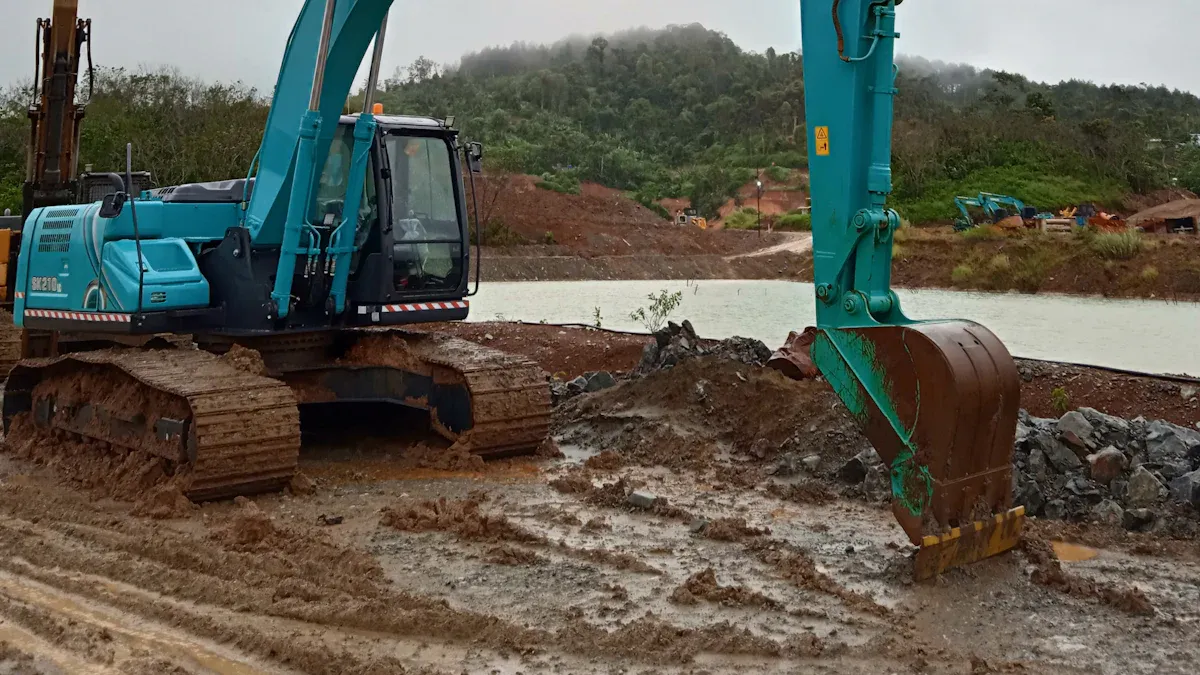
An HDD Machine High Flow Mud System Clears Debris Fast. It utilizes a high volume of drilling fluid, which efficiently removes drilled cuttings. This is crucial for maintaining bore stability and optimizing the efficiency of horizontal directional drilling. The system's primary benefit is preventing blockages, ensuring the CEGC drilling machine operates continuously.
Key Takeaways
-
High-flow mud systems use special fluid and strong water power to quickly remove dirt and rocks from the drill path.
-
These systems make drilling faster, stop pipes from getting stuck, and help tools last longer by keeping the hole clean.
-
Good pumps, smart drill bit designs, and careful mud science are important to make high-flow mud systems work their best.
How HDD Machine High Flow Mud Systems Clear Debris
Mud Properties and Debris Suspension
Horizontal directional drilling needs special fluid. This fluid helps remove debris. It is not just water. It is a special mix. It has two main features. These are thickness and gel strength. Thickness helps it carry solid bits. Gel strength holds cuttings when the pump stops. Good sodium bentonite makes it thick. It also gives it gel strength. This stops debris from settling. This is key in horizontal drilling.
Some muds are very good. They are called mixed metal oxide (MMO) muds. They can hold many sizes of cuttings. This includes fine sand. It also includes large gravel. They can even hold golf-ball sized pieces. These muds have a special structure. They get thin like water when pumped. Then they quickly turn into a strong gel. This happens when the flow stops. This quick gelling stops solids from settling. The amount of solid bits affects how thick the fluid is. This is called plastic viscosity. For example, rougher sand makes the fluid thicker. This makes it harder to pump.
Hydraulic Force and Scouring Action
A hdd machine high flow mud system clears debris fast. It uses strong water power. The drilling fluid is pumped fast. It is pumped in large amounts. This makes a powerful stream. This stream pushes debris out. It is like a strong water jet. It cleans a dirty surface. The fluid cleans the borehole walls. It removes loose material. It carries it away. This cleaning keeps the path clear. It helps the drill bit.
Annular Velocity for Efficient Transport
Annular velocity is fluid speed. It is the speed between the drill pipe and bore wall. The right speed is very important. It carries cuttings to the surface. This stops them from building up. For many years, 150-200 feet per minute was the goal. This was for cleaning the hole. But other things also matter. These include how many cuttings are there. How fast the drill moves matters too. The drill's spin speed also matters. Adjusting these helps clean the hole. This is true even if fluid speed is different.
Good annular velocity stops cuttings beds. For example, faster fluid speeds help. They improve the Cuttings Transport Ratio (CTR). This means more cuttings are removed. A higher flow of clean drilling fluid carries bigger cuttings. This lowers the height of any cuttings bed.
|
Mud System |
CTR Increase (%) |
|
|---|---|---|
|
1.5, 2.5, 3.5 |
n-HAp |
28–38.6 |
|
1.5, 2.5, 3.5 |
CuO-NP |
14.6–23.5 |
|
1.5, 2.5, 3.5 |
Al2O3 |
9.3–18.9 |
|
1.5, 2.5, 3.5 |
SiO2 |
5.0–13.4 |
|
1.5, 2.5, 3.5 |
MgO-NP |
2.8–7.7 |
Preventing Borehole Wall Buildup
Fluid flow stops buildup. It stops material on borehole walls. This buildup is called filter cake. Too much filter cake causes problems. It makes friction on the drill pipe. This leads to higher torque. The drill pipe can get stuck. Cuttings or loose rock can build up. This happens around the drill pipe. It can block fluid flow. This blockage increases torque and drag. Sometimes, the ground can collapse. It drops rock into the hole. This also causes uneven torque and drag. Soft material can stick to the drill bit. Clay is an example. This makes the bit cut less well. It also increases torque. High-flow mud systems keep the bore clean. This helps avoid these costly issues.
Benefits of Fast Debris Clearance in HDD
A hdd machine high flow mud system clears debris fast. This gives many good things. These good things help builders. They help power companies. They help city projects. They make trenchless drilling operations better.
Enhanced Drilling Efficiency and Speed
Quick debris removal means fewer stops. The drill can go faster. It drills quicker. Jobs finish sooner. This helps a company earn more money. High-flow mud systems stop delays. They keep tools working longer. They also make drilling better. This happens by keeping paths clear. These systems can make jobs 30% faster. They also need less new drilling fluid. This saves money. It helps the Earth. Fluid cleaning systems are important. They take solids out of drilling fluids. This stops clogs. It stops tools from wearing out. It makes machines more dependable. This makes work sites better.
Reducing Risks: Stuck Pipe and Frac-Out
A clean path greatly lowers the chance of stuck pipe. Stuck pipe causes big delays. It costs a lot. Good debris removal helps control fluid pressure. This stops frac-out. Frac-out is when fluid leaks out. It goes to the ground surface. This causes problems with rules. It makes messes to clean. CEGC has ways to fix "Poor Fluid Performance & Frac-Out Risk." These ways match the good things about fast debris removal. These systems keep solids floating. This stops them from settling. This stops solids from making blockages. Blockages can make fluid come up fast. This makes drilling work best.
Extending Tool Life and Performance
Less rough stuff in the hole means less wear. This protects drill bits. It protects reamers. It protects other tools. This means less money spent on new parts. Tools also last longer. This means they are used more. For example, one builder cleaned 213 tons of solids. This was during a reaming job. They used a fluid cleaning system. It had a three-shaker screen panel. This system cleaned all the fluid in two days. This made hauling costs lower. The trash piles were drier. It also had less rough sand. This meant less time machines were broken. It made work run well.
Improving Borehole Stability and Quality
A clean hole helps make a steady pilot hole. It also makes a good reamed path. This is very important. It makes sure the pipe goes in well. A clean hole stops stuff from falling in. This keeps the hole shape good. It makes putting the pipe in smoother.
Making High-Flow Mud Systems Work Best
Strong Pumps and Reusing Fluid
Strong pumps are very important. They move enough fluid. They also create enough push. Mud pumps must work well. This makes the system effective.
|
What it is |
How much |
|---|---|
|
Mud Pump Flow |
|
|
Mud Pump Pressure |
1,000 Psi |
Good mud recycling systems are also key. These systems use shakers. They also use hydrocyclones. They take solids out of the fluid. This is called separation. Always cleaning the mud helps. It keeps the mud good. It uses less new material. A good recycling system keeps work going. This saves money. It saves resources. Good separation is vital. This is true for all mud recycling systems.
Drill Bit and Nozzle Design for Flow
The drill bit's design matters. Its nozzles point the fluid. This fluid hits the cutting part. It knocks off debris. This removes the most debris. Good nozzle spots help. They separate cuttings well.
Mud Science and Flow Rate Control
Good mud science changes fluid. It matches the ground. This moves debris best. Always checking flow rates is needed. Adjustments stop low flow. They stop low pressure. A good solids plan includes fluid care. This keeps the fluid clean. This helps the hdd machine high flow mud system clears debris fast.
Bentonite is a main part. Its traits are key:
-
Purity & Mineral Composition: Much montmorillonite (>85%) is best. It stops wear.
-
Particle Size & Texture: Small bits (1-10 microns) help hydration.
-
Plastic Viscosity & Yield Point: These balance flow. They balance carrying power.
-
Swelling Capacity & Gel Strength: Bentonites that swell a lot are best.
-
Chemical Compatibility: Bentonite must mix with other things.
-
Filtration & Fluid Loss Control: Good filtering stops fluid loss.
Bentonite with polymer is better. It stays strong in heat. It resists salt. But it costs more. It needs skilled handling.
Different jobs need different bentonite:
|
What it's for |
Best Bentonite |
Key Numbers |
Special Things to Know |
|---|---|---|---|
|
Shallow water wells |
Standard sodium bentonite |
PV: 15–20 cP, YP: 8–15 lb/100ft² |
Cheap, easy to get; make sure it swells enough |
|
Oil & gas exploration |
Very pure, pre-hydrated |
Fluid loss: ≤12 mL/30min, Gel: 8–18 lb/100ft² |
Stays the same; works with polymers and barite |
|
Horizontal drilling |
Special bentonite mix |
High YP/PV ratio, low fluid loss |
Resists salt; keeps stuff floating in angled holes |
|
Geothermal drilling |
Heat-safe bentonite |
Stays thick at >150°C |
Does not break down in high heat and pressure |
This careful work, with good mud recycling, makes sure things separate well. It makes the system work best.
High-flow mud systems clean up debris well. They use three main ways. These are holding debris up, washing it away with water, and moving it fast. This helps a lot. It makes drilling work better. It lowers the chance of pipes getting stuck. It also stops mud from leaking out. The hole quality gets better too. A good mud system cleans debris fast. It is very important for today's drilling jobs.
FAQ
What happens if debris is not cleared quickly?
If debris stays, it can block the bore. This causes stuck pipes. It slows down drilling. It can also damage tools. This makes projects take longer.
How do mud properties help clear debris?
Mud has special thickness and gel strength. These properties hold cuttings. They stop debris from settling. This keeps the bore clear.
What equipment is needed for a high-flow system?
You need strong mud pumps. You also need good mud cleaning systems. These include shakers. They help recycle the drilling fluid. This keeps the system working.


