
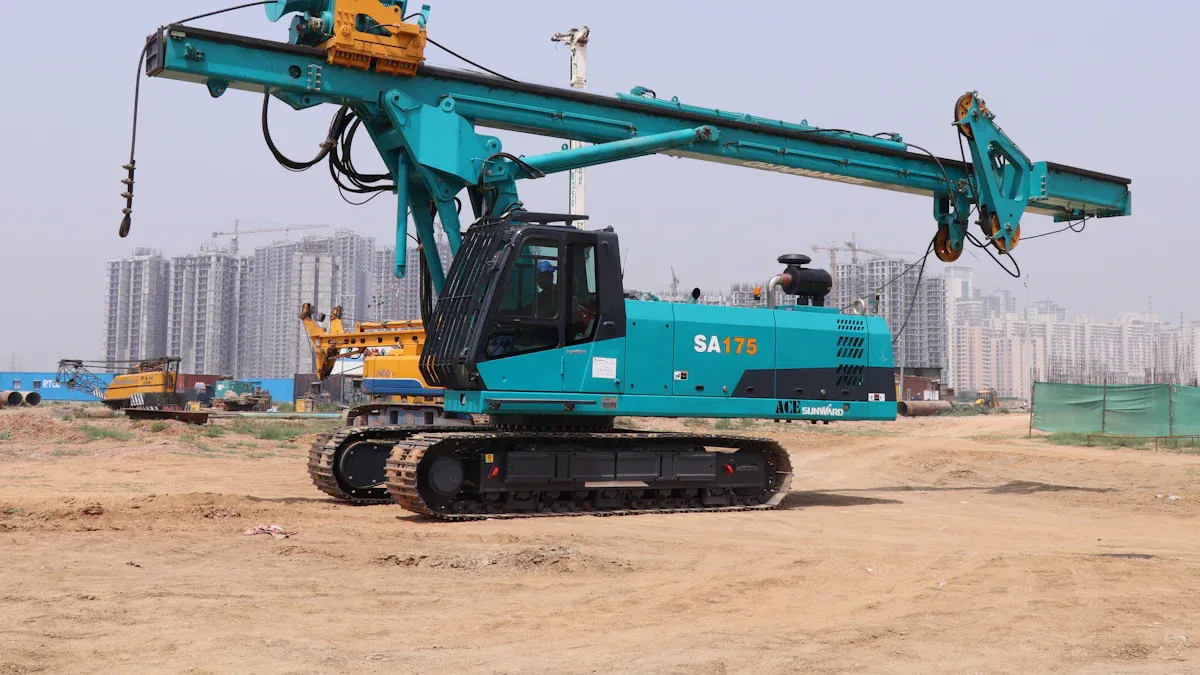
Drilling fluids are paramount for successful horizontal directional drilling. Without an effective mud system, issues like bore deviation and stuck pipe can lead to significant financial losses, costing billions annually. An Ultra Stable Mud System offers a fundamental solution to these challenges. This system enhances project efficiency, reduces costs, and ensures compliance with environmental regulations for any CEGC horizontal directional drilling machine. High-quality hdd drilling fluids are essential for optimal performance.
Key Takeaways
-
An Ultra Stable Mud System makes horizontal drilling projects better. It keeps the hole strong. It removes dirt well.
-
This system stops pipes from getting stuck. It protects drilling tools. It saves money. It reduces repairs. It lessens downtime.
-
Mixing and checking the mud is important. Recycling mud saves money. It helps the environment.
Drilling Fluids: Essential Functions in Horizontal Directional Boring
Drilling Fluids: Definition and Core Roles
Drilling fluids are special mixes. They are key for horizontal directional boring. These fluids do many important jobs. They take out solids from the hole. They also make tools slippery. They cool electronics too. This stops them from getting too hot. It prevents damage. Drilling fluids make the hole strong. This stops fluid from coming up. It keeps the drill path shape. They help pull out dirt. This limits how far you can drill. It stops the ground from rising. In sandy or gravelly soil, fluids make the hole strong. They also remove dirt. For clay, they stop the soil from growing. Sometimes, they need more chemicals.
Mud Stability: Key to Successful HDD
Strong mud is very important. It helps horizontal directional drilling work well. Good mud moves dirt easily. In flat holes, dirt falls down. This is due to gravity. Thick hdd drilling fluids hold this dirt up. This stops dirt from piling up. It prevents pipes from getting stuck. Good fluid also makes a thin layer. This layer keeps the hole strong in sandy soil. It stops the ground from falling in. This is very important for good work.
Unstable Mud: Risks in Trenchless Drilling
Bad mud in trenchless drilling is risky. Weak drilling fluids can make shale unstable. Clay can swell up. It can lose its stickiness. This happens with bad mud contact. Fluid seeping in can raise pressure. This makes rock soft. It causes the hole to fall apart. Problems also come up. Tools can get stuck. It is hard to move things around. These problems can break machines. They can also harm nature. A strong mud system stops these issues. Bad hdd drilling fluids can cause lost flow. They can also make the well unstable.
Benefits of an Ultra-Stable Mud System for HDD
A very stable mud system helps drilling projects. It fixes common problems. This makes work better. It helps operators with many issues.
Borehole Stability and Cuttings Removal
A stable mud system keeps the hole strong. It makes a thin layer on the hole walls. This layer stops fluid loss. It keeps the hole from falling in. This is good for tough ground. These fluids also remove dirt well. They carry solids out of the hole. This stops dirt from building up. This prevents problems. Removing dirt helps drilling go smoothly. It keeps the drill path right.
Preventing Stuck Pipe and Torque Spikes
A stable mud system stops pipes from getting stuck. It also lowers sudden twists. These problems cause delays. They cost a lot of money.
-
Using old mud again keeps it stable. This lowers stuck pipe risks. Bad mud often causes this.
-
Good mud mixing keeps mud right. Density, thickness, and flow stay the same. This helps clean curved parts. It keeps the hole stable. This stops dirt from building up. It prevents stuck pipes later.
-
Mud recycling removes solids. This keeps mud weight good. It keeps mud flow good too. This helps clean long holes. It stops dirt beds from forming. These beds can stick pipes. They can cause too much twist.
The system keeps mud steady. This lets the drill move freely. It lowers rubbing. It stops the drill pipe from sticking. This makes drilling smoother.
Equipment Protection and Cost Reduction
A stable mud system protects tools. It lowers project costs. Bad drilling fluids wear out tools fast. They need more repairs. This system reduces wear on pumps. It helps drill bits last longer. It helps other parts too. This makes expensive tools last longer.
|
Quantifiable Savings/Extension |
|
|---|---|
|
Maintenance Costs |
20-30% reduction |
|
Equipment Working Life |
15-25% extension |
|
Wear and Tear (mud pumps, drill bits) |
30-50% reduction |
|
Downtime (automated systems) |
30% reduction |
|
Maintenance Costs (predictive maintenance) |
Drastically reduced |
|
Useful Life of Components (predictive maintenance) |
Increased |
These savings are big. They come from fewer repairs. They come from fewer replacements. Less downtime also saves money. CEGC's drilling machine works better. It wears out less.
Frac-Out Prevention and Compliance
Frac-outs are a big worry. They happen when fluid pressure is too high. It breaks the soil around the hole. This damages the hole. A stable mud system stops these events. They cost a lot. They harm nature.
-
It adds positive ions. These are like Al3+. They lower soil changes. They help keep soil stable.
-
The system makes complex stuff. This fills gaps in the soil. This stops fluid from getting in.
-
It makes the soil stronger. This balances fluid pressure.
-
It changes the soil structure. This makes soil more stable. It helps particles connect better.
-
It keeps the mud's flow properties steady.
The system controls pressure. It controls fluid properties. This lowers frac-out risk. It helps follow environmental rules. It avoids costly cleanups. This careful way is key. It makes trenchless projects work well.
Managing Your Ultra-Stable Mud System
Mud Mixing and Water Quality
To make an ultra-stable mud system, mix it well. First, fill the tank with fresh water. Add 0.5 ppb Soda Ash. This makes the water softer. It helps the gel mix well. Next, add 40 ppb Bentonite. Let it sit for six hours. Then, add fresh water. This makes it 20 ppb Bentonite. Last, add 0.5 ppb Caustic Soda. Use a chemical barrel. Then pump it down the hole.
|
Product |
Function |
Concentration |
|---|---|---|
|
Fresh Water |
Base Fluid |
– |
|
Soda Ash |
Water Hardness Reducer |
0.5 ppb* |
|
Bentonite |
Viscosifier |
40 ppb |
|
Caustic Soda |
Alkalinity |
0.5 ppb* |
*Note: Change Soda Ash and Caustic Soda amounts. Do this after testing drill water hardness.
For seawater, the steps are different. Fill the tank with seawater. Add 3 ppb to 4 ppb Guar Gum. It is then ready to use.
|
Product |
Function |
Concentration |
|---|---|---|
|
Sea Water |
Base Fluid |
– |
|
Guar Gum |
Viscosity |
3-4 ppb |
It is best to make a 20 ppb displacement slurry. Mix 40 ppb pre-hydrated Bentonite with fresh water. This makes a better filter cake. It also makes the mud thicker. This is key for big holes. On land, they use drill water. Offshore, they use seawater. This makes it faster. It saves drill water.
Water quality affects drilling mud. Mud going into loose sand raises pressure. This makes the soil weaker. It can cause soil to turn to liquid. It can make the hole unstable. A good filter cake is important. It stops mud from leaking. This keeps the hole strong. Many things make a hole stable. These include soil stress and strength. Pore pressure and drilling fluid pressure also matter. The mud's chemicals are important. Instability can come from chemicals. This includes filter cake forming. Soil falling in and cracks also cause issues. Without a good filter cake, mud leaks fast. This makes soil particles lose pressure. This causes soil to crumble. It happens even with low mud pressure.
In South Florida, drillers had problems. They mixed bentonite with hard water. They did not treat the water. The bentonite did not work right. They added too much to stabilize the ground. This made drill solids 20%. Mud weight went up to 14.5 pounds per gallon. This made pressure higher (150 psi at 200 feet). Clean mud had lower pressure (90 psi). This made the hole less stable. It also caused more fluid loss.
Adapting to Ground Conditions
Different ground needs different mud. Sandy soil needs mud. It forms a strong filter cake. This stops fluid loss. Clay needs mud. It stops swelling. This keeps the hole open. Rocky areas need mud. It carries heavy cuttings. It also greases the drill bit. Changing the mud helps drilling. It stops problems like holes collapsing. It stops tools from getting stuck.
Monitoring and Adjusting Mud Properties
Always check mud properties. This makes sure the horizontal directional boring ultra stable mud system works. Tools help operators make changes fast. This keeps the drilling fluid working well.
-
Online Rotational Couette Viscometer: This tool checks all flow properties. It works in real-time. It is good for thin mud. It is good for mud with few solids.
-
Pipe Viscometer: This gives a good real-time check. It can become a small, standard tool.
-
MWD Downhole Pressure Measurement: This can check drilling fluid flow.
-
Ultrasound Technology: This uses sound changes. It checks mud properties. It sees solids or polymers. This needs more study.
-
Mud Level Monitoring: This sees if mud is lost or gained. It watches mud level in a tank. It is slow to react. It is not very sensitive.
-
Micro Flow Monitoring: This compares mud flow in and out. A difference means mud is lost or gained. This is simple and works fast. But measuring flow can be hard.
-
Annulus Pressure While Drilling (APWD): This checks pressure at the bottom of the hole. It compares it to expected pressure. This helps find problems early. Mud movement and gas affect it.
-
Acoustic Monitoring Technology: This finds gas (well-kick). It checks sound speed differences. It compares liquid to gas-liquid mixes. Sound signals can be easily messed up.
-
Logging Parameter Monitoring: This uses full logging. It checks hole info all the time. It checks weight on bit. It checks hook load and speed. It checks mud flow and pressure. It checks mud density and hydrocarbons. This is old tech and cheap. Accuracy can be off. This is due to drill string rubbing the hole.
-
Logging While Drilling (LWD): This checks rock waves. It checks resistance and density. It does this in real-time.
Mud Recycling and Cost Savings
Mud recycling helps a lot. It helps the environment. It saves money too. It cuts waste disposal costs. It lowers bad gas emissions. It also needs less new water. Fluid additive costs go down. Drilling fluid flow gets better. Equipment repair costs also drop.
For example, a project in B.C. used recycled mud. It removed 1,018 m³ of dry dirt. This was in 8 days. It was spread on site. This saved hauling 1,934 m³ of wet dirt. That is 84 truckloads. This cut carbon by 35,834 kg of CO2. This is like taking 8 cars off the road. This shows big gains. It saved money and helped nature. It cut fluid waste. It cut gas from transport. It also needed less new water.
Less waste and mud recycling save money. They avoid costs from shutdowns. They avoid worker injury costs. Equipment repair costs are lower. Fines and legal fees are less. Insurance costs do not rise. Hidden costs are also avoided. These include lower work output. They include more staff leaving. Lost business from a bad name is stopped. Costs for hiring new workers are saved. Cleanup costs are very high. Oil companies can spend $60,000 to $80,000. This is to clean a site. There is a 25-year cleanup rule. There is a lifetime rule for pollution. This makes preventing cheaper than cleaning. Recycling is key for drilling waste. It lessens harm to nature. It helps the earth. It makes care better. Old ways of getting rid of waste are not good. The industry is recycling. This is to cut waste.
HDD Machine's Role in Mud System Success
The horizontal directional drilling machine helps the mud system. A strong drill rig, like CEGC's, helps mud work. These machines help size pumps. This matches flow and pressure. It matches bore length and ground. They make sure mud flows right. They are ready for filters. This keeps optimal hdd drilling fluids. The machine's design also affects mud. Smooth power delivery reduces shaking. This stops tools from wearing out fast. It cleans the hole well. CEGC's machines work well together. They work with different mud plans. This allows good control. This team effort is key. It leads to better drilling.
An ultra-stable mud system is very important. It helps with drilling projects. This system stops the drill from going off course. It keeps pipes from getting stuck. It also protects nature. Good mud care saves money over time. It makes work excellent. Use it with a strong CEGC drill. This makes trenchless work better.
FAQ
What is an ultra-stable mud system?
This system uses special liquids. They keep holes strong. They take out dirt well. This stops drilling problems.
How does it prevent stuck pipe?
This system keeps mud steady. It lowers rubbing. It stops dirt from piling up. The drill pipe moves freely.
Why is water quality important for mud mixing?
Good water helps mud mix right. It lets bentonite work well. This makes good drilling fluid.


