
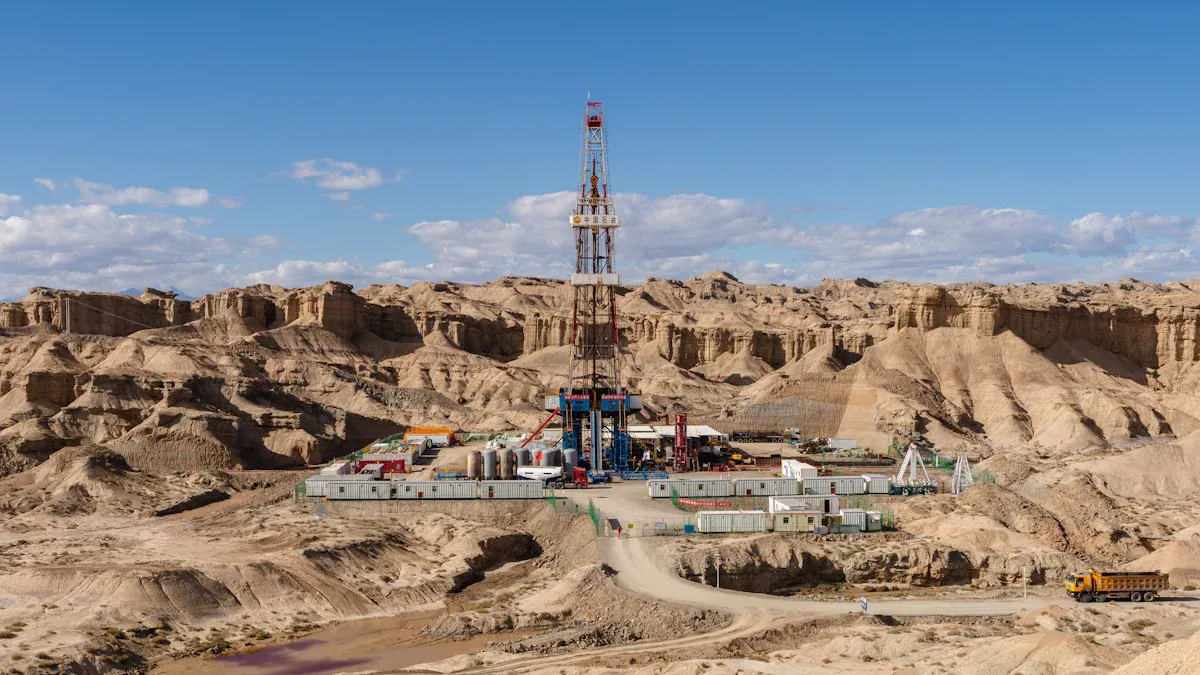
When drilling in tough ground, you often face multiple challenges. The Directional Bore Machine Stable Flow Solves Issues by addressing these common problems:
-
Ground damage
-
Drilling fluid loss
-
Stuck pipe
-
Mud management difficulties
-
Contaminated mud
-
Inadequate hole cleaning
CEGC provides solutions to protect your tools and ensure efficient, reliable drilling operations.
Key Takeaways
-
Steady circulation helps keep boreholes safe. It stops problems like collapses and stuck pipes. Use mud flow and drill-string rotation together for best results.
-
Good mud management lowers fluid loss. It also makes recycling better. This saves money and helps the environment by making less waste.
-
Change your drilling plan for different soil types. Use geotechnical surveys to learn about the ground. Adjust fluid mixes to keep control and accuracy while drilling.
Directional Bore Machine Stable Flow Solves Issues
Borehole Stability and Cuttings Removal
It is important to keep the borehole open and clear while drilling. The directional bore machine stable flow solves issues by moving mud at a steady speed. This steady flow helps lift cuttings out of the hole. It also stops them from settling at the bottom. If cuttings stay in the borehole, they can block the way. This can cause stuck pipe or even make the borehole collapse. You can look at the table below to see how steady circulation works:
|
Mechanism |
Description |
|---|---|
|
Hydraulic lift |
Mud flows upward in the annulus, carrying cuttings out. |
|
Mechanical agitation |
Drill-string rotation helps lift or resuspend settled cuttings, especially in deviated wells. |
|
Fluid suspension |
Mud rheology aids in suspending fine particles during circulation and static periods. |
You should use circulation and drill-string rotation together, especially in horizontal or curved parts. This keeps the borehole clean and helps it stay strong. A tandem sweep strategy is also helpful. First, use a low-viscosity pill to move cuttings. Then, use a high-viscosity pill to lift them out. By watching the process and keeping the flow steady, you stop cuttings from building up. This keeps your project on schedule and protects your tools.
Fluid Loss, Frac-Out, and Mud Management
When you drill in tough ground, you can lose fluid or have frac-out. The directional bore machine stable flow solves issues by controlling pressure and keeping mud the same. You need to pick the right fluid and keep the density correct. This helps stop pressure from getting too high. If you guess wrong about the hole size or soil, fluid can escape into the ground.
Advanced mud management systems help you use less fluid and recycle more. These systems keep mud quality good. This makes your equipment last longer and need less fixing. You can see the benefits in the table below:
|
Benefit |
Impact on Efficiency and Compliance |
|---|---|
|
Reduced drilling fluid consumption |
Leads to cost savings and efficient resource use. |
|
Effective recycling and reuse |
Minimizes waste generation and supports environmental regulations. |
|
Consistent mud quality |
Extends equipment life and reduces maintenance needs. |
|
Automated operation |
Lowers labor requirements and enhances worker safety. |
|
Real-time monitoring |
Allows for immediate adjustments, optimizing performance. |
|
Modular design |
Facilitates easy installation and scalability for various projects. |
|
Reduced operating costs |
Minimizes disposal volumes and associated expenses. |
|
Maintained precise mud properties |
Ensures better drilling performance and reduces wellbore issues. |
|
Compact footprint |
Ideal for space-constrained sites, ensuring reliable operation. |
By recycling up to 80% of drilling fluids, you save water and help the environment. The directional bore machine stable flow solves issues by keeping mud moving. This helps you avoid delays and expensive cleanups.
Preventing Equipment Stress and Downtime
You want your equipment to last and finish the job on time. The directional bore machine stable flow solves issues by lowering stress on rods, pumps, and other parts. When you keep the flow steady, you stop sudden torque spikes and pressure shocks. This protects your tools and lowers the chance of stuck pipe or tool failure.
You should follow pump sizing rules for your site. First, find out about your electrical supply and the fluid you will use. Next, figure out the design flow and measure the distance for friction loss. Pick the right pipe size and fittings to keep pressure steady. These steps help you keep things stable and stop overloads.
Steady circulation also keeps drilling fluid temperatures safe. This matters in hot places, where heat can hurt equipment and slow down work. By managing circulation times and using the right fluids, you keep your project on track and costs down.
Tip: Use CEGC’s anti-stall powertrain and overload protection features to lower downtime and protect your investment.
You can see that directional bore machine stable flow solves issues by keeping the borehole stable, removing cuttings, managing mud, and protecting your equipment. This method gives you better results and helps you finish your drilling project safely and on time.
Precision and Adaptability in Horizontal Directional Drilling
Managing Variable Soils and Unexpected Formations
Horizontal directional drilling can surprise you. Soil changes fast from sand to clay or rock. You must keep control and make sure things stay stable. Here are some ways to handle these changes:
-
Start with a geotechnical survey. It shows what is underground before you drill.
-
Change your drilling fluid mix. The right mix keeps the borehole stable and helps remove cuttings.
-
Use steerable drill heads and reamers. These tools help you stay on the planned path.
-
Watch drilling pressure and torque. Make changes quickly when you see a problem.
CEGC’s horizontal directional drilling machines can handle different soils. You can change torque and thrust settings for each job. This keeps your project moving and protects your equipment.
Enhancing Drilling Accuracy and Reducing Deviation
Accuracy is important in every horizontal directional drilling project. You want your bore to follow the plan. CEGC gives you advanced tracking and control systems. These features help you keep the drill on target and improve stability. Look at the table below for tracking technologies:
|
Technology |
Description |
|---|---|
|
Advanced Software Platforms |
Uses real-time data to guide drilling and improve accuracy. |
|
Makes controls easy and collects data for better performance. |
|
|
Automation Integration |
Links teams and data for faster decisions and more stable drilling. |
You can adjust rotation speed and penetration rate. Sensors and real-time monitoring let you change settings as you drill. This keeps your borehole stable and lowers the risk of deviation.
Customization and Best Practices for Steady Flow
You can customize CEGC’s horizontal directional drilling rigs for your project. Pick the right rod size, tool joints, and mud pumps. Match your equipment to the soil and bore length. Follow these best practices for steady circulation and stability:
-
Use thick drilling fluid to lift cuttings and keep the borehole open.
-
Flush pipes with high pressure to clear blockages.
-
Build entrance pits to collect and reuse drilling fluid.
-
Choose powerful drills and enough pumps for the job.
Tip: Write down your best settings and results. This helps you improve future horizontal directional drilling projects.
You get better results and more stability when you follow these steps. Your team stays safe, and your equipment lasts longer.
You can do well in tough ground if you use steady circulation. CEGC’s horizontal directional drilling machines have standard and custom options. Look at the table below to see how good planning and teamwork help you get better results.
|
Best Practice |
Measurable Outcome |
|---|---|
|
Hydraulics and Cleaning |
Better efficiency |
|
Real-Time Monitoring |
Fast problem detection |
FAQ
What is directional drilling?
Directional drilling lets you guide the drill underground. You do not need to dig up the ground above. This way, you can reach your goal without making a mess. It helps you go around things in the way. It also helps keep nature safe.
How does directional drilling improve project safety?
Directional drilling helps keep workers out of danger. The drill works under the ground. You do not need to make big holes on top. This means less trouble from cars and bad weather.
Can you use directional drilling for different soil types?
You can use directional drilling in sand, clay, or rock. You change the drill settings for each type of ground. This makes it work for many kinds of jobs.


