
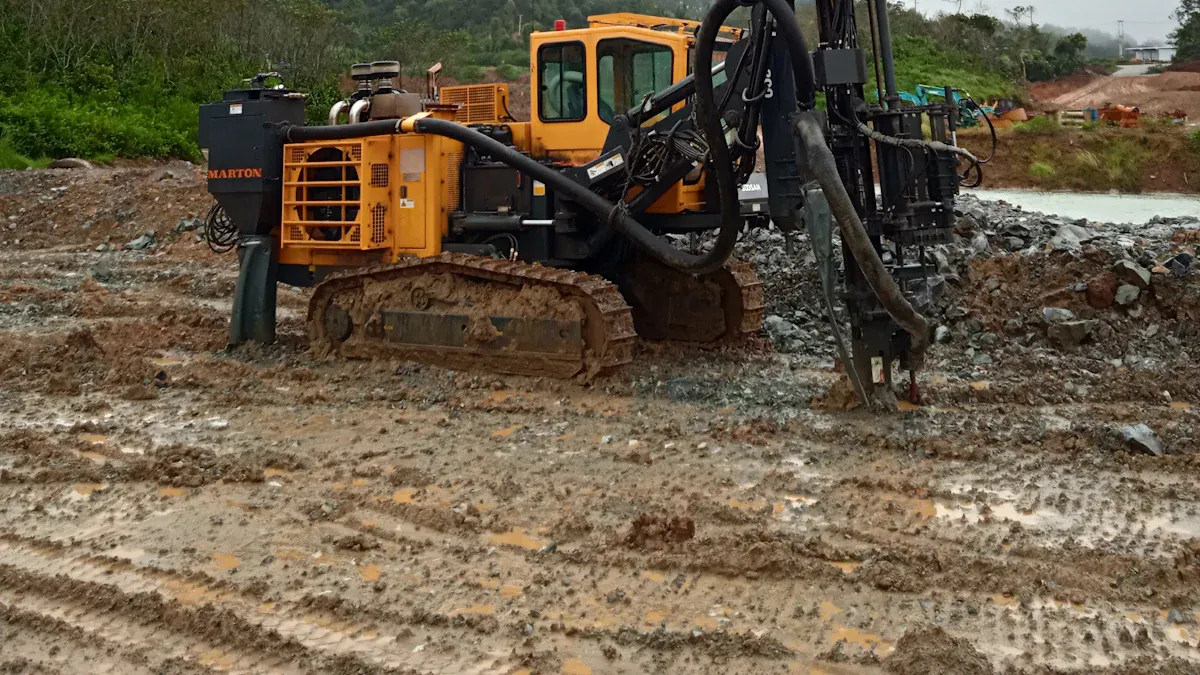
You must keep mud pressure steady to stop holes from falling in during horizontal directional drilling. Mud holds up the sides of the borehole and keeps formation pressure even. Contractors using CEGC horizontal directional drilling machines and Trenchless Drilling Rigs face dangers like too much mud pressure and mud getting into places it should not. Good mud management helps you stay away from these issues. Horizontal Drill Constant Mud Prevents Hole Collapse.
Key Takeaways
-
Keep mud pressure steady to stop the hole from collapsing. This helps the sides of the hole stay strong and safe.
-
Use good mud management to stop fluid loss and drill well. This saves time and lowers costs.
-
Check and change drilling fluid often to fit the soil. This makes drilling work better and keeps it stable.
Horizontal Drill Constant Mud Prevents Hole Collapse
What Is Mud Pressure?
Mud pressure in horizontal directional drilling means how hard the drilling mud pushes inside the hole. This pressure is very important because it keeps the hole from falling in. If the mud pressure gets too high, it can cause problems like frac-out or blow-out. These problems can hurt the environment and damage things around the drill.
It is important to know about mud pressure because it keeps the hole safe. When you use a horizontal directional drilling machine, you pump mud into the hole. The mud pushes on the sides of the hole. This stops the dirt from falling in. If the pressure is not steady, the hole can fall in. You have to check the pressure all the time.
There are different ways to measure and watch mud pressure. Here is a table that shows some common ways:
|
Method |
Description |
|---|---|
|
Downhole Pulser Unit |
Changes mud pressure inside the drillstring to make signals that can be read at the surface. |
|
Surface Pressure Transducers |
Check pressure changes and turn them into digital signals for people to study. |
|
Mud-Pulse Telemetry |
Sends data by making pressure changes in the mud, which are read at the surface. |
|
Positive Pulse Tools |
Blocks mud flow for a short time to make pressure go up, sending information in the pressure. |
|
Negative Pulse Tools |
Lets mud out for a short time to make pressure go down, also sending information in the pressure. |
If you use CEGC’s horizontal directional drilling machine or Trenchless Drilling Rig, you get special systems to help you watch and control mud pressure. These machines help you keep the pressure just right, which is very important for every job.
How Mud Supports the Borehole
You need the right mud pressure to hold up the hole. The horizontal drill constant mud keeps the hole from falling in by pushing on the dirt and holding it back. The mud helps because of its pressure and the way it is mixed. If the pressure drops, the dirt can move in and block the hole.
-
Drilling mud makes a thin layer on the sides of the hole, which helps keep the hole strong and stops it from falling in.
-
The way you mix the drilling mud is important; if you mix it wrong, the mud can leak out or the hole can fall in, which can slow down your work and cost more money.
-
Bentonite is a big part of drilling mud and helps make the strong layer on the hole walls.
You have to keep the pressure steady. If the pressure goes down, the hole can fall in. If the pressure is too high, mud can leak into the ground. The horizontal drill constant mud keeps the hole safe by making sure the pressure is balanced.
Let’s see what happens when mud pressure changes:
|
Mud Pressure (kPa) |
Effect on Borehole Stability |
Observations |
|---|---|---|
|
100 |
Does not stop soil pressure, so mud leaks in |
Mud column gets smaller, some mud leaks in |
|
300 |
Keeps things balanced, stops collapse |
No mud leaks in |
|
600 |
Keeps the hole strong, good conditions |
No mud leaks in |
|
1000 |
Too much pressure, mud spreads out |
Mud wall does not work well, dirt moves in |
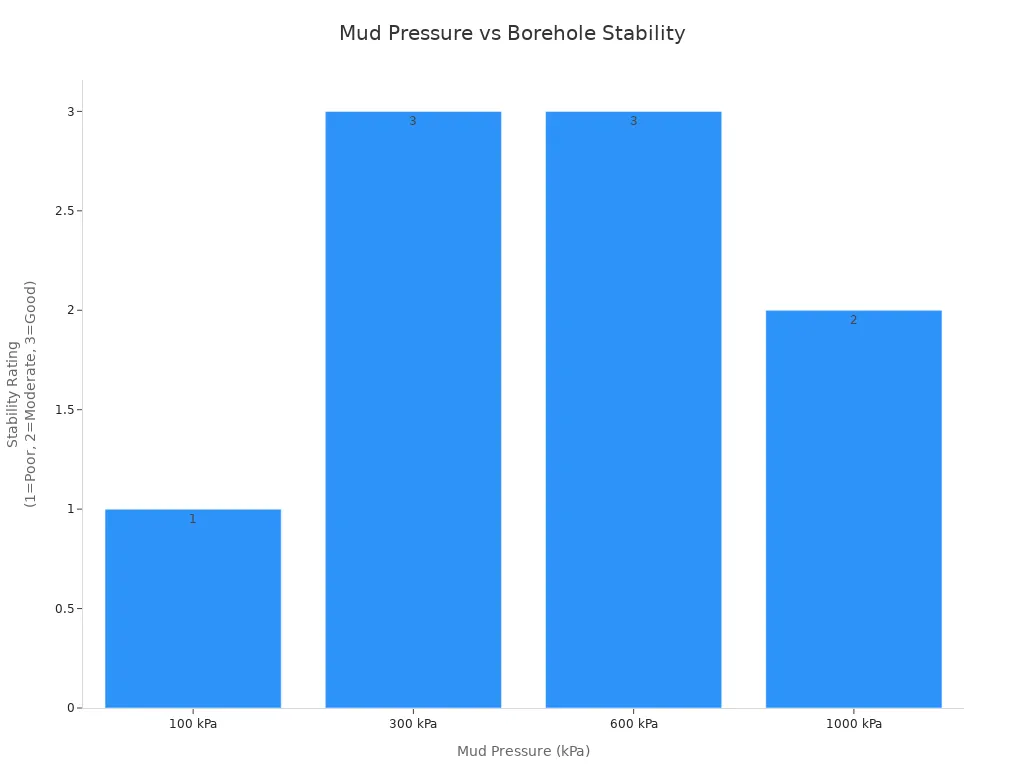
You can see that the right pressure keeps the hole strong. The horizontal drill constant mud keeps the hole from falling in by making sure the pressure is not too low or too high. If you use CEGC’s horizontal directional drilling machine, you get tools to help you keep the pressure just right. This helps you finish your work safely and on time.
The science is simple. Mud pressure holds up the sides of the hole and stops dirt from moving in. The horizontal drill constant mud keeps the hole from falling in by making a strong wall. You always need to check and change the pressure to fit the dirt and how deep the hole is. With the right tools and good mud control, you can stop problems and finish your project.
Mechanisms for Borehole Stability
Hydrostatic Pressure Effect
It is important to know how hydrostatic pressure helps keep the borehole safe. When you pump drilling mud into the hole, it makes a column of fluid. This fluid pushes out on the sides of the borehole. The mud pressure must be higher than the groundwater and formation pressure. If you keep the mud level high, you get enough hydrostatic pressure to hold up the walls.
Hydrostatic pressure makes a barrier between the drilling fluid and the soil. This barrier is called a filter cake or gel membrane. It stops soil from falling in. In soft or loose soils, you must keep the fluid level up to keep the right hydrostatic head. If the pressure drops, the borehole can fall in. If the pressure is too high, mud can leak into the ground.
Tip: Always make sure your drilling mud pressure is higher than groundwater pressure. This easy step helps stop sudden hole collapse.
Here are some facts about pressure in horizontal directional drilling:
-
Normal formation pore pressure is about 0.465 psi per foot.
-
In some tight soils, formation pressure can be up to 1 psi per foot.
-
You must keep your hydrostatic pressure above these numbers to keep the borehole safe.
-
Positive hydrostatic pressure is needed for good drilling.
When you use a CEGC horizontal directional drilling machine, you get tools to watch and control pressure. These systems help you keep the right balance for borehole safety.
Fluid Loss and Cuttings Control
Fluid loss is a big problem in horizontal directional drilling. If your drilling mud leaks into the ground, you lose pressure. This can make costs go up, slow down your work, and cause problems for the environment. You need to use the right mud mix to stop fluid loss and keep the borehole safe.
Drilling mud does more than just hold pressure. It also carries cuttings out of the hole. If you do not remove cuttings, they can pile up and block the borehole. This can cause stuck pipe or make the borehole go off course. Good cuttings control helps keep the borehole open and safe.
Here is a table that shows how cuttings control helps with borehole safety:
|
Aspect |
Explanation |
|---|---|
|
Cuttings Transport |
Moves cuttings out of the hole to stop blockages and pressure drops. |
|
Equivalent Circulating Density (ECD) |
Keeps pressure steady and stops problems with borehole safety. |
|
Overall Borehole Integrity |
Good cuttings control keeps the borehole strong during drilling. |
You should always check your drilling fluid properties. Low solids content and good filtration control help keep the borehole safe. Some additives, like ENI, can make soil stronger and stop fluid from leaking out. These additives fill spaces between soil pieces and make the soil around the borehole stronger.
If you do not manage your mud and pressure, you can get stuck pipe and bore deviation. Stuck pipe happens when cuttings pile up or when high pressure traps the drill string. Bore deviation can happen if you do not clean the hole well or if pressure changes too much. You can stop these problems by using good mud, keeping pressure steady, and watching your drilling process.
Note: Good mud management and pressure control are your best tools for borehole safety. Always use equipment that lets you watch and change these things as you drill.
By knowing these ways to keep your borehole safe, you can avoid big problems and finish your project on time.
Practical Steps for Stability
Monitoring and Adjusting Mud
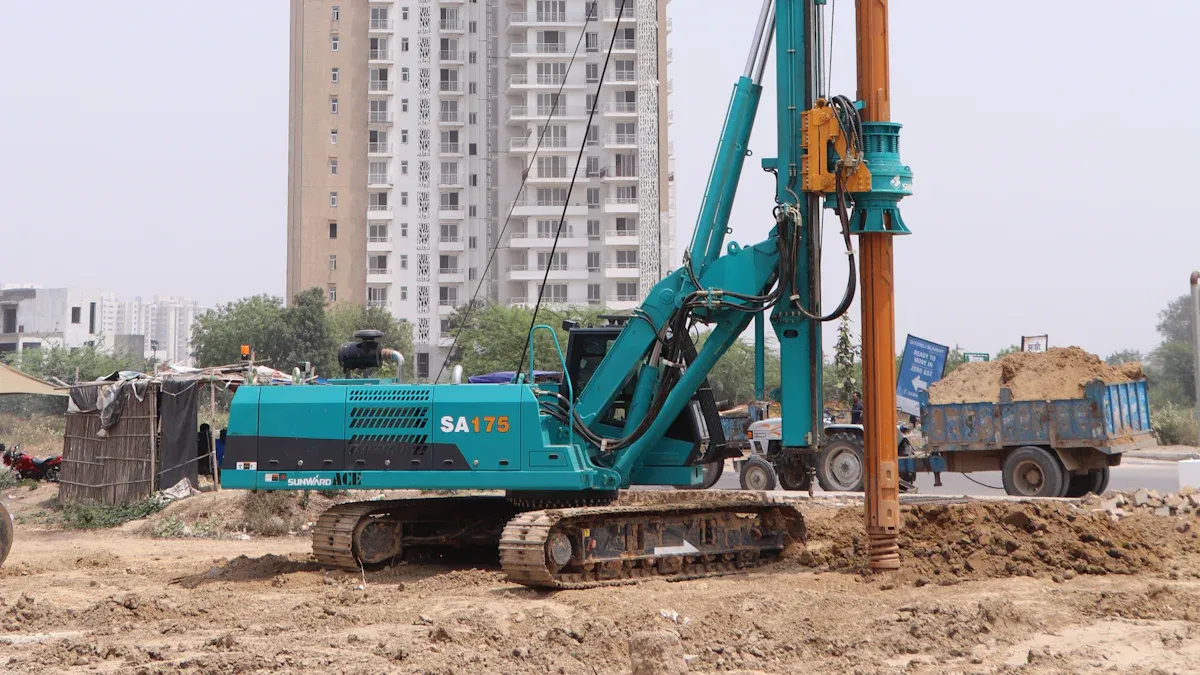
You need to watch and change drilling fluid to keep the hole safe. Checking how thick the mud is and how fast it moves helps you move cuttings out and control pressure. If you measure annulus pressure as you drill, you can remove debris better and lower risks. Sensors and software help you track things like hookload, rotary speed, torque, how fast you drill, pit level, flow, fluid density, and temperature. Watching hydraulics gives you early signs if the hole is not stable.
-
Make sure drilling fluid matches the soil.
-
Change tools and mud mix for each ground type.
-
The drilling fluid should make a filter cake to keep the hole strong and stop water from leaking out.
-
Work with a drilling fluid expert to get the best mud recycling and solids removal.
Drilling fluid methods are better now. Jim Watland, an operations manager, says, "Now, I can use the same size horizontal directional drill and go 500 feet farther or make the hole 10 inches bigger because we know how to use new drilling fluid products."
Fluid Management Solutions
You need good fluid management to keep pressure steady and the hole safe. Reclaimers clean and reuse drilling fluid, which saves water and cuts down on waste. High-pressure mud pumps help make cuttings and keep pressure even. Fluid mixing systems blend the right ingredients for the soil to make the best drilling fluid.
|
Solution |
Benefit |
|---|---|
|
Reclaimers |
Save water, reduce waste |
|
High-pressure mud pumps |
Keep pressure steady, make cuttings |
|
Fluid mixing systems |
Match drilling fluid to soil |
Drilling fluid holds up cuttings and moves them out of the hole. You need to check pH and calcium to make the fluid work well. Using CEGC horizontal directional drilling hdd equipment gives you top specs and great fluid management. These steps help you keep the hole safe and stop it from falling in.
You keep the borehole safe by keeping mud pressure steady. Good pressure control stops the hole from falling in. Some important steps are moving cuttings, making the walls strong, cooling the drill head, and lowering friction. Managing mud well helps you work faster, spend less money, and protect the environment. CEGC horizontal directional drilling machines give you good results.
|
Recommendation |
Description |
|---|---|
|
Use Packaged Mud Recycling Systems |
Save money and make HDD work better. |
FAQ
What happens if you do not keep mud pressure steady?
You risk hole collapse. The borehole walls can fall in. You may face stuck pipe or lost tools.
Why should you use CEGC horizontal directional drilling machines?
You get reliable mud management. The machines help you control pressure. You finish projects faster and safer.
How do you know if mud pressure is right?
-
Watch for steady returns at the surface.
-
Check pressure gauges often.
-
Ask your drilling fluid expert for advice.


