
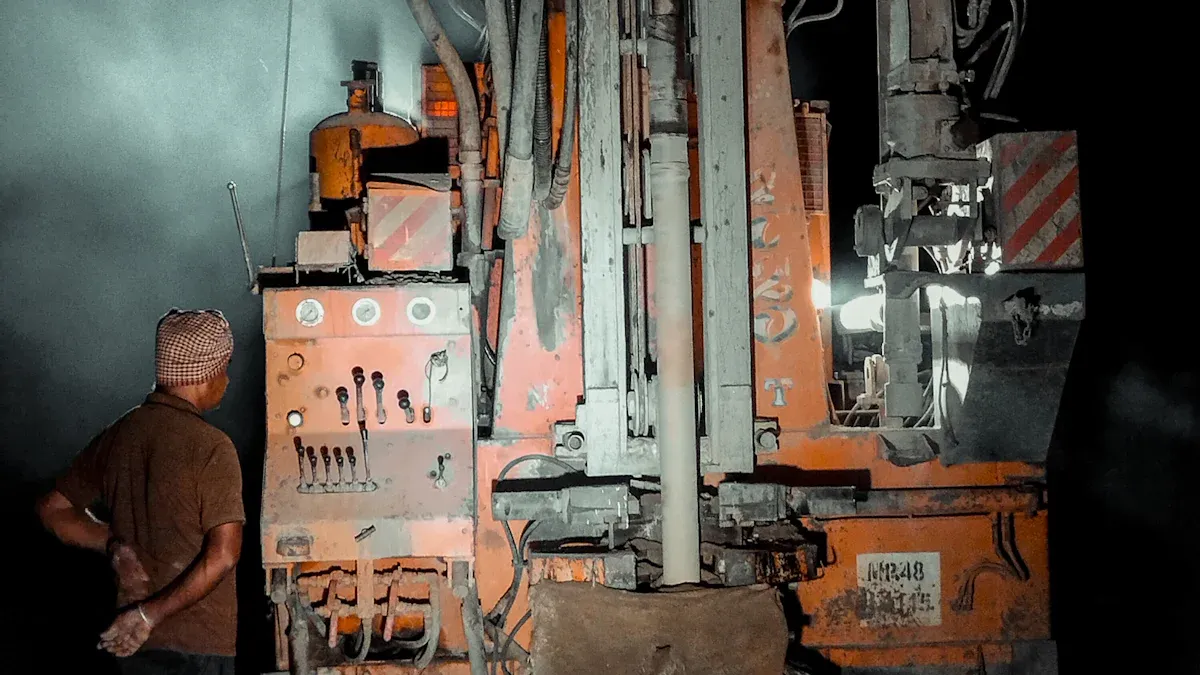
The need for trenchless ways to build things is growing. Horizontal directional drilling rigs are very important. We need to know the expected horizontal directional drilling rig max transfer for 2026. The market for fixing pipes without digging will be big. It will be 6.96 billion dollars in 2026. Horizontal directional drilling is a good way to build pipelines. It is also good for other underground work. It does not harm the environment much. It saves money too. CEGC helps with good drilling solutions.
Key Takeaways
-
By 2026, drilling rigs will drill longer and wider. They will use stronger power, better steering, and smarter tools.
-
New technology helps rigs work better. This includes stronger engines, precise guidance, and smart fluid systems.
-
Big rigs will drill over 10,000 feet. They will use pipes bigger than 60 inches for large projects like water lines and clean energy.
What is HDD Max Transfer?
What HDD Transfer Means
"Horizontal directional drilling rig max transfer" means how much a rig can do. This includes how far it can drill. It also includes how big a pipe it can put in. The type of material matters. The pipe's weight matters. The path's difficulty matters. These things set limits for drilling. Knowing this helps with building underground.
How We Measure Drilling Machines
We use several ways to measure drilling machines. Pullback force helps put in pipes. Torque shows how much power it has to drill. Fluid flow helps keep the hole steady. It also removes dirt. Rod capacity tells us how long the drill can go. New drilling rigs drill better. They can drill 200 feet in an hour. Old ones only did 100 feet. Brands also care about saving fuel. They care about less pollution. AI watches things as they happen. This makes drilling better.
Dogleg severity (DLS) is also important. High DLS puts stress on the drill. It also makes drilling less good. Keeping DLS low makes drilling safe and good. How fast it drills (ROP) changes costs. AI and new models guess ROP. This makes drilling work best.
What Drilling Rigs Can Do Now (2023-2024)
How Far and How Big
Today's drilling tools can do many jobs. Small rigs drill less than 1,000 feet. They connect local pipes. Medium rigs drill 1,000 to 3,000 feet. They are good for longer lines. Big rigs can drill 3,000 to 5,000 feet. They build large pipelines. Pipes can be small or big. They are made of PVC, HDPE, or steel. This helps with many underground jobs.
Problems We Face Now
The drilling world has problems now. Many companies want to install fiber. This makes prices very low. Some new companies are not careful. They do not follow rules. This makes things unsafe. It is hard to find skilled workers. Getting equipment is also tough. Help for machines is a big problem. These things make projects slower. But drilling rigs are still getting better. CEGC helps solve these problems.
Advancements Driving 2026 Horizontal Directional Drilling Capabilities
The future of horizontal directional drilling is bright. New technologies make rigs stronger. They make them more exact. These changes fix common problems. They help with bigger underground jobs. These jobs are also harder.
Enhanced Power and Anti-Stall Powertrain Systems
Modern drilling rigs are getting stronger. Engines and hydraulic systems are better. These changes boost pulling power. They also boost rotation. They fix issues like stuck pipes. They stop sudden torque. They cut down on idle time. High power is now normal. It works at many speeds. Hydraulic sensing is also key. Pressure control helps too. They help stop damage. Slow starts and stops reduce shock. This protects rods and tools.
Many main hydraulic parts come from top brands. Danfoss makes the rotary pump. It also makes the feed pump. The control handle is also Danfoss. Two Poclain motors turn the power head. These motors are fast and work well. They give lots of power. They break down less often. A special system can pull 110 tons. This helps with hard obstacles.
Advanced power systems use two 565kW engines. Other engines are 264kW and 154kW. A computer controls these engines. This makes sure power matches hydraulics. This design gives strong power. It also makes drilling better. Motors with many protections handle tough spots. This makes motors last longer. It ensures top drilling. Computer settings manage drilling. These include power, speed, and force. They allow for auto changes. This keeps power steady. It stops drill pipe problems.
New models show big progress. The Ditch Witch AT/JT120 is an example. It has 120,000 lb of force. This allows for longer drills. It allows for bigger pipes. It helps the pipeline industry. These models also have 15,500 ft-lb of turning power. They have 3,000 ft-lb of inner turning power. A 20-ft drill pipe design helps. It makes drilling time longer. It limits connecting and breaking.
Precision Guidance and Stability Systems
Better steering makes drilling more exact. It helps over long distances. These systems fix wrong turns. They stop crossing failures. They ensure exact steering. They ensure steadiness. Load-matched control helps. It links thrust, pull, turn, and feed. Strong frames reduce shaking. Carriage alignment helps too. Tracking systems are common. They often record data. They also control the process.
SmartNAV is an auto steering system. It makes drilling more exact. It gives auto instructions. These show the best path. It makes drilling steady. It makes sure rules are followed. It sets max turns. It shows records of choices. It works with SmartSLIDE. This is for remote work. Dashboards and 3D views help. They make work easier.
Steering uses a special bit or motor. A sensor tells the driller. It shows how steep it is. It also shows the roll. This helps control direction. You push the drill string. You do not turn it. Surveying finds the drill's spot. It uses sensors for steepness. Magnetic sensors find direction. These readings show the hole's spot. Tracking checks the survey. It uses outside points. A tracker sends a signal. Sensors in the tool feel this signal. This gives more check points. It makes it more exact.
A combined method uses a navigation system. It also uses sound tech. A turning magnetic system helps. It fixes the path exactly. This system works over 100 meters. It uses sensitive tools. It also boosts signals. The navigation system gives quick data. It is very exact. It works even with magnetic issues. Sound tech gives more location data. A smart control system helps. It uses real-time data. It uses machine learning. It guesses and fixes drill path errors.
ParaTrack systems are very exact. The Gyro Module works with many rigs. The Steering Tool does many things. It steers, surveys, tracks, and logs. ParaTrack P2 AC Wire Guidance checks surveys. It changes for job limits. It uses surface coils. It can use underground wires. The Beacon Tracker System is easy to move. It gives an outside point. This helps find the drill's spot. It is good for river crossings. The At-bit Inclination Assembly helps. It makes steering more sure. It measures steepness at the bit. This allows for tight turns. The Magnetic Intersect reduces pressure. It makes drills longer.
Advanced steering uses 'seamless steering.' To change direction, the drill stops turning. The slant face is set. It is opposite the path wanted. With old slant face tech, pushing without turning moves the drill head. Bent sub systems work with two-pipe systems. They move in the bend's direction. This happens when pushed. Workers watch the drill head's direction. They use electronic tracking. They use HDD guidance systems. This makes sure turns are exact. Guidance systems include walkover systems. They also include non-walkover wireline systems.
Putting utilities into a plan is key. Setting safe distances helps. Meeting space rules avoids hitting pipes. This stops crossing failures. Checking the plan is important. Finding utilities confirms their size. It confirms their depth. This happens before putting them in the plan. This lowers risk. Ground radar finds utilities. It finds them up to 15 feet deep. Map systems combine data. This gives a full view of the path. Electric tools confirm metal pipes. GPS mapping makes good records. Full route checks include ground tests. They also include utility maps. They include nature surveys. This helps with drilling plans. It helps avoid problems.
Tooling Compatibility and Durability for Trenchless Drilling Rigs
Stronger drill rods are now here. They are also lighter. Better bit designs are also key. These changes fix high costs. They fix tool wear. They offer good tools. They are also long-lasting. This includes working with many reamers. It also gives smoother power.
Drill rods are made from special metals. These metals are flexible. They are strong. They last long. This is needed for drilling. They handle bending. They handle turning. Different steel mixes help rods. They return to straight better. This is better than normal steel. Special steel makes drilling better. It makes tools last longer. This is true in hard steering.
Top makers create special steel. This is for drilling. These rods are often one piece. This makes them stronger. It removes welds that could break. This method helps. It has exact threads. It makes tools last long. It makes drilling good. This is for tough jobs.
|
Series |
Hardening Method |
Key Composition |
Durability/Wear Improvement |
|---|---|---|---|
|
A-series |
Air-hardened |
5% Chromium |
Better water-resistance, less bending |
|
D-series |
Air-hardened |
More Chromium |
Higher wear resistance, keeps shape |
|
O-series |
Oil-hardened (lower temperature) |
High Chromium |
More resistant to bending, wear resistant |
Drill bit designs are much better. PDC bits are examples. New tech like RockStorm™, Kymera™ Hybrid, and MegaForce™ bits are too. They make tools work better. They cut costs for rigs. These new ideas make drilling better. They reduce shaking. They make bits last longer. They need less upkeep. This means lower costs. It also means rigs work more.
PDC bits are better than Tricone bits. They drill faster. They work steadily for a long time. This means lower upkeep costs. It means less fuel use. RockStorm™ Technology has cutters. These are built-in. They resist wear. They resist hits. They are also steady. This stops spinning. This makes bits last longer. It makes work smoother. The Kymera™ Hybrid Drill Bit mixes cutters. It has fixed PDC and rolling ones. This dual action balances power. It balances energy. It boosts drilling speed. It reduces shaking. It makes turns smoother. The MegaForce™ Bit uses special PDC. This keeps it sharp. It has good water flow. It has small nozzles. These help remove dirt. Multi-level balancing gives strength. This is for hard drilling. It also uses Tungsten Carbide. It has a good length. This fights wear. It makes control better. New bits mean fewer trips. They drill faster. They shake less. They make drilling deeper. They make it faster. They make it smarter.
Advanced Fluid Management and Mud Engineering
Better drilling fluids reduce rubbing. They make the bore steady. This fixes bad fluid work. It fixes frac-out risk. It offers a mud solution. It also offers fluid control. Pump size advice is important. The path of flow is key. Filtering readiness is too.
Special oils reduce turning power. They cut it by 18–22%. This is in angled wells. Better mixing tech makes stable oil-water mixes. This is key for oiling drill strings. This is in steep parts. Special oils cut turning power by 40%. This is more than mineral oils. This is in S-shaped wells. Special soaps cut turning power by 18%. This was in Bakken tests. They change with heat. Cellulose products cut filtering rates. They cut them by 38% to 52%. This is compared to older options. This makes the wellbore steadier. PAC makes thin filter cakes. These are almost sealed. They work in reactive shale. This keeps the wellbore steady.
Tiny materials make shale stronger. This is in water-sensitive shale. This makes the bore steadier. Fluid loss agents stop fluid. They stop it from entering rock. This keeps the wellbore steady. Flow changers adjust fluid. They change how it acts under stress. They help keep dirt floating. They stop it from settling. This is key for steady bores. It also stops stuck pipes.
Graphitic-Carbon Nitride (g-C3N4) is a shale additive. It cut fluid loss by 41.8%. This was before heating. It cut it by 68% after heating. It had a max cake thickness of 1 mm. The g-C3N4 fluid improved Yield Point by 52%. It improved it by 66% after heating. It boosted Plastic Viscosity by 23.8%. Apparent Viscosity rose by 38%. Shale recovery was 99.6%. This was in g-C3N4 fluid. It was 88% in base fluid. This shows better wellbore steadiness. The g-C3N4 shale sample was smaller. It had less pore space. This shows it plugged pores well. This makes it steadier.
Formal mud plans show drilling methods. They cover checking. They cover controlling. They cover changing conditions. Their difficulty matches project risks. Custom fluid mixes fix problems. MAX GEL is a thickener. SUPER-VIS is a hanger. PLATINUM PAC is a polymer. PLATINUM ROD EASE is a lube. Software like PC MOD helps. VIRTUAL HYDRAULICS helps too. They plan drilling fluids. They find mud traits. This is for cleaning holes. It is for steadiness. It is for pressure control.
Watching pressure closely is key. This tracks sudden pressure changes. It checks against max pressure. This stops frac-outs. Models predict frac-outs. They warn drillers. This lowers project risks. Matching fluid traits is key. Plastic viscosity, yield point, and density are matched. They are matched with geology. This makes the borehole steady.
Automation and AI Integration in Horizontal Directional Drilling
Smart systems make drilling better. This allows for longer bores. It allows for harder bores. It helps with long-reach drilling. Automation and AI are changing things. They change how underground work happens. These systems use real-time data. They learn from past jobs. This helps them make better choices.
AI can guess ground conditions. It can change drilling speed. This makes drilling better. It also reduces tool wear. Auto systems can control the rig. They can keep it on track. This reduces human mistakes. It makes drilling steady. AI helps look at lots of data. This data comes from rig sensors. It helps find problems early. This stops costly delays. These smart technologies will make drilling more reliable. It will also make it cheaper. This is for future projects.
2026 Horizontal Directional Drilling Rig Max Transfer Projections
The year 2026 will bring big changes. Drilling will get much better. New ideas make this happen. This part shows what rigs can do. It covers how far they drill. It covers pipe sizes. It covers pipe types.
Maxi Rigs: Extended Reach and Large Diameter
Maxi rigs will do amazing things. They will drill longer and wider. They will drill over 10,000 feet. Pipes will be bigger than 60 inches. These rigs will put in big steel pipes. They will also build other key things.
Maxi rigs are key for big jobs. They will put in water lines. They will put in gas lines. This includes big water projects. They will also lay power lines. This is for moving electricity. It is important to bury old lines. New lines for clean energy will use them. Maxi rigs help drill long holes. This is in nature areas. They will help with clean energy pipes. This includes big projects. These connect solar and wind farms. They connect them to power grids. Big plastic pipes for ocean energy are planned. Carbon capture pipes are also growing. These move carbon from factories. They put it underground. Many such projects are planned. They are in the Midwest.
Leaders in the field agree. Cory Baker from Hardrock Maxi Rigs says they do many things. They work with water, sewer, and clean energy. They also work with phones, oil, and gas. Rahul Mangire from Laney Directional Drilling says they do more now. They work in power, water/sewer, and ocean wind. Josh Ugrich from NCDD says big pipes are real. NCDD put in many 36-inch pipes. They are ready for 42-inch pipes. Many jobs for 42 and 48-inch pipes are coming. They are set for 2024 and 2025. Big maxi rigs are needed now. This is because of big pipe plans. These are in the Southern U.S. Also, carbon capture plans need them. These changes will make drilling better. This is for big projects.
Midi Rigs: Increased Utility Installation Capacity
Midi rigs will also get better. This will happen by 2026. They will put in more utilities. They will drill over 3,300 feet. Pipes will be up to 24 inches. These rigs are key for city growth. They will put in water systems. They will put in sewer systems. They will also lay phone cables. They will lay power lines. Midi rigs will drill better. This will make jobs faster. It will also cost less. This helps with the need for new underground lines.
Mini Rigs: Enhanced Urban Utility Solutions
Mini rigs are key for cities. They will offer better city solutions. They will drill farther. They will handle harder jobs. These rigs will work in tight spots. They will put in smaller cables. They will put in smaller pipes. This includes fiber optics. It includes local power lines. They are small. They drill well. This makes them perfect. They cause less trouble in crowded areas. This helps build underground efficiently.
CEGC's Role in Custom Project Capabilities
Companies like CEGC are very important. They help meet these new needs. They make things special for each job. This means they meet standards. They also make custom solutions. CEGC makes special equipment. This is for unique project needs. This includes different drill lengths. It includes ground types. It includes tool needs. CEGC also helps with engineering. This is for drilling projects. This help makes sure jobs go well. It helps even in tough ground. Their knowledge makes drilling better. It makes sure projects meet goals. This way of working is key. It is for future underground building.
Real-World Factors for HDD Performance
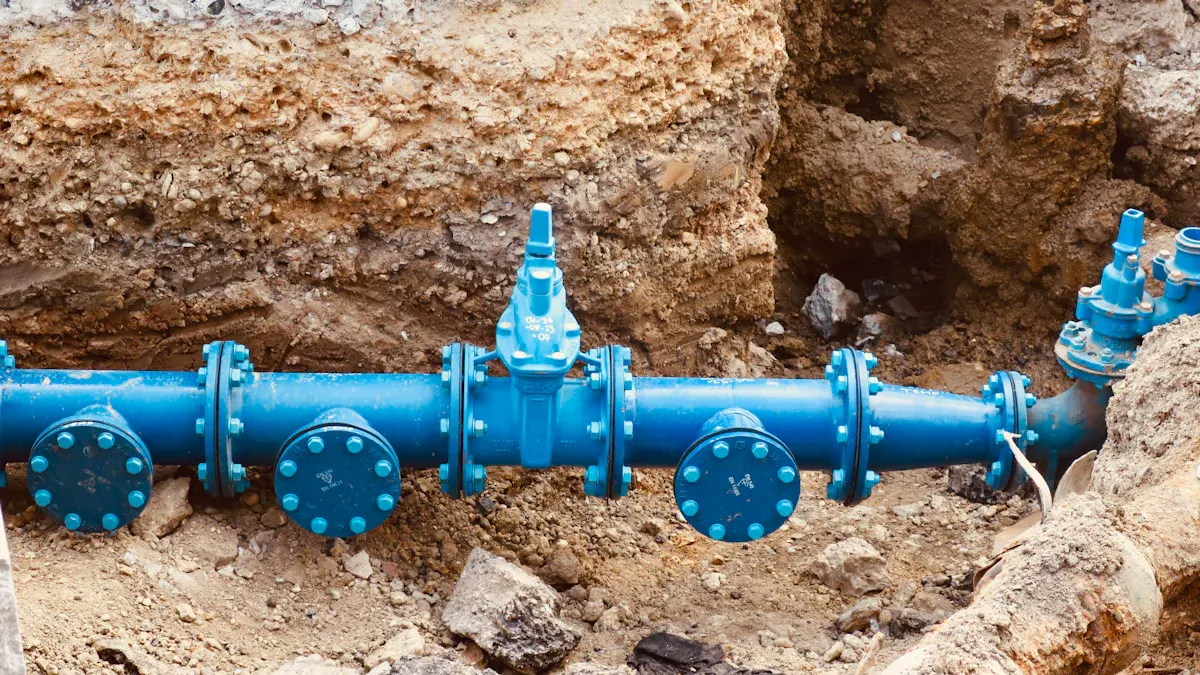
Geological Conditions and Ground Stability
The ground greatly affects drilling. Good ground checks are very important. We need to change how we drill. We need good tools and smart people. Watching things as they happen helps. It makes drilling safe. It helps us drill well. It helps us go through different ground. Some ground is tricky. This includes soft rock, caves, and sand. Drilling hard rock wears out tools. It can also make things shaky. Caves can be dangerous. The ground type changes how well we drill. Soft ground is easy to drill. Hard ground needs special tools. Good drill plans stop holes from falling in. They stop drill parts from breaking. This keeps the ground steady.
Project Complexity and Design Constraints
Hard projects make drilling harder. We can measure how hard a drill job is. Tools like WCI help us manage this. These tools sort out different things. They look at how hard the plan is. They look at how hard the ground is. Using this system helps manage projects better. Not dealing with hard parts causes problems. It costs more money. It makes work harder. Hard drilling jobs need good teams. They need plans that think about risks. Good ground tests are key. These include looking at the ground. They include using special surveys. They help us know what is underground. They help stop problems.
Operator Skill and Experience
Good workers are very important. The drill team needs to know a lot. They need to have worked before. They need to be trained. They must be good at fixing problems. Teams must change plans fast. This is for hard ground. Smart workers can feel problems coming. They can tell if the mud is wrong. They can tell if the ground is moving. This comes from working for many years. Smart workers are key for new problems. This includes rocks or hidden pipes. This needs more than just knowing facts. Their skill makes drilling exact. It makes drilling work well.
Maintenance and Rig Condition
Good care keeps drills working best. Well-kept drills work without problems. They break down less often. Checking and fixing them makes them last longer. This helps drilling work well all the time. Not taking care of them costs a lot to fix. It can also make jobs slow. A drill in great shape works its best. It helps the whole job go well.
By 2026, drilling rigs will do more. Power, guidance, and smart tech help. They make things longer. They make things bigger. They make things harder. This fixes problems. Builders must use new tech. This makes drilling work best. Think of CEGC for help. They make drilling better. This helps nature and money. Better drilling is key for the future.
FAQ
What new things will make HDD better by 2026?
Stronger power will help. Better steering will too. Tools will last longer. Fluid control will improve. AI will be used more. These things will make drilling better. It will allow for longer drills. It will allow for harder drills.
How will big drilling machines get better by 2026?
By 2026, big machines will drill over 10,000 feet. They will use pipes bigger than 60 inches. They will put in large steel pipes. They will help with big building jobs.
What does CEGC do for drilling projects?
CEGC makes special drilling plans. They meet needs for drill length. They meet needs for ground type. They meet needs for tools. This makes sure jobs meet rules. It makes sure projects work well.


