
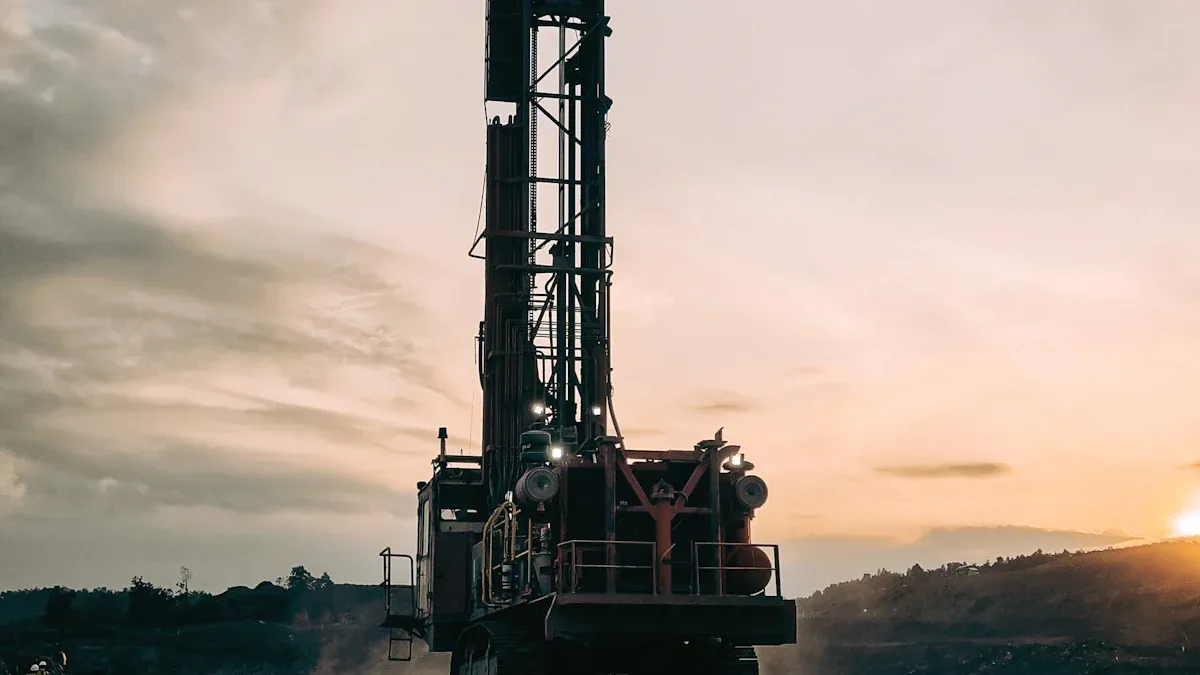
A Well Drilling Rig High Torque Delivery Handles Load with strong twisting power. This power helps the drill rig push through the ground. A good drill rig handles heavy work well, drilling effectively through different kinds of rock. This strong twisting power is key for good drilling, especially when using special CEGC drilling tools.
Key Takeaways
-
High torque is a strong twisting force. It helps drill bits cut through hard ground and rock.
-
Modern drilling rigs use special systems like top drives and strong engines. These systems deliver high torque for effective drilling.
-
Managing torque well is important. It makes drilling safer, faster, and helps tools last longer.
What is Drilling Torque?
What Torque Means When Drilling
Torque is a twisting push. It spins the drill string. Machines on top make this push. It goes down to the drill bit. The bit is at the well's end. Pipes and collars make the drill string. This twist happens between the string and the ground. It helps with all drilling.
Why High Torque is Needed
Strong torque is very important. It helps the drill rig. This power beats tough ground. Hard rock, like Leikoupo, needs this twist. It makes drilling faster. Bauxite mudstone is hard to drill. High torque makes it easier. Hard layers in Maokou also need this. It helps the drill crush rock. It makes drilling quicker. Granite is very hard. High torque makes it drill faster. It also saves the drill bit. High torque is key for coring. It helps with drag. Too much drag slows drilling. Knowing about torque and drag is important.
Things That Change Torque Needs
Many things decide how much twist is needed. The hole's size is one thing. How deep the well is also matters. The rock's hardness changes needs. The drill's size is important. The material drilled also counts. This includes its layers. How fast you cut matters. How much you feed the drill matters. All these affect twist and drag. Checking torque and drag helps plan drilling. This check stops too much drag. It makes drilling work well.
Making and Using Strong Twist
Making and using strong twist is key for good drilling. Many parts and systems help with this. Each part works together. They make sure the drill bit gets the twist it needs. This twist helps push through hard ground.
Top Drive Systems Give Steady Twist
Top drive systems are new drill tools. They sit at the top of the tall rig. These systems spin the drill string from above. This gives a steady, strong twist to the drill bit. Steady spinning helps drilling keep going. It also stops pipes from getting stuck. Top drives let you control speed and twist well. This control is very important for different drilling jobs.
New top drive systems give a lot of twist. This helps them drill through tough rock. The chart below shows how much twist different models can give:
|
Product Model |
Maximum Continuous Torque (ft-lb) |
Maximum Continuous Torque (N-m) |
|---|---|---|
|
TDX-1500 |
105,000 |
142,360 |
|
TDX-1250 |
105,000 |
142,360 |
|
TDX-1000 |
91,000 |
123,379 |
|
TDS-1000 |
62,250 |
84,399 |
|
HPS-03-1000 |
78,181 |
106,000 |
|
HPS-750 |
78,181 |
106,000 |
|
TDS-8SA |
62,250 |
84,399 |
|
TDS-4S |
45,500 |
61,689 |
|
TDS-11SH |
54,600 |
74,027 |
|
TDS-11SA |
37,100 |
50,300 |
|
TDS-11HD |
58,800 |
79,722 |
|
TDS-10SH |
22,288 |
30,218 |
|
IDS-350PE |
37,000 |
50,165 |
This chart also shows the different twist amounts. It is for many top drive types.
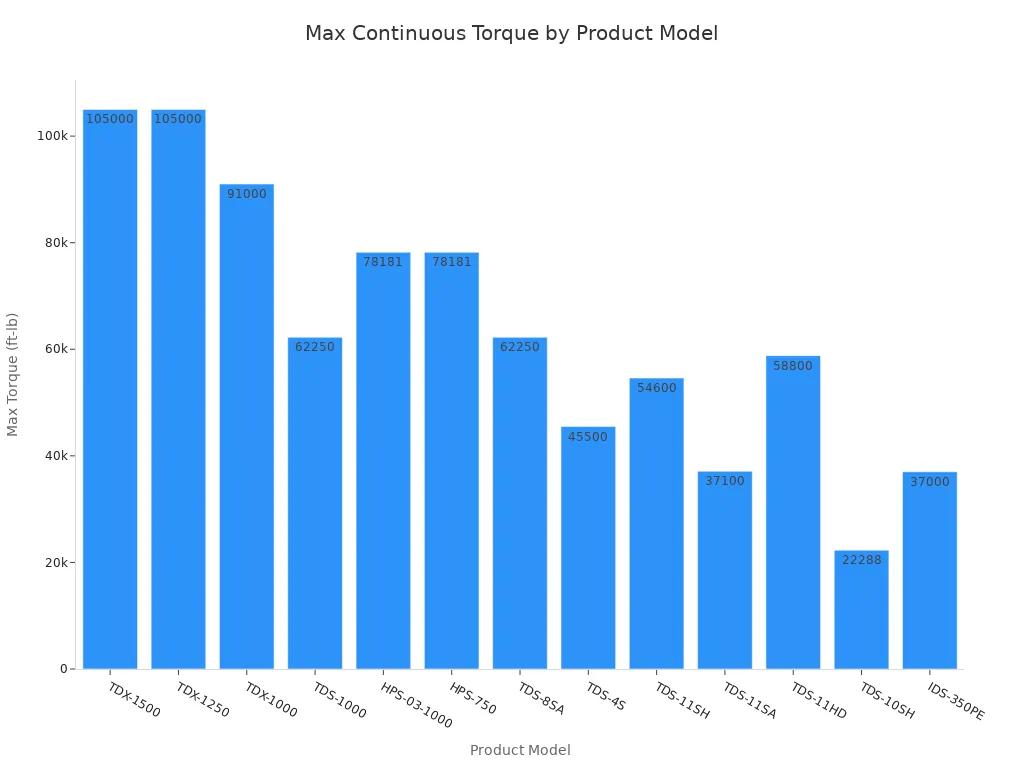
These numbers show the great power available. This power makes drilling work well.
Rotary Table Systems and Twist
Rotary table systems are an older way to spin the drill string. They are on the rig floor. A square or six-sided pipe, called a kelly, goes through the rotary table. The table grabs and spins the kelly. This sends twist to the drill string below. Rotary tables spin on and off. This is because the kelly must unhook and rehook. This happens when new pipe parts are added. Top drives give a more steady and often stronger twist. But rotary tables are still common on many rigs. They work well for many drilling jobs.
Power Sources for Making Twist
Power for making twist comes from different places. These places run the motors and pumps on the rig. The power choice affects how well it works and its cost.
|
Power Source |
Advantages |
|---|---|
|
Natural Gas |
Cheaper to run (up to 90% less than diesel with gas from the well), less pollution (nitrogen oxides, tiny bits, CO2), can use two types of fuel in engines. |
|
Hybrid Systems (Diesel + Natural Gas/Electric Power + Batteries) |
Works better, uses less fuel, less pollution, generators run smoother, uses less diesel, can change how it works (like in bad weather). |
|
Alternative Sources (Solar, Wind, Geothermal, Biofuels) |
Works better, less harm to nature, can use heat that is wasted to make electricity. |
Diesel engines were common. But natural gas and hybrid systems are now popular. They save money and help the environment. The total power of the drilling rig sets the most power it can use. This power then turns into the twist needed for drilling.
Good Systems for Sending Twist
Once twist is made, it must go well to the drill bit. The sending system makes sure this happens. Key parts work together. They move the twisting force.
-
Kelly bars: These are important rods. They drive in rotary drilling systems. They send twist from the rotary table to the drill bit.
-
Interlocking Kelly bars: These have six sides. They are good for deep jobs. They need a lot of twist. They send twist well. They push down hard.
-
Friction Kelly bars: These use keys to send twist. They use their own weight to push down. They are good for medium deep drilling. They work in medium-hard dirt.
-
Motor Housing & Swivel Assembly: This gives power. It spins the drill string. It links the motor to the drill pipe. This makes it spin all the time.
-
Rotary System: This has the quill, torque track, and gearbox. It sends motor power and spin to the drill string.
-
Transmission and Main Shaft: This links the gearbox to the drill string.
These parts are made strong and to last. They handle the huge forces in drilling. A good sending system loses little energy. It makes sure the well drilling rig high torque delivery handles load well at the drill bit.
Key Parts for Twist Delivery
Drill String Design for Twist Strength
The drill string must be strong. It handles twisting forces. This happens when drilling. Experts check for problems. They look at twist and drag. This makes the drill string good. Strong steel is used. It handles more twist. Good connections also help. Planning the well path helps. It manages twist and drag. Special liquids reduce rubbing. This stops too much force. Shaking can happen. It is called stick-slip. Changing how you drill helps. It stops these problems.
Drill Bit Affects Twist
The drill bit changes twist needs. Bits with more blades help. They control uneven twist. This is good for turning. They also stop shaking. Cutters do not go too deep. This helps with twist. It works when rock changes. Bigger bits need more twist. This helps them drill well. A strong rig is needed. It drills deep in hard rock. Match the rig power. Match it to the bit type. This makes drilling good.
Downhole Motors Add Twist
Downhole motors give more twist. They are at the drill bit. These motors are low down. They are in the drill string. They spin the bit alone. The top does not spin it. This makes drilling faster. It also saves the drill string. Downhole motors are helpful. They help with turning. They give power for hard rock.
Torque Converters and Clutches
Torque converters control power. They move power from the engine. It goes to the load. These parts use fluid. They increase twist. This happens when speed is low. They act like a gear. They are used in rigs. A clutch locks parts. This makes it work better. It saves energy. It uses less fuel. It makes less heat. This system helps manage twist. It also handles drag.
Managing and Monitoring Drilling Torque
Good management of drilling torque is key. It helps drilling work well. This means watching it all the time. It also means using safety steps. These steps keep people safe. They make equipment last longer. They also make drilling better.
Real-time Torque Measurement
Drilling teams need to know the twist force. This force is on the drill string. It is called torque. Measuring torque in real-time helps. Operators see torque levels as they drill. Sensors on the rig collect this data. This info shows how the drill bit works. It helps stop problems. Too much torque or drag is bad. Operators can change drilling settings. This keeps drilling smooth. Watching torque also finds issues. Rock hardness can change. The drill bit can wear out. This constant info is very important. It helps make quick choices. Knowing about torque and drag is key.
Over-Torque Protection
It is vital to protect gear. Too much twist can cause damage. Over-torque protection systems do this. They stop damage to the drill rig. They also protect the drill string. This happens during drilling. For example, a system turns on. This is if power goes too high. It protects from too much load. It also stops short circuits. The VFD cuts power. This makes it shut down safely. The system also tells the operator. It shows a fault code. Other systems use sensors. These watch the torque. A limit is set. If it is reached, it stops. This protects the well drilling rig high torque delivery handles load. It stops too much stress.
High Torque's Impact on Efficiency
High torque directly affects drilling. It is key for good drilling. Models guess how fast drilling is. They use drilling torque. This shows its importance. Many things help drill fast. Torque is one of them. Not enough torque limits power. This slows down drilling. If the drill bit gets stuck, torque drops. This is called bit balling. Both slow down drilling. Less torque can also cause more drag. So, keeping torque high is key. It helps drill at the best speed. It also makes drilling productive.
Safety in High Torque Operations
Safety is most important. This is when using high torque. Strong twisting can cause bad accidents. Operators must follow safety rules. They must also use best ways.
-
Use the right socket size. It must fit the fastener. This stops slips.
-
Hold the torque wrench tight.
-
Look around you. Keep the work area clear. Others should be far away. This stops injuries. It stops harm from moving parts. It stops harm from flying bits.
Good torque management is key for safety. It keeps high-pressure tanks safe. It stops accidents. Following rules is vital. This includes leak checks. These steps make things safer. They protect people and nature. Learning from past events helps. It makes torque management better. Checking and testing are important. This makes drilling safe. Knowing about torque and drag helps. It helps stop problems from too much drag.
High Torque Challenges in Directional Drilling
Mitigating Bore Deviation and Crossing Failure
Strong twisting force makes drilling hard. It stops the drill string from moving. It causes jerky movements. It harms tools underground. It is hard to guess the drill-bit twisting force. This is because of different ground types. These problems cause a lot of twist and drag. CEGC's system helps. It matches the load. It controls push, pull, spin, and feed. A strong frame stops shaking. A tracking system makes drilling accurate. Small holes are drilled first. Then they are made bigger. This makes sure connections are right. Drilling speed and spin force are controlled. This keeps things steady. It stops holes from breaking. It also manages drag.
Preventing Stuck Pipe and Torque Spikes
Stuck pipes and sudden twists stop work. Dirt buildup and shaky holes cause this. Different sticking forces also add to it. These problems make twist and drag worse. CEGC's system stops this. It gives strong twisting force. It works at many speeds. It senses hydraulic load. It slowly starts and stops. This reduces sudden shocks. Knowing about rough ground helps. Using strong drill bits is important. Making sure the hole is clean helps. This stops pipes from getting stuck. It also helps with twist and drag analysis.
Optimizing Tooling and Reducing Wear
Strong twisting force wears out tools fast. This costs more money. CEGC's package helps. It delivers smoother twisting force. This reduces shaking and uneven wear. It works with many reamers. These are for horizontal drilling. Combining parts and oils helps performance. Watching twisting force changes finds wear early. Good drilling fluids reduce rubbing. Special coatings on drill pipes also lessen drag. Rotary Steerable Systems spread twisting force evenly. This reduces jerky movements and shaking. Good twist and drag analysis helps choose these.
Managing Fluid Performance and Frac-Out Risk
Bad fluid makes twisting force higher. It also makes pipes get stuck. It can cause cracks. CEGC's solution helps with this. It tells you how big pumps should be. It makes sure paths are ready. Following fluid rules is key. This means mixing and watching. Using special drilling oils helps. They greatly reduce rubbing. For example, one oil cut rubbing. This kept drilling working well. It made running liners easier. This also helps reduce twist and drag analysis.
New Ways to Make Twist Work Better
Today's drilling needs more power. It also needs to be exact. New tools make drilling rigs better. They help rigs give and control twist. These new ideas make drilling efficiency better. They also make the whole drilling rig performance better.
Better Top Drive Designs
Top drive systems keep getting better. Engineers make them. They give more twist. They also control it better. These new designs help with deep drilling. They help with hard drilling. They easily handle tough rock. This makes drilling quicker. It makes it more dependable. These are important parts. They are advanced drilling equipment.
Smart Drilling and Best Twist
Smart drilling uses facts. It makes twist better. Systems like KAIZEN use smart computers. They learn from data. They always make drilling best. This system learns from many hours. It learns from drilling facts. It makes good choices. It tells the best weight on bit. It tells the best spins per minute. This system can tell the driller what to do. It can also run the autodriller. This stops problems. It stops the drill string from bending. It stops mud motors from stopping. It does this right away.
Model Predictive Control (MPC) guesses and makes systems best. Digital Twins mix models with learning. This makes them always right. Reinforcement Learning (RL) helps twist controllers. They learn the best ways. High-Frequency Downhole Sensing tells twist right away. Autonomous drilling systems use twist control. It is part of a bigger plan.
Stronger Materials for Twist
New materials make drilling parts stronger. Better steel makes them very strong. They also last longer. They resist wear better. These steels are heated in special ways. This makes parts last longer. Surface treatments make them resist wear. Ways to stop rust also make tools last. Special coatings are used. Electric protection is used. These keep important parts safe. They work in tough places. This makes sure twist works well. It works for long times of drilling.
Strong twisting power is key. It helps drilling work well. This power makes modern rigs good. The rig handles heavy loads. Good power control helps with different loads. It keeps drilling safe. New drilling tools are better. CEGC's machine helps with hard drilling. This makes drilling better. It helps manage heavy loads.
FAQ
What does high torque mean for drilling?
High torque means a strong twist. This power helps the drill bit. It cuts through hard ground. It is key for good drilling.
Why is high torque important in drilling?
High torque helps beat hard ground. It lets the drill go through rock. This makes drilling faster. It makes drilling work better.
How do modern rigs deliver high torque for drilling?
New rigs use good top drive systems. They also have strong engines. These parts work together. They send a strong twist for drilling.


