
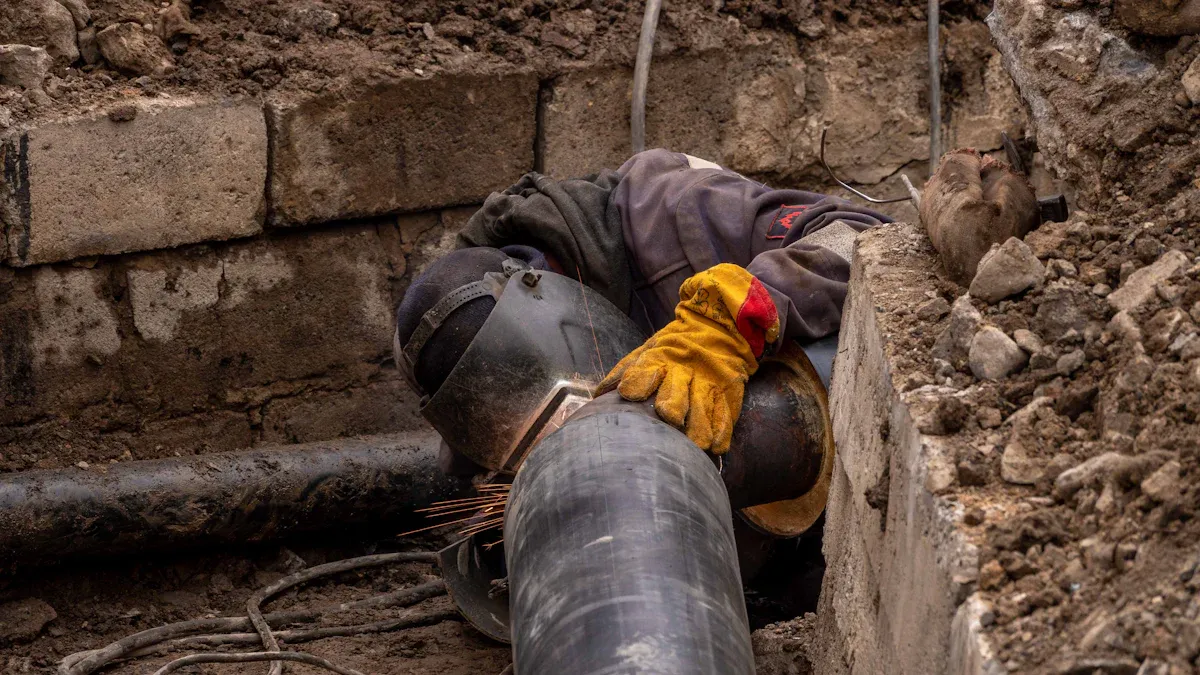
The demand for horizontal directional drilling is on the rise, particularly in challenging terrains and difficult ground conditions. This necessitates advanced drilling methodologies. By 2026, traditional drilling techniques will no longer suffice due to their inefficiency and lack of speed. CEGC offers cutting-edge technology that optimizes the performance of HDD drilling machines. This innovation ensures HDD Drilling Machine Optimal Transfer Beats Resistance, enabling efficient penetration through tough obstacles. This new technology enhances drilling operations, making them faster and more effective across diverse ground types. It future-proofs drilling endeavors and guarantees continuous improvement in the field.
Key Takeaways
-
New tools help HDD drilling machines. They work better in hard dirt.
-
Knowing the ground helps before drilling. It stops problems. It makes projects safer.
-
Smart liquids and good plans make drilling better. They lower dangers.
Knowing Tough Ground
Better Ground Checks
Mapping underground is key for good horizontal directional drilling. By 2026, new ground methods give good details. They stop drills from going off track. They also prevent failures. This starts with looking at the site. It uses old ground reports. Simple, cheap tests help too. Other checks fill in missing facts. A desk study looks at old maps. Then, a site visit happens. More ground checks use drilling and testing. For soft ground, split spoon tools are used. Big drills find rocks. Test pits check large bits near the top. Rock coring is used for rock. Double tube tools are standard. Ground surveys help too. They give a full view of the ground conditions. This advanced technology makes projects work better.
AI and ground surveys are important. AI changes collected data. It turns points into a moving picture of the ground. Knowing the underground is key. Smart predictions use machine learning. This checks risks. It shows different outcomes. This helps manage risks early. Problems are found ahead of time. This leads to changes in plans. Online learning updates rock types. It uses sensor data. It also uses core samples. This helps train models. We can know rock types right away. This changes drilling as we go. It makes things safer. It works better. It stops problems like stuck drills. It also stops drills from going off track. These problems come from unknown ground conditions.
Finding Problems and Their Effects
Horizontal directional drilling faces ground problems. These make drills go off course. Hard rock, soft rock, and hidden caves are common. Holes and air in soft rock make the drill shaky. This makes it go off course. Caves are tricky. They are hard to find. This can be dangerous. Other tough ground conditions, like gravel, wear out tools. They also slow drilling. Soft dirt can shrink. This stops pipes from going in. Quicksand makes pulling pipes hard. This is because of sticky forces. We cannot see underground. So, ground changes can make holes go off track. Uneven drill pressure also causes this. Thinking the drill can handle too much pressure is a big problem. This, with changing ground facts, raises the risk of cracks. This hurts the hole. It can make drilling fluid leak out. Knowing these problems helps make good solutions. It also makes drilling work better.
The wear resistance of advanced drill bits is greatly affected by their coatings. It also depends on the rock's mechanical properties. TiAlSi and Diamond-DLC coatings show lower wear rates. This is compared to WC coatings. These bits can have wear rates 42-60% lower than WC bits. This depends on the rock type. The relationship between rock properties and drill bit wear is critical. Increased rock properties lead to wider differences in wear resistance. Ultrafine diamond particles increase wear resistance. Friction heat and high abrasion from silica-containing rock formations cause drill failures. Measures like the Cerchar Abrasivity Index (CAI) estimate rock abrasiveness. This helps select appropriate drill bits. It predicts their lifespan. These advancements ensure efficient trenchless solutions. They boost productivity in all trenchless operations.
Smart Fluid Management and Operational Optimization
Smart Drilling Fluids and Mud Management
Good fluid management is key. It helps with horizontal drilling. CEGC has new mud and fluid solutions. These stop frac-outs. They make bores stable. Right pump size is important. It gives correct flow and pressure. This is for different bore sizes. It is also for different ground types. Filtering is also key. It keeps drilling fluids good. This stops problems when drilling.
Smart drilling fluids are made. They fit certain ground types. These fluids make drilling better. They lower rubbing. They help remove dirt. This makes things work well. Systems watch mud in real-time. They check fluid traits. This includes thickness and pH. This data helps workers. They can make changes fast. This keeps fluid working best. It stops costly delays. This way of working makes drilling better. It also makes tools last longer. This means less fixing.
Strategic Optimization for Challenging Projects
Smart planning is a must. It is for tough HDD jobs. It makes work best. It lowers dangers. Checking routes well helps design. It also helps do the job. This also lessens harm to nature. Following rules is a must. Talking to people early helps. It fixes worries. It builds agreement. Special ways to fix problems are key. Detailed plans from workers are vital. They show skill and new ideas.
Stopping risks early uses new tech. It also uses smart analysis. This mixes skill with new ways. It helps beat tough problems.
Fix
'Dry holes' (drill path above entry where no fluid support, making soil fall apart)
Avoid or make strong with things (like temporary surface casing)
Water levels above entry or flowing groundwater (causes floods, uncontrolled dirt inflow)
Find ways to fix this when planning
Managing all risks early saves money. Find and map all pipes first. Do this before drilling. This stops hitting pipes. Hitting pipes causes power cuts. It causes dangers. It breaks rules.
Risk
Fix
Hitting underground pipes (causes power cuts, dangers, breaks rules)
Find and map all pipes before drilling
Frac-out (drilling fluid leaks out, causes dirt and fines)
Watch pressure closely, manage fluid well, plan for spills
Borehole falls apart and drill breaks (stops work, costs more)
Design path for stable soil, use right tools, drill well
Watching pressure closely stops frac-outs. Good fluid care helps. Planning for spills helps. Frac-outs mean fluid leaks. This causes dirt and fines. Drill path designs need to think of soil. Good tools and drilling stop holes from falling. They stop drills from breaking. These problems stop work. They cost more. Following all rules is a must. This includes OSHA for safety. It includes PHMSA for pipes. State and federal permits are needed. This is for nature areas.
Pick a skilled HDD worker. They should have good past work. Modern tools are needed. A strong safety plan is key. Check their past jobs. Check their tools. Check their safety record. This makes jobs work well. These smart plans make good trenchless fixes. They make work better. They lower fixing needs.
Making Things Work Best with Live Checks and Plans
Better Plans for Drilling Paths
Good plans are key for drilling. They make work better. Tech helps find the best drill angles. This makes more work get done. It also helps nature. Smart computer models use lots of facts. They show how drilling might go. This helps pick the best paths. These paths avoid bad spots. They save resources. Live checks give facts right away. This helps change things fast. This is for new ground or blocks. This way helps drilling jobs. It makes them work better. It wastes less. It keeps nature safe. Horizontal drilling saves money. It helps nature. It uses less land. It finishes faster. This is compared to old ways. So, it is a top pick for many jobs.
Live Checks and Smart Drilling
Live checks are key for best work. New sound systems are being made. They check things deep down. They send signals through drill pipes. This helps check deep places. MWD systems watch how things are built. They check tilt, direction, weight, and twist. LWD systems check ground traits. They check resistance, rays, thickness, and holes. Both MWD and LWD use same ways to send facts. These include mud pulses, electric waves, and wired pipes.
Smart drilling ways help a lot. They help with new ground. Current drills can change for different ground. They change drill parts as needed. The PERSEPHONE project makes drilling better. It changes for ground in real-time. It uses constant checks. It also checks rock types. This changeability saves energy. It changes drilling based on rock facts. This means fewer extra holes. Using robots in bad spots helps. It means fewer people are there. This makes work safer. CEGC's control guides well. This makes drilling better. It makes the most work get done. It also means less fixing. This smart way helps work long-term.
What's Next for HDD and Being Green
Real-Life Examples in Tough Ground
Good HDD jobs show great work in very hard ground. In one area, special clay stuff helped with sticky clays, sand, and rocks. This made sure pipes were put in well. Another job put three gas lines under a river. There was sand, rocks, mud, and clay. Special liquids helped with these different grounds. This made drilling work. A big pipeline job also finished many drills. It followed strict rules. In another place, important river wall drills needed careful pressure. This stopped harm. These show how good work helps. They show how better tools make things work well. Regular checks also make tools last longer. This means less stopping and more work. For example, a special liquid stopped rust in pipes. It protected them and watched them from far away. This made them last longer. It also meant less fixing later.
New Ideas and What's Being Studied
The future of HDD will have big changes. Self-driving drills are a main idea. Drills run by remote control or partly by themselves make work safer and better. This is true in hard places. Smart computers look at drilling facts. They guess problems. This makes planning better. These new ways make jobs turn out well. They cost less money. The future of HDD will also have more machines doing work. This means fewer human mistakes. New HDD tracking tools give lots of facts. They show how things tilt, turn, and where they are going. This lets drills go deeper. Mixed systems use wires and walking over ground. This makes things more exact. Being green is also more important. HDD uses less ground space. It avoids tender nature spots. This means less power used and less bad air. Green ways of making things, like using sun panels, help nature. These green building ways make work good for a long time. HDD will keep getting new ideas. This will make it work even better.
Achieving hdd drilling machine optimal transfer beats resistance needs many things. It uses good site checks. It uses CEGC's Trenchless Drilling Rig technology. It also uses smart fluid care. Skilled operations make things work well. They give great performance and efficiency. This is true in tough ground conditions. This plan makes things work better. It gives efficient trenchless solutions. The future of trenchless drilling needs advanced technology. These solutions make hdd drilling machine optimal transfer beats resistance strong. They give great efficiency for trenchless projects.
FAQ
❓ How do better ground checks help drilling jobs?
Better ground checks use smart computers. They also use ground surveys. They make good maps of the ground. This stops drills from going off track. It stops problems. This makes jobs work.
⚙️ What are the main good things about CEGC's new drills?
CEGC's drills have special engines. They stop stalling. They have strong frames. They stop too much weight. They are steady. They work with many tools. They have auto parts. This makes them work better.
💧 Why is smart fluid care important for tough ground?
Smart fluid care helps. It includes right pump size. It includes cleaning the fluid. This stops fluid leaks. It makes the hole steady. Watching the fluid helps. It keeps the fluid working best.


