
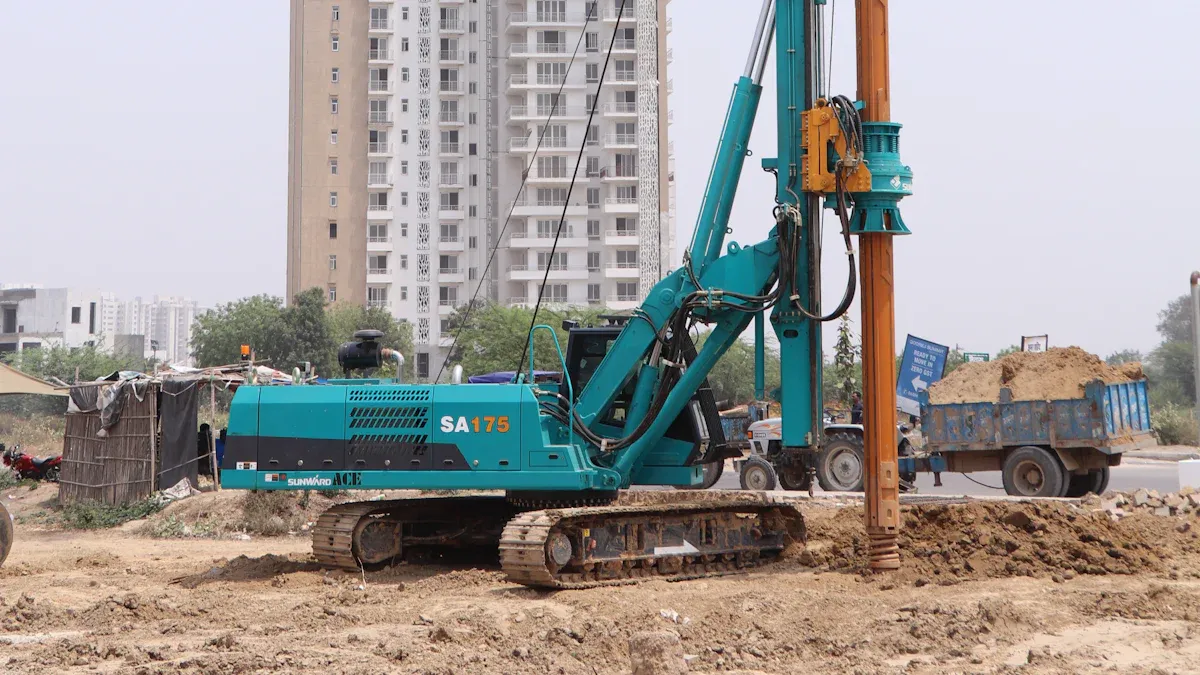
You use horizontal directional drilling rig variable flow to fit the ground. This lets you control downhole pressure and move cuttings better. Variable flow keeps your drilling tools safe and helps you stay safe. B2B contractors pick CEGC for good specs and custom choices for their projects.
Key Takeaways
-
Variable flow in horizontal directional drilling helps manage pressure underground. It also moves cuttings better. This makes drilling safer and more efficient.
-
Changing drilling fluid properties, like viscosity and density, is very important. It helps match the ground and keeps the borehole stable.
-
Using CEGC rigs lets workers make custom solutions. They can adjust things in real time. This improves cleaning and lowers the chance of pipes getting stuck.
Understanding Horizontal Directional Drilling Rig Variable Flow
What Is Variable Flow?
You use horizontal directional drilling rig variable flow to change how much drilling fluid goes through the borehole. This helps you control the pressure of the drilling fluid and move cuttings out better. When you change the flow, you can make it fit the ground and the drilling step. Variable viscosity means you can also change how thick the fluid is for better results. The table below shows what experts found when they studied how variable flow affects cuttings transport and drilling fluid pressure:
|
Study |
Findings |
|---|---|
|
Hemphill and Ravi |
Pipe rotation changes how fast the fluid moves and how much pressure drops. |
|
Ozbayoglu et al. |
Pipe rotation and particle size change how cuttings move with different mud types. |
|
Adari et al. |
Changing flow rates and fluid types changes how high the cuttings bed gets during drilling. |
|
Song et al. |
Many things affect how well the well gets cleaned and how much the drill pipe rubs on the cuttings bed. |
How Variable Flow Works in HDD Rigs
First, you make a pilot hole with your horizontal directional drilling rig. A surveying system helps guide the drill rods. Mud pumps push drilling fluid to the drill bit to help dig and move cuttings. In rock, you use a mud motor to get more power. The cut material mixes with the fluid and comes back up to the surface. Variable flow lets you change the pump speed and the fluid’s properties, like variable viscosity, to keep moving cuttings safely and well. CEGC rigs have pump packages and fluid management tools to help you work in different ground types.
Fluid Dynamics: Laminar vs. Turbulent Flow
You need to know the difference between laminar and turbulent flow. Laminar flow moves slowly and smoothly, but it does not carry cuttings well. Turbulent flow moves faster and mixes the fluid, so it carries cuttings much better. Using turbulent flow keeps the borehole clean and steady. Turning the drill pipe also helps move solids away. If the flow is too low, cuttings can pile up and cause trouble. CEGC’s rigs help you keep the right flow for safe and steady horizontal directional drilling.
Tip: Always check your drilling fluid and flow rate. Good cuttings transport helps your project go well and saves time.
Impact of Variable Flow on Horizontal Directional Drilling
Downhole Pressure and Bore Stability
You can use horizontal directional drilling rig variable flow to control downhole pressure. This helps keep the borehole safe and steady. When you change the flow rate, you decide how much drilling fluid goes through the hole. The right fluid properties help clean the borehole well. If your fluid has the right density and viscosity, you keep pressure steady and stop the bore from falling in. You also move cuttings out fast, so pressure does not get too high. Here is how these things work together:
-
Density and viscosity of drilling fluid change borehole pressure.
-
Good cuttings transport stops pressure from rising.
-
The right flow rate helps clean the borehole and control pressure.
-
The tools you pick change how much material you remove and how pressure changes.
You keep the borehole safe by using the right flow and fluid. CEGC rigs let you change pump rates and fluid properties for each job. You get strong specs and custom choices for hard ground.
Drilling Fluid Properties and Adjustments
You need to change drilling fluid properties for different soils. If the fluid is too thin or thick, the borehole will not clean well and cuttings will not move. You can add things to change viscosity and gel strength. Bentonite fluids are good because they get thinner when moving fast and thicken when still. This helps hold cuttings and clean the borehole. Here is how changing fluid helps:
-
If discharge drops, fluid can spill or back up.
-
High gel strength with low viscosity helps move cuttings in horizontal directional drilling.
Try a simple test with water and glitter to see how gel strength works. In a vertical tube, glitter floats. In a horizontal tube, glitter falls fast. This shows why you need strong gel to clean the borehole.
You can use a table to help change fluid:
|
Recommendation |
|
|---|---|
|
Density |
Lower density before cementing but keep well control. |
|
Rheological |
Use additives to adjust properties for good displacement and hydraulic needs. |
|
Temperature |
Check how temperature changes fluid and simulate at different conditions. |
|
Pressure |
Watch how pressure affects fluid and chemical reactions. |
CEGC rigs help you manage fluid and pumps. You can match fluid properties to your job for better cleaning and cuttings transport.
Preventing Stuck Pipe and Tool Wear
You stop stuck pipe by keeping cuttings moving and the borehole clean. If you keep fluid moving and flow rates high, debris does not pile up around the pipe. You watch drilling numbers and change flow as you drill. This lowers the chance of sticking and keeps the borehole clean. You also protect tools from wearing out and torque spikes. The Anti Stick-Slip Tool helps by changing forces at the bit and rock. This makes drilling smoother and cuts down shaking. You get less heat and tools last longer.
-
Fluid always moving keeps cuttings transport strong.
-
Watching in real time lets you change flow and stop sticking.
-
Smoother torque means less tool wear.
CEGC horizontal directional drilling rig variable flow systems have anti-stall powertrain and overload protection. You get strong torque and hydraulic load sensing. You can speed up or slow down to protect rods and tools.
Practical Scenarios and CEGC Solutions
You see results when you use horizontal directional drilling rig variable flow. In the Delaware basin, modeling helped put wells in the right place. CFD simulations showed that higher fluid flow rates moved cuttings and cleaned the borehole better. Better fluid design made drilling faster in long horizontal holes. You fixed problems like high torque and cuttings piling up. Research also found that better flow spread lowered friction when pulling pipe back.
-
You use variable flow to clean the borehole and move cuttings in tough ground.
-
You change fluid and flow for long bores and tricky crossings.
-
You cut downtime and tool changes with better cleaning.
-
You use your rig more and finish projects faster.
CEGC gives you custom solutions for every job. You can pick pump packages, better filters, and fluid handling for your site. You get tracking and process control for better guidance. You match torque, thrust, and rod specs to your ground and bore length. You keep cleaning and cuttings transport strong from start to finish.
Tip: Always check your flow rates and fluid properties. Good cleaning and cuttings transport keep your project safe and efficient.
Variable flow helps you use the right drilling fluid for every job. This makes your work safer and helps you finish faster. It also keeps your machine working longer. When you pick a horizontal directional drilling machine, follow these steps:
-
Use medium rigs when you need to cross something.
-
Pick big rigs if you have to drill through rock.
CEGC gives you smart choices that you can change to fit your needs.
FAQ
How does variable flow help you avoid stuck pipe?
You keep cuttings moving with variable flow. This stops debris from piling up and lowers the risk of stuck pipe during drilling.
Can you adjust fluid properties on CEGC rigs?
You can change viscosity and density. CEGC rigs let you match fluid properties to your ground conditions for better cleaning.
What makes CEGC horizontal directional drilling machines stand out?
|
Feature |
Benefit |
|---|---|
|
Custom options |
Fit your project needs |
|
Strong specs |
Handle tough ground |
|
Fluid control |
Improve safety and speed |


