
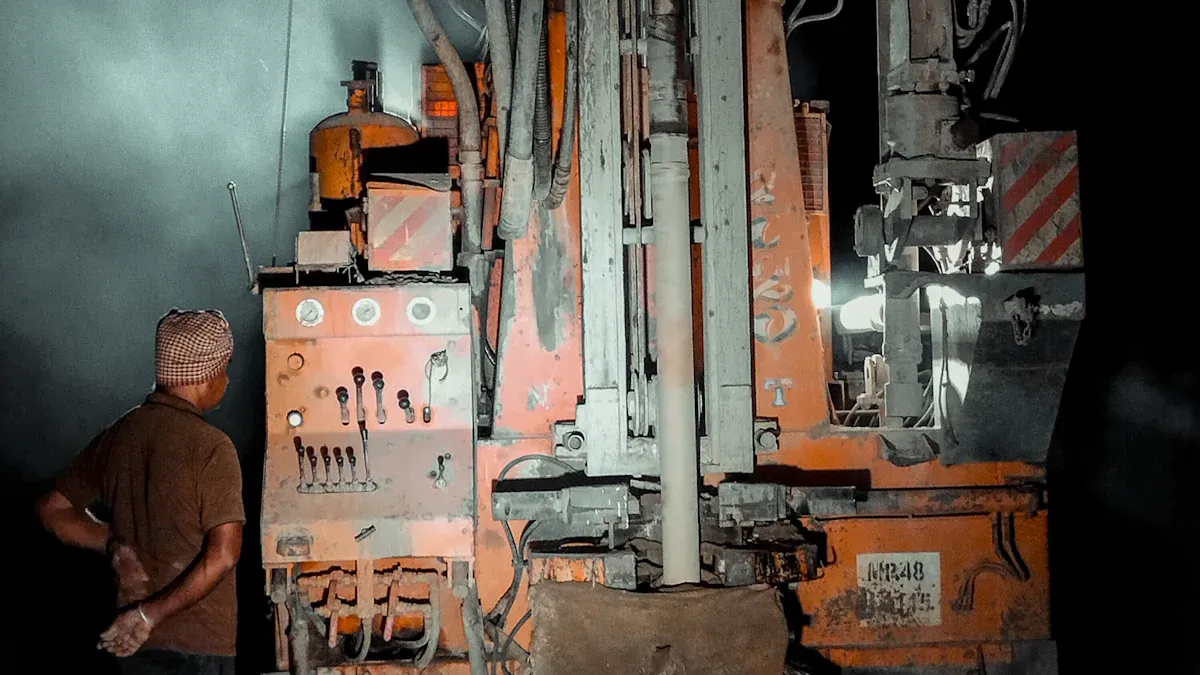
Horizontal directional drilling (HDD) is crucial for modern infrastructure development, with the market projected to reach $10.69 billion USD in 2024. A common challenge in this field is the breakage of drill rods, often caused by getting stuck or experiencing high twisting forces. To combat these issues, an anti-jam system is a vital technology for any horizontal directional drilling machine. This article delves into the Horizontal Drill Anti Jam System Prevents Rod Breaking, explaining how this innovative solution from CEGC effectively prevents rod damage and ensures smoother operations in horizontal directional drilling.
Key Takeaways
-
An anti-jam system stops drill rods from breaking. It uses smart technology to watch the drilling process.
-
The system reacts fast to problems. It changes how the drill works to keep it safe and prevent damage.
-
Using an anti-jam system makes drilling safer. It saves money and helps the drilling machine last longer.
Understanding the Horizontal Drill Anti Jam System
System Definition and Core Function
An anti-jam system is a special technology. It is built into a horizontal directional drilling machine. Its main job is to stop the drill pipe from getting stuck. It also prevents sudden high twisting forces. These forces are called torque spikes. Such problems can stop drilling and cost a lot of money. The system works like a guard for the drill rig. It gives the drill rig an "Anti-Stall Powertrain" and "Overload Protection." This means the drill can keep working smoothly. It works even when conditions are tough. CEGC designs these systems with standard features. These features work well in the market. CEGC also offers custom options for different projects. For example, the RockStrong™ coring system has a special part. This part helps stop jams. This system works well even in very hard ground. It has no real limits for pressure or temperature. Another example is the HFJ21 Hydraulic Tunneling Jumbo Drilling Rig. It has an advanced system. This system changes how the drill works automatically. It adjusts rotation, feed, and percussion pressure. This helps the drill stay in the best mode for the rock. This way, the Horizontal Drill Anti Jam System Prevents Rod Breaking by adapting to different ground conditions. It also uses special computer models to check how the drill string moves. This helps stop jamming.
Key Components for Jam Prevention
To stop drill rods from breaking, an anti-jam system uses several important parts and methods. One key part is reducing the force on the drill. This means lowering the feed and percussion pressure. This happens when the drill starts to get stuck. This helps free the drill without causing damage. Another important part is managing the drilling mud. The system can increase the mud flow. It can also use thicker mud. This helps carry away dirt and rock pieces better. Sometimes, the system will quickly turn the drill back and forth. This helps clear out cuttings from the bottom of the hole. Some systems also have parts that vibrate or hit the drill string. This helps loosen any blockages. The drill bits themselves can also help. Some bits have special designs that clean themselves. These designs include wide grooves or ways to remove dirt using suction. If the drill starts to jam, the system can quickly reverse or lift the drill. This stops the drill from getting stuck worse. All these parts work together. They make sure the Horizontal Drill Anti Jam System Prevents Rod Breaking and keeps the drilling going. This careful control helps prevent costly damage to the drill rods.
How the Anti-Jam System Prevents Rod Breaking

Real-time Monitoring and Detection
It is key to know when trouble might start. This helps stop drill rods from breaking. The anti-jam system watches the drilling. It uses smart tech all the time. It gathers facts from many sensors. These sensors are on the rig. They are also deep in the drill hole.
Sensors on top record many things. They check how fast the drill goes. They see how much it twists. They measure how fast it spins. They also check how much mud flows. They measure mud pressure. They see the weight on the drill bit.
Sensors deep down are special. They measure how the drill string shakes. This includes up, down, and side-to-side moves. It also checks twisting. All this info goes to computers. These programs use machine learning. They find patterns. They can guess when the drill might get stuck. They can also guess when parts might break.
Here are ways to find problems:
|
Researcher(s) |
Technique/Model |
Input Parameters |
Anomaly Detected |
|---|---|---|---|
|
Zhao et al. |
Modified Symbolic Aggregate Approximation |
Drilling data |
Stuck pipe, vibration, fluid loss |
|
Baumgartner and van Oort |
Machine Learning |
High-frequency downhole measurements |
Downhole vibrations |
|
Zha and Pham |
Deep Neural Network |
Drilling torque, tension, drilling speed, WOB, triaxial acceleration |
Stick-slip |
|
Wiktorski et al. |
Support Vector Machines (SVM) |
T, DSR, WOB |
Stick-slip, lateral vibration |
Vibroacoustic sensors are also important. They listen to drill sounds and shakes. These sensors can tell if the drill uses too much power. Too much power often means the drill will get stuck. The system watches these signs. It warns of problems early. This constant watch helps stop rod breaking. It catches issues fast.
Automated Responses to Prevent Breakage
The system acts fast when it finds a problem. It does not wait for a person. This quick action stops damage. For example, if the drill starts to get stuck, the system moves it a little. It might pull back a bit. Then it pushes forward. This is called oscillation. It helps free the drill string. It does not stress the rods too much.
The system can also change drill power. It can lower the push force. It can slow down the spin. This controlled change in power helps. It stops sudden hard hits. These hits can harm drill rods. They can also harm swivels and other tools. The system makes these changes by itself. It keeps the drill string safe. It keeps the Trenchless Drilling Rig strong. This smart, fast response stops rod breaking well.
Mitigating Torque Spikes and Shock Loads
Drilling in hard ground can cause sudden twists. These are called torque spikes. It can also cause shock loads. These forces can break drill rods fast. The anti-jam system uses smart hydraulic controls. These controls handle these dangers.
One key part is hydraulic load sensing. This system changes pump power. It gives the drill what it needs. It only sends the right amount of fluid. This makes the system work well. It also makes parts last longer.
Many drilling machines have a torque limiter. The FDP-450 rig is one example. This part is in the control area. Workers can set the most twisting force allowed. If the drill tries to twist harder, the system stops it. This helps smaller drill rods a lot. It adds more safety.
Pressure relief valves are another key safety part. They are in hydraulic systems. These valves act like a safety switch. If pressure gets too high, they move the fluid. This stops the system from pushing too hard. The settings for these valves are chosen carefully. They match the strength of the drill tools and rods. This stops human errors. It prevents too much stress on the rods. It stops rods from bending. It stops threads from breaking. These smart hydraulic controls help. They stop rod breaking. They protect drill rods from strong forces.
Benefits of Anti-Jam Systems in HDD Operations
Enhancing Safety and Operational Efficiency
Anti-jam systems make drilling safer. They help jobs run better. Workers are safer. They are not near moving parts. The system loads drill rods. It unloads them too. Fewer people handle heavy tools. The system collects data. It tracks pressure. It tracks speed. It tracks depth. This helps workers make good choices. It stops problems early. Smart tech stops pipes from sticking. This is a big safety help. Workers can use remote control. They can watch videos. They manage work from far away. They watch progress. They are safe from dangers. This makes drilling safer. It makes it work better.
Reducing Costs and Downtime
Stopping drill rods from breaking saves money. It keeps projects on time. If a rod breaks, work stops. This means lost time. Repairs cost extra. An anti-jam system stops this. It avoids costly pipe recovery. It means buying fewer new rods. This helps budgets. Less stopped time means faster jobs. Customers are happy. Company fame gets better.
Extending Equipment Lifespan for Drill Rigs
Anti-jam systems protect the entire Horizontal Directional Drilling Rig. They lower stress on rods. They protect other tools. This makes them last longer. The system stops sudden jolts. It stops twists. These forces harm parts over time. By controlling forces, the system keeps gear good. This means fewer fixes. It means fewer new parts. It makes the directional drilling machine last longer. This saves money. It protects the company's tools.
A Horizontal Drill Anti Jam System Prevents Rod Breaking. It is key for drilling. This system watches things live. It reacts by itself. This stops costly rod breaks. It also avoids work delays. These systems make work safer. They cut down costs. Equipment lasts longer. Anti-jam tech is vital for good drilling. This shows CEGC's strong commitment.
FAQ
What is an anti-jam system in HDD?
An anti-jam system is a special tool. It is part of a drilling machine. It keeps drill rods from getting stuck. It also stops strong twisting.
How does the system prevent drill rod breakage?
The system watches things closely. It finds problems fast. Then it makes changes by itself. It moves the drill carefully. It changes its power. This keeps the drill rods safe.
What are the key benefits of using an anti-jam system?
It makes work safer for people. It saves money. It means less time waiting. The drill machine lasts longer.


