
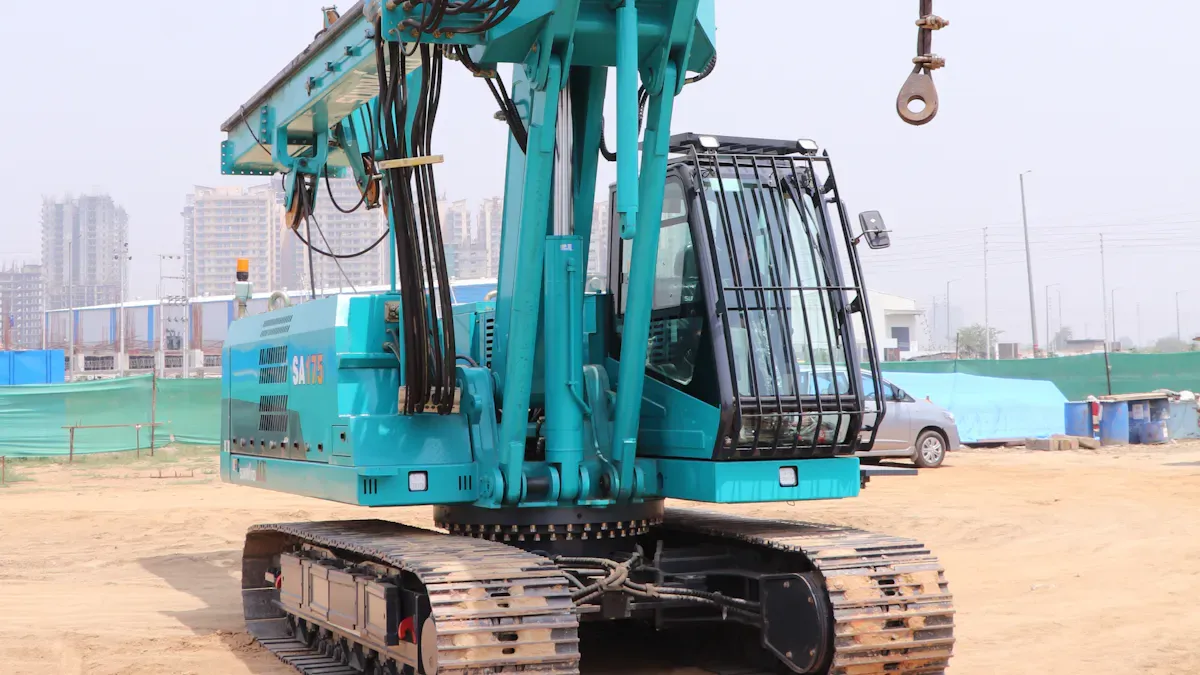
You use a hydraulic pile driver stable support system to keep your building safe and working well. Stability is important because a weak hydraulic pile driver stable support system can cause landslides or slope failures. Soil type, pile shape, and what your project needs all change your choice. The table below shows what happens if a hydraulic pile driver stable support system fails:
|
Incident Type |
Consequence Magnitude |
Observations |
|---|---|---|
|
Landslide |
Minor |
Extra pore pressure goes up |
|
Landslide |
Immense |
Big slope failures are seen |
Pick a hydraulic pile driver stable support system that fits your hydraulic equipment, pile shape, and project needs. Good systems, like ones from CEGC, help you avoid expensive errors.
Key Takeaways
-
Pick a hydraulic pile driver support system that fits your tools and project. This helps keep things steady and stops expensive mistakes. - Check and take care of your hydraulic pile driver often to find problems early. This keeps your tools safe and working well. - Learn about the soil before you start building. Using the right hydraulic system for the soil helps put in piles the right way.
Hydraulic Pile Driver Stable Support System Features
Stability and Balance
A stable support system keeps your hydraulic pile driver safe. Stability stops your equipment from tipping or shaking a lot. Balance helps you drive piles straight and deep enough. Heavy equipment gives more stability. Bigger models cut down vibration and help you install piles better.
-
Equipment weight is important. Heavy hydraulic pile drivers give better balance and less shaking.
-
Advanced controls help you avoid mistakes. These controls keep your equipment safe and make installation easier.
-
Always check if your support system fits your equipment’s capacity. This keeps pile installation steady and reliable.
Mini pile drivers work well for small sites. They are light and easy to move. They help you finish faster, especially when you do not need heavy excavators or wait for concrete. Soft soil needs less force. Hard or sticky soils need stronger equipment, which can change how long installation takes.
Tip: Match your equipment’s capacity to your project’s needs. This keeps your support system stable and your installation safe.
Precision and Alignment
You want every pile to go where your plan says. Precision and alignment are important for a strong foundation. Your hydraulic pile driver support system uses special tools to keep piles straight and at the right angle. This makes sure your installation meets engineering rules.
|
Component |
Function |
|---|---|
|
Pile Guidance System |
Makes your equipment install piles very accurately. |
|
Laser Alignment Systems |
Keeps piles vertical or at the angle your project needs. |
|
Electronic Inclinometers |
Checks pile position and alignment during installation. |
|
GPS Positioning |
Gives exact location data for each pile installation. |
|
Real-time Feedback Mechanisms |
Watches and fixes pile position to stop big mistakes. |
|
Advanced Sensors |
Finds small misalignments and starts correction steps. |
|
Programmable Templates |
Saves pile coordinates for complex foundation layouts. |
|
Visual Display Systems |
Shows instant feedback on pile position, depth, and alignment. |
|
Automated Positioning Features |
Handles routine alignment tasks to reduce operator fatigue and mistakes. |
|
Remote Monitoring Capabilities |
Lets supervisors track installation progress from other places. |
|
AI Integration |
Learns from installation patterns to predict and stop alignment problems. |
Your support system holds each pile tightly while you install it. It keeps piles straight and helps you reach the right depth. Adjustable leads let you use different pile sizes and types. This flexibility means you can handle many project needs with one system.
Note: Industry standards like ISO 9001 and OSHA 1926.603 require your equipment to meet strict safety and quality rules. These standards help you trust your support system every time you install piles.
Support System Design

Turntable Engineering
A turntable holds your hydraulic pile driver guide steady. It lets the system move smoothly without sudden stops. Good turntable engineering keeps dirt from building up. Guards and shields on the turntable lower the chance of crashes. These parts protect the pile driver guide and help it last longer. You should check how fast the turntable turns and how it locks. These things help you pick the right system for your project. The turntable must fit your hydraulic pile driver guide and hold the pile during installation.
Tip: Clean the turntable a lot. This stops dirt from jamming or hurting it.
Material and Durability
You pick materials that fit your project needs. The main materials for hydraulic pile driver support systems are wood, concrete, and steel. Each one has its own good points:
-
Wood is good for short jobs. You use it for small projects. It lasts a few years.
-
Concrete is strong. You use it for medium projects. It can last up to 30 years.
-
Steel is the toughest. You use it for big projects. It can last over 50 years.
You need to check how thick and strong the material is. Strong materials keep your hydraulic system steady. You will fix things less if you use tough materials. Your pile driver guide should work with the material you pick. This keeps your pile installation safe and steady.
|
Material |
Typical Lifespan |
Best Use Case |
|---|---|---|
|
Wood |
2-5 years |
Temporary, small jobs |
|
Concrete |
20-30 years |
Medium projects |
|
Steel |
50+ years |
Large, long-term |
You should match the material to your hydraulic pile driver guide and project needs. This helps your system last longer and keeps your pile installation strong.
Compatibility and Orientation
Hammer Opening and Loading Position
You have to make sure your hydraulic pile driver fits the hammer opening and loading spot. The system should let you put piles in fast and safely. If the hammer opening is not right for your pile, you might have to wait or work could get dangerous. You need a system that lets you change the hammer opening size. This helps you use different pile sizes when you install piles. A good hydraulic system keeps the pile still while you load it. This means fewer mistakes and your team stays safe.
Tip: Always check the hammer opening before you start putting in piles. This can stop accidents and save time.
Pile Shape and Dimensions
You need to match the pile shape and size with your hydraulic system. Some systems are best for round piles. Others work better with square or H-shaped piles. If you pick the wrong system, you could break the pile or hurt the equipment. You should read the system’s guide to find the right pile size. This helps you stop problems when you put in piles.
Here is a simple table to help you compare:
|
Pile Shape |
Best System Type |
Common Use |
|---|---|---|
|
Round |
Adjustable hydraulic |
Bridges, piers |
|
Square |
Fixed hydraulic |
Buildings, towers |
|
H-shaped |
Specialized system |
Heavy foundations |
You should always choose a hydraulic system that fits your pile shape and size. This makes putting in piles easier and safer.
Project and Site Considerations
Soil Conditions
You must check the soil before you start any construction. Soil conditions change how your hydraulic pile driver works. Loose soil lets piles go in fast. Dense soil needs more hammer energy. You can use a blow count to see how hard the soil is during your project. This number tells you if your pile goes in easy or if you need to use more force. Soft clay and dense sand need different energy levels. If you use too much force, you can damage the pile. If you use too little, the pile will not go deep enough. You must match your hydraulic pile driver to the soil at your construction site.
-
Loose soils allow fast pile penetration.
-
Blow count helps you measure soil resistance.
-
Soft clays and dense sands need different energy levels.
You keep your construction safe when you know the soil type. You also save time and money on your project.
Project Size and Demands
Every construction project has its own needs. A small project may use a light hydraulic pile driver. A big project needs a heavy-duty hydraulic pile driver. You must look at the number of piles, the size of each pile, and the total area. Large construction projects often need more workers and stronger machines. You should plan for the right equipment before you start. This helps you finish your project on time. You also avoid delays and extra costs. Your system must fit the demands of your construction project. You get better results when you match your hydraulic pile driver to your project size.
Tip: Always match your hydraulic pile driver to your construction project needs. This keeps your work safe and efficient.
Operational Factors
Power Source
A strong power source keeps your hydraulic pile driver running. Hydraulic power packs help you move piles in and out fast. These packs help you finish jobs quicker. Many power packs can make over 5000 psi of pressure. This high pressure lets you drive piles quickly and accurately. You can use these power packs with many machines at different sites. Good power packs save money because you fix things less often.
-
Hydraulic power packs help you drive piles faster.
-
They work with many kinds of piling machines.
-
High pressure gives you strong impact energy.
-
You finish jobs faster and have less waiting time.
Tip: Buy a good hydraulic power pack to stop delays and lower repair costs.
Noise and Vibration
Noise and vibration are important when using a hydraulic pile driver. You need to keep workers and buildings safe. Hydraulic pile drivers make less noise and shake less than other ways. Vibratory driving is quieter. Impact driving is louder and shakes the ground more. City jobs have rules to protect old buildings and special equipment. Federal rules limit underwater noise to protect sea animals.
|
Method |
Ground Vibration |
|
|---|---|---|
|
Vibratory |
85-95 dBA |
0.1-0.5 in/sec |
|
Impact |
100-110 dBA |
0.5-2.0 in/sec |
You should give workers ear protection and keep safe space. Always check shaking levels to stop damage. Check and fix your equipment often to avoid too much shaking. You keep your site safe by following rules and teaching your team.
Note: Use vibratory hydraulic pile drivers for quieter and safer city building.
Maintenance and Inspection
Routine Checks
You need to check your hydraulic pile driver support system often to keep it safe and working well. Regular checks help you find problems before they get worse. You should look at these parts every day:
-
Inspect the hydraulic system for leaks or low pressure.
-
Check the frame for cracks or weak spots.
-
Test the positioning tools to make sure they guide piles straight.
-
Clean off dirt and debris from all moving parts.
-
Watch the instrument panel for warning lights or strange readings.
If you see anything unusual, fix it right away. You keep your hydraulic pile driver stable when you follow these steps.
Tip: Write down your checks in a logbook. This helps you remember what you checked and when.
Preventive Maintenance
You can make your hydraulic pile driver last longer with a good maintenance plan. Follow the schedule in the table below to avoid breakdowns and downtime.
|
Maintenance Level |
Frequency |
Key Tasks |
|---|---|---|
|
Daily |
Clean debris, check oil levels, lubricate points, monitor instrument panel for problems. |
|
|
Level 1 |
Every 50-100 hours |
Tighten connections, check brakes, verify pressure gauges, inspect for leaks in the hydraulic system. |
|
Level 2 |
Every 300-500 hours |
Take apart key parts, check for wear, replace seals and filters, test all electrical connections. |
You should also:
-
Calibrate your hydraulic system often to keep it accurate.
-
Deep clean all parts every week.
-
Watch fuel use to spot problems early.
Some parts need special care. For example, keep the ram hard, replace pile cushions when they get too thin, and check the accumulator pressure. If you use the wrong buffer or low-quality materials, you may see more breakdowns.
Note: Good maintenance keeps your hydraulic pile driver safe and saves you money.
Choosing Tips and Checklist
Evaluating Support Systems
You want a support system that keeps your hydraulic pile driver safe and steady. Use this checklist to help you make a smart choice:
-
Check if the support system matches your hydraulic pile driver model.
-
Look for strong materials that last a long time.
-
Make sure the turntable design stops dirt from building up.
-
Test if the system holds piles straight and does not shake.
-
See if you can adjust the system for different pile shapes and sizes.
-
Ask about how easy it is to clean and maintain the support system.
-
Review the safety features for workers and equipment.
-
Confirm that the system meets industry standards for hydraulic equipment.
Tip: Write down your answers as you check each point. This helps you compare different systems.
Questions for Manufacturers
Before you buy a hydraulic pile driver support system, ask the manufacturer these questions:
-
How does your support system handle different soil types?
-
What is the expected lifespan of the hydraulic support system?
-
Can the system fit different pile shapes and sizes?
-
What kind of maintenance does the hydraulic system need?
-
How do you handle repairs or replacement parts?
-
Does the system have features that reduce noise and vibration?
-
What safety certifications does your hydraulic support system have?
You get better results when you ask clear questions. This helps you choose a reliable and safe hydraulic support system for your project.
When picking a hydraulic pile driver, think about stability, compatibility, and maintenance. Look at this table to help you remember what matters:
|
Factor |
Description |
|---|---|
|
Hammer Opening |
Choose standard or big for your hydraulic pile driver. |
|
Orientation |
Set the I-beam direction for your hydraulic system. |
|
Loading Position |
Pick rear or side loading for your hydraulic guide. |
|
Pile Shape/Size |
Match the pile type to your hydraulic support system. |
To keep your hydraulic pile driver safe and working well, do these things:
-
Check how your equipment works and its certifications.
-
Look at your hydraulic system every day.
-
Add oil to moving parts.
-
Clean your hydraulic machine after you use it.
-
Get your hydraulic pile driver serviced on time.
Remember, a strong hydraulic support system helps your project stay safe and run smoothly.
FAQ
What makes a pile driving system stable?
A pile driving system is stable when it uses strong materials. Good design also helps make it steady. You need to check the system often. This keeps your equipment safe. It also helps you do your work right.
How do you choose between different driving systems?
First, look at the soil type at your site. Next, think about the size of the pile you will use. You should also check what your project needs. Pick the system that fits your site best. This keeps your team safe while working.
Why is regular inspection important for hydraulic pile drivers?
Regular inspections help you find problems early. This means you can fix things before they get worse. Your pile driver will work well every day. You also stop breakdowns from happening.


