
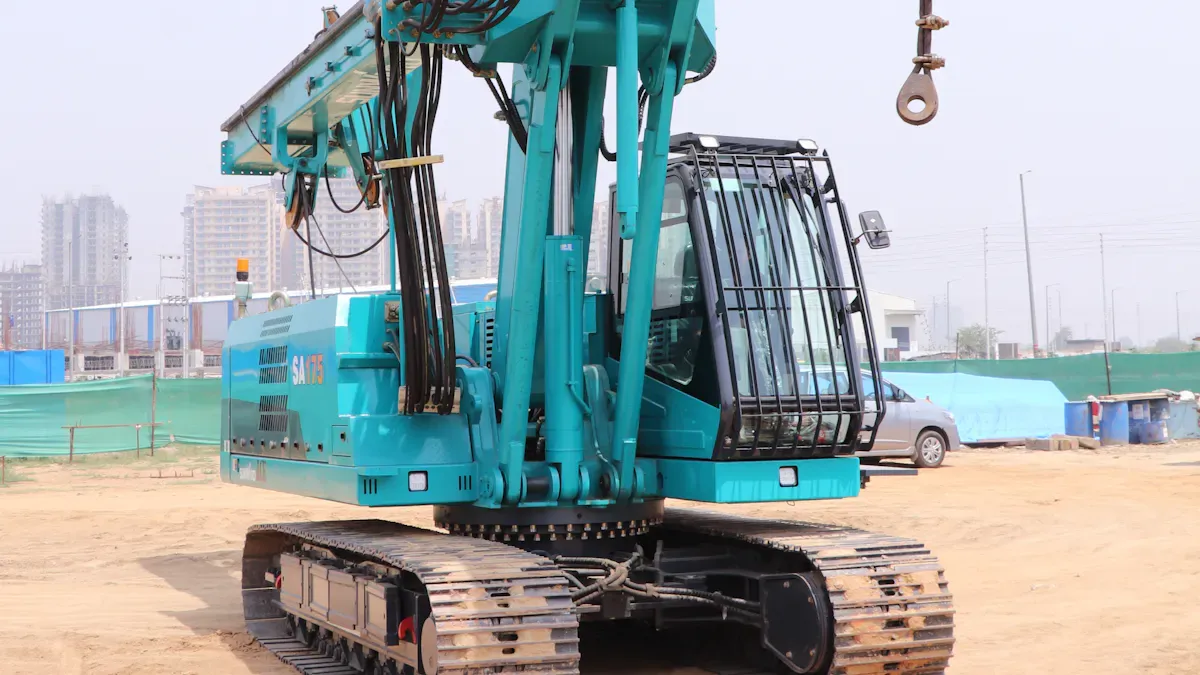
A hydraulic static pile driver steady frame helps with pile driving in building projects. This frame lets the hydraulic static pile driver push piles into the ground quietly. It also makes less shaking. It uses hydraulic force to go deep into tough soil. The hydraulic static pile driver steady frame keeps piles steady. It makes sure piles go to the right depth. Engineers at CEGC work on steady frame design for better results. Good engineering and steady frame design make projects safer. They also help save money. Modern engineers use tools like finite element analysis to check steady frame design. Sensitivity analysis helps engineers find weak spots in the hydraulic static pile driver steady frame. Careful design and engineering make the hydraulic static pile driver steady frame strong. It also makes it efficient and reliable.
Key Takeaways
-
Hydraulic static pile driver steady frames help make building safer and faster. They make sure piles go in the right place and do not make much noise. - Engineers can make the frame better by using special computer tools. These tools help find weak spots and make the frame stronger. - A lighter frame costs less to make and move. It still stays strong and helps save money on building projects.
Hydraulic Static Pile Driver Steady Frame Design
Structural Demands
A hydraulic static pile driver steady frame has many needs. The frame holds up heavy loads when piles are pushed in. It must not bend or twist too much. Engineers make sure the frame is strong and stiff. The frame should not move, even if the ground is not flat. Good design helps the frame handle stress from all sides. The frame must last a long time and not break. Engineers use structural optimization design to help with this. They check every part for weak spots. This makes the frame safer and stronger.
Common Failure Risks
There are some risks that can hurt the steady frame. Cracks can happen if stress is not spread out well. If there is too much weight, the frame can bend or break. The frame might twist if it is not stiff enough. Bad design can make the frame wear out fast. Engineers use design optimization to stop these problems. They look for places where stress is high. Good design helps stop sudden breaks. Structural optimization design also keeps the frame safe after many uses.
Optimization Goals
Engineers have clear goals for making the frame better. They want the frame strong and stiff but not too heavy. A lighter frame is easier to move and costs less. One study showed that using ANSYS APDL made the frame 22.1% lighter. This made the frame safer and more reliable. Structural optimization design also saved money. Engineers use design optimization to follow safety rules and lower costs. Good design helps the frame last longer and work well. Structural optimization design is important for every step. Engineers always try to find the best balance.
Engineering Tools for Analysis
Modern engineers use many tools to make the hydraulic static pile driver steady frame better. These tools help them check if the frame is safe and works well. They also help engineers pick the best design for the frame.
Finite Element Analysis (FEA)
Finite element analysis lets engineers look at the steady frame closely. This method splits the frame, hammer system, pile, and soil into small pieces. Engineers use finite element analysis to see how each piece handles force. The analysis also shows how the soil acts when the pile goes in. Nonlinear behavior is important in this step. Engineers use finite element analysis to do dynamic analysis and see what happens during pile driving. The table below explains how finite element analysis helps with the steady frame:
|
Aspect |
Description |
|---|---|
|
Analysis Method |
Finite element analysis splits the hammer system, pile, and soil into small parts. |
|
Nonlinear Behavior |
It looks at how the soil acts in a nonlinear way during pile driving. |
|
Dynamic Analysis |
Nonlinear time domain dynamic analysis shows hammer blows as repeating impact loads. |
|
Purpose |
It helps engineers understand the driving and pushing process until the pile is strong enough. |
ANSYS APDL Application
Engineers use ANSYS APDL for finite element analysis. This tool helps them make models of the steady frame. They can try out different shapes and materials. ANSYS APDL lets engineers do many kinds of tests. They can check for stress, bending, and twisting. This tool helps them find the best design faster. Engineers use it to make the frame lighter and stronger.
Sensitivity Analysis Methods
Sensitivity analysis helps engineers find which parts of the frame are most important. This analysis shows which changes make the biggest difference. Engineers use sensitivity analysis to make the frame more reliable. The table below lists common sensitivity analysis methods:
|
Method |
Description |
|---|---|
|
Orthogonal Test Design |
Uses test tables to plan tests and lets engineers use statistics on results. |
|
Latin Hypercube Design |
Helps pick design variables that affect how the frame works. |
|
Central Composite Design |
Looks at the response surface and is good for solving optimization problems. |
|
Box–Behnken Design |
Needs fewer tests than a full factorial design but still gives good answers. |
|
Latin Square Design |
Controls for two blocking factors and is good for tests with many factors. |
Engineers use sensitivity analysis to make sure the steady frame stays safe and strong. This analysis is important for finding the best design.
Optimization of Pile Driver Frame
Modeling and Simulation
Engineers use modeling and simulation to make the pile driver frame better. They build a geometric model of the steady frame first. This model shows how parts connect and support the whole frame. Engineers use ANSYS APDL to make the model. They run static analysis to see how the frame handles different forces. The analysis shows where the frame might bend or twist. Engineers use this information to change the design. They test many frame versions with simulation. Each simulation helps them pick the best shape and size for each part. The optimization process uses data from the analysis to guide changes. Engineers focus on strength, stiffness, and weight. They use multi-objective optimization to balance these needs. The optimization model helps them choose materials and shapes. Engineers use optimization algorithms to test many options fast. Careful analysis and repeated simulation lead to the best design.
Weight Reduction Strategies
The optimization of pile driver frame tries to make the frame lighter but still strong. Engineers use different ways to reduce weight:
-
They focus on the large-body structure during optimization.
-
They build a geometric model with ANSYS APDL parametric design language.
-
They do static analysis on the finite element model to find weak spots.
-
The optimization model sets mass as the main goal but keeps strength and stiffness high.
-
Engineers try different optimization algorithms to get the best results.
-
The improved BP neural network algorithm based on particle swarm optimization gives the best outcome.
-
The mass of the large-body structure drops from 82,556.1 kg to 65,046.15 kg, which is a 21% reduction.
Engineers use optimization to make the frame easier to move and install. Lighter frames cost less to build and transport. The optimization process checks every part to make sure it meets design goals. Multi-objective optimization helps engineers balance weight and strength. They use optimization algorithms to test many designs quickly. The optimization model guides each step. Engineers use analysis to confirm the lighter frame still works well. The optimization of pile driver frame improves safety and saves money.
Maintaining Strength and Stability
Engineers must keep the steady frame strong and stable while optimizing. They use special design features to help with this. The table below shows how different features keep the frame safe and reliable:
|
Feature Description |
Benefit |
|---|---|
|
Patented cantilever articulating mechanism |
Rigidity and strength 30% higher than traditional designs, enhancing stability during operation. |
|
Integrated side piling system |
Increases strength and rigidity by 30% to 50%, contributing to overall stability. |
|
Net-shaped rib structure |
Improves penetration-resisting ability by about 40%, ensuring stability when engaging with pile heads. |
|
Optimal structure design based on fatigue strength theory |
Ensures a fatigue life longer than 15 years, maintaining operational reliability. |
Engineers use analysis to check each feature. They use optimization algorithms to see how changes affect strength and stability. The optimization model helps them pick the best features for the frame. Multi-objective optimization lets them improve many things at once. Engineers use simulation to see how the frame works in real conditions. They change the design to keep the frame safe for many years. The optimization of pile driver frame makes sure the structure stays strong after many uses.
Tip: Engineers always check the results of each optimization step with analysis. This helps them find problems early and keep the frame safe.
The optimization of pile driver frame uses modeling, simulation, and advanced optimization algorithms. Engineers use analysis and multi-objective optimization to make the frame lighter, stronger, and more reliable. The optimization model guides every decision. This process leads to better design and safer construction projects.
Sensitivity Analysis Impact
Identifying Key Parameters
Engineers use sensitivity analysis to find important parts of the steady frame. This analysis shows which changes matter most in the design. They test different variables and write down what happens. Sensitivity analysis tells how each part affects the whole frame. For example, engineers might change how thick a beam is or pick a new material. They use analysis to see if these changes make the frame stronger or weaker. This process helps them focus on key parameters. Engineers save time and resources by using analysis to guide their work.
Note: Sensitivity analysis stops engineers from guessing. They use real data from analysis to make smart choices.
A simple table shows how engineers use analysis to find key parameters:
|
Parameter Tested |
Change Made |
Effect on Frame (from analysis) |
|---|---|---|
|
Beam Thickness |
+10% |
Increased strength |
|
Material Type |
Switched |
Lowered weight |
|
Joint Design |
Modified |
Improved stability |
Improving Reliability
Reliability means the steady frame works well every time. Sensitivity analysis helps engineers make the frame more reliable. They use analysis to find weak spots before problems happen. If analysis shows a part is too weak, engineers change the design. They repeat analysis until the frame meets safety standards. Sensitivity analysis also helps engineers predict how the frame will act in real life. They use analysis to check the frame after many uses. This process makes the steady frame safer and more reliable.
Engineers trust analysis to help them make good design choices. They use sensitivity analysis to keep the frame strong for many years. Good analysis leads to better results and safer construction projects.
Real-World Results and Benefits
Efficiency Gains
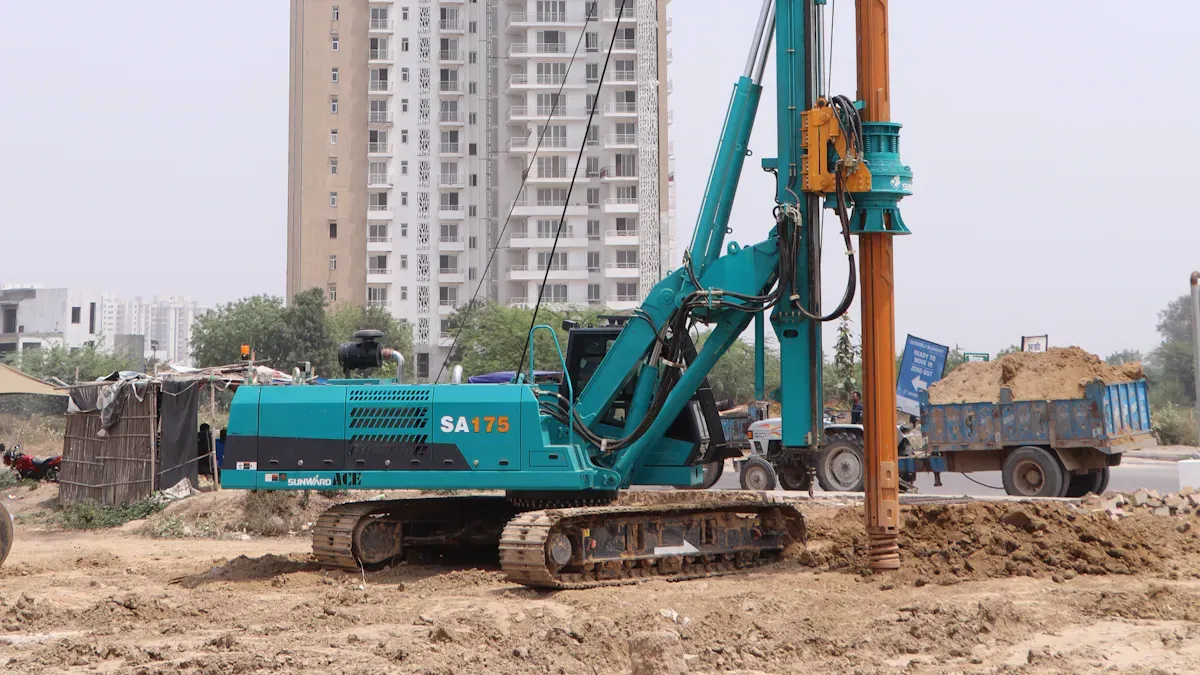
Hydraulic static pile driver steady frames work better after optimization. Engineers use optimization to make pile installation faster and more accurate. They check each change with analysis to see its effect. The new design helps workers finish jobs in less time. Optimization also helps the frame use less energy when working. The improved frame has less downtime and works longer without stopping. Engineers make the frame easier to move and set up with optimization. Every project gets better results because of this process.
Cost Reduction
Optimization helps save money on hydraulic static pile driver steady frame projects. Engineers use analysis to find ways to cut production costs. The design makes the frame lighter but still strong. The frame’s mass goes from 82,556.1 kg to 64,282.6 kg. This is a 22.1% drop, so less material is needed. The lighter frame costs less to move from place to place. Optimization keeps the frame stiff and strong while saving money. Engineers check every part with optimization to meet safety rules. Analysis helps guide each step in the design process.
-
Optimization makes the frame weigh less.
-
Using less material lowers production costs.
-
The lighter frame is easier to transport.
-
Optimization keeps the frame strong and safe.
Case Study Highlights
Engineers use case studies to show how optimization helps real projects. They use analysis and smart algorithms to improve the design. The table below shows two case studies with good results:
|
Case Study Title |
Key Findings |
Optimization Method |
|---|---|---|
|
Optimization of Pile Driver Frame Based on Sensitivity Analysis |
It has less impact on the environment and uses power well. |
Sensitivity analysis and improved algorithms |
|
Optimized Design of Large-Body Structure of Pile Driver Based on Particle Swarm Optimization Improved BP Neural Network |
Lightweight design and computer tools are important. |
Particle swarm optimization and BP neural network |
Engineers use optimization and analysis to make each design better. The case studies show that optimization makes projects safer, faster, and cheaper.
Engineers make hydraulic static pile driver steady frames better with new tools. They use finite element analysis and sensitivity analysis to design strong frames. These methods help make the frames work well and last longer. Engineers should use advanced software to get the best results. The table below shows good resources for learning about optimization methods.
|
Resource |
Description |
|---|---|
|
Optimization of Pile Driver Frame Based on Sensitivity Analysis |
Talks about making hydraulic static pile driver frames better using sensitivity analysis and software like ANSYS. |
|
ANSYS, ABAQUS, MATLAB |
These are advanced computer programs for designing and improving machines like pile drivers. |
|
Applications in Various Fields |
Sensitivity analysis helps design better cars, airplanes, and farm machines too. |
FAQ
What does a hydraulic static pile driver steady frame do?
The steady frame keeps piles steady. It helps the pile driver push piles deep into the ground. This makes sure the piles go in safely and in the right spot.
How do engineers make the frame lighter without losing strength?
Engineers use computer models to test ideas. They try different shapes and materials. Optimization algorithms help them find ways to make the frame lighter. They make sure the frame stays strong while using less material.
Why is sensitivity analysis important in frame design?
Sensitivity analysis helps engineers see which parts are most important. It shows what changes make the biggest difference. Engineers use this to make the frame safer and stop weak spots from happening.


