
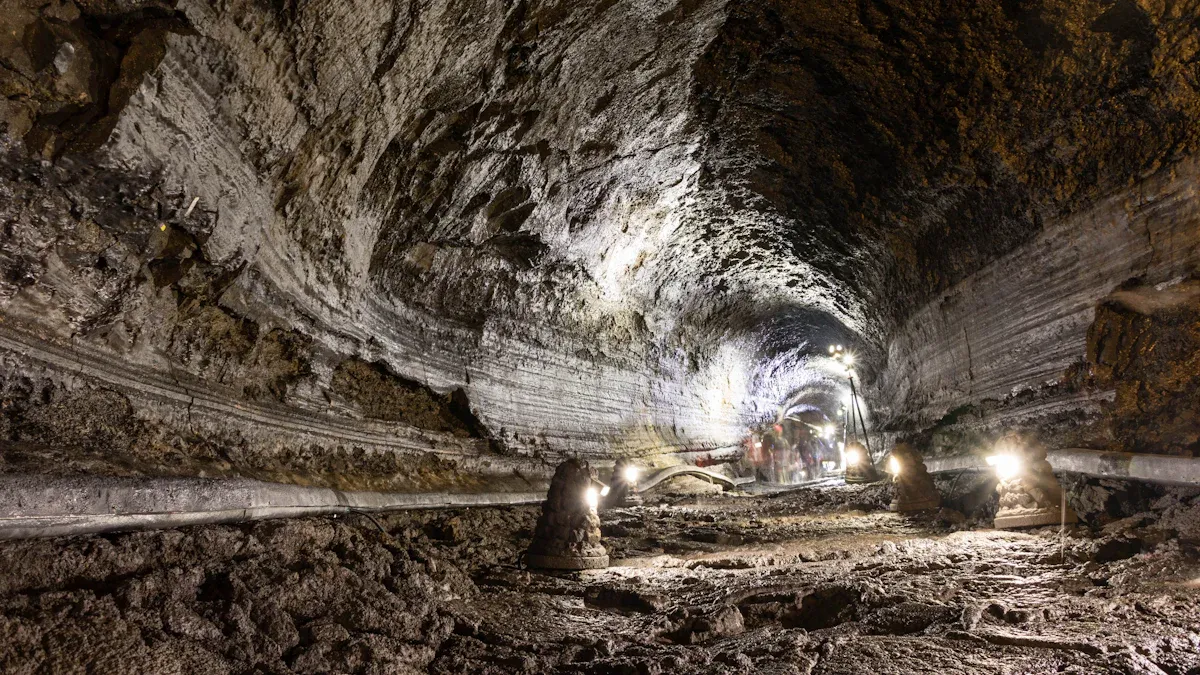
You see mining machines go down 900 meters because engineers make them strong and use new technology. CEGC makes machines like shaft boring machines, raise boring rigs, and tunnel boring machines. These machines dig deep into rock, move rocks, and work in hard places.
|
Technology Type |
Depth Capability |
Description |
|---|---|---|
|
Shaft Boring Machines (SBM) |
Digs into hard rock with holes 10 to 12 meters wide, and lifts the dug-up rock to the top. |
|
|
Raise Boring Rigs (RBR) |
Up to 2,000 m |
Makes shafts by pulling a cutterhead up after a small drill, used for making air and work shafts. |
|
Tunnel Boring Machines (TBM) |
Up to 2,000 m |
Used for many kinds of tunnels, and can work in different ground types. |
Mining Machine 900m Depth Prevents Limits because technology lets you get past very hard problems.
Key Takeaways
-
Mining machines work at 900 meters deep because of good engineering and new technology. This helps mining be safe and work well in tough places.
-
Clean energy, like solar power and smart energy controls, helps mining machines do better and lowers harm to the environment.
-
Automation and remote control systems make deep-sea mining safer and faster. Operators can control machines from far away and stay safe.
Mining Machine 900m Depth Prevents Limits: Core Principles
Engineering Adaptations for Deep Mining
Mining machines can work 900 meters underground. Engineers make them strong for tough places. The mining machine 900m depth prevents limits by using special changes. These machines deal with heavy rock pressure and loose ground. Engineers pick strong materials and smart shapes to keep them safe.
Unloading excavations help lower rock pressure near the tunnel. This means making extra holes close to the main tunnel. The rock pressure moves to these new holes. This makes the main tunnel stronger and safer.
Mining machine 900m depth prevents limits by using unloading excavations. This keeps the main tunnel or shaft strong. Engineers add thick steel frames and strong walls. These parts stop rocks from falling and protect the machine. Sensors inside the machine check for cracks or movement. If something changes, the sensors warn you. You can fix problems before they get worse.
Mining machine 900m depth prevents limits by using flexible joints and shock absorbers. These parts let the machine bend without breaking. Engineers test every part to make sure it works deep underground. The mining machine 900m depth prevents limits because it can handle hard places below the ground.
Power and Energy Solutions
Mining machines need good power to work at 900 meters. The mining machine 900m depth prevents limits by using clean energy. Electricity and solar power help the machines work deep underground. Clean energy makes the machines work better and lowers pollution.
The mining machine 900m depth prevents limits by using strong batteries and backup power. Solar panels charge the batteries during the day. At night or in dark tunnels, the machines use electric power. This system keeps the mining machine working all the time. Engineers pick power that works well at any depth.
Mining machine 900m depth prevents limits by using smart energy controls. These controls save power and stop waste. You can check energy use and change settings for each job. The mining machine 900m depth prevents limits because it uses the best power for deep mining.
Deep-Sea Mining: Overcoming Environmental Limits
Pressure and Water Ingress Protection
When you mine in the deep sea at 900 meters, you face big problems. The water pressure is very strong. Machines must be tough and safe. Every part needs to stay dry inside. Engineers use thick steel shells and special seals. These parts keep water out and protect the machines. Deep-sea mining machines have double walls. These walls stop leaks and keep the inside safe.
Sensors always check for water. If water tries to get in, the system gives a warning. You can fix leaks before they get worse. Engineers use pumps to take out any water that gets inside. Deep-sea mining machines have flexible joints. These joints let the machine bend without breaking from pressure.
Scientists worry about sediment plumes that can travel far and hurt sea life. They also warn about water, light, and noise pollution. These things can harm deep-sea ecosystems forever. We do not know much about life at these depths. This makes deep-sea mining a new frontier compared to shallow places.
You must care about the ocean when you mine in the deep sea. You need to protect minerals and sea animals. You use biodegradable oils in hydraulics. This helps lower pollution. Special pumps move ore to the top without hurting the sea floor.
Automation and Remote Control Systems
Automation and remote control make deep-sea mining safer and smarter. These systems let you control machines from far away. People do not need to go into dangerous places. Sensors and cameras watch every part of mining. You can see and fix problems fast.
Here is how automation helps in deep-sea mining:
|
Benefit |
Description |
|---|---|
|
Fewer people work in dangerous places, so it is safer. |
|
|
Enhanced Efficiency |
Machines work better and faster with good controls. |
|
Predictive Maintenance |
Sensors and data help stop equipment from breaking down. |
You use remote control rooms near the mining site. You sit in a safe place and guide the machines under the sea. Tablets and computers help you check data and control everything. You can use 3D models to practice before real mining starts.
There are many special machines for deep-sea mining. Some examples are:
-
Underwater mining crawlers that move on the sea floor and collect ore.
-
Four tracks with their own suspension and steering for better movement.
-
Drum cutters that dig ore in thin layers, so you do not blast rocks.
-
Ancillary cutters for special rocks like kimberlite.
-
Dredge pumps that send ore to the surface.
-
Submerged hydraulics that use biodegradable oil to protect the sea.
-
Control rooms that let you run everything from above the water.
Underwater mining crawlers help you collect minerals with less waste. You only take the ore you need. This protects the sea and makes the mine last longer.
You need good training to use these systems. Companies like BHP teach you how to use robots and manage data. You learn to use digital twins and 3D models. You practice with tablets and computers before using real machines. You can control trucks and mining machines from far away. This keeps you safe and helps you do your job well.
Deep-sea mining is still very new. There are many unknown risks. You must use the best technology to keep people and the ocean safe. Automation, remote control, and smart training make deep-sea mining possible at 900 meters. You help shape the future of mining and protect deep-sea minerals for everyone.
Safety and Innovation at 900m Depth
Monitoring and Maintenance
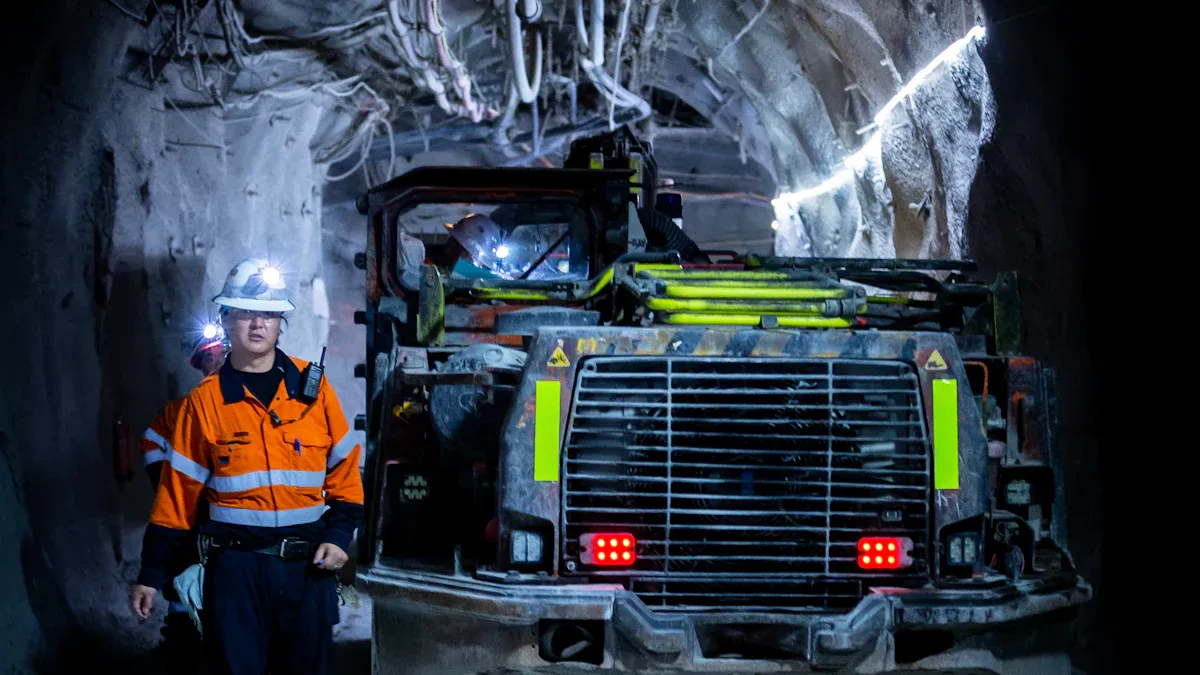
Strong monitoring systems help keep mining machines safe. Sensors check for dust, gas, and water quality. Weather stations measure rainfall and wind speed. You see real-time data about pH, turbidity, and conductivity. These checks help you find problems early and keep the mine safe.
Advanced mining technology tracks every part of the machine. Cameras and sensors look for cracks or leaks. If something changes, you get a warning. You can fix issues before they become big problems. The Lilou Coal Mine uses smart networks to connect all systems. This makes mining safer and more efficient.
Regular maintenance keeps machines working well. You clean filters, check seals, and replace worn parts. Tablets help you record maintenance tasks and check machine health.
Emergency and Fail-Safe Systems
You must be ready for emergencies at 900 meters. Fail-safe systems protect you and the machine. Pumps remove water if leaks happen. Thick steel walls and special seals keep the machine dry. Backup power keeps machines working during outages.
New technologies help you stay safe. AI and communication tools let you control machines from far away. Real-time video streaming and VoIP keep you connected. In some mines, autonomous systems work during dangerous times, like after blasting. These systems run without people for hours, lowering risk.
You learn from mines like Bingham Canyon and Lilou Coal Mine. They show how smart systems and automation make deep mining safer. You use these innovations to protect workers and keep mining reliable.
You see mining operations go past old limits at 900 meters. They use strong machines, smart robots, and safety tools. Mining operations use sensors and AI to keep workers safe. Soon, mining will use IoT and better backfilling for deeper work. You help make the future of mining and deep digging.
New technology will make mining safer and smarter for all people.
FAQ
What makes mining machines work at 900 meters digging depth?
You pick strong materials and smart shapes. Sensors check if the machine is safe. These machines deal with heavy rocks and water pressure deep underground.
How do you protect the ocean floor during mining?
You use special pumps and biodegradable oils. These tools help keep the ocean floor safe. You collect minerals without hurting the sea while mining.
Can you control mining machines from far away on the ocean floor?
You use remote control systems. Cameras and sensors help you guide machines. You dig and mine safely from far away under the sea.


