
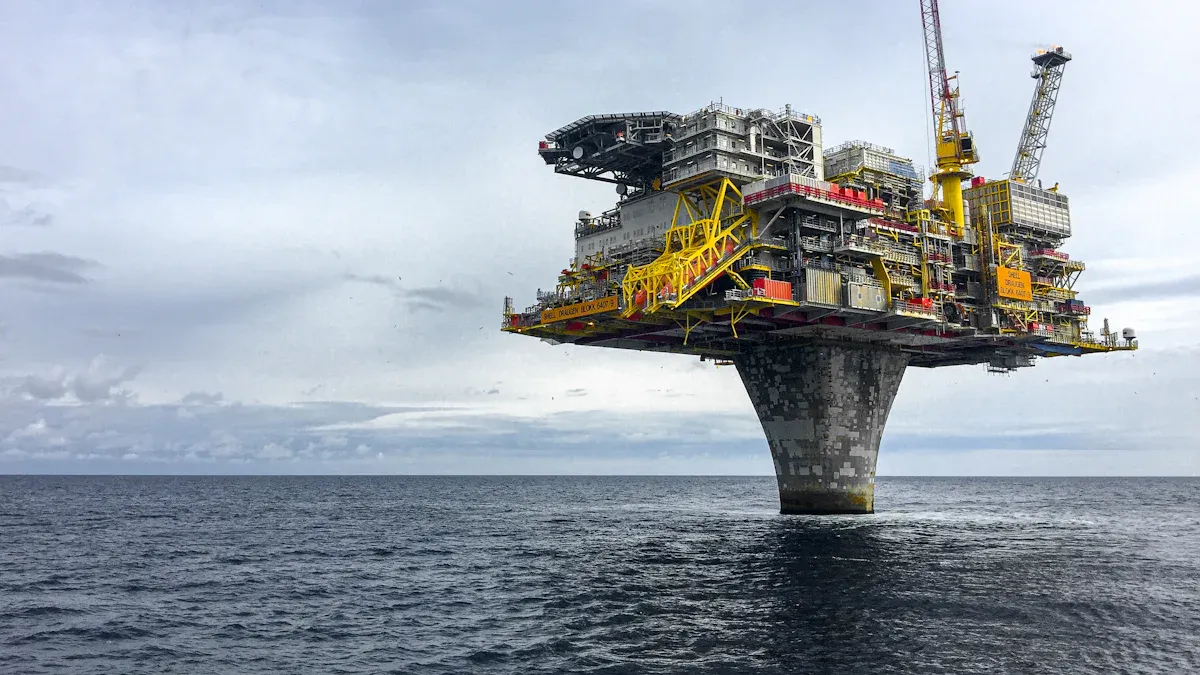
CEGC Oil Drilling Rig Handles Shale Limestone Sandstone
CEGC oil drilling rigs are expertly designed to handle diverse geological formations, including shale, limestone, and sandstone. These robust machines utilize specialized drill bits and advanced mud systems to adapt seamlessly to varying ground conditions. This adaptability is crucial for safe and efficient oil extraction, a paramount concern in the oil drilling business. The CEGC drilling rig, a testament to superior engineering, excels at drilling through these different rock types, ensuring optimal performance and reliability.
Key Takeaways
-
Oil drilling rigs use special drill bits and mud to work through different rocks like shale, limestone, and sandstone. This helps them drill safely and well.
-
New tools like horizontal drilling and real-time data help rigs drill better. These tools make drilling more exact and help get more oil from the ground.
-
Modern drilling rigs use smart engineering and new technology. This helps them handle tough rock problems and makes oil production safe and good.
Geological Formations: Shale, Limestone, Sandstone
We need to know about the ground. This helps us find oil. An oil drilling rig handles shale limestone sandstone. Each has special features. Knowing this helps us drill for oil. It also helps us get oil and gas out safely.
Shale: Characteristics and Challenges
Shale has tiny rock pieces. These pieces often have clay. Clay can swell up. This happens when it touches water. Water comes from drilling fluids. Swelling makes the rock weak. It can make the shale fall apart. Shale also has natural cracks. These weak spots cause problems. They make drilling hard.
Common drilling challenges in shale formations include:
Hydration and Swelling: Clay gets wet and grows. This makes the rock weak.
Inadequate Mud Weight: Drilling mud can be too light. It cannot hold up the hole. This causes caving.
Extended Open-Hole Exposure: Leaving shale open too long. More water gets in. This makes the rock weaker.
These problems make drilling in shale hard. It is a complex job for any drilling rig.
Limestone: Characteristics and Challenges
Limestone can be soft or hard. This changes how a drill bit works. Limestone often has caves. It also has empty spaces. These "cavernous zones" make the well shaky. Cracks in limestone make steering hard. Drilling fluid can get lost.
Limestone is very hard. It is also rough. This wears out drill bits fast. The drill pipe can get stuck. Losing drilling fluid is a big problem. This happens in limestone. Fluid goes into cracks or caves. Normal materials cannot plug these holes. This makes drilling for oil hard.
Sandstone: Characteristics and Challenges
Sandstone is mostly siltstone. It has different sand layers. This rock does not hold much oil. Oil does not flow easily. But some sandstone holds more oil. These spots are good for finding oil. This rock can hold oil well. This happens when it is near good source rocks. It also needs thick caprocks.
Drilling through sandstone is tough. Sandstone is very rough. It wears down drill bits quickly. It damages the drill's cutting parts. This means shorter drilling times. More bit changes are needed. This makes oil drilling less good. The drill bits get hot. This heat damages drill parts more. This slows down drilling for oil and gas. This is a common issue.
Rig Adaptations: Tools for Drilling for Oil
A modern oil drilling rig handles shale limestone sandstone. It uses special tools. It also uses special methods. This helps the rig drill for oil. It works in different ground conditions. The right tools help. The right ways help. They make drilling for oil safer. They make it more effective.
Drilling Bits: Tailoring for Efficiency
The drill bit is a key part. It is on any drilling rig. It cuts through rock. Different rock types need different drill bits. This makes oil drilling efficient.
For mixed rock layers, TCI roller-cone bits are good. These include shale, siltstone, and limestone. These bits can break hard rock. They also handle bouncing. This happens when drilling in shale. But modern fixed-cutter bits are used more. These include PDC bits.
PDC bits have special cutters. They work well in uniform limestone. They also work in moderately hard shale. They cut the rock. They do this by shearing it. This means they scrape the rock. They slice it away. PDC bits drill faster. They are faster than tri-cone bits. This is in clean, carbonate-rich areas. They cut all the time.
Here is how PDC bits compare to roller cone bits for different rocks:
|
Feature |
PDC Bits |
Roller Cone Bits |
|---|---|---|
|
Application |
Soft to medium-hard formations (limestone, sandstone, shale) |
Harder formations (granite, abrasive sandstones), versatile, interbedded layers |
|
Drilling Action |
Shearing action |
Crushing action |
|
Efficiency |
Faster penetration rates, extended bit life in suitable formations |
Slower penetration rates in soft/medium formations, efficient in hard formations |
|
Key Advantage |
Speed and longevity in softer rocks |
Adaptability to varying and harder conditions |
Modern PDC bits offer many benefits. They help with oil drilling.
-
Cutting Efficiency: They cut very well. Their blades are shaped well. They spread force evenly. Advanced PDC cutters resist heat. They resist wear better. Better water flow helps clean the bit. It also cools it.
-
Durability: These bits last longer. They use strong materials. These are like steel alloys. They also have special coatings. This means less wear. Good heat control stops cutters from breaking.
-
Cost-effectiveness: They reduce bit changes. This saves time. It also saves money. They save money later. This is true even if they cost more at first.
-
Stability: They are very stable. Their weight is spread well. This reduces shaking. This happens during drilling.
-
Penetration Rates: They drill faster. This is due to better cutter tech. It is also due to blade design. This removes rock faster.
Choosing the right drill bit is key. It is a step in preparing to drill. It makes sure the oil drilling rig handles shale limestone sandstone well.
Drilling Fluids: Wellbore Stability & Cuttings
Drilling fluids are vital. They are also called drilling mud. They are vital for oil drilling. They do many jobs. They keep the wellbore stable. They carry rock cuttings. They take them to the surface. CEGC's mud solutions help. They fix problems. These include poor fluid performance. They also fix frac-out risk. This keeps the drilling mud stable. It makes it flow well.
For shale formations, special drilling mud is needed. It stops the shale from swelling. It stops it from falling apart. Here are ways drilling mud helps:
-
Potassium chloride (KCl): This is a common chemical. It stops clay from taking water. But it needs a lot.
-
High molecular weight partially hydrolyzed polyacrylamide (HPAM): This chemical sticks to clay. It stops the shale from breaking.
-
Surfactants: These make a lot of foam. But they are not used everywhere.
-
Ionic liquids: These stop water from getting into shale. They work very well. But they cost a lot.
-
Amines: These also stop water. They stop it from getting into shale. They stick to the shale surface.
-
Nanoparticles: These are new chemicals. They help stop shale from swelling.
Other products help stabilize shale:
-
Asphaltic Shale Stabilizers:
-
Sulf Mac: This conditions the mud. It stops shale from breaking. It controls fluid loss.
-
Sulf Mac SA: This version works in hot conditions. It works up to 400°F. It keeps fluid loss controlled. It helps with lubrication.
-
PEL TROL: This uses natural asphalt. It stabilizes shale. It helps with lost circulation. It also helps with fluid loss.
-
PEL TROL L: This is a liquid asphalt. It is good for the environment. It stabilizes shale. It lubricates.
-
-
Polyamine-Based Shale Stabilizers:
-
Claystab AB: This is a strong polyamine. It stabilizes clay-rich shales. It stops them from collapsing. It stops them from swelling. This is in water-based drilling fluids.
-
Claycease: This polyamine has no chloride. It works where chloride ions are a problem. It stabilizes shale. This is in polymer-based drilling fluids.
-
PEL-HIB: This polyamine helps keep the wellbore stable. This is in tough shale formations. It stops the hole from collapsing. It stops it from swelling too much.
-
-
Glycol-Based Shale Inhibitors:
-
PEL COL LC: This is for cold places. It keeps fluid properties stable. This is for shale.
-
PEL COL MC: This glycol mixes with water. It works in salty systems. It stabilizes shale. This is in salty areas.
-
-
PHPA-Based Shale Stabilizers:
-
PEL-PHPA: This is a powder. It stabilizes shale. It does this by covering it. This stops it from breaking down.
-
PEL-PHPA L: This is a liquid PHPA. It covers shale. It stabilizes it. It stops shale from taking water. It stops it from breaking apart.
-
For limestone formations, weighted muds are used. This is especially true with high pressure. It is also true with many cracks. These muds help control pressure. They prevent fluid loss.
-
Pressurized Mud Cap Drilling (PMCD): This method uses a thick mud cap. It is heavy. This cap balances pressure. This is from the reservoir. The mud column is heavy enough. It creates pressure. This is just below reservoir pressure. A device at the surface keeps this pressure steady. This helps manage pressure changes. It also helps with gas. This method is used in tough limestone. This is like the Kujung formation. It handles pressure changes. It reduces gas release.
Weighted muds are very important. They control high pressure. This is in deep reservoirs. Materials like barite, calcium carbonate, and ilmenite make mud heavy. Researchers want to make these materials better. They want to improve mud properties. They want to stop problems. These include barite settling. The choice of weighting material is very important. It affects filter cake formation. A thin, strong filter cake is needed. It protects the formation. It stops problems. These include the drill pipe getting stuck. This filter cake has a polymer layer. It has a weighting material layer. The weighting material touches the drilled formation. Good engineering stops solid particles. It stops them from entering the formation. This prevents damage.
For sandstone, low-solids muds are often used. These muds help prevent damage. This is to the reservoir. They also make sure oil flows easily. This is from the reservoir later.
Operational Parameters: Optimizing Performance
How the drilling rig works also matters. This is beyond the tools. Adjusting how it works helps. It makes drilling for oil better. This includes weight on the drill bit. It also includes how fast it spins.
When drilling shale with water-based mud, do not put too much weight. Do not put too much on the drill bit. Studies show more weight makes the drill bit hotter. This is during rotary drilling. The speed of the drill bit also affects its temperature. But not as much.
By carefully controlling these things, the drilling rig can work better. This helps reduce wear. This is on the drill bit. It also helps prevent problems. These include the drill pipe getting stuck. This careful control helps set up the rig. It helps it succeed. It makes sure the oil drilling rig handles shale limestone sandstone precisely. This leads to better results. This is in oil drilling.
Advanced Tech for Efficient Oil Drilling
Modern oil drilling uses new drilling technologies. These make drilling better. They help in tough rock. An oil drilling rig handles shale limestone sandstone better. This is because of new tools. CEGC puts many new ideas into its machines.
Directional Drilling and Horizontal Wells
Directional drilling and horizontal wells changed oil drilling. These ways let us reach oil deep underground. These spots were once too hard to get. This is true for shale rock.
“Horizontal drilling can explore more of the reservoir. They tend to form flat. Directional drilling is good in shale rock.”
Horizontal drilling techniques have many good points.
-
Horizontal wells make more oil. They last longer than straight ones.
-
More oil can be reached. This means more money.
-
Less chance of dry holes. This makes projects safer for money.
-
Directional drilling is good in shale. We can follow rich oil spots.
Horizontal drilling changed the oil and gas world. It opens up oil spots we could not reach. It makes oil production much better. This way drills straight down first. Then, it curves the hole sideways. It goes through the oil rock. When used with fracking, it gets the most oil. It makes paths for oil and gas to flow. This works well in shale rock. It gets oil that was too costly before. This way also means fewer straight wells. It saves money. It bothers the land less. It is better for nature.
-
More contact with the oil rock makes more oil.
-
It reaches oil spots. These are too thin for straight drilling.
-
It gets more oil.
-
It drills more wells from one spot.
-
It costs less to move the rig.
-
More oil production makes up for higher costs. This is compared to straight wells.
-
Fracking with new tools and horizontal drilling made a lot more oil and gas. This is true in big shale areas.
Horizontal drilling makes much more contact with oil rock. It also makes more oil. The well touches more oil rock. This is compared to straight wells. More time in the oil spot means more oil. It also means more oil is taken out. This is true in hard-to-flow rock. Examples are tight sandstone or cracked limestone. Long horizontal wells work well in thin rock. They also work in rock where oil flows up easily. They help avoid problems like gas and water coming up. They lower pressure. This way is key for getting oil from tight spots. It gets oil from a much bigger area. This is more than old straight wells.
Real-time Data: LWD and MWD
Real-time data is key for good oil drilling. Tools like Logging While Drilling (LWD) and Measurement While Drilling (MWD) give this data. They help make drilling for oil better.
LWD tools gather special data. This makes drilling better in tricky rock.
-
Clear pictures help place the well. They make drilling better. They make the hole better.
-
Close-up, shallow, very deep, and deep side views. These help drill ahead. They help check the oil rock.
-
Resistance and Reservoir math are key for well placement. They are key for hole quality.
-
No-source checks of holes and oil rock quality. These use magnets. They give rock details.
-
Direct rock pressure checks are done when needed. This is for oil liquids and rock strength.
-
Rock liquid samples are taken. They are checked while drilling.
Other LWD data points include:
-
Side Gamma Ray gives live readings. It shows pictures to guess rock tilt. It helps change landing spots. It shows early signs of oil rock tops.
-
Bit Resistance Check finds pressure changes. This is before the bit drills. It lets us stop drilling right away.
-
128-part Resistance Pictures help guess rock tilt. This updates rock models. It helps show rock layers.
-
Side Density and Porosity (LithoFusion) helps steer the drill. It helps check liquids and minerals. It shows rock shapes. It gives 16-part density, PEF pictures. It gives 128-part clear sound pictures.
-
Clear Neutron Porosity, Rock Weight, Photoelectric Factor give live data. This is for rock checks and rock details.
-
Clear Sound Pictures show rock layers and shape. They show cracks, holes, breaks, swelling, and ledges. This is for rock shape details.
-
Exact Hole Size Check (Sound) shows tool distance. This helps fix neutron readings. It gives hole shape details. It helps check rock strength. It helps with cement amount.
-
Ring Pressure Sensor (APWD) works with sound pictures. This is for advanced rock strength checks. It allows live rock strength checks. It allows hole stability math.
-
Laterolog Resistance (GeoFusion) gives 3 focused resistance checks. It has great detail (0.1 to 20,000 Ohm-m). This is for good rock checks in high resistance oil rock. It is for rock strength checks of cracks.
More data from LWD tools includes:
-
Gamma Logging checks natural radiation. It matches oil rock models. It checks shale amounts. It helps place the well live.
-
Clear Gamma Ray, Neutron-Density, Hole and Ring Pressure, and Resistance Logs are taken. This is in high-pressure, hot places.
-
Heat-Neutron Porosity and Side-Focused Rock-Density help find liquid types. They help check pore pressure. They give rock details for water, rock type, and holes.
-
Resistance Checks help find oil in place. They figure out water amount. They match the oil rock model. They guide well placement with deep readings.
-
Sound Data (Sonic Logging) matches sound time-to-depth checks. It finds holes. It helps understand rock strength.
-
Hole Pictures find rock tilt. They find natural and drill-made cracks. They show rock types and stress direction.
-
Direct, Live Pore-Pressure and Liquid-Flow Info helps check oil rock chance. It helps avoid dangers.
MWD tech gives live feedback. This is for steering choices in directional drilling. In directional drilling, MWD gives live tilt, direction, and tool face data. These are key for exact steering changes. This lets drillers see the hole path live. They make fixes right away. They use the MWD tool face. This exactness is key for reaching hard-to-get spots. It helps go through narrow oil rock zones. It helps avoid rock edges or other wells. It makes sure the hole stays on its path. It gets the most oil rock. It lowers risks.
|
Term |
Definition |
Importance for Steering |
|---|---|---|
|
Inclination |
The angle of the hole from straight up. |
Helps find how much the well goes sideways. This is key for keeping the right path. It helps reach target depths. |
|
Azimuth |
The side direction of the hole. It is measured clockwise from north. |
Guides the hole sideways to specific rock spots. It avoids hitting other wells. |
|
Toolface |
The spin direction of the drill parts. |
Lets drillers turn the steerable part of the drill. This makes exact direction changes. It makes sure the hole follows the plan. |
MWD systems give constant live data. This includes the well's spot, direction, and downhole state. This removes guessing. It also removes stopping. These stops would be needed to check and fix the path. This allows instant changes to the drilling path. MWD allows live steering. It constantly checks rock traits. Examples are holes and resistance. This helps workers steer the drill bit. They steer it to good oil spots. This gets more oil and best well placement.
Precision Guidance for Bore Accuracy
Exact guidance is key for hole accuracy. This is true for horizontal directional drilling machines. CEGC's Exact Guidance & Stability System fixes hole going off. It also fixes crossing failure. It makes sure projects are always exact.
Tools used for exact guidance include:
-
BIM (Building Information Modeling) is a digital building tool. It helps HDD projects. It lets planners work together. They see land and paths. It takes data from sources. Examples are ground radar and rock checks. It makes full underground 3D models. This lets engineers pick the best drill paths. They avoid things. They find problems early. This makes sure measurements and direction are exact.
Other systems for exact guidance are:
-
Advanced Monitors have screens. They have meters and numbers for key data. This includes drill head direction. It includes basic depth. It includes tilt.
-
Analog Controls stay quick. This is true even with smart systems. They let workers make live changes for exactness. This is true around things.
-
Digital Exact Guidance Systems combine many guidance ways. They offer full monitors, numbers, and live control. This is through one screen. It lowers mistakes.
-
Advanced Automation makes drilling smooth. It needs less hand work. It lowers mistake risk. This is through things like auto depth control. It also uses live feedback.
More tools for exact guidance include:
-
Steering Tools have sensors. They give drillers live data. This includes tilt and roll. By turning a special bit or part, and pushing the drill string without spinning, we control the hole direction.
-
Surveying Tools have sensors. They have magnetic or spinning sensors. These tools check tilt and direction. This data, with Measured Depth (MD), lets us figure out the hole's exact spot. This uses ways like Minimum Curvature.
-
Tracking Systems check surveyed spots. They use outside electric signals. Sources like ParaTrack2, Beacon Tracker System, or Microcoil are put in known spots. They send signals sensed by sensors in the survey tool. This gives more check points. It makes it more exact.
Anti-Stall Powertrain for Uptime
Stuck pipe, sudden twists, and downtime are big worries in oil drilling. CEGC's Anti-Stall Powertrain & Overload Protection system stops these problems. It makes daily work steady. This is true in hard or mixed ground. This system makes sure the drilling rig runs well. It protects the machine from sudden too much work. This means more reliable oil exploration. It also means less stopping in drilling. This smart engine helps keep steady progress. It lowers the chance of costly delays. This is key for good oil exploration.
Tooling Compatibility and Durability
High tool costs and tool wear are common problems in oil drilling. CEGC's Tooling Compatibility & Durability Package lowers these costs. It also lowers tool wear. It cleans the hole well. It makes tools last longer.
Strong packages make tools last longer. They fight rubbing, shaking, and scraping. These are common in rough rock. Special drill rods, downhole shock absorbers, and strong swivels lower stress. They keep parts strong. Tough metals and exact joints make tools last longer. They cut down on wasted time. Greases lower rubbing. This lowers twisting and pulling. It makes drilling faster. It eases stress. This good link between strong parts and good greases makes twisting steady. It makes holes cleaner. It makes drilling work as expected. This helps clean holes well.
-
Special drill rods are made for twist control. They keep parts strong.
-
Downhole shock absorbers stop shaking. This lowers stress.
-
Strong swivels keep smooth spinning. This helps keep parts strong.
-
Tough metals and exact joints make tools last longer. They cut down on wasted time.
-
Good wear parts (teeth, bits, adapters) lower shaking. They fight scraping. They make tools last longer in tough rock.
-
Greases lower rubbing. They lower twisting and pulling. They make drilling faster. They ease stress. This makes twisting even. It means faster drilling. It means fewer early breaks.
Rubbing is a big enemy in drilling. It makes heat. It makes things wear out faster. It wastes energy. Good grease lowers this. It lowers rubbing. This lowers twisting and pulling. It makes drilling faster. It eases stress. Studies show good greases can cut surface wear by more than half. For spinning parts, enough grease makes twisting even. This means faster drilling. It means fewer early breaks. Using good rods and good greases keeps things tight longer. Greased threads resist sticking. This double protection makes twisting steady. It makes holes cleaner. It makes drilling work as expected. These are key for cleaning holes well in rough rock. This is vital for good oil exploration.
The oil drilling rig handles shale limestone sandstone. It uses smart engineering. This shows new ideas in the oil drilling industry. Oil drilling rigs use special bits. They use special mud. They also use good settings. This helps with oil drilling. New tools like horizontal directional drilling machines are key. Real-time data also helps. This makes drilling exact. This way helps the drilling rig. It solves rock problems. It makes oil production good and safe. This new drilling rig changes well. Being able to change is important. Technology is also important. This helps the rig drill for oil. It makes more oil production. These tools help drill deeper. They also help drill faster.
FAQ
How do drilling rigs handle different rock types?
Rigs use special tools. They use special mud. They use special settings. This helps them drill. They drill through shale. They drill through limestone. They drill through sandstone. This is important for finding oil. It helps reach the oil. It helps understand the oil.
What is a reservoir?
A reservoir is rock underground. It holds oil. It holds gas. Finding a good one is key. This rock can be sandstone. It can be limestone. It stores oil and gas. Knowing about it is very important.
Why is real-time data important in drilling?
Live data helps guide the drill. It makes sure the drill hits the oil. This makes finding oil better. It helps understand the oil. This helps manage the oil. It helps find more oil later.


