
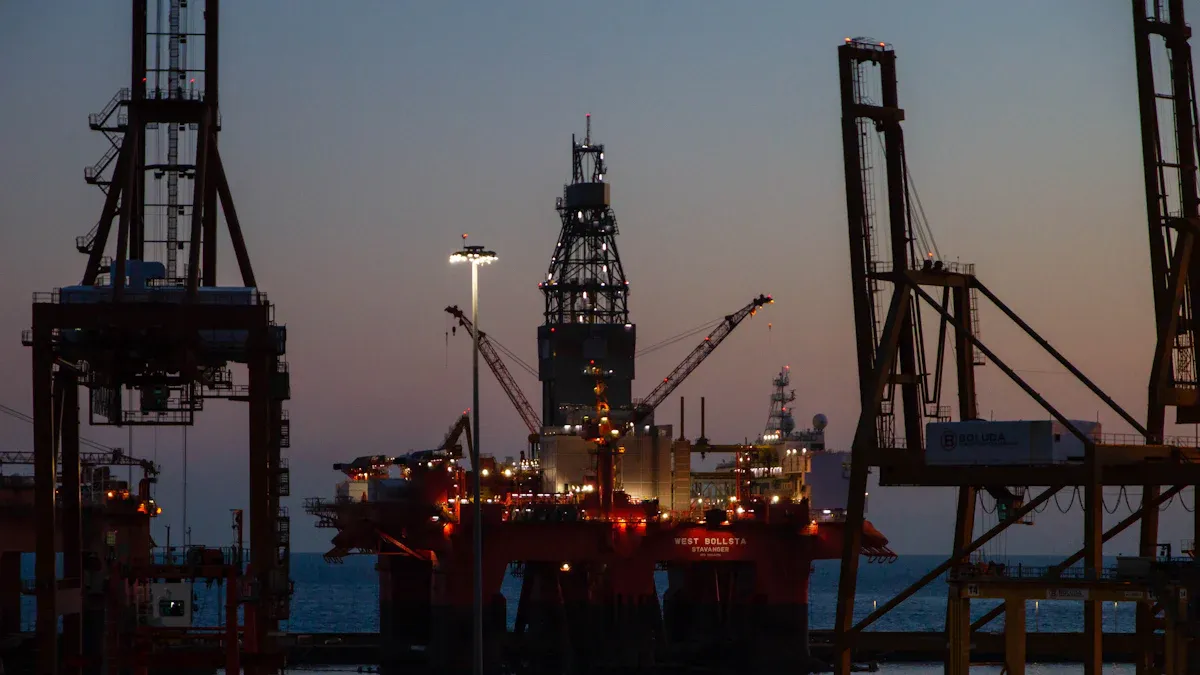
Using fuel efficiently is crucial, and reduced resistance directly translates to significant fuel savings. This, in turn, lowers operational costs. This blog explores strategies to achieve substantial fuel savings by 2026. CEGC is dedicated to enhancing drilling efficiency and optimizing energy management, ensuring robust oil and gas production and seamless operations. Our Oil Drilling Rig Reduced Resistance Saves Fuel initiative is a testament to this commitment.
Key Takeaways
-
Less drag in oil drilling saves much fuel. It also lowers costs.
-
New tools, special liquids, and smart systems help drills. They work better. They use less energy.
-
Less drag means less pollution. Equipment lasts longer. Projects finish faster.
Understanding Drilling Resistance
Defining Operational Resistance
Operational resistance means forces that fight drilling. These forces make the oil drilling rig reduced resistance saves fuel idea important. They make the drill work harder. This extra work uses more energy. Lessening these forces helps operations in oil and gas run well.
Key Sources of Resistance
Many things cause drilling resistance. Friction is a big one. It happens between the drill pipe and the hole. The rock type also causes resistance. Hard rock needs more power to drill. Fluid drag from mud adds resistance. Bad hole cleaning also raises resistance. This is when rock bits pile up.
Fuel Impact of Resistance
More resistance uses more fuel. When the rig meets more resistance, engines need more power. This extra power uses more fuel. Picking the right tools for the ground helps the rig. Lessening this load saves fuel. Changing speed and pressure for the ground stops jams. Overloading uses more power. This wastes fuel. Stopping jams by lowering pressure or lifting the drill saves fuel. Good operations are key for oil and gas.
Advanced Fluids for Reduced Friction
Special liquids help reduce resistance. They are very important. They make oil and gas work better. These liquids help the drill move smoothly. They also save fuel. This helps the oil drilling rig reduced resistance saves fuel operation.
Next-Gen Lubricants and Reducers
New drilling needs new answers. New lubricants help. They lower rubbing. This happens between drill parts and the hole. For example, new liquids help. They work in hot water drilling. Plant-based oils are good too. Canola and soybean oil work well. They are good for the Earth.
Other liquids also reduce rubbing. They mix oil and water. They have a special liquid. It does not mix with water. They also have water. It has a special powder. This powder reduces rubbing. Other liquids use salt. Potassium or sodium salt are examples. The powders can be different types. They can be negative, positive, or both. Other powders are used too. They are in water-based liquids. These new liquids help. They move heat better. They make things smoother. They also filter better. Old liquids often fail. This happens in hot, high-pressure places. Tiny particles fix this. They stay strong. They form strong networks. This makes liquids better. They stay mixed. They are thicker. They do not move into rocks.
Optimizing Fluid Rheology
Making liquids flow well is key. It lowers drag. It helps flow in the hole. This means changing liquid traits. It balances moving rock bits. It also controls pressure. It keeps the hole stable. For straight parts, a low flow is best. This lifts rock bits well. It does not add too much pressure. Good goals are moderate YP. Also, low PV is good.
For angled and flat parts, stopping rock bits is key. Making the liquid flow well helps. It moves rock bits. High YP is good. A YP/PV ratio over 1.5 is good. Thickeners like Xanthan Gum help. They make high YP. They do not add much PV. This makes a flat flow. It cleans the hole. For hot, high-pressure wells, stable flow is vital. The plan is to keep it stable. It should act as expected.
How drilling liquid flows is key. It cleans the hole. It moves and holds rock bits. YP gives moving power. LSRV is key for removing beds. This is in angled wells. In straight wells, enough YP helps. It makes a flat flow. This lifts rock bits well. Strong Gel Strengths hold rock bits. This happens when pumps are off. It stops them from falling. It stops pipes from getting stuck. In angled and flat wells, high LSRV is vital. It pushes on rock beds. This keeps them moving. Low LSRV can make channels. This goes over the bed. This causes fast build-up. It increases twisting. It gets pipes stuck. Uncontrolled rock bits change liquid flow. This often causes problems. It affects hole cleaning. It affects pressure control. It affects drilling speed. PV can go up. YP and Gel Strengths can go up. This slows drilling. It cleans the hole poorly. It increases pressure. It gets pipes stuck.
Mud Integration for Fluid Management
Good mud mixing is vital. It fixes bad liquid flow. It fixes break risks. Right pump size is key. The cleaning power should be 1.5 to 2 times more. This is more than the rig needs. This handles busy drilling times. The best cleaning amount should be about 20% to 50% more. This is more than constant pumping needs. For removing fine sand, closer to 50% is best. For rock removal, closer to 20% is fine. Each 5-inch cleaner handles about 80 gallons per minute. Each 10-inch cleaner handles up to 500 gallons per minute. The mud system should clean at least 100% to 125% of the mud flow. This keeps solids low. Making the system a bit bigger helps. It gives more choices.
A balanced system is needed. It must do rough and fine cleaning. This stops problems. These problems come from small systems. Bad drilling liquid goes back to the hole. This happens without good care. This causes issues. It causes delays. It overloads other machines. Pressure can go up. Problems with hole pressure can happen. The well can even fail. Following mud rules is key. This means setting mixing goals. It means watching constantly. It means making changes. These actions keep liquid stable. They also lower break risk. These new liquid uses save a lot of fuel. They make oil and gas drilling better.
Innovative Rig Designs and Tooling
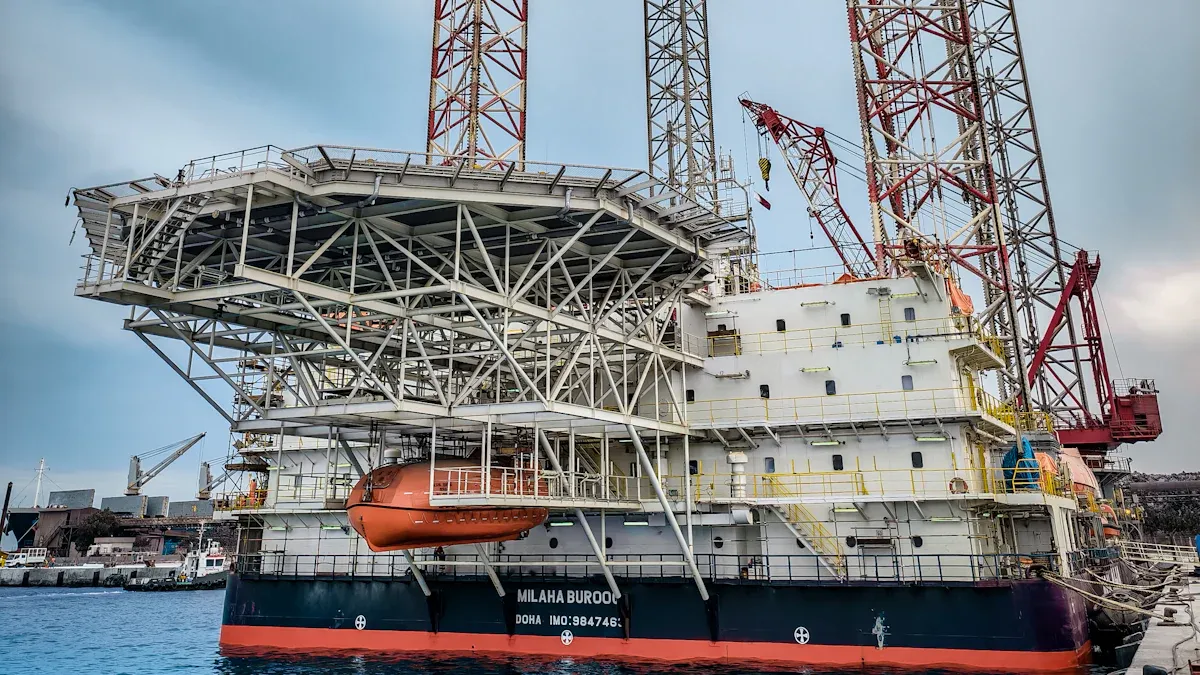
Modern drilling needs new answers. New rig designs and special tools cut down resistance. This helps the oil drilling rig reduced resistance saves fuel goal. These new ideas make oil and gas work better.
Low-Friction Drill Pipe Coatings
Special coatings on drill pipes are key. They lower rubbing against the hole. This makes drilling smoother. For example, new coatings like CuNia and RotoGlide exist. These make a slick surface. Drilling fluid coatings also help. They oil the drill bit and rock. This makes drill bits last longer. It also makes drilling better. Another new idea uses Coarse GlassDrill Ball Bearings. These are solid glass balls. They make an oily layer. This layer greatly cuts down rubbing. It works between the drill string and the hole. These tiny balls make drilling better. They are good in angled holes.
Hydrodynamic Drill Bit Designs
Drill bit shape greatly affects resistance. Water-friendly shapes lower drag. These bits move through rock and liquid easily. Their smooth shapes need less force. This helps them cut into rock. This makes drilling faster. It also uses less energy. Less energy means less fuel burned. These shapes make drilling work better.
Anti-Stall Powertrain for Efficiency
Stuck pipe and sudden twists cause big problems. They stop work and cost money. CEGC's Anti-Stall Powertrain & Overload Protection system fixes these. This system gives strong twisting power. It also has many speeds. It senses hydraulic load. It manages pressure. The system controls speeding up and slowing down. This lessens shocks on rods, swivels, and tools. It stops pipe from getting stuck. It also stops sudden twists. This greatly improves the drill rig's efficiency. Special "rock packages" are an option. These have better cooling, filters, and strong parts. They give extra twist power for hard ground.
Tooling Compatibility and Durability
High costs and tool wear hurt project money. Tooling Compatibility & Durability Packages offer fixes. These packages work with many reamers. This includes blade, fluted, rock, and barrel reamers. Smoother twist delivery lessens shaking. It also reduces uneven tool wear. Easy access for service means faster fixes. This lowers costs. It also makes tools last longer.
Rotary Steerable Systems (RSS) are also important. They lower hole rubbing. RSS lets the drill string turn while steering. This makes drilling faster. It cuts time to reach the target. It also lessens slow slide drilling. RSS tech makes better holes. It keeps the hole path smoother. This makes it less winding. It lessens wear on drill gear. It also lowers rubbing during casing and finishing. Constant turning while steering lowers rubbing. This helps push weight to the bit. It makes drilling faster. RSS drill systems make smoother, 'right-sized' holes. These are not spiraled. This further lowers rubbing. It makes casing, wireline, finishing, and tripping easier. Constant steering makes a less winding hole. This lowers rubbing. Constantly turning pipe removes cuttings better. This means fewer wiper trips. It also lowers chances of stuck pipe. RSS gives exact direction control. This allows faster drilling. It makes smoother holes. Drillstring drag is much lower with constant pipe turning. This makes long, angled wells possible. Smoother holes let casing go to the bottom easier. This is true for longer side sections.
Material science also affects drill string work. New ideas have made stronger parts. They also last longer. Using composite carbon fiber for light drill pipes is a key step. These material changes make drill strings better. They help with tough situations. They also handle changing loads better. These new ideas help lower total fuel use. This is for oil and gas searching.
Optimized Drilling Parameters and Automation
Real-Time Data Analytics for Resistance
Computers help with oil and gas work. They find and fix problems. Sensors gather information. Smart computer programs check this information. They watch drilling conditions. These tools guess when parts will break. They also guess when pipes get stuck. This makes things safer. It saves fuel.
Automated Control for Drilling Efficiency
Automatic systems make drilling better. They control how much weight is on the drill. They also control how fast it spins. A special tool gives data. It shows weight and twisting force. This finds problems. It also finds bad shaking. Changes fix shaking. They make drilling faster. Fast data flow helps. Software picks the best settings. This saves energy. It uses less fuel.
Precision Guidance and Stability Systems
Special systems fix crooked holes. They stop mistakes. This is key for horizontal directional drilling machines. CEGC's systems control loads. They have strong frames. A steering tool measures angles. It helps hit targets. This tool is very exact. Radar systems are a backup. This makes oil and gas work precise.
Predictive Maintenance and IoT Deployment
Fixing things before they break helps. It lowers resistance. This uses smart devices. These devices watch machines. They find problems early. They guess when things will fail. This means less stopped work. Machines last longer. Planning is better. This makes work safer. It makes work better. Smart cleaning stops buildup. It stops rubbing. This uses good liquids. It uses special tools. Watching things live helps. It changes settings fast. This makes oil and gas work smooth.
Energy Recovery and Hybrid Systems
Capturing Energy from Operations
Drilling operations make waste energy. New ways catch this. They turn it into power. For example, gas from flares can change. This gas can be squeezed. It becomes renewable fuel. Small machines can make electricity. Rigs at sea use wave power. The C·Power "RigRAY" system connects. It goes on drilling ships. It turns waves into power. This power goes to the rig. It uses less carbon power. The Twin Ocean Power Wave Energy Converter also uses waves. It has floating tubes. These make waves into electricity. This uses less old fuel.
Hybrid Power System Integration
Hybrid power systems make drilling better. An energy Storage System (ESS) is a test model. It uses a Li-ion battery. It also has a supercapacitor. This plan makes power last. It makes it work longer. These systems help oil and gas. They make power better. They stop power dips. This means less waiting. They cut CO2 by 25% each year. This makes them a better renewable fuel choice. They use energy better. They use 20–30% less diesel. They also reuse power. This comes from lowering drills. This makes tools last longer. It costs less to buy and run. These systems can link to the rig's power. They can use a DC bus. They can also use AC lines. These are at 690 V or 6 kV.
Future of Electric and Alternative Fuel Rigs
The future of oil and gas drilling will have more electric rigs. It will also have other renewable fuel rigs. This change helps the Earth. It also makes work better. Using more renewables will be important. This means sun and wind power. These renewables will use less fossil fuel. The aim is to drill in a better way. It will cost less.
Economic and Environmental Benefits
Quantifiable Fuel Cost Savings
Less resistance saves money. The oil drilling rig reduced resistance saves fuel method uses less fuel. This saves a lot of money. Companies get back their investment. They spend less on fuel. This makes the total cost lower.
Reduced Emissions and Footprint
The environment also benefits. Burning less fuel means less bad air. This helps the Earth. It makes oil and gas work cleaner. Good drilling lowers CO2 a lot.
|
CO2e Reduction (tonnes per drill annually) |
|
|---|---|
|
Drilling efficiently and avoiding over-drilling |
Up to 445 |
|
Optimizing explosive use based on rock hardness |
195 |
Extended Equipment Lifespan
Less resistance means less stress. Machines last longer. They need fewer fixes. This makes work better. It costs less to keep them running. Equipment lasts longer. This saves money.
Improved Project Completion
Less resistance makes drilling faster. Projects finish sooner. One study showed faster drilling. It saved many hours. This helps oil and gas production operations. It also saves energy. Projects finish on time.
Less resistance in oil and gas drilling is very important. It saves fuel. It makes work better. Special liquids help. New designs help. Better settings help. Getting back energy helps. Using these ideas together is key. It makes oil and gas production competitive. It makes operations responsible. This way of drilling saves fuel. It lowers cost. It uses less energy. This helps money and nature.
FAQ
What are the main benefits of less drilling resistance?
Less resistance uses less fuel. This makes work cheaper. Machines also last longer. It is better for the Earth. It makes less pollution.
How do CEGC's new designs save fuel?
CEGC's designs have special coatings. They make drill bits smooth. Our Anti-Stall Powertrain stops delays. These new ideas lower drag. They stop work problems. This directly saves fuel.
Does automation help save fuel when drilling?
Yes, automation works very well. Computers check data. They control drill weight. They also control speed. This stops wasted energy. Good guidance stops mistakes.


