
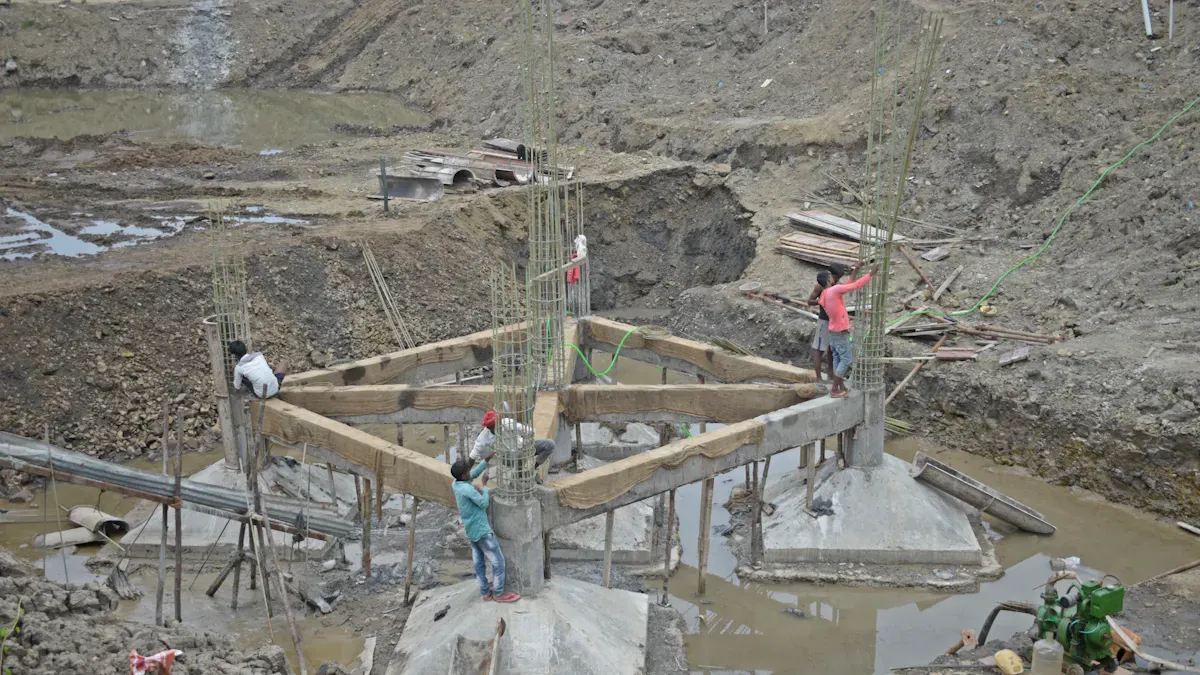
You use a Pile Driver 1700kN Force Controls Deep to drive piles with strong force and precise control. CEGC designs machines that help you match the right pile driver to your soil and project needs. You improve performance and save money when you choose the right equipment.
Key Takeaways
-
Pick the best pile driver for your soil and project. This helps the work go better and saves money. The Pile Driver 1700kN can go down 10 to 30 meters. This makes it good for big jobs like bridges and tall buildings. Use advanced control systems to watch force and depth as you work. This keeps people safe and helps stop mistakes.
Pile Driver 1700kN Force Controls Deep: Performance Metrics
Force Output
You find out how strong a pile driver is by looking at its force output. The Pile Driver 1700kN Force Controls Deep can push with up to 1700 kilonewtons of force. This strong force lets it push piles into hard ground and reach deep layers. You can change the force to fit the pile size and soil type. Using the right force keeps the pile safe and makes your structure stronger.
Tip: Always check the force before you begin. This keeps your machine safe and helps you work safely.
Depth Capacity
It is important to know how deep your pile driver can go. The Pile Driver 1700kN Force Controls Deep can drive piles from 10 to 30 meters deep. This depth works for most big projects, like bridges and tall buildings. You pick the depth based on what your project needs and the soil. Deeper piles hold more weight and make things steadier.
-
Typical depth range: 10–30 meters
-
Good for big projects
-
Works in tough soil
Control Precision
You use special systems to control the pile driver. The Pile Driver 1700kN Force Controls Deep has sensors and digital controls to watch force and depth. You see updates right away, so you can change things fast. Good control means fewer mistakes and saves time. You can set the force you want and stop at the right depth. This makes your work safer and better.
|
Feature |
Benefit |
|---|---|
|
Real-time sensors |
Accurate force control |
|
Digital displays |
Easy depth monitoring |
|
Adjustable settings |
Custom operation |
Note: You work faster and save money when you use good controls.
Types of 1700kN Pile Drivers
Hydraulic Drivers
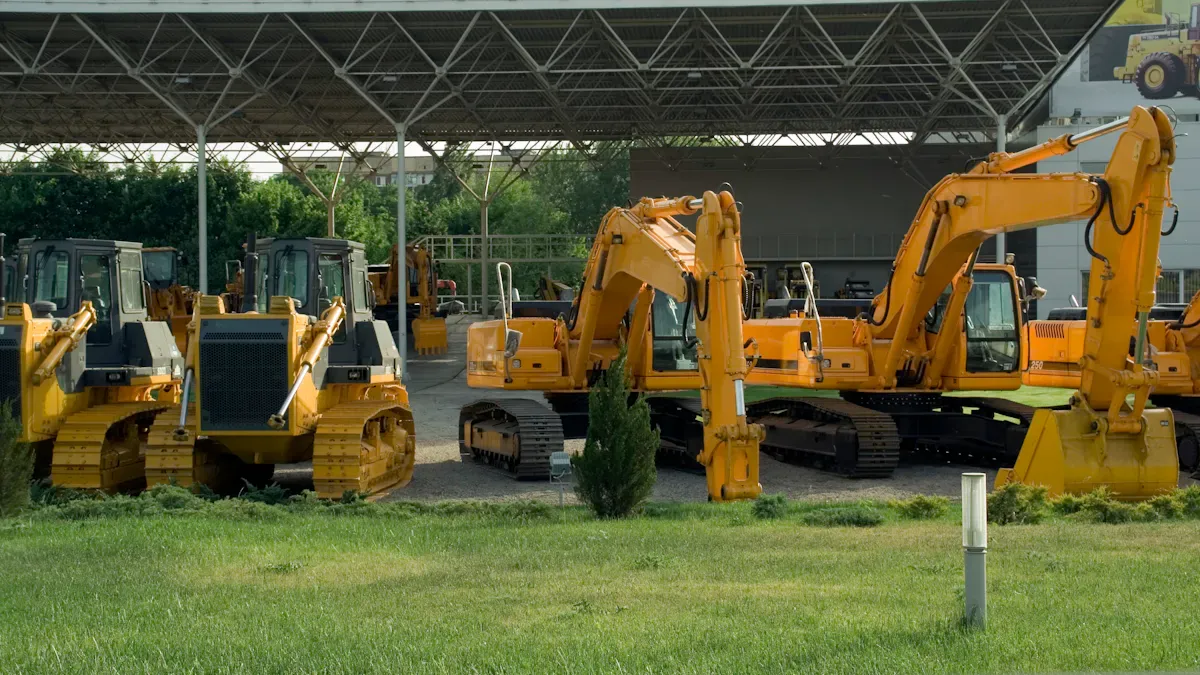
You use hydraulic drivers when you need strong, steady force. These machines push piles deep with smooth motion. You can control the pressure and speed with high accuracy. Hydraulic drivers work well for many soil types. You often choose them for big projects where you need both power and control. You get less noise and vibration, which helps in city areas.
Vibratory Drivers
You pick vibratory drivers when you work with loose or granular soils like sand or gravel. These machines shake the pile as they drive it down. The vibration makes the soil move aside, so the pile goes in faster. You finish jobs quickly with vibratory drivers. They use less energy for the same depth in the right soil. You should not use them in clay or very hard soils.
Tip: Vibratory drivers save time and money in sandy ground.
Diesel & Drop Hammer Drivers
You use diesel and drop hammer drivers for tough jobs. These machines hit the pile with heavy force. You get good results in clay or mixed soils. Diesel hammers work fast and cost less to run. Drop hammers are simple and strong, but they move slower. You may see more noise and vibration with these types.
|
Pile Driver Type |
Suitable Soil Types |
|---|---|
|
Granular soils (sands, gravels, non-plastic silts) |
|
|
Impact Driving (Diesel & Drop Hammer) |
Cohesive soils (clay, mixed strata) |
You match the Pile Driver 1700kN Force Controls Deep to your soil and project needs. This helps you work faster and keeps costs down.
Control Systems & Technology
Force Application
You control the force with advanced hydraulic systems. These systems let you set the exact pressure for each job. You can adjust the force to match the pile size and soil type. The Pile Driver 1700kN Force Controls Deep gives you steady power, so you avoid damaging the pile or the ground. You see the force level on a digital display. This helps you make quick changes if the soil gets harder or softer.
Depth Monitoring
You track the depth with sensors and digital readouts. These tools show you how deep the pile goes in real time. You stop at the right depth every time. You avoid over-driving or under-driving the pile. Many machines store depth data for each pile. This record helps you check your work and meet project standards. You finish jobs faster and with fewer mistakes.
Safety Features
You work safer with built-in safety systems. Most machines have alarms for high force or sudden movement. You get automatic shut-off if something goes wrong. In urban areas, you must follow strict rules:
-
Vibration must stay between 0.5-2.0 in/sec PPV.
-
You often use hydraulic hammers instead of diesel units during certain hours.
-
Vibratory methods are best when soil allows.
-
You need a vibration monitoring plan before starting.
-
You must notify nearby residents.
-
Sound barriers are required near homes or offices.
Tip: Always check local rules before you start. Good safety and control protect your team and the community.
Application Scenarios for Deep Piling
Bridges & Infrastructure
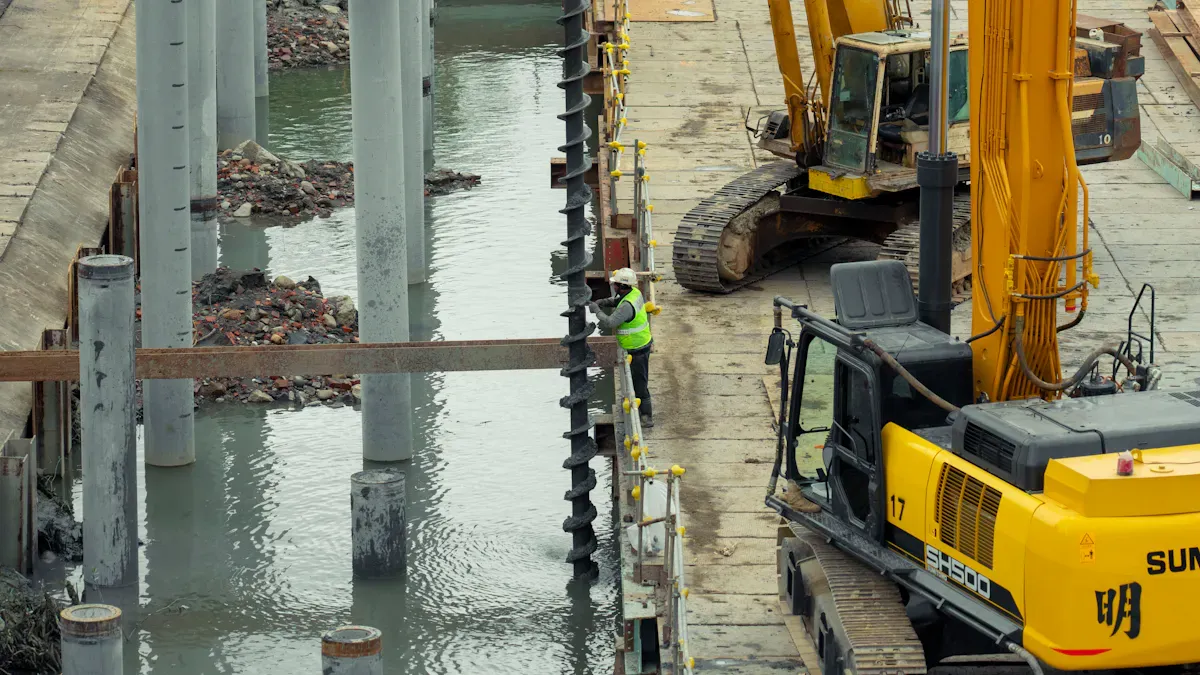
You work on bridges and big projects. These need strong foundations. You use hydraulic drivers or diesel hammers. These machines push piles deep, from 10 to 30 meters. This depth helps support heavy loads. It also handles traffic and water flow. Hydraulic drivers let you control force. They make less noise, which is good near cities or rivers. Diesel hammers are best for tough soils. They also help when you need fast installation.
High-Rises & Commercial Projects
You build high-rises and commercial buildings. These need deep and stable piles. Driven piles go from 10 to 30 meters deep. Bored piles can go deeper if needed. You pick the pile type after soil tests. You also check load needs. The Pile Driver 1700kN Force Controls Deep lets you change force for each pile. This helps you follow safety rules. You save time and money by picking the right driver. Soil checks help you choose the best depth and pile type. This gives lasting strength.
Challenging Soils
You sometimes work in clay, loose sand, or mixed soils. These soils make piling harder. You use machines with variable frequency drives. You also use load-sensing hydraulics. These tools help you adjust to changing ground. Some drivers use both vibratory and impact methods. This speeds up work and helps piles reach solid ground. Automatic refusal detection keeps your team safe. It also stops wasted effort.
|
Feature |
Benefit |
|---|---|
|
Variable frequency drives |
Adjust to soil changes |
|
Load-sensing hydraulics |
Keep performance high |
|
Combination of vibratory/impact |
Reduce time, improve end bearing |
Tip: Always pick the right pile driver for your soil and project. This gives you the best results.
Pros & Cons Table: 1700kN Pile Drivers
You should know the good and bad sides of 1700kN pile drivers before picking one for deep piling. These machines give strong force and smart controls. But you might run into some limits in certain jobs. Knowing these facts helps you choose better for your project.
|
Pros |
Cons |
|---|---|
|
High force output (1700kN) |
Can be heavy and hard to move |
|
Deep piling capacity (10–30m) |
May require skilled operators |
|
Precise control systems |
Higher upfront cost |
|
Works in tough soil |
Noise and vibration in some models |
|
Real-time monitoring |
Limited in very soft or rocky soils |
|
Safety features |
Maintenance needs |
Tip: You get the best results when you match the pile driver to your soil and project needs.
Strengths & Weaknesses
You get strong force and deep reach. You can use controls to change force and depth. You work faster and safer with real-time checks. You make fewer mistakes and get better quality.
You may see some weak spots. Some dynamic formulae in pile driving do not show the pile, driving system, or soil interaction well. This can cause errors in deep piling. You need to check the system and soil before starting.
|
Weaknesses of Dynamic Formulae in Pile Driving |
|---|
|
Modeling of the pile as one rigid mass |
|
Inadequate modeling of the driving system |
|
Inadequate modeling of the soil interaction |
You should always look at your equipment’s limits. You can stop problems by planning ahead and using the right controls.
Hydraulic drivers give you great control and power for deep piling. Diesel hammers are good for bridges or hard soils. You should always pick a driver that fits your project. This helps you do better work and spend less money.
|
Equipment Choice |
Project Impact |
|---|---|
|
More success and better work speed |
|
|
Poor equipment match |
Work takes longer and costs more |
Check your soil and project needs before picking a pile driver.
FAQ
What is the main benefit of a 1700kN pile driver?
You get strong force for deep piling. This helps you build safe foundations for bridges, high-rises, and other large projects.
How do you choose the right pile driver for your project?
You check your soil type and project needs. You match the pile driver’s force and control features to your job.
Can you use a 1700kN pile driver in city areas?
Yes. You use hydraulic or vibratory drivers for less noise and vibration. Always follow local rules for safety and noise limits.


