
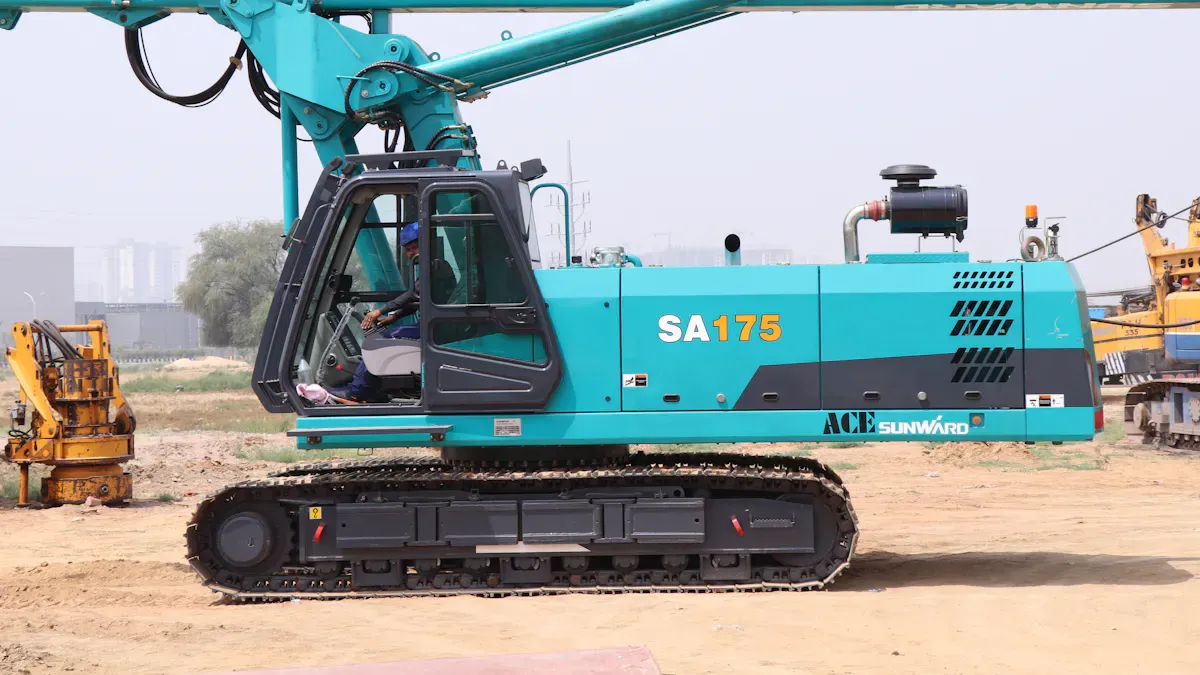
You must place and keep Pile Driver Position 2600kN Pressure Handles in the right spot. This helps you get the best results. Check them often to stop problems and protect your equipment. > Remember, CEGC says to use stability steps and new technology. This makes every job site safer and more reliable.
Key Takeaways
-
Make sure the pile driver is in the right spot so piles line up and go in straight. This makes the work faster and safer for everyone.
-
Check the site carefully before you begin. Knowing about the soil and rules can stop problems before they happen.
-
Use a checklist every day to keep the pile driver working well. Checking it often can stop it from breaking and help it last longer.
Importance of Positioning
Performance Impact
You have to put your pile driver in the right place to get good results. When you set the machine in the correct spot, piles line up better and go deeper. If you put piles in the wrong place, you can have trouble with racking alignment. This makes it harder for piles to go into the ground straight. Good pile placement helps you finish faster and keeps everyone safe.
-
Piles that are not lined up can cause building problems.
-
Bad placement makes workers less efficient.
-
Uneven resistance when driving piles makes more shaking.
Tip: Always look at the alignment before you start driving piles. This step saves time and stops expensive errors.
Pressure Handles Role
Pressure handles help control how much force goes on each pile. You need to use the right pressure so you do not break the pile or hurt the soil. The Pile Driver Position 2600kN Pressure Handles give strong and steady force. This lets you drive piles deep enough without causing problems. If the pressure is too high or too low, piles might not go in evenly or line up right.
Common Positioning Mistakes
Many workers make mistakes when they set up the pile driver. You should try not to make these mistakes to keep your project safe and working well.
-
Putting the pile driver on ground that is not flat.
-
Not checking alignment tolerance in pile design.
-
Not making sure the hammer and pile line up.
-
Forgetting to think about soil conditions.
You can stop these mistakes by using a checklist and the right tools. Always check your setup before you start working.
Pile Driver Position 2600kN Pressure Handles: Best Practices
Site Assessment
You need to start every project with a careful site assessment. This step helps you choose the right pile type and ensures your equipment works well. Follow these steps for a complete site check:
-
Evaluate the soil composition and load capacity. This tells you which pile type fits your project.
-
Assess the depth of the foundation and check if your site is easy to reach with heavy equipment.
-
Consider rules about noise, emissions, and the environment. These rules can affect how you use Pile Driver Position 2600kN Pressure Handles.
-
Check the water table level. High water can change the equipment or pile coatings you need.
-
Look at nearby buildings. You must control vibrations to avoid damage.
-
Use tests like Cone Penetration Testing (CPT) and Standard Penetration Testing (SPT) to learn about the soil.
-
Watch out for tricky soils like expansive clays or sands that can move.
Tip: Good site assessment helps you avoid surprises and keeps your project safe and on schedule.
Equipment Setup
You must set up your equipment the right way to get the best results from Pile Driver Position 2600kN Pressure Handles. A good setup improves both safety and speed. Here is a step-by-step guide:
-
Inspect all equipment before use. Look for leaks, cracks, or worn parts.
-
Check hydraulic systems for proper flow (GPM) and pressure (PSI). These numbers affect how fast and deep you can drive piles.
-
Choose the right hammer energy for your soil. Hard soils need more energy.
-
Make sure the weight and size of your machine fit your site. Heavy machines need strong ground.
-
Review the driving method. Impact, vibratory, or press-in methods each have different noise and vibration levels.
-
Confirm that your equipment meets all safety and noise rules.
|
Factor |
Description |
|---|---|
|
Driving Method |
Pick the method that fits your site and keeps noise low. |
|
Required Driving Force |
Match the force to your soil and pile type for best results. |
|
Energy Efficiency |
Hydraulic hammers often save energy and work faster. |
|
Access and Mobility |
Make sure your machine can move easily on your site. |
|
Noise and Vibration Levels |
Follow rules to protect workers and neighbors. |
|
Cost and Availability |
Choose equipment that fits your budget and timeline. |
Note: Always follow safety protocols. Regular inspections and stress checks keep your piles and equipment in good shape.
Alignment & Calibration
You must align and calibrate your pile driver before you start work. This step is key for safety and strong buildings. Here is what you should do:
-
Line up the hammer and pile exactly. Even a small mistake can cause damage or make the pile go in crooked.
-
Use alignment tools to check that the pile is straight before driving.
-
Calibrate the pressure handles to make sure you use the right force.
-
Watch for signs of misalignment, like piles that rotate or stop early. Fix problems right away.
-
Keep alignment within the tolerance set by your project design.
Alert: Misalignment can cause piles to fail, damage equipment, and even put workers at risk. Always double-check your setup.
Stability Measures
You need to keep your pile driver stable during every job. Stability keeps workers safe and helps you drive piles straight. Use these measures for Pile Driver Position 2600kN Pressure Handles:
|
Stability Measure |
Description |
|---|---|
|
Stabilizers/Outriggers |
Use these to keep your machine level and steady. |
|
Leveling of Base Machine |
Check that the base is flat before you start. This step is critical. |
-
Monitor pile performance as you work. This helps you spot problems early.
-
Identify soil layers by watching how the pile goes in. Changes can mean you hit a new layer.
-
Avoid over-driving piles. Too much force can break them or damage the soil.
-
Keep the work area clear. Only trained workers should be near the pile driver.
-
Inspect equipment every day and keep good records.
Safety Reminder: Stability measures like outriggers and daily checks prevent accidents and keep your project on track.
By following these best practices, you make sure Pile Driver Position 2600kN Pressure Handles work safely and efficiently on every job.
Maintenance & Reliability
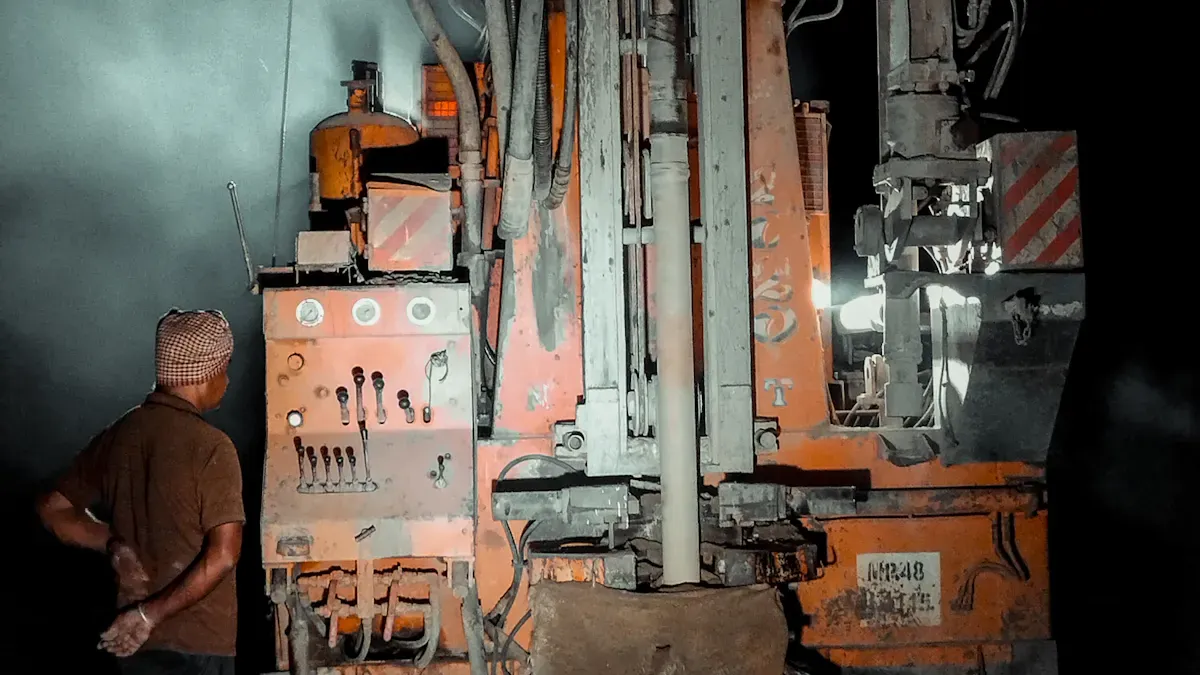
Routine Checklist
You should use a maintenance checklist every day. This helps your pile driver work well and not break down suddenly. Checking your equipment often stops small problems from getting worse. It also makes sure your pile driver works its best. Doing this can help your machine last longer.
Here is a checklist you can use each day:
-
Look at hydraulic lines for leaks.
-
Make sure pressure handles are set right.
-
Clean and oil moving parts.
-
Check if the pile driver is lined up.
-
Find any parts that are worn or broken.
-
Test safety alarms and systems.
-
Write down all the work you do.
Tip: Using a checklist helps you find problems early and keeps your equipment working longer.
Predictive Maintenance
You can use smart technology to make maintenance easier. AI tools can find problems before they get bad. These tools watch your pile driver and tell you when to fix things. This saves you time and money.
|
Benefit |
Description |
|---|---|
|
Extending Asset Longevity |
AI checks machine health to stop early wear and make machines last longer. |
|
Enhancing Safety and Compliance |
Stops big failures that can be dangerous and helps with safety rules. |
|
The Financial Case: ROI and Beyond |
AI can make machines work more, so you get your money back in about a year. |
|
Reduced Spare Parts Inventory |
Smart tools mean you do not need to keep as many spare parts. |
|
Labor Optimization |
Workers can spend time fixing big problems, not just checking things. |
|
Better Asset Reliability |
Machines break down less and work better with good maintenance plans. |
Note: Predictive maintenance helps you plan repairs and avoid long stops. Your pile driver will be ready for every job.
Troubleshooting
Sometimes, pile drivers have problems. Knowing how to fix them fast keeps your project going. Some common problems are jams, shaking, hydraulic failures, and piles not lined up. You can fix these if you follow the right steps.
|
Common Issue |
Description |
Solution |
|---|---|---|
|
The pile driver can get stuck while working. |
Clean and oil moving parts often. Use the right driving methods. |
|
|
Excessive vibration |
Too much shaking can hurt the machine and nearby places. |
Make sure all parts are lined up. Try using ways to lower shaking. |
|
Hydraulic system failures |
If this breaks, the pile driver stops working. |
Check for leaks and change fluids when needed. |
|
Misalignment of piles |
Piles not lined up can make buildings unsafe. |
Use good tools to line up piles and check guides are set right. |
Here are steps you should follow to fix problems:
-
Stop the hammer if you think something is wrong.
-
Check the catch cap ring and fix or change it.
-
Do a dry drop at the start of each shift to clear the chamber.
-
Set pressure to what the maker says.
-
Look for broken or worn parts and change them.
-
Check for leaks and fix seals.
-
See if anything is not lined up and fix it.
-
Check dampers and change them if needed.
-
Make sure the pile is in the right spot before you start.
-
Keep the right amount of hydraulic fluid.
-
Change filters that are clogged.
-
Fix or change hoses or fittings that are damaged.
-
Get air out of the hydraulic system.
-
Watch alignment closely when you start driving piles.
-
Make small changes to keep piles straight.
-
Use guide plates that fit the pile size.
Alert: Fixing problems fast keeps your pile driver safe and your project on time.
Component Care
You need to take care of every part of your pile driver. Each part needs to be checked to work well. Clean and oil moving parts often. Look for leaks in the hydraulic system and keep fluids at the right level. Check pressure handles and alignment tools for damage. Change broken parts right away.
-
Clean filters and change fluids when needed.
-
Keep spare parts in a dry, safe place.
-
Write down all repairs and changes.
Reminder: Taking care of parts stops breakdowns and keeps your pile driver working well.
Safety & Compliance
Risk Management
You need to manage risks to keep your site safe. Safety steps help stop accidents and protect workers. You can do these things to lower dangers:
-
Check equipment often so it does not break.
-
Make zones to keep people away from falling things.
-
Lift heavy parts safely so no one gets hurt.
-
Give workers hearing protection to stop ear problems.
-
Make sure everyone knows how far to stay from the pile driver.
-
Teach workers what to do in emergencies.
-
Have safety talks often so everyone remembers the rules.
-
Make sure every worker wears personal protective equipment (PPE).
-
Watch safety steps and make them better if needed.
-
Talk clearly with your team to keep the site safe.
Tip: Daily checks and clear rules help you stop accidents and keep your project going well.
Operator Training
You need skilled operators to use pile drivers safely. Training and certification are very important. Certified operators know how to use machines, spot dangers, and follow safety rules. Training helps stop injuries and accidents. Skilled operators use machines better, so jobs finish faster and safer.
-
Operators learn to spot dangers quickly.
-
Training makes the site safer for everyone.
-
Certified operators work faster and better.
Alert: Always check that your operators have current certifications.
Regulatory Standards 2026
New rules for pile driving start in 2026. You must follow these rules to stay safe and legal. The Code of Federal Regulations (CFR) gives rules for equipment and training. The American Society of Mechanical Engineers sets rules for machines. Rules say you must check equipment often, do maintenance, and check hydraulic systems. Safety features like overhead guards and blocking devices are now needed. Countries also have rules for emissions and noise, so makers use cleaner and quieter machines.
-
Check equipment before and after you use it.
-
Follow the maintenance plan from the maker.
-
Train operators to use machines safely.
-
Use machines with safety features and clean technology.
Note: Following new rules helps you keep workers safe and protect the environment.
When you put Pile Driver Position 2600kN Pressure Handles in the right spot and take care of them, your project gets better. You should make sure the machine is stable. Check it every day. Use smart technology to help you. Always follow safety rules and laws. This keeps workers and the environment safe. Everyone should wear PPE. Operators need training. Have safety meetings to make your site safer.
FAQ
How often should you check the pressure handles?
You should check the pressure handles every day before you start work. This keeps your pile driver safe and working well.
What should you do if you see a hydraulic leak?
Stop the machine right away. Tell your supervisor. Fix the leak before you use the pile driver again.
Can you use Pile Driver Position 2600kN Pressure Handles on any soil?
No, you must check the soil type first. Some soils need special piles or extra steps for safe driving.


