
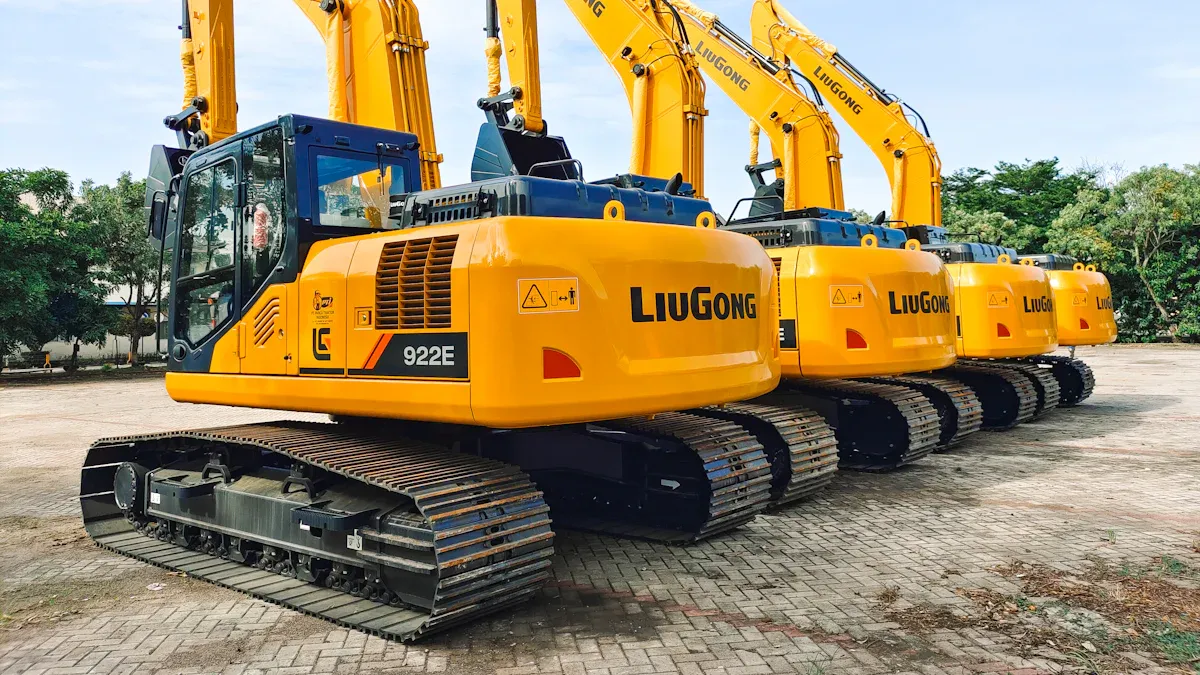
When working with hard ground, you need machines that deliver exceptional performance. The Pile Driver 1800kN Output Beats Hard Ground with its impressive power, making it capable of driving through tough dirt and rocks. CEGC provides a comprehensive pile driver guide to help you choose the best equipment for your needs. With high output, you can complete your projects efficiently and on schedule.
The Pile Driver 1800kN Output Beats Hard Ground, ensuring you overcome tough soil and finish your work quickly with CEGC’s expert guidance.
Key Takeaways
-
Pick the correct pile driver for the soil you have. Use impact hammers if the ground is dense clay or rock. Use vibratory hammers if the soil is loose.
-
A pile driver with 1800kN output can handle hard ground. This strong output lets you drive piles deeper. It also lowers the chance of breaking your equipment.
-
Do a careful soil check before you begin your project. Knowing how the soil resists and acts helps you pick the right equipment. It also helps you avoid expensive errors.
Hard Ground Challenges
Types of Hard Soils
You may face several types of hard soils on your project site. Some soils have high density, like compacted clay or solid rock. Others contain gravel or old concrete pieces. These materials make pile driving more difficult. You need to know what kind of soil you will work with before you choose your equipment.
Here is a table that shows which pile driver works best for each soil type:
|
Pile Driver Type |
Best Suited For |
|---|---|
|
Vibratory Hammer |
Loose soils like sand and silt |
|
Impact Hammers |
Cohesive soils like clay or solid rock |
If you see clay or rock at your site, you should use an impact hammer. Vibratory hammers work better in loose soils. This knowledge helps you match your pile driver to the ground conditions.
Why Output Matters
Hard ground creates many challenges for you. You may notice that piles stop before reaching the right depth. Sometimes, piles twist or bend because the soil pushes unevenly. You might also hear loud noise or feel strong vibrations, especially near buildings. Pile tips can break if they hit rocks or old steel.
Here are some common problems you may face:
-
You need more blows to drive the pile because the soil is tough.
-
Piles may go deeper than you expect if the soil changes suddenly.
A pile driver with 1800kN output gives you the force you need. High output helps you push through resistance and reach the design depth. You finish your work faster and avoid damage to your equipment. This power makes your project safer and more efficient.
Pile Driver 1800kN Output Beats Hard Ground
How High Output Overcomes Resistance
You face tough soil conditions when you work on construction sites with dense clay, gravel, or rock. These materials push back against your equipment. The pile driver 1800kN output beats hard ground by delivering powerful force that breaks through resistance. You see the pile move deeper with each strike. High output lets you drive piles to the correct depth without delays.
You avoid common problems like pile bending or tip damage. The pile driver 1800kN output beats hard ground by keeping piles straight and strong. You finish your work faster because the machine does not struggle with tough soil. You protect your equipment from wear and tear. High output means you spend less time fixing broken parts and more time building.
Tip: You save money and time when you use a pile driver 1800kN output beats hard ground. You do not need extra machines or repairs.
Comparing to Lower Output Drivers
You may wonder how lower output pile drivers perform in hard ground. These machines often fail to push piles deep enough. You see piles stop short or twist under pressure. The pile driver 1800kN output beats hard ground, while smaller machines struggle.
Here are some limitations you face with lower output pile drivers:
-
You need piles with enough stiffness to transfer force through tough soil. Lower output machines cannot deliver the force needed.
-
You must use piles with high strength to avoid damage. Weak piles break or bend when the machine cannot overcome resistance.
You notice that the pile driver 1800kN output beats hard ground by solving these issues. You do not worry about piles failing or equipment breaking. You get reliable results every time. You choose the right machine for your project and avoid costly mistakes.
|
Machine Type |
Performance in Hard Ground |
Risk of Damage |
Project Speed |
|---|---|---|---|
|
Lower Output Pile Driver |
Struggles to reach depth |
High |
Slow |
|
Pile Driver 1800kN Output |
Beats hard ground easily |
Low |
Fast |
You see that the pile driver 1800kN output beats hard ground and gives you the best chance for success. You make smart choices and build strong foundations.
Choosing the Right Pile Driver
Selecting the right pile driver is the most important step for your project’s success. You need to match your equipment to the soil and the job site. This pile driver guide will help you avoid common mistakes and make smart choices.
Soil Analysis and Site Needs
You must start with a careful soil investigation. Soil composition changes how piles behave. Hard ground, soft clay, or mixed soils all need different approaches. You should look at several factors before you choose the right pile driver. Here is a table to help you understand what to check:
|
Factor |
Description |
|---|---|
|
Soil Resistance |
The maximum resistance the soil can provide against the pile during driving. |
|
Pile Stiffness |
The ability of the pile to transmit driving forces large enough to overcome soil resistance. |
|
Pile Strength |
The capacity of the pile to withstand driving forces without sustaining damage. |
|
Dynamic Characteristics |
The behavior of the soil under dynamic loading conditions, which affects the choice of hammer. |
|
Wave Equation Analysis |
A method used to predict driving stresses, penetration resistance, and energy transfer to the pile. |
You should also check how the soil reacts to compression, tension, and sideways forces. This helps you pick the right pile driver and pile shape and dimensions for your project.
Tip: Always start with a detailed soil test. This step helps you avoid pile defects and costly repairs later.
Hammer Type Selection
You need to pick the right hammer for your pile driver. The hammer gives the energy that pushes the pile into the ground. There are several types:
-
Diesel hammers
-
Hydraulic hammers
-
Drop hammers
-
Vibratory hammers
Each hammer works best in different soils. Diesel and hydraulic hammers give strong blows. They work well in hard ground. Vibratory hammers are better for loose soils. You should check the hammer’s energy and how it matches your soil. The pile driver guide can help you compare hammer types and pick the best one for your site.
Pile Shape and Compatibility
You must match the pile shape and dimensions to your soil and project needs. Some piles are round, some are square, and some have special shapes. The right pile driver works best when the pile shape and dimensions fit the ground and the hammer. If you use the wrong pile shape and dimensions, you may see piles bend, break, or not reach the right depth.
Here are some tips for choosing pile shape and dimensions:
-
Use strong, stiff piles for hard ground.
-
Make sure the pile shape and dimensions match the hammer and the soil.
-
Check that the pile can handle both the driving force and the weight of the building.
Note: The right pile driver and pile shape and dimensions work together to give you a safe and strong foundation.
Land vs. Water Projects
You need to think about where you will use your pile driver. Land-based and water-based projects have different needs. Here is a table to show the main differences:
|
Project Type |
Equipment Requirements |
|---|---|
|
Land-based |
Requires specific pile driving equipment suited for solid ground conditions. |
|
Water-based |
Needs different pile driving equipment, often designed for aquatic environments. |
You should always check if your equipment can handle the site. The right pile driver for land may not work in water. You may need special machines for bridges, docks, or piers.
Callout: Always match your pile driver to the project location. This step keeps your work safe and efficient.
By following this pile driver guide, you can avoid common mistakes. Start with a soil test, pick the right hammer, match the pile shape and dimensions, and check your site. These steps help you choose the right pile driver and build a strong foundation.
Practical Project Considerations
Operator Skill and Safety
You need skilled operators to use pile driving equipment safely. Operators must finish a lot of training. They spend many hours working on real jobs. They also spend time learning in classrooms. Training teaches them how to use pile driving equipment. They learn basic engineering and safety rules. Apprenticeship programs help operators get certified and improve their skills.
Safety is very important when using pile driving equipment in hard ground. You should follow these steps:
-
Check the site for dangers like loose soil or hidden pipes.
-
Look at the pile driving equipment before each use to see if it works.
-
Wear boots, safety glasses, helmets, and bright vests.
-
Keep machines and workers far apart.
-
Use radios or hand signals to warn people about danger.
-
Take care of pile driving equipment often so it does not break.
Tip: Good training and safety checks keep you and your team safe from accidents.
Cost and Equipment Features
You must think about costs when you plan your project. Costs include buying or renting pile driving equipment. You also pay for repairs and daily use. Big projects need dynamic or hydraulic pile driving equipment. Small jobs may use compact or static machines. The type of soil also changes what you need.
Contractors look for special features in pile driving equipment. The table below shows what matters most:
|
Feature |
Description |
|---|---|
|
Power and Striking Energy |
High energy helps you drive piles through tough soils. Machines with 60-100 kJ can do many jobs. |
You should pick pile driving equipment that fits your project size and soil type. Planning well helps you avoid delays and extra costs.
Real-World Success Stories
Case Studies with 1800kN Drivers
You can see the impact of a pile driver with 1800kN output in real projects. Many contractors use this machine to solve tough soil problems. Here are two examples:
-
Urban Bridge Construction
You work on a bridge project in a city. The ground has dense clay and old concrete. The pile driver with 1800kN output pushes piles deep without delays. You finish the foundation ahead of schedule. -
Coastal Dock Installation
You build a dock near the ocean. The soil has gravel and rocks. The pile driver with 1800kN output drives steel piles straight and strong. You avoid pile bending and equipment damage.
These case studies show that you can trust high-output machines for hard ground. You get reliable results and save time.
Lessons Learned
You learn important lessons from these projects. Here are some key points:
-
Always check the soil before you start.
-
Choose a pile driver with enough output for the job.
-
Train your team to use the equipment safely.
-
Match the pile shape and hammer to the site conditions.
|
Lesson |
Benefit |
|---|---|
|
Soil testing |
Prevents pile failure |
|
High output selection |
Speeds up construction |
|
Operator training |
Reduces accidents |
|
Equipment matching |
Improves project quality |
Tip: You build strong foundations when you follow these lessons. You avoid costly mistakes and finish your work with confidence.
You get good results when you use a pile driver with 1800kN output for hard ground. It is important to match your equipment to the soil and what your project needs.
-
Hammer opening, pile shape, and loading position help decide if things fit together.
-
How you set up the pile driver decides which guide you need.
Here are steps you should follow:
-
Look at your site carefully.
-
Find out what problems you might face.
-
Pick the best template system for your job.
FAQ
What does 1800kN output mean for a pile driver?
You get 1800kN of force. This lets you drive piles into hard ground quickly. Strong output helps you finish your project faster.
Can you use a pile driver 1800kN output for soft soils?
-
You can use it, but it may be too powerful. Choose a smaller machine for soft soils to avoid damaging piles.
How do you check if your pile driver fits your project?
|
Step |
Action |
|---|---|
|
Soil Test |
Check soil type |
|
Equipment Match |
Compare output and needs |


