
You get better safety and work faster with dynamic plans in Reach Stacker forklift dispatch: dynamic vs static plans. Dynamic dispatch changes fast when things change, so it saves time and lowers the chance of crashes. CEGC gives ports machines that meet market rules and lets you change them to fix your work problems.
Key Takeaways
-
Dynamic dispatch plans let you make changes right away. This helps things run better and cuts down on waiting. You can use live data to change plans fast. This is helpful when vessel schedules or cargo are not ready.
-
Static dispatch plans give clear schedules and make things easy to predict. They work well for jobs that do not change much. These plans help teams stay on track and avoid mix-ups in daily work.
-
Picking the best dispatch plan is very important for ports. Look at what your port needs. Then choose dynamic or static plans to make work better and more dependable.
Static Dispatch Plans for Reach Stacker Forklifts
Definition & Features
Static dispatch plans are made before the workday starts. You set fixed schedules and routes for reach stacker forklifts. Each operator gets a clear plan for their shift. They know which container to move and where to go. The plan fits your yard’s layout and your equipment’s capacity. CEGC’s port machines work well with these plans. They have market-standard specs and reliable performance. You can pick the right capacity, span, and duty cycle for your job. Static dispatch is about routine and predictability. Both static and dynamic picking are used, but static dispatch sticks to a set plan.
Application in Port Operations
Ports use static dispatch when container flow is steady. Vessel arrivals are predictable. This method works best when daily operations do not change much. It helps your team stay organized and avoid confusion. Automated decision support systems and simulation-based training help operators learn. These tools bridge skill gaps and make work safer. The table below shows how these tools help:
|
Evidence Description |
Outcome |
|---|---|
|
Automated decision support systems make port operations more consistent and faster. They help operators learn and improve skills. |
Better efficiency and smaller skill gaps. |
|
Simulation-based training lets operators practice in a safe place. They get better at their jobs and avoid risks. |
Higher skill levels and safer work. |
|
Training simulators lower error rates by about 30%. This leads to safer work and faster response to incidents. |
Better safety and more reliable operations. |
Static dispatch has some problems:
-
Manual dispatching can make load assignments less efficient.
-
Poor communication can cause delays.
-
Static plans cannot change quickly, so costs may go up.
CEGC’s reach stacker forklifts keep cycle times stable and lifting safe. This is true even if operator skills are different. The right capacity and dispatch plan help your port run smoothly.
Dynamic Dispatch Plans for Reach Stacker Forklifts
Real-Time Adjustments
You have to act fast when things change at the port. Dynamic dispatch plans let you change reach stacker forklift jobs right away. These plans use live data from your yard, vessel schedules, and equipment status. You can move resources if a vessel comes early or late. You can also adjust when cargo is ready at different times. This flexibility helps you stop traffic jams and keep everything running well.
Yard crane integration helps with both landside and waterside work. If a quay crane gets behind, you can quickly reschedule yard trucks. This stops slowdowns and keeps work moving. Vessel planning changes all the time. You need to think about cargo readiness, equipment, weather, and last-minute shipping line news. Dynamic dispatch plans help you deal with these changes fast.
Tip: Use graphical planning tools and alert systems to change plans quickly for new schedules and cargo. Real-time tracking helps you send resources where they are needed most.
Technology & Implementation
You can use advanced technology to make dynamic dispatch plans work. The table below shows important technologies that help with real-time changes:
|
Technology |
Description |
|---|---|
|
Tracks where equipment is with high accuracy. This improves visibility and efficiency. |
|
|
RFID |
Finds and tracks vehicles automatically for dynamic dispatch. |
|
LiDAR |
Spots obstacles and helps with safe driving. |
|
Sensors |
Watch vehicle and environment status for quick response. |
CEGC’s solutions have anti-sway control to keep loads steady. They have safety interlocks to stop work if something is wrong. Motion coordination systems help move containers smoothly. These features lower accident risk and keep your team safe.
Dynamic dispatch plans give clear performance gains. For example, the GPRT framework makes work 18.77% more efficient than manual ways. Automated stowage and yard planning tools also cut vessel turn times. This makes your port stronger in the market.
Reach Stacker Forklift Dispatch: Dynamic vs Static Plans Comparison
Efficiency & Performance
Ports need to move containers fast and safely. When you compare dynamic and static plans, you see big differences. Static plans work well when things stay the same. Operators follow set routes and schedules. This is good if containers rarely change places.
Dynamic plans help when things change quickly. You can update jobs right away. If a vessel is late or a crane slows down, you fix the plan fast. This keeps cycle times short and equipment busy. CEGC’s machines support both types of plans. They have anti-sway control, safety interlocks, and motion coordination systems. These features keep loads steady and lower accident risk.
The table below shows how routing types affect cycle time:
|
Routing Type |
Description |
|---|---|
|
Foundational Static Routes |
A core network of scheduled stops that rarely shift, covering known demands and standard drop-offs. |
|
Layered Dynamic Routes |
Additional capacity remains dynamic for urgent, same-day, or unforeseen deliveries. |
|
Threshold-Based Re-Optimization |
Automated solutions recalculate routes when certain criteria are met like a new VIP order or major traffic disruptions. |
Dynamic routing is best for busy ports with lots of changes. Static routing works well when orders and yard layout stay steady. CEGC lets you pick the right plan for your port. You can choose the best capacity, duty cycle, and automation level.
Flexibility & Reliability
Ports need both flexibility and reliability. Static plans give reliability. You know what will happen each day. Operators use the same routes. Maintenance is easy to plan. This lowers confusion and keeps teams on track.
Dynamic plans give flexibility. You can react to changes fast. If weather, vessel schedules, or cargo readiness change, you update your plan right away. This makes your port stronger. You avoid bottlenecks and keep equipment moving. Dynamic plans help you use equipment better and earn more money. You also cut waiting times for trucks by linking with booking systems.
The table below compares dynamic and static plans:
|
Aspect |
Dynamic Dispatch |
Static Dispatch |
|---|---|---|
|
Adaptability |
Adapts in real-time to disruptions |
Relies on historical rules and fixed allocations |
|
Equipment Utilization |
Maximizes utilization and profitability |
May not be effective in frequent disruptions |
|
Integration with Systems |
Enhances efficiency with predictive analytics |
Limited integration with booking systems |
|
Cost Implications |
Reduces operational costs |
Potentially higher costs due to inefficiencies |
CEGC’s technical solutions help both plan types. Predictive maintenance and workflow integration are available. You can pick features to keep your port reliable and flexible.
Operational Complexity
You must think about how complex your work will be. Static planning locks resources to a fixed schedule. You spend less time changing plans during the day. This makes work simple, but performance may drop if things change.
Dynamic planning lets you update plans as new data comes in. You need advanced tools and skilled operators. This adds complexity, but you can handle real-time events. Your port becomes stronger. You can deal with disruptions without slowing down.
-
Static plans are best for steady demand and big fleets.
-
Dynamic plans are best for high changes or fewer resources.
-
You can mix both methods for the best results.
CEGC offers custom plans for reach stacker forklift dispatch. You can match market benchmarks or add special features. You get the right balance of performance, safety, and control.
Note: Review your port’s needs before picking a plan. The flexibility and performance of your dispatch plan will shape your port’s future success.
Pros & Cons of Dispatch Plans
Static Plan Advantages
Static dispatch plans give you clear schedules. Your team knows what to do every day. This makes your work easy to manage and plan. You can set up maintenance and training with no surprises. Operators use the same routes, so there is less confusion. Static plans work best when container flow does not change much. This keeps load moves safe and organized.
-
Training new operators takes less time.
-
Your work stays simple and easy to watch.
-
You can match equipment size to daily loads.
Static Plan Disadvantages
Static plans do not change fast when things shift. If vessel times change or the yard gets crowded, the plan cannot keep up. This causes problems in busy or changing ports:
-
Static dispatch plans, like regular traffic systems, cannot change for real-time traffic.
-
These systems do not give right-of-way well, so traffic jams happen.
-
There are more accident risks, especially in busy or changing ports.
You may see more delays and higher costs if load amounts change a lot.
Dynamic Plan Advantages
Dynamic dispatch plans help you react fast to changes. You can change your work as things happen. This keeps loads moving even if vessel times or yard space change. The table below shows how dynamic plans help your work:
|
Benefit Description |
Impact on Operations |
|---|---|
|
Better load planning saves money by using space well and keeps vehicles safer. |
Makes work safer and vehicles last longer. |
|
Packing well means fewer trips, so you save money and follow rules. |
Lowers costs and helps you follow rules. |
|
Full truckloads mean fewer trips, so you save time, labor, and fuel. |
Makes work faster and cuts down on waiting. |
|
Good loading and routing make deliveries more accurate and customers happier. |
Builds trust and makes service better. |
|
Better load and route plans use vehicles more and cut empty space. |
Lowers all transport costs. |
Dynamic Plan Disadvantages
You face problems when you set up dynamic dispatch plans. Heuristic algorithms have trouble with fast changes and unknowns in the terminal. These algorithms use fixed rules. This makes it hard to handle yard jams and vessel time changes. Your work can get complex, and making schedules is tough. You need skilled workers and good systems to get the most from dynamic plans.
Suitability & Recommendations
High-Volume & Unpredictable Operations
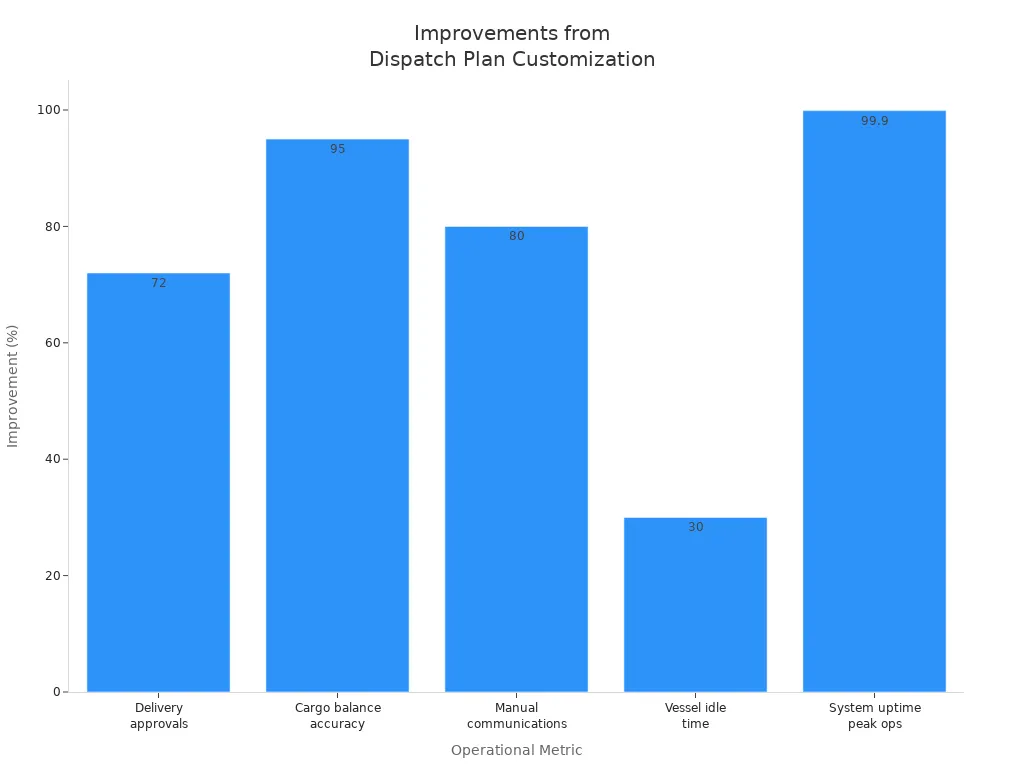
Busy ports change all the time. Vessel arrivals can be early or late. Cargo amounts can go up fast. Dynamic planning helps you handle these changes. You use live data to change how goods are sent. This keeps loading quick and cuts down on waiting. CEGC lets you customize reach stacker forklifts for your needs. You can add active stability control and automation. These features help dispatch goods without mistakes and keep systems working longer. The table below shows how custom plans make ports work better:
|
Metric |
Improvement |
|---|---|
|
Delivery approvals |
72% faster |
|
Cargo balance calculation accuracy |
95% accuracy |
|
Reduction in manual communications |
80% reduction |
|
Vessel idle time |
30% decrease |
|
System uptime during peak ops |
99.9% uptime |
Routine & Predictable Operations
Some ports have steady schedules and containers move the same way. Static planning works well for these ports. You set fixed routes for sending goods. This makes it easier to group loads and keeps your team organized. CEGC’s equipment helps with routine delivery planning. You can pick the right size for your equipment and use active stability control for safety. Maintenance is easy, and goods are sent without mistakes. You get reliable cycle times and less complicated work.
Choosing the Right Plan
You need to pick a dispatch plan that fits your port. Dynamic planning is best for busy ports with lots of changes. Static planning is good for ports with steady work. CEGC lets you customize both types of plans. You can choose active stability control, grouping options, and automation. This keeps your goods dispatch safe and efficient. You make delivery planning and loading better. You send goods without mistakes and group loads well. Your port becomes flexible and reliable.
Tip: Look at how your port works. Pick a dispatch plan that matches your volume, changes, and grouping needs. CEGC’s custom plans help you make dispatch and delivery planning better for any situation.
You need to pick a dispatch plan that fits your port. This helps your port work well and stay reliable. Watch how often your equipment is used and when it is not working. Check how much time your machines are busy or stopped. Use real-time data and new technology to make work faster. CEGC’s container handling equipment works with both static and dynamic plans. Look at how your team works and change your plan if needed for the best results.
FAQ
What makes dynamic dispatch plans better for high handling performance?
Dynamic dispatch plans help you work faster. You can change jobs as things happen. This keeps your logistics steady. It also makes safety and handling better.
How does CEGC improve loading and stability during goods dispatch?
CEGC’s dynamic reach control system helps with loading. It makes things more stable. Your logistics team makes fewer mistakes. You keep goods dispatch safe and efficient.
Why should you focus on handling and logistics in port operations?
Good handling and logistics help you send goods reliably. These things make handling better. You get safer loading and more stable work every time.


