
With the Reach Stacker forklift: speed without tire burn, you can operate efficiently at a steady pace without damaging the tires. Make smooth turns and regularly inspect the tires to ensure optimal performance. CEGC provides reliable machines designed for safety, durability, and high performance. Advanced anti-sway systems help you move loads securely, while operator training and routine maintenance checks keep your operations both safe and fast.
Key Takeaways
-
Drive at the same speed to stop tire burn. Do not start or stop quickly to keep your tires safe.
-
Use CEGC’s anti-sway systems to keep loads still. This helps your tires last longer and keeps everyone safe.
-
Check your tires often for damage and look at the pressure every day. Finding problems early stops expensive repairs.
-
Train operators to help them get better at their jobs. Good training means fewer mistakes and more safety.
-
Plan your driving path to avoid sharp turns and quick stops. Good planning saves time and helps your tires last longer.
Tire Burn Causes & Impact
Load Sway and Collision Risks
Tire burn can happen if your Reach Stacker forklift has load sway. Load sway is when the cargo swings while lifting or moving. This makes it hard to put loads in the right place. If you try to fix the sway too fast, you might turn the wheel hard or stop suddenly. These moves make the tires get hot and wear out faster. Tire burn makes tires last less time and can cause crashes with other machines or containers.
CEGC’s anti-sway control system helps lower load sway. The system uses special movement plans and braking to keep the load steady. You can move containers smoothly and do not need quick fixes. This technology helps keep both the cargo and tires safe.
Tip: Move smoothly and steadily to protect your tires and save money on repairs.
Wind, Inertia, and Operator Skill
Wind and inertia also cause tire burn. Strong wind can push containers and make them sway more. Inertia is the force that keeps things moving. It can make the load swing if you start or stop quickly. If you do not change your speed or turning, tires can wear out faster and you lose control.
Operator skill is important too. Skilled operators know how to use the Reach Stacker forklift carefully. They turn gently and drive at steady speeds. Newer operators may react too fast, which causes more tire burn. CEGC’s operator-centered HMI gives clear alarms and updates. This helps you make better choices and keeps your driving steady.
Here are ways that less tire burn helps your work:
|
Benefit |
Impact on Operational Costs and Downtime |
|---|---|
|
Reduce downtime from failures |
Less surprise machine stops, so you get more work done |
|
Lower maintenance costs |
Fewer expensive fixes, more planned checkups |
|
Increase tire lifespan |
Tires last longer, so you spend less money |
|
Faster decision-making |
You fix problems faster and keep working |
By knowing these causes and using CEGC’s solutions, you can keep your Reach Stacker forklift working well and smoothly.
Reach Stacker forklift: speed without tire burn
Speed Control and Safe Turning
You can achieve Reach Stacker forklift: speed without tire burn by focusing on how you drive and handle each load. Start by keeping your speed steady. Avoid sudden starts or stops. These quick changes can heat up your tires and cause damage. When you drive at a constant pace, you protect your tires and keep your cargo safe.
Set a speed limit that matches your work area. Many operators find that a brisk walking pace, about 3 to 5 mph, works best indoors. This speed helps you stay in control, especially when you carry heavy loads. You should also think about the type of load, the floor surface, and how many people are nearby. If you see more people or obstacles, slow down even more.
When you turn, make your movements smooth and wide. Sharp turns can twist your tires and cause them to wear out faster. Always look ahead and plan your path. If you need to change direction, slow down first. This habit keeps your Reach Stacker forklift: speed without tire burn and helps you avoid accidents.
Common technical problems, like faulty brakes or the wrong tire size, can also lead to tire burn. If you stop too quickly or use the wrong tires, you create extra heat. Modern machines, like those from CEGC, use better materials and smart designs to fix these problems. You also get training to help you build safe driving habits.
Tip: Drive at a steady pace, avoid sharp turns, and check your tires often. These steps help you keep your Reach Stacker forklift: speed without tire burn.
Here are some key points for safe speed and turning:
-
Keep your speed steady and slow, especially with heavy loads.
-
Use a speed limit of 3-5 mph indoors.
-
Make wide, gentle turns.
-
Slow down before changing direction.
-
Check your brakes and tires often.
Anti-Sway and Safety Systems
You can rely on advanced safety systems to keep your Reach Stacker forklift: speed without tire burn. Anti-sway controls help you move containers without swinging. These systems use smart sensors and motion plans to keep your load steady. You do not need to make sudden moves to fix swaying cargo. This means your tires stay cooler and last longer.
CEGC’s Reach Stacker forklifts come with assisted and active anti-sway systems. These features help you place containers with more accuracy. You also get multi-layer safety interlocks. These include overload protection, limit switches, and emergency stop buttons. If something goes wrong, you can stop the machine right away. This keeps you and your team safe.
Operator-centered HMI (Human-Machine Interface) gives you clear alarms and easy-to-read screens. You always know the status of your machine. If you see a warning, you can act fast. This system helps you avoid mistakes and keeps your Reach Stacker forklift: speed without tire burn.
Modern safety systems also use dual-hand controls and light curtains. These features make sure you stay safe while working quickly. You can trust your equipment to protect you and your tires.
Here is a table showing how these systems help you:
|
Safety Feature |
How It Helps You |
|---|---|
|
Anti-sway controls |
Keeps loads steady, reduces tire wear |
|
Multi-layer safety interlocks |
Stops accidents before they happen |
|
Operator-centered HMI |
Gives clear warnings and instructions |
|
Emergency stop systems |
Lets you stop the machine instantly |
|
Dual-hand controls |
Prevents accidental activation |
|
Light curtain systems |
Protects you while you work efficiently |
By using these systems and following safe driving habits, you keep your Reach Stacker forklift: speed without tire burn. You also make your work safer and more productive every day.
Tire Care & Maintenance
Regular Inspections
Check your Reach Stacker forklift tires every day. Look for cracks, cuts, or flat spots. These problems mean your tires might break soon. Check for chunking or tears too. If you see damage, fix it right away. This keeps your forklift safe and steady. Before each shift, check the tire pressure. Low pressure makes tires wear out faster. Test the steering and brakes as well. Good brakes and steering help you avoid sudden stops that burn your tires.
Tip: Walk around your forklift before you start work. This easy step can stop big problems later.
Pressure and Tire Selection
The right tire pressure helps your forklift drive better. It also makes your tires last longer. When pressure is correct, you get better grip and control. This lowers the chance of blowouts and downtime. Always use the tire type that fits your work area. For ports, pick tires that resist cuts and wear. CEGC builds machines with marine-grade anti-corrosion features. These include hot-dipped galvanizing, armor coating for chains, and stainless steel parts. These features protect your tires and other parts from saltwater and bad weather.
|
Feature |
Description |
|---|---|
|
Hot-Dipped Galvanizing |
Keeps forks and carriage safe from saltwater. |
|
Armor Coating for Chains |
Makes chains last longer in wet places. |
|
Stainless Steel Parts |
Helps parts last longer in tough places. |
|
PPG Siloxane Paint |
Gives extra protection with a special paint process. |
Predictive Maintenance
Predictive maintenance helps your Reach Stacker forklift run well. This system uses sensors and onboard diagnostics to watch your tires and other parts. The sensors check things like temperature and pressure all the time. If something changes, you get a warning before a problem starts. This lets you fix things early and avoid breakdowns. Predictive maintenance also helps you plan repairs, so you do not lose time during busy shifts. CEGC’s forklifts support these smart systems, making your work more reliable and cheaper.
Note: Predictive maintenance makes your forklift last longer and lowers repair costs. You can stop problems early and keep your port working well.
Best Practices Checklist
Daily Operation Steps
You can keep your Reach Stacker forklift working well by following daily steps. Begin each shift with a walk-around check. Look at the tires for cracks or cuts. Check if the tire pressure is low. Test the brakes and steering to make sure they work. Make sure the load weight is not too heavy for the forklift. Pick tires that fit your work area. For ports, use tires that resist cuts and last longer.
Plan your route before moving containers. Good planning saves time and fuel. You avoid sharp turns and sudden stops. This helps your tires last longer. Check the load weight before lifting. Heavy loads can hurt your tires. Keep your speed steady and do not change direction quickly.
Here is a simple table to help you remember these steps:
|
Operational Step |
Description |
Benefits |
|---|---|---|
|
Regular Tire Maintenance |
Check pressure, wear, and damage |
Reduces downtime and increases operational hours |
|
Choosing the Right Tire Type |
Select tires for your work environment |
Enhances traction and stability |
|
Proper Training for Operators |
Learn best practices for using forklifts |
Minimizes errors and enhances control |
|
Reviewing Load Weight |
Keep loads within forklift capacity |
Prevents tire wear and equipment breakdown |
|
Implementing Efficient Routing |
Plan the best paths for operations |
Minimizes travel time and fuel consumption |
Tip: Make these steps part of your daily routine. You will see fewer breakdowns and longer tire life.
Operator Training
You need training to use a Reach Stacker forklift safely. Training shows you how to handle loads and drive at steady speeds. You learn to make smooth turns. You also learn to use anti-sway systems and safety controls. CEGC gives you operator-centered HMI with clear alarms and instructions. This helps you react fast and avoid mistakes.
Training teaches you how to work with your team and follow port rules. Supervisors should check your skills often. Practice helps you feel confident and stay consistent. You get better at finding problems early and fixing them before they get worse.
Note: Ongoing training keeps your skills strong. You protect your tires, your equipment, and your team.
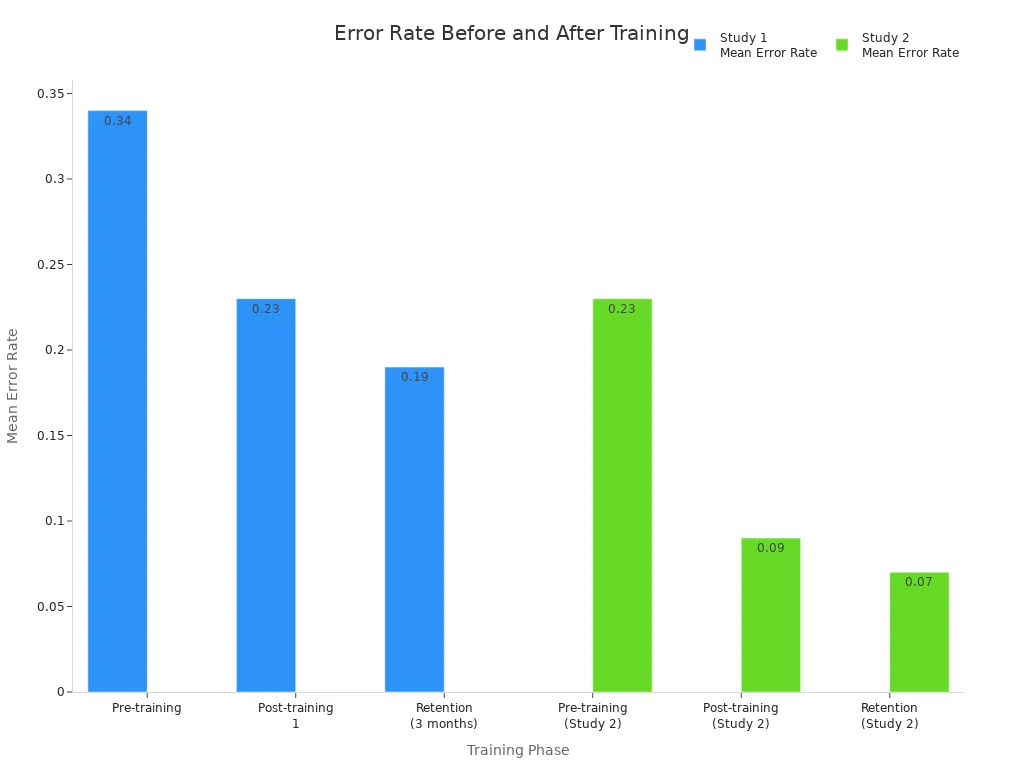
You can keep your Reach Stacker forklift working well by driving at a steady speed. Make smooth turns and check your tires often. CEGC’s anti-sway systems and easy-to-use controls help you stay safe. These features also protect your tires from damage. If you train your operators and use predictive maintenance, you save money and have less downtime. Training helps everyone work safer and make fewer mistakes. The table below shows how training lowers errors:
|
Training Phase |
Mean Error Rate |
Improvement (%) |
|---|---|---|
|
Pre-training |
0.34 |
N/A |
|
Post-training |
0.23 |
28 |
|
Retention (3 months) |
0.19 |
24 |
Keep using these good habits and keep learning new things. You will get longer tire life, safer work, and spend less money.
FAQ
What causes tire burn on a Reach Stacker forklift?
You cause tire burn by making sharp turns, sudden stops, or carrying heavy loads too fast. Wind and load sway also add stress. You can prevent this by driving smoothly and checking your tires often.
How often should you check Reach Stacker forklift tires?
You should check your tires before every shift. Look for cuts, cracks, or low pressure. Daily checks help you spot problems early and keep your forklift safe.
Why is anti-sway important for Reach Stacker forklifts?
Anti-sway systems keep your load steady. You avoid sudden moves that damage tires. You also reduce the risk of accidents. CEGC’s anti-sway technology helps you work faster and safer.
What features make CEGC Reach Stacker forklifts reliable?
|
Feature |
Benefit |
|---|---|
|
Anti-sway control |
Reduces tire wear |
|
Multi-layer safety |
Prevents accidents |
|
Predictive maintenance |
Lowers repair costs |
|
Marine-grade design |
Resists corrosion |
Tip: Use these features to get the best performance and longest tire life.


