
Boost your Reach Stacker throughput and reduce breakdown impact by choosing CEGC port machinery solutions. By combining regular maintenance, skilled operators, advanced technology, and effective resource planning, you can maximize efficiency. Common challenges you face include:
-
High equipment usage leading to frequent downtime
-
Increasing safety regulations
-
Limited visibility into operational data
-
Growing demands for sustainability
With CEGC, you can address these issues and ensure your Reach Stacker throughput remains high while minimizing the impact of breakdowns.
Key Takeaways
-
Doing regular preventive maintenance can stop up to 85% of breakdowns and cut costs by 30%. Plan inspections every six months to help your equipment work well.
-
Teaching operators about safety and how to use equipment is very important. Skilled operators can stop accidents and make work faster, which helps everything run better.
-
Use smart technology to watch equipment in real time and do predictive maintenance. This finds problems early, so you have less downtime and get more work done.
Preventive Maintenance for Maximizing Throughput
You can get more work done and have fewer breakdowns if you do preventive maintenance on your CEGC reach stacker, container handler, and container crane. Preventive maintenance stops sudden failures, helps you stack containers better, and follows good warehouse rules. You manage your machines well and keep your terminal working without problems.
Regular Inspections
You should have experts check your reach stackers every six months or as the maker says. These checks help you find problems early and keep your machines working their best. Preventive maintenance can cut roadside failures by 85%. Routine checks can give you up to 90% vehicle availability. Stopping breakdowns can lower costs by 30%. Doing maintenance before problems happen keeps downtime low and helps you work faster. You manage stacking better and follow good warehouse rules.
-
Planned checks stop breakdowns and keep throughput high.
-
Routine checks help you find problems before they get worse.
-
You keep stacking safe and follow warehouse best practices.
Lubrication & Hydraulic Checks
Lubrication and hydraulic checks are important for getting more work done. You need to oil moving parts and check hydraulic systems often. If you hear strange sounds or see leaks, you can fix them before things break. Regular checks make sure safety devices and parts work right. You have less downtime and your terminal works better.
|
Benefit |
Description |
|---|---|
|
Breakdown Prevention |
Finding problems like strange sounds or leaks early stops sudden equipment failures. |
|
Improved Operational Safety |
Regular checks make sure safety devices and parts work right. |
|
Higher Productivity |
Less downtime means faster cargo handling and better terminal performance. |
Hydraulic system problems cause slow lifting, drifting loads, and controls that don’t work. If you only have 85% of the needed hydraulic fluid, lifting speeds can drop by 40%. Dirty fluid causes most hydraulic problems. Air in the oil makes pumps work 30% less well. Removing air from the system brings back lifting power. Keeping hydraulic systems in good shape helps stacking and warehouse best practices.
-
Oil moving parts so they don’t wear out.
-
Report problems before things break.
-
Check hydraulic fluid levels and quality for best throughput.
-
Remove air from hydraulic systems to get lifting power back.
Timely Part Replacement
Changing parts on time keeps your reach stacker, container handler, and container crane safe and working well. You have less downtime and get more work done if you replace important parts on a schedule. You follow good warehouse rules and manage stacking better.
|
Part Type |
Maintenance Recommendation |
|---|---|
|
Hydraulic system |
Check and fix often to stop leaks and keep performance high. |
|
Engine components |
Change and fix on time to use less fuel and stop breakdowns. |
|
Electrical system |
Check often to stop failures and keep things running. |
|
Structure and chassis |
Check often to keep lifting safe and stop accidents. |
|
Brake system |
Check and change often to keep brakes working and safe. |
You change hydraulic parts before leaks start. You change engine parts to use less fuel and stop breakdowns. You check electrical systems to stop failures. You check structure and chassis for safe stacking. You change brake parts to keep safety and throughput high.
Tip: Use CEGC’s anti-sway and safety control systems to stop loads from swinging and lower collision risk. Real-time monitoring gives you fast updates on crane work. Anti-sway technology keeps loads steady and makes cycles faster. You stop accidents and put containers in the right place. These systems help you get more work done and manage stacking better.
You make a strong preventive maintenance plan by doing regular checks, lubrication and hydraulic checks, and changing parts on time. You get more work done, stack better, and follow good warehouse rules. You manage your port machines well and keep your terminal working smoothly.
Operator Best Practices to Improve Performance
Training & Certification
You can make reach stackers work better by training operators. Skilled operators know how to use special features on CEGC machines. These features include the operator-centered HMI and guided operation support. These tools help you make smart choices and avoid mistakes. When your team gets trained, there are fewer accidents and less damage to equipment.
-
Reach stackers do not work well if operators are not trained.
-
You need skills and certificates to use reach stackers right.
-
It is hard to find trained operators in some places because there are not enough training programs.
You can check how training helps by using different indicators:
|
Type of Indicator |
Description |
|---|---|
|
Leading Indicators |
Scores for operator skills, simulation results, training finished, and test pass rates. |
|
Lagging Indicators |
Number of accidents, equipment damage, near misses, and insurance claims. |
|
Training Transfer |
Skills from practice help in real work. |
|
ROI Calculation |
Training lowers risks and saves money. |
Load Handling Techniques
You can lift better and have fewer breakdowns with good load handling. CEGC reach stackers have advanced features like load sensors, position sensors, and anti-sway technology. These features help you balance loads, stop overloading, and put containers in the right spot.
|
Technique |
Contribution to Throughput and Equipment Wear Reduction |
|---|---|
|
Load Sensors |
Show real-time weight and balance, stop overloading, and keep lifting safe. |
|
Position Sensors |
Track where loads are, help place them right, and lower crash risk. |
|
Condition Monitoring |
Tell you when to fix things, so you avoid sudden breakdowns. |
|
Advanced Motion Control |
Make movements smooth and exact, lower stress on parts, and keep things safe. |
|
Variable Frequency Drives |
Let you control motor speed, so starts and stops are smooth and parts last longer. |
|
Anti-Sway Technology |
Stop loads from swinging, making lifting safer and more exact. |
You should always use the best ways to handle loads. This keeps your machines in good shape and helps you move containers faster.
Safe Operating Procedures
You keep your team and machines safe by following safety rules every day. Safety meetings help everyone learn new rules. You avoid mistakes like overloading, which can make the machine tip and hurt people. You also stop crashes in tight spaces and lower the chance of machine problems.
-
Keeping certificates up to date stops fines and makes work safer.
-
Using safety rules lowers the chance of accidents.
You make your workplace safer and handle loads better by putting safety first. You lift more and keep your port running well.
Smart Technology for Avoiding Downtimes

Monitoring & Diagnostics
You can stop downtimes by using CEGC’s smart systems. These systems watch your reach stacker’s engine, hydraulics, and fuel use all the time. You get alerts when something is wrong, so you can fix it fast. Companies want to avoid expensive breakdowns, so the vibration-monitoring market is growing quickly. Every hour of downtime can cost more than $100,000. Real-time monitoring lets you plan repairs when machines are not busy. This keeps your material handling strong and helps your warehouse stay organized.
|
Feature |
Description |
|---|---|
|
Checks important things like engine health, hydraulic systems, and fuel efficiency. |
|
|
Predictive Maintenance |
Uses AI and IoT to guess problems before they get worse, using past data and how machines work now. |
|
Error Code Alerts |
Sends alerts right away for mechanical or electronic faults so you can fix them quickly. |
|
Maintenance Scheduling |
Plans maintenance jobs automatically based on how much you use the machine and how healthy it is. |
|
Integration with Spare Parts |
Makes sure spare parts are ready for fast repairs, so downtime is less. |
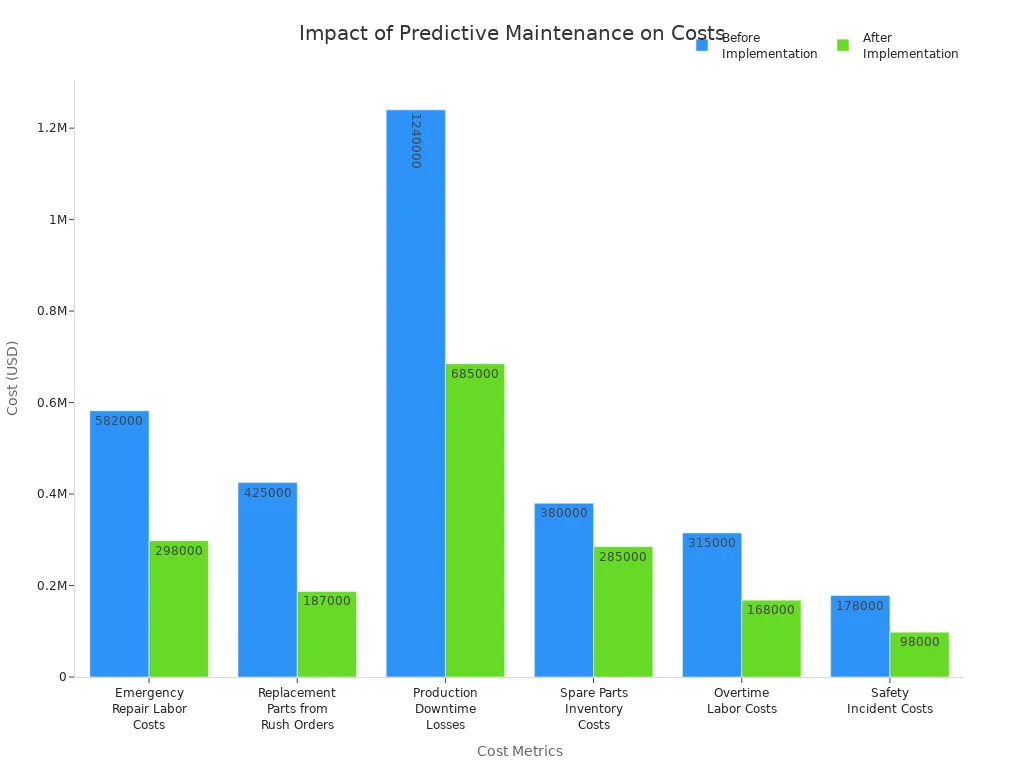
You can see how predictive maintenance helps in the chart below. Costs for emergency repairs, spare parts, and downtime go down after you use these systems.
Automation & Controls
Automation helps you work better and keeps your port safe. CEGC’s automated stacking and control systems make every move exact. You make fewer mistakes and keep your equipment in good shape. Automated systems find problems early and let you fix them fast. Machines can do dangerous jobs, so your team stays safe. Automation can cut breakdowns by up to 70% and lower maintenance costs by 30%. You load and unload faster, store things better, and get more work done.
-
Automation makes operations exact and lowers accidents.
-
Automated response systems make accident response faster by up to 60%.
Data Analytics Integration
You can make your work more efficient with data analytics. CEGC’s systems collect data from sensors on your reach stackers. Machine learning looks at this data to guess failures and plan maintenance. You get better organization and efficient operation because you know when to act. Data integration also helps you with workflow and remote diagnostics. You can keep your equipment working longer and help your warehouse stay organized.
-
Data integration and processing keep your information correct.
-
Machine learning helps you plan maintenance and stop surprises.
Tip: Use CEGC’s smart technology to keep your port running well and reach your high productivity goals.
Emergency Preparedness & Spare Parts
Critical Spares Inventory
You need a good spare parts plan to keep your reach stacker, container handler, and container crane ready. CEGC uses modular access and a standard wear-part plan. This helps you change parts fast and stop big problems from breakdowns. You keep a list of important spares like hydraulic seals, brake pads, and electrical connectors. You store these parts in a dry and safe place. Salt and wet air can ruin parts quickly, so marine durability is important. You use special packaging to stop rust and protect your parts. You check your spare parts often to make sure you have everything. This helps you fix things fast and keeps your machines working, so your work does not stop.
Rapid Response Plan
You need to act fast when there is an emergency. A rapid response plan helps you fix problems and keep your port safe. You use wearable sensors to warn operators if a reach stacker falls or moves in a strange way. AI video analytics watch for danger and send alerts. You track near-miss events to find patterns and stop accidents. Digital twin models let you test changes and guess what could go wrong. You use safety systems together for a stronger response, so you can stop damage and keep your team safe.
|
Component |
Description |
|---|---|
|
Wearable Sensors |
Find sudden moves and warn operators. |
|
AI Video Analytics |
Watch for danger and send alerts. |
|
Near-Miss Tracking |
Record close calls to stop future accidents. |
|
Digital Twin Models |
Test changes and guess hazards. |
|
Safety System Integration |
Use many safety tools for better response. |
-
Look at near-miss events to find patterns.
-
Put up barriers or change traffic in risky spots.
-
Use predictive analytics to see hazards before they happen.
You update your plan and train your team often. This helps you act fast and keeps damage small.
Communication Protocols
Clear communication helps you act fast in emergencies and protect your machines. You set up radios and alarms so everyone knows what to do. You use simple codes for quick alerts. You share news about spare parts and repairs. You tell your team about marine durability and how to protect equipment. Good communication helps you act fast, stop damage, and keep your port safe.
Tip: Check your emergency plan often. Practice drills with your team. This keeps everyone ready and helps you act fast, so you can stop damage every time.
Continuous Improvement for Reach Stacker Throughput
You can get better results by checking your performance data. You should make smart changes to your process. You also need to update training programs often. These steps help you reach your goal of reach stacker throughput: reduce breakdown impact.
Performance Data Review
You need to look at your data often. This helps you find slow spots in reach stacker operations. CEGC’s analytics tools show where delays happen. They help you fix problems fast. The shifting bottleneck detection method works best for reach stacker throughput: reduce breakdown impact. It finds short-term problems quickly. Here is a table showing different methods you can use:
|
Method Name |
Key Attributes |
|---|---|
|
Capacity utilization method |
Needs system capacity knowledge; finds big bottlenecks. |
|
Queue length and waiting time method |
Looks at wait times; helps spot delays in operations. |
|
Sensitivity analysis method |
Checks system responses; finds different bottleneck levels. |
|
Average active duration method |
Measures active times; may miss short bottlenecks. |
|
Shifting bottleneck detection method |
Very accurate; finds short bottlenecks well, best for reach stacker operations. |
|
Arrow-based method |
Shows bottlenecks visually; can be hard to use. |
|
Turning point method |
Finds performance changes; good for long-term checks but may miss short-term issues. |
You can use these methods with CEGC’s analytics tools. This helps you track reach stacker throughput: reduce breakdown impact.
Process Adjustments
You should change things based on what your data shows. If you see long waits, you can change stacking order or shift times. CEGC’s systems let you set up your port machinery how you want. This helps you match your process to your needs. You can also set alerts for slowdowns. This lets you fix problems before they get worse.
Feedback & Training Updates
You need to give your team feedback often. You should update their training to keep everyone ready for new hazards. Regular checks help stop skill loss and keep safety high. When you change warehouse layout or rules, refresher training helps your team adjust. Here are some benefits of ongoing feedback and training:
-
Operators learn about new hazards and changes.
-
Regular checks stop skill loss and laziness.
-
Refresher training lowers accidents by up to 35%.
-
You fix laziness, which causes many incidents.
You help reach stacker throughput: reduce breakdown impact by making feedback and training part of your routine. CEGC’s operator-centered HMI and analytics make updates easy. You see better safety and productivity when you focus on continuous improvement.
You can make your reach stacker work better by doing a few things. First, check and clean your equipment often. Next, keep fluids and filters in good shape so machines run well. Train your operators and always use safety steps. Use predictive maintenance and have backup systems ready. Make emergency plans so you know what to do if something goes wrong. CEGC solutions help your port work smoothly and stay reliable.
FAQ
How can you keep your warehouse running during a reach stacker breakdown?
You can use backup machines to keep working. Train your team so they know what to do. Store important spare parts for quick fixes. Always check your machines for problems before they break.
What is the best way to improve warehouse safety with reach stackers?
Train operators to follow safety rules every day. Use CEGC’s anti-sway systems for safer stacking. Check your warehouse for hazards often. Keep your warehouse neat and clear for safe work.
Why does preventive maintenance matter for warehouse reach stackers?
Preventive maintenance helps stop breakdowns in your warehouse. Regular checks make reach stackers last longer. You save money and keep your warehouse running without delays.
How do you choose the right reach stacker for your warehouse?
Look at your warehouse size and how much you need to lift. Think about how high you need to stack. CEGC has many choices for your warehouse. Pick the reach stacker that fits your work best.
What should you do if your warehouse reach stacker stops working?
Follow your warehouse emergency plan right away. Call your maintenance team for help. Use your spare parts kit to fix things fast. Warn others and move loads with another machine to stay safe.


