
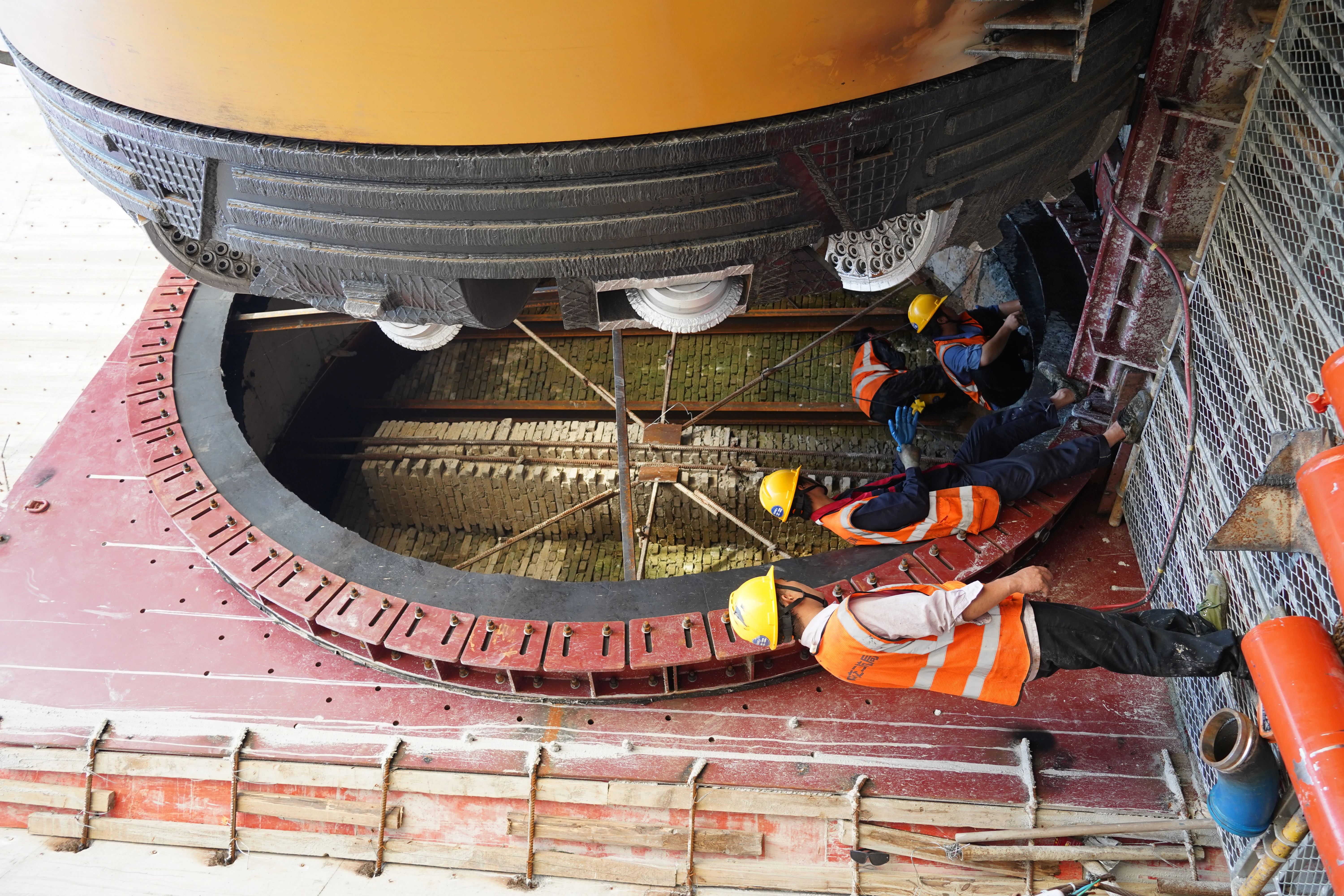
To prevent major ground movement during tunnel construction, settlement swings shrink with synced TBM tunnel grouting. Without this precise grouting, large settlement swings can lead to cracks, sinkholes, and dips in roads, putting city infrastructure and public safety at risk.
CEGC supplies Microtunnelling Machines for a wide range of applications, including water pipelines, gas pipelines, and urban rail projects.
|
Risk Factor |
Description |
|---|---|
|
Settlement due to tunneling |
Can cause the ground to move up or down, potentially damaging roads and railway tracks. |
|
Sinkholes |
May develop rapidly, causing structural damage and endangering people in urban areas. |
|
Cracks on road or track slabs |
Occur when ground movement undermines the foundation of roads or tracks. |
Key Takeaways
-
Synced TBM tunnel grouting stops the ground from moving when building tunnels. This helps lower risks like cracks and sinkholes.
-
Picking the right grout and watching the process closely can make settlement swings much smaller. This makes tunnel projects safer and more dependable.
-
Watching data as it happens lets workers change things fast during grouting. This makes the project safer and helps it go faster.
Settlement swings shrink with synced TBM tunnel grouting

What Are Settlement Swings?
When you dig a tunnel, the ground above can move. This movement is called a settlement swing. It happens because the soil shifts during tunnel work. If you do not control these swings, cracks can show up in roads. Sidewalks might dip, and buildings nearby can get damaged. Synced TBM tunnel grouting helps stop these swings. The grout fills gaps as the machine moves forward. This keeps the ground steady and safe.
Why Settlement Control Matters
It is important to control settlement swings to keep people and property safe. If you ignore them, roads, railways, and buildings can get hurt. Synced TBM tunnel grouting helps shrink settlement swings. The grout supports the soil and stops sudden drops or rises. Studies show that poor control can cause big problems. For example, one study found that swings can damage things near tunnels. You need to know how soil and buildings work together to keep everything safe.
If you use CEGC’s Microtunnelling Machines, you get good control for many projects. These projects include gravity sewers, water mains, gas pipelines, power cables, telecom ducts, and tunnels under rivers or wetlands.
Here are some findings from new studies:
|
Study |
Findings |
|---|---|
|
Effect of grout properties on surface settlement |
Grout injection pressure is important for lowering surface settlement in cities. |
|
Development of the safety control framework for shield tunneling |
Good control steps are needed to manage settlement risks in city tunneling. |
|
Influence of new tunnels on existing tunnels |
Careful planning helps stop problems for old tunnels when building new ones. |
|
Investigation into the effect of grout properties |
Stiffer grout and the right pressure can lower ground movement in cities. |
Synced TBM tunnel grouting helps shrink settlement swings. This makes tunnel projects safer and more reliable.
How Synced Grouting Works
Synchronous Grouting Process
You can control ground movement during tunnel construction by using a step-by-step grouting process that matches the advance of your tunnel boring machine. Here is how the process works:
-
Synchronous Grouting: You fill the gap between the soil and the tunnel lining rings as soon as the TBM moves forward. This step must happen quickly and evenly. It helps prevent the ground from shifting and keeps the tunnel segments in place.
-
Grout Performance Requirements: You need to use grout that meets strict standards. The grout should have the right strength and not bleed too much water. A hardening grout works best because it gives strong support soon after injection.
-
Secondary Grouting: You use a special cart with a grouting machine to add more grout every few rings. This step fills any small gaps left behind. You also keep records and adjust your work based on real-time data.
This process helps you keep the tunnel safe and reduces the risk of damage to roads and buildings above.
Mechanisms for Reducing Settlement
You can shrink settlement swings by choosing the right grout and using the best injection methods. The type of grout and how you inject it both matter. Here is a table that shows common grout types and their features:
|
Grout Type |
Description |
Additives Used |
|---|---|---|
|
Cement-based Grouts |
Made from cement and water for strong support. |
Fly ash, silica fume, and other industrial waste. |
|
Lime-based Grouts |
Made from lime and water, often used with sand or bentonite. |
Sand, bentonite, and other soil additives. |
|
Bi-component Grouts |
Two liquids that mix and harden quickly. |
Cement, sodium silicate, and special chemicals. |
-
You must mix the grout well for it to work.
-
You should change your injection method if the ground is soft or rocky.
-
Additives can make the grout stronger or help it flow better.
When you use synchronized grouting, you fill the space behind the shield of the TBM. This step stops the ground from moving and keeps the tunnel lining safe. Studies show that if you increase grout pressure from 0.5 to 1.5 bar, you can cut surface settlement by up to 55%. If you use a stiffer grout, you can reduce settlement by over 40%. Compacting the soil also helps, lowering settlement by about 50%. You need to make sure the grout fills all gaps evenly. If you leave gaps, the ground can settle more, sometimes by 33% or more.
You should also know about special methods like jet grouting. Jet grouting helps when you work in soft or wet ground. It makes the soil stronger and keeps water out. You can use jet grouting to support the tunnel and stop the ground from sinking.
You must avoid over-grouting. Too much grout can cause cracks or make the ground swell. You can use special additives, like calcium oxide, to stop the grout from shrinking as it dries. You also need to check the water in the soil, because it affects how the grout sets.
Monitoring and Control in TBM Operations
You need to watch the grouting process closely to keep everything safe. Electronic monitoring systems help you track key details in real time. Here is a table that shows what you should monitor:
|
Parameter |
Actual Value |
Target Value |
Notes |
|---|---|---|---|
|
Backfill Grout Injection Volume |
V_actual |
V_target |
Compare the actual and target volume for each tunnel ring. |
|
Backfill Grout Injection Pressure |
P_actual |
P_target |
Check the pressure for each tunnel section. |
|
Ground Response Metrics |
D_response |
P_ground |
Watch for ground movement and water pressure changes. |
Modern systems use wireless data and many sensors at once. These tools give you fast feedback and help you spot problems early. You can see how the grout spreads in three dimensions. This helps you adjust your work right away if something changes underground.
-
Real-time monitoring cuts down on mistakes.
-
Multi-channel systems let you measure many things at once.
-
Wireless data means you get updates quickly, even in hard-to-reach places.
You can use these tools to adjust TBM speed and grout pressure. This keeps the tunnel safe and the ground steady. If you follow these steps, you will see that settlement swings shrink with synced TBM tunnel grouting. You will protect the city above and make your tunnel project a success.
Practical Steps and Best Practices
Equipment and Implementation
You need the right equipment to make synchronized grouting work well. The table below shows what features to look for in each type of machine. These features help you keep the tunnel safe and the ground steady.
|
Equipment Type |
Recommended Features |
|---|---|
|
Tunnel Boring Machines (TBMs) |
Full face closure, strong seals, roll correction, design for tough ground, visual position display. |
|
Tunnel Shield |
Fits tunnel shape, closes face without ground loss. |
|
Microtunneling Equipment |
Balances soil and water, remote control, active direction control, slurry monitoring and separation. |
|
Pipe Jacking Equipment |
Main jacks in frame, enough jacking power, extra jacking stations if needed. |
You should follow these steps for the best results:
-
Check the site and clear any debris.
-
Mix the grout with the right flow and setting time.
-
Use pumping methods that fill all gaps without leaving air pockets.
-
Watch the flow rate and pressure as you work.
-
Let the grout cure to make a strong seal.
CEGC offers Microtunnelling Machines and TBM solutions for all these needs. You can use them for sewers, water mains, gas lines, power cables, and more. These machines work in many types of ground, from soft soil to rock.
Quality Control and Monitoring
You must keep a close eye on the grouting process. Real-time data monitoring lets you adjust the grout flow and pressure right away. This helps you control ground movement and avoid using too much grout. When you use real-time detection, you make your project safer and save money. You can spot problems early and fix them before they get worse. This approach gives you better results and keeps your tunnel project on track.
When you use synced TBM grouting, tunnel projects become safer and easier to predict. The table below explains how careful grouting and watching data in real time can make things safer and help the project go better:
|
Description |
Benefit |
|---|---|
|
Lowers the chance of ground moving |
|
|
Real-time data |
Makes safety better and helps get good results |
People all over the world now like using strong, synchronized grouting. This way helps tunnels last longer and saves money.
FAQ
What size pipes can you install with a Microtunnelling Machine?
You can put in pipes from 150 mm to 3,000 mm wide. The machine works with many kinds of pipes, like steel and concrete.
Can you use micro tunneling for gas pipelines?
Yes, you can use micro tunneling for gas pipelines. This way is good for putting in pipes safely in busy cities and places that need extra care.
Does a Microtunnelling Machine work in wet or soft ground?
You can use a Microtunnelling Machine in wet or soft ground. CEGC’s slurry systems help control water and soil so the tunnel is safe to build.


