
You improve ship crane: pick success in wind—what to change by using real-time wind monitoring and anti-sway systems. You make ship crane: pick success in wind—what to change safer with strong safety interlocks. You train operators to boost ship crane: pick success in wind—what to change. CEGC helps you reach ship crane: pick success in wind—what to change goals. You keep safety first with every ship crane: pick success in wind—what to change.
Key Takeaways
-
Use real-time wind monitoring systems to stay safe when using cranes. These systems give alerts if wind speeds are dangerous. This helps you make smart choices.
-
Put in anti-sway systems to stop loads from moving too much in wind. This technology gives better control and keeps everyone safe. It also helps lifts be more accurate.
-
Train operators well on wind safety rules. Operators who know the rules can spot risks fast. They can make quick choices to keep themselves and their team safe.
Wind Impact on Ship Crane Performance
Risks to Marine Crane Operations
There are many dangers when using ship cranes in bad weather. Wind can change fast and push equipment past safe levels. Ship crane performance gets worse as wind speed goes up. Rules say to stop if wind is over 20-25 mph. You should not let people handle loads if wind is 10 m/s, or about 22.4 mph. Always check the weather before each shift. Only work in daylight or when you can see well. Strong winds and gusts make crane work unsafe. Always follow these rules to keep your team safe.
Load Sway and Collision Exposure
Loads swing more when wind gets stronger. Ship crane performance drops because the load moves off course. This makes lifting hard and can cause accidents. The table below lists the main dangers during crane work in tough weather:
|
Risk Type |
Description |
|---|---|
|
Wind Pressure |
Wind makes more side force on the boom and counterweights. |
|
Load Swing |
Loads move off course, making overload and crashes more likely. |
|
Structural Fatigue |
Wind stress wears out parts faster. |
|
Sudden Gusts |
Strong wind gusts can make loads swing or tip over. |
|
Height |
Wind is stronger higher up, hurting ship crane performance. |
|
Load Shape |
Big or odd-shaped loads catch more wind and raise risk. |
|
Gusts & Direction Shifts |
Fast wind changes can shock the system and cause accidents. |
You must change how you work if you see signs of strong wind. Stop crane work in very bad weather to protect ship crane performance. You keep your team safe by following wind and weather rules.
Safety Precautions and Technical Solutions
Real-Time Wind Monitoring and Shutdown Protocols
You keep your team safe by using crane wind monitoring systems. These tools show wind speed and weather right away. You get alerts if wind gets too strong. You can plan work and stop before accidents happen. You use an anemometer to check wind speed and follow crane safety rules. You look at weather reports before each shift and during work. You always watch wind and act fast to protect workers.
Tip: Write down wind conditions and when you stop work. This record helps you make crane safety better and follow rules.
|
Benefit |
Description |
|---|---|
|
Alerts Crew |
Tells you when wind is too strong, keeping work safe. |
|
Planning Operations |
Helps you pick good times for cargo handling. |
|
Risk Reduction |
Lowers dangers during crane work, especially with tricky cargo. |
You follow rules for wind speed limits. You stop ship crane work when wind is unsafe. You use shutdown steps to keep crane safe.
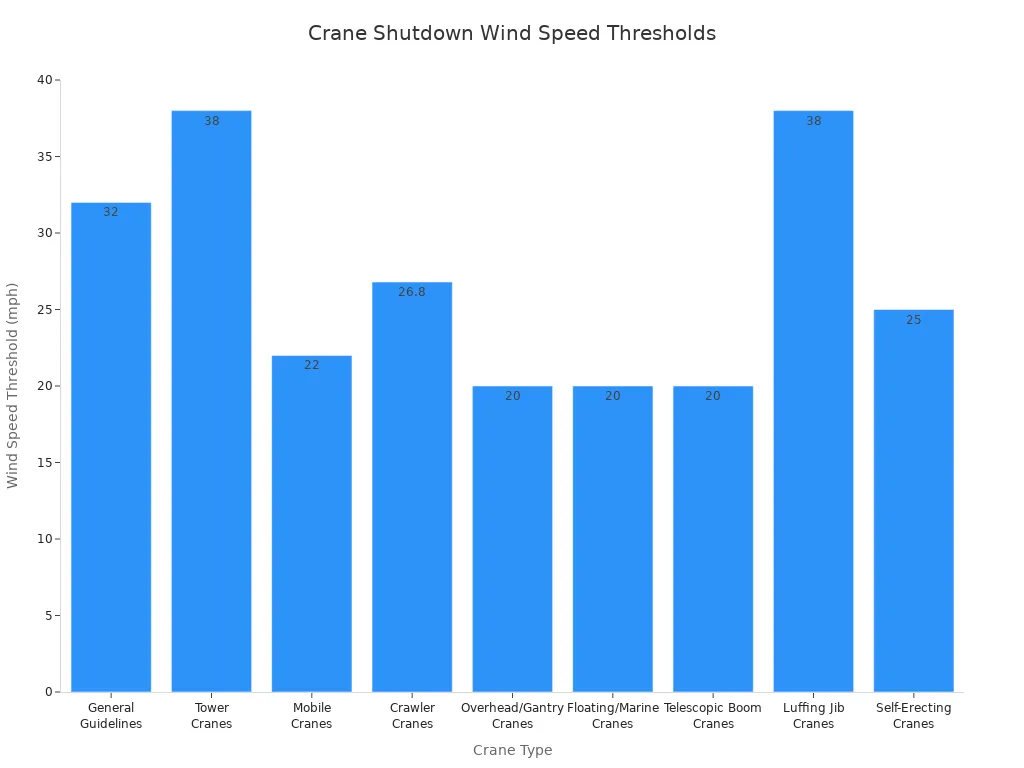
|
Crane Type |
Wind Speed Thresholds (mph) |
Notes |
|---|---|---|
|
General Guidelines |
0–12 |
Safe for normal work. |
|
|
13–31 |
Be careful; check load and weather. |
|
|
32+ |
Stop all work right away. |
|
Overhead/Gantry Cranes |
20–25 |
Follow site rules for outdoor work. |
|
Floating/Marine Cranes |
Above 20 |
Stop work in rough seas. |
|
Telescopic Boom Cranes |
20–25 |
Wind affects boom extension. |
You use crane wind monitoring to decide fast. You wait to lift if wind is too strong. You tie down loose loads and use tag lines to control swinging. You talk clearly between crane operator, signalers, and ground crew. You make ship crane work safer with these steps.
Anti-Sway and Safe Lifting Control Systems
You add anti-sway systems to your ship crane. These systems cut down load movement and help ship crane work in windy weather. You use active anti-sway control to manage load movement right away. The system checks wind speed, load angle, and crane work. It changes how the crane works to stop swinging. You see less swinging and more steady loads. You protect cargo and make things safer.
Modern container gantry cranes use anti-sway parts to stop load swinging. You get safer lifts, better crane safety, and less cargo damage. Wind makes it hard to place containers exactly. Anti-sway systems help you keep containers steady, even in bad weather. You use CEGC’s anti-sway control, safety locks, and operator HMI for steady ship crane work.
Note: Anti-sway systems are very important for ship crane work in wind. You lower accident risks and make handling easier.
You pick strong crane parts made for the sea. Salt in the air makes metal rust faster. You choose cranes built for tough weather so they last longer and need fewer repairs. You plan for weather problems with confidence. You keep crane safety high and costs low.
Operator Training and Decision-Making
You teach operators to spot wind dangers and make safe choices. You make wind action plans for each site. These plans set limits, actions, and ways to talk. You use real-time tools like crane wind speed indicators and anemometers. You let operators stop work if needed. You write down wind conditions and when you stop work for safety.
You make crane safety better by teaching operators to tie down loads and stop swinging. You use good rigging and load control. You talk clearly between crane operator, signalers, and ground crew. You boost ship crane work and worker safety with strong training.
Safety Precautions: You always follow safety steps and update your plans using weather reports and crane wind monitoring.
You use predictive maintenance to keep ship crane work reliable. You check crane parts in real time. You fix things early to stop problems. You cut downtime and make crane work better. You save money and get more from your crane.
You also work on energy efficiency. Dynamic load control systems change lifting speed and path using real-time data. These changes stop swinging and keep loads steady in bad weather. You keep work stable and lower accident risks. You use CEGC’s energy options for steady ship crane work.
|
Benefit |
Description |
|---|---|
|
Enhanced Efficiency |
AHC technology makes load handling better, helping productivity. |
|
Reduced Downtime |
Work keeps going in rough seas, so you stop less. |
|
Stability in Operations |
AHC cranes keep work steady even when waves get bigger. |
You use crane wind monitoring, anti-sway systems, operator training, strong crane parts, predictive maintenance, and energy efficiency. You get top ship crane work and crane safety in windy weather.
You make ship crane pick success better in wind by using real-time wind monitoring. Anti-sway systems help keep loads steady. You train operators well so they know what to do. Check your rules often to make sure they work. Set clear wind speed limits for each crane type. Change your steps if you need to. Write down when you stop work. This keeps your team safe and helps your work go smoothly.
FAQ
What should you do if wind speed suddenly increases during crane work?
You should stop crane operations right away. Use your wind monitoring system. Secure all loads. Wait until wind speed drops to a safe level before you start again.
How do anti-sway systems help with windy conditions?
Anti-sway systems reduce load movement. You get better control and safer lifts. These systems help you place containers more accurately, even when wind is strong.
Why is operator training important for ship crane safety in wind?
Operator training helps you spot wind risks fast. You learn safe lifting steps. Good training keeps your team safe and improves ship crane performance.


