
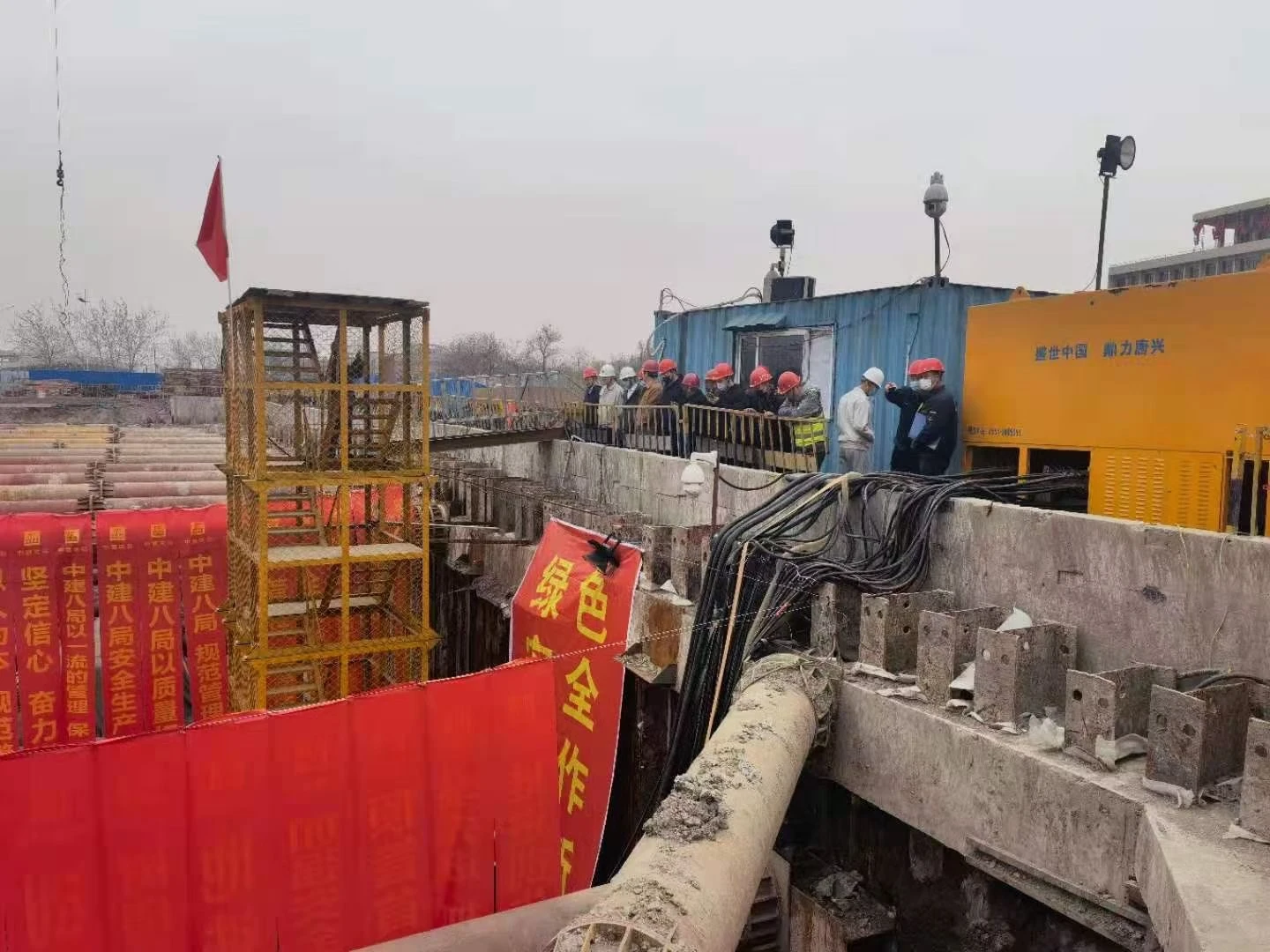
Stability protects strict settlement limits in TBM tunnel work. In urban environments, even minor ground movements can cause significant disturbances. These disturbances can impact homes, businesses, and critical infrastructure nearby. You need a tunnel machine you can rely on. CEGC offers advanced tunnel boring machines designed to help you adhere to strict settlement regulations and ensure the safety of your projects.
Key Takeaways
-
Know the settlement limits to keep buildings and roads safe during tunneling. Following these limits helps avoid expensive delays and problems with the project.
-
Pick the best tunnel boring machine with good stability features. This makes tunneling safer and reduces how much the ground moves, so your project stays on schedule.
-
Use real-time monitoring to find ground movement early. Advanced tools help you change your tunneling plan and keep everyone safe during the project.
Settlement Limits and Stability in TBM Tunnel Work
What Are Settlement Limits?
It is important to know about settlement limits before you start a tunnel project. Settlement limits are the most ground movement allowed above or around your tunnel. These limits help keep buildings, roads, and utilities safe from harm. In TBM tunnel boring machine and microtunnelling machine projects, you must keep the ground movement inside these limits. If you go over the limits, you could get claims, have delays, or even stop your project.
Why Stability Matters
Stability helps keep your tunnel safe and your project moving forward. When you control the ground and tunnel face, you lower the chance of unwanted movement. You can use a tunnel machine with special features to help manage these risks. CEGC gives you machines with standard specs and custom options for your project. This means you get the best machine for your settlement-sensitive job. You can trust your TBM machine to keep the ground steady and protect your work.
Urban Project Challenges
Urban tunneling has its own problems. You work close to homes, offices, and busy streets. Even small ground shifts can cause big trouble. Here are some main challenges you face:
-
You must control ground movement to stop surface sinking.
-
Good monitoring programs help you find movement and pore pressure.
-
Controlling how fast you dig and earth pressure helps lower risks.
-
Slow cutterhead rotation keeps the ground steady in low cover spots.
-
Ground settlement can hurt things around your tunnel.
-
Structural and geotechnical engineers must work together to handle these problems.
You can count on CEGC’s tunnel machine solutions to meet strict settlement limits and keep your city projects safe.
Stability Protects Strict Settlement Limits in TBM Tunnel Work
Stability and Settlement
It is important to know how tunnel stability and settlement control are connected. When the tunnel stays stable, the ground above does not move too much. This helps protect buildings and roads from damage. If the tunnel is not stable, the ground can settle and cause problems. The table below shows how using pre-reinforcement and post-reinforcement can help. These methods can lower settlement by more than 80%.
|
Parameter |
Pre-Reinforcement |
Post-Reinforcement |
Reduction (%) |
|---|---|---|---|
|
Maximum vertical settlement (mm) |
92 |
17 |
79.3 |
|
Maximum ground settlement (mm) |
42 |
7 |
83.3 |
You should think about tunnel stability when you start your design. This helps stop settlement and keeps your project safe.
Face Pressure Control
Face pressure control is very important in shield tunneling. You need to keep the right pressure at the tunnel face. If the pressure is too low, the ground can fall in. If the pressure is too high, there can be blowouts. The right pressure keeps the tunnel safe and helps control settlement.
To keep the ground under roads or railways safe, you must set EPB operating rules before you start. This gives you clear goals and limits. You need to watch face pressure closely. If the pressure is too low, the ground can fail or lose water. If it is too high, you can get heave or blowouts.
You can use models to help keep the right chamber pressure. Automation and AI can suggest the best steps, even if the ground changes. These tools make it easier to keep the tunnel stable and stop ground settlement.
Grouting and Ground Improvement
Grouting and ground improvement help keep the tunnel steady and limit settlement. There are different ways to do this, and each has its own use. The table below lists some common methods:
|
Technique |
Description |
|---|---|
|
Permeation Grouting |
Puts thin grout into soil to make it stronger and stop water. |
|
Compensation Grouting |
Adds grout to lift settled buildings, using high pressure for local heave. |
|
Jet Grouting |
Mixes soil with grout using strong jets, making hard columns in the ground. |
|
Compaction Grouting |
Puts thick grout in the ground to make soil tighter and reduce settlement. |
You can use these ways before or during tunneling. This helps keep the tunnel stable and control settlement. If you see signs of settlement, you can act fast during shield tunneling.
Real-Time Monitoring
Real-time monitoring helps you find problems early. You need to check ground movement, tunnel face, and shield settings as you work. This lets you fix issues before they get worse. You can use tools like InSAR, total stations, and LoRa technology. These tools give you very exact data, sometimes as close as 2 mm.
Watching for settlement helps you act quickly. If you see movement, you can change your tunneling or start grouting right away. AI systems can also find strange patterns and warn you early. This keeps the tunnel safe and helps control settlement.
CEGC’s tunnel boring machines and microtunnelling machines give you what you need. You get AI help, smart automation, and real-time data. These features help you keep the tunnel steady, manage shield work, and meet strict settlement rules. You can trust CEGC to help your tunnel projects from beginning to end.
Risks of Ignoring Stability
Settlement Failures
If you do not pay attention to stability, bad things can happen. The ground above your tunnel might sink a lot. This can break roads, buildings, and pipes. Many reports show how settlement problems happen in tunnel work. You can see some results in the table below:
|
Study |
Findings |
|---|---|
|
Zheng et al. |
Studied how twin-tunnel spacing and volume loss change surface settlement in granular soils. |
|
Lei et al. |
Showed how ground settles during overlapped tunneling and made a model to predict movement. |
|
Liu et al. |
Built a 3D model to find the right support pressure for the tunnel face. |
|
Shi et al. |
Studied how pipelines change shape when the shield face becomes unstable. |
You must control settlement to keep your tunnel and city safe.
Face Instability and Water Ingress
Face instability and water coming in can stop your tunnel job. If you do not keep the shield face steady, the ground can fall in or water can rush inside. You can see main causes and how to stop them in this table:
|
Cause of Instability/Water Ingress |
Preventative Measure |
|---|---|
|
Lower groundwater with wells or grouting |
|
|
High inflow in loose soils or cracked rock |
Use strong pumps and rock grouting |
|
Instability in fine sands and silts |
Install wells inside the tunnel for local water control |
You need to watch the shield face and use the right tools to stop these problems.
Project Delays and Claims
If you ignore stability, your project can get delayed and cost more. You might have these problems:
-
Tunnel boring machine breaks or works slowly.
-
Changing the tunnel path or moving pipes and wires.
-
Waiting for permits or city approval.
-
Floods, disasters, or unknown things underground.
-
Fights about who pays for delays or extra costs.
You can lower these risks with help from CEGC. You get custom tunnel machine solutions, expert advice, jobsite assembly, and training. CEGC also gives you spare parts and support for shield and microtunnelling jobs. This keeps your tunnel project safe and on track.
You keep strict settlement limits in every tunnel job by making sure the tunnel is stable. You use special monitoring to make sure your tunnel stays safe and the shield works well. The table below shows ways you can check the tunnel with different monitoring tools:
|
Monitoring Technique |
Description |
Application |
|---|---|---|
|
Fiber Optic Sensors |
Used for strain monitoring |
Assessing tunnel lining stability and deformation |
|
Integrated Monitoring |
Combines various data sources |
Evaluating convergence during construction |
|
Finite Element Simulations |
Models stress redistribution |
Understanding settlement in tunnel structures |
|
Construction Monitoring |
Analyzes settlement and deformation |
Evaluating stability during excavation phases |
You get lots of good things from CEGC’s tunnel machine choices. You can use a two-part back-filling system and fast hardening mixtures to keep the tunnel strong and stop the ground from moving. You also use the right machine design and keep watching the tunnel to control the shield and lower dangers.
-
You should always watch for tunnel changes and shield movement.
-
You can use these tools to warn you early if something is wrong.
-
You make your tunnel safer and plan better for other jobs.
You make your tunnel jobs safer and more dependable when you pick CEGC. You keep the shield steady, protect the city, and follow strict settlement rules.
FAQ
What is the main reason for strict settlement limits in urban tunneling?
You need to keep buildings, roads, and pipes safe. Strict settlement limits help protect the city when you build tunnels.
How does CEGC’s tunnel machine help control settlement?
You get tools that watch the tunnel as you work. You can control the pressure at the tunnel face. You can improve the ground to make it stronger.
|
Feature |
Benefit |
|---|---|
|
Monitoring |
Early warning |
|
Pressure Control |
Safe digging |
|
Grouting |
Less ground movement |
Can you use CEGC’s TBM machine for different ground types?
Yes, you can use it. CEGC lets you pick the best tunnel machine for your project. You can choose one for soft soil, hard rock, or mixed ground.


