
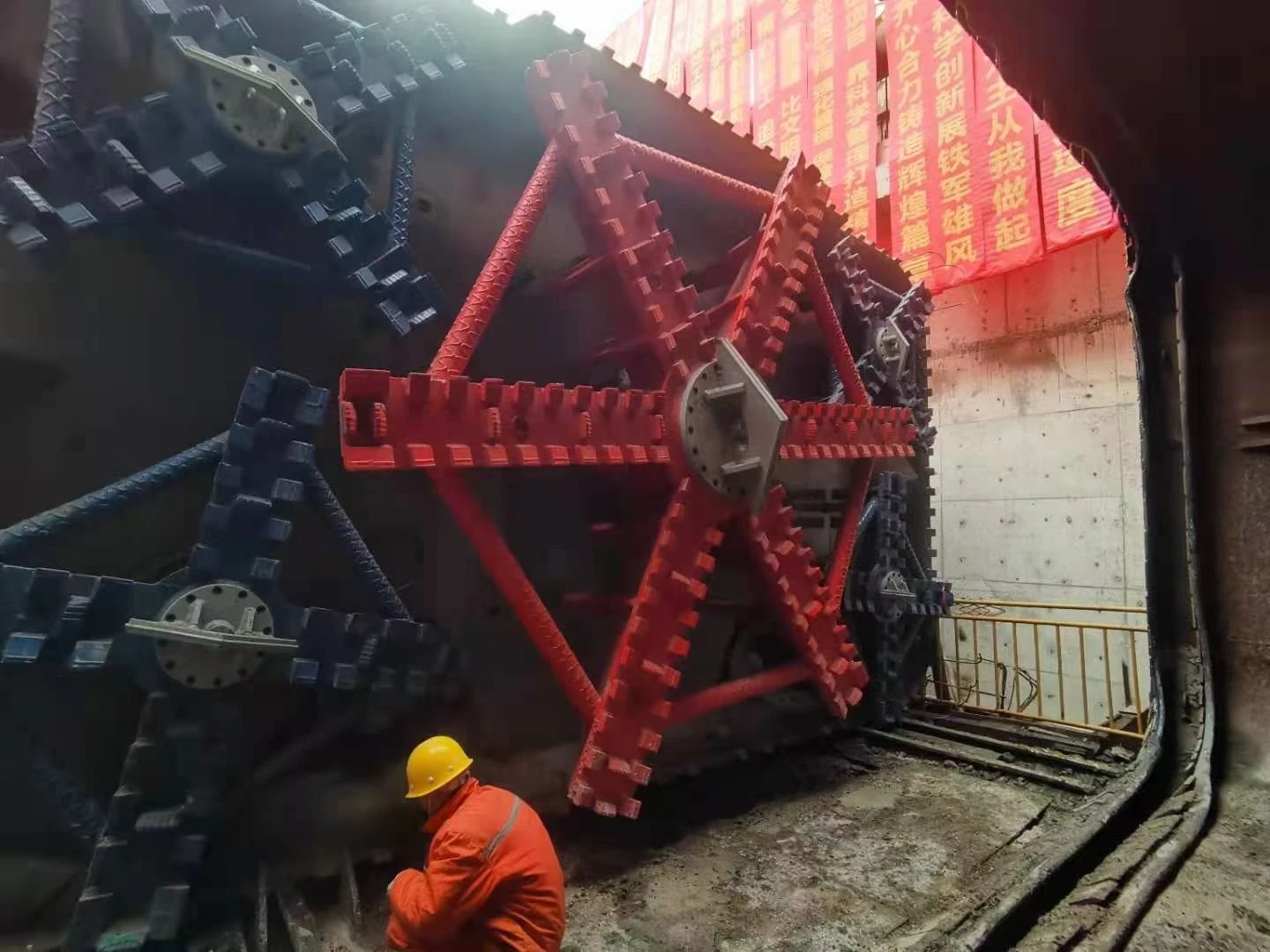
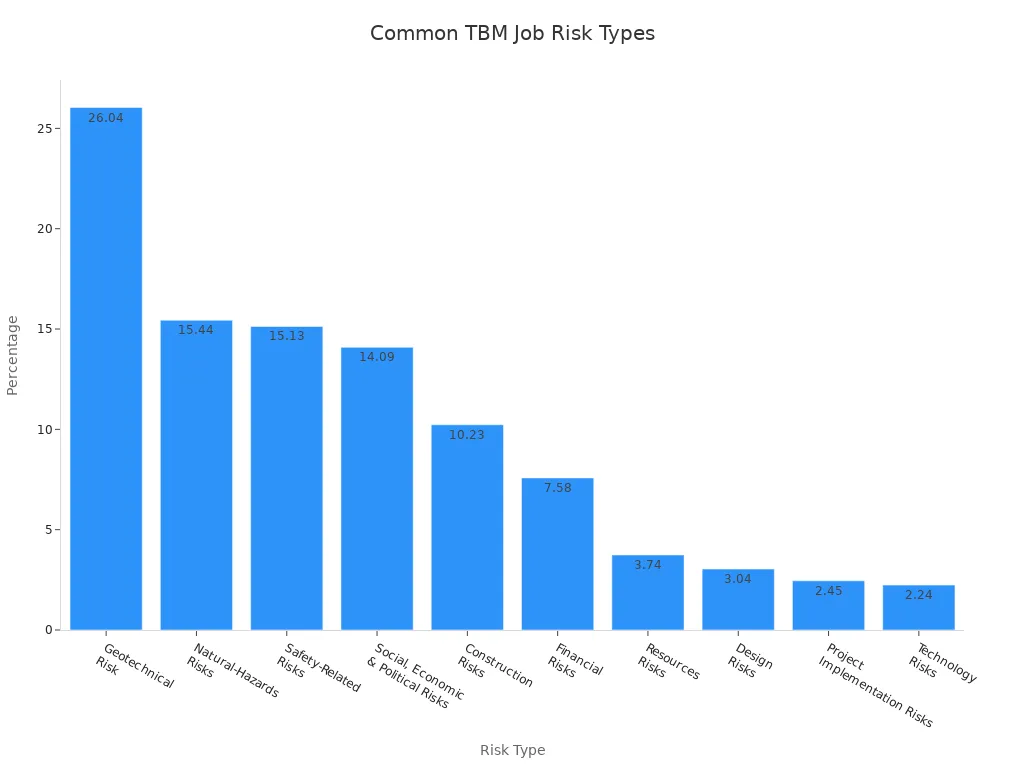
You can encounter significant issues if poor stability occurs in tunnel boring machine (TBM) jobs. These problems can lead to delays, damaged equipment, and safety incidents. Such issues often result in disputes regarding contracts. The bar chart below illustrates that geotechnical risks account for more than a quarter of claims.
CEGC provides tunnel boring machine solutions with standard features designed to help you avoid these challenges. Poor stability can trigger claims on TBM machine jobs, making it essential to have reliable tunnel boring machine systems to ensure your project's safety.
|
Specification/Consideration |
Description |
|---|---|
|
Ensures the machine is suited to the ground and water conditions, helping to prevent stability issues. |
|
|
Use appropriate cutterhead designs |
Aids in effectively controlling soil movement, which keeps the tunnel stable. |
|
Implement safety features |
Modern TBMs are equipped with systems that monitor for problems in real-time, allowing for early detection of issues. |
|
Consider groundwater and environmental factors |
Understanding soil water and pressure is crucial for selecting the best TBM for your project. |
|
Utilize modeling software |
Enables you to simulate how the TBM will perform in various ground conditions before actual deployment. |
Key Takeaways
-
Poor stability in TBM jobs can cause delays. It can also damage equipment and cause safety problems. These problems can lead to claims.
-
To stop claims, match your TBM to the ground conditions. Use the right cutterhead designs to keep things stable.
-
Use real-time monitoring and do regular maintenance. This helps you find problems early. It keeps people safe and lowers the chance of claims.
Poor Stability In Tunnelling Operations
Defining Poor Stability In TBM Jobs
In the fault fracture zone, the rock is broken into many pieces. It does not stay strong and can cause problems like collapse, water coming in, and parts bending. These problems can make the TBM cutterhead get stuck and the thrust system work too hard. This puts the tunnel job and machines at risk.
You can have poor stability in mixed-face ground or fractured rock. Highly stressed rock also makes it hard to keep the tunnel safe. These conditions can slow down your project.
Effects On Tunnel Machine Performance
Ground settlement and face instability can cause big problems. You may see the cutter wear out faster. It can be hard to move muck. The tunnel boring machine may not work as well. These problems can make your project cost more and take longer. Mixed ground areas often have these issues. Water coming in can also affect your work. If water gets inside, it can raise pressure and risk blow-out. This makes it harder to keep the tunnel face stable.
|
Key Findings |
Implications on TBM Performance |
|---|---|
|
Excess pore water pressure stays the same if TBM moves faster than slurry infiltration. |
This helps keep the tunnel face stable. |
|
If TBM moves slower, pore water pressure goes up and blow-out risk increases. |
This can make TBM less stable and not work well. |
Causes: Ground, Water, And Machine Issues
You may face poor ground stability for different reasons:
-
Bad ground conditions like squeezing or collapse can stop your TBM or make it stuck.
-
Water coming in through holes or cracks can weaken the tunnel and raise risks.
-
Machine problems, like not controlling face pressure right, make it harder to fix these issues.
CEGC’s solutions use face pressure control, soil conditioning, and sealing to help you manage these risks and keep tunneling safe.
Poor Stability Can Trigger Claims On TBM Machine Jobs
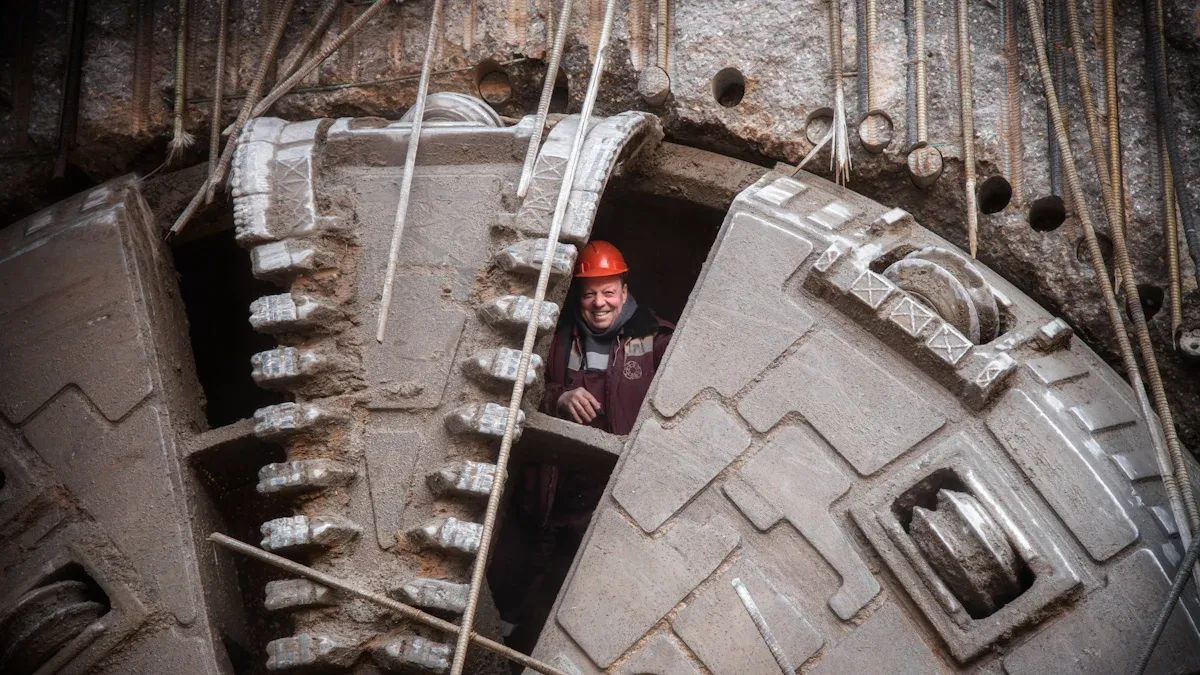
Types Of Claims: Delay, Damage, Safety, Cost
When poor stability happens, many problems can start. These problems can cause different types of claims. You might see:
-
Delay claims if ground moves or collapses and slows work.
-
Damage claims if buildings or roads get harmed by collapse.
-
Safety claims if workers are in danger from falling ground.
-
Cost claims if you need more money to fix damage.
You should look for faults that can break the ground. These faults can make the ground fall in or sink. High water pressure can make ground loss even worse. This can cause the ground above to sink a lot. It can also make safety and cost claims happen. Mixed ground can make the pressure on the tunnel face uneven. This can cause too much digging and ground falling in. That leads to delay and damage claims. Poor stability can cause all these claims on TBM machine jobs.
Mechanisms: Settlement, Collapse, Subsidence
It is important to know what causes claims in tunneling. The main reasons are settlement, collapse, and subsidence.
-
Ground subsidence happens when soil or water leaks into the tunnel. This can make the ground above sink or fall in.
-
When the tunnel changes shape, it can make the ground collapse. Water and sand leaks can make this problem bigger.
-
Big changes in the tunnel can make the ground above settle or buildings fall.
-
Shield tunnels often have trouble because of ground settling, collapse, or leaks.
Poor stability can cause claims when these things happen. Collapse can happen fast and cause big trouble. You need to act quickly to stop the ground from settling or falling in. If you do not, the collapse can get worse and hurt more of your project. Collapses can also mean more claims and higher costs.
Real-World Scenarios In Tunnelling Projects
There are many real examples where poor stability causes claims. In city tunnel jobs, too much ground sinking can hurt buildings, roads, and pipes. Ground subsidence is a big danger. It can damage buildings and other things in cities.
You might see ground falling in, cave-ins, or collapse during tunnel work. These events can be very bad. Workers can get hurt. Buildings and roads can be damaged quickly. Collapses can stop your project and cause big claims.
You need strong solutions to handle these risks. CEGC gives risk management and custom plans for your tunnel machine. You can use face pressure control, ground protection, and sealing to stop collapse. These tools help keep your tunnel jobs safe and moving. When you use the right tools, you lower the chance that poor stability will cause claims.
Tip: Always check ground movement and water pressure during tunnel work. Acting early can stop collapse and lower claims.
Preventing Claims In TBM Tunnelling
Monitoring And Maintenance Strategies
You can stop many claims by watching and caring for your tunnel boring machine. Real-time monitoring systems help you check the ground and machine all the time. Sensors collect data so you can find dangers early. Doing maintenance before things break keeps the machine working well. Regular checks and cleaning help you spot problems before they get worse. If you do maintenance when work is slow, you lose less time and keep people safe.
-
Real-time data helps you notice changes in the ground or machine.
-
Automatic KPI tracking lets you see if things are working right.
-
Doing maintenance and checks helps keep everyone safe.
-
Looking at downtime and trends helps you plan and stop problems.
-
Clean, check, and oil your machine to keep it safe and strong.
You can save money and make better tunnels by taking care of your machine. Machines that are cared for have fewer problems and accidents. This means fewer claims and safer work.
Risk Management And Technical Solutions
You need risk management to deal with surprises in TBM jobs. Start by checking for dangers and problems. Use support like steel arches, rock-bolts, and lining segments to keep the tunnel face strong. Permeation grouting and canopy methods give more help in weak ground. Compressed air and ground freezing stop water and keep things safe.
|
Method |
Description |
|---|---|
|
Gets expert ideas to check risks in tunnel jobs. |
|
|
Event Tree Analysis |
Looks at chances of danger in underwater TBM work. |
|
Fault Tree Analysis |
Helps make a safety plan for tunneling. |
|
Analytic Hierarchy Process |
Weighs how bad and likely dangers are. |
|
Bayesian Networks |
Checks accident risks from ground problems. |
|
Causal Networks |
Links dangers and causes to help manage risks. |
Always match your tunnel machine to the ground you are working in. CEGC’s cutting and guidance systems help keep the tunnel straight. Modular design lets you change support for each job. This makes things safer and lowers risks. Emergency plans and drills get your team ready for problems. Using these safety steps lowers claims and keeps your project going.
Tip: Change your risk plan when the ground changes. Acting fast on new dangers keeps your team safe and your project on time.
There is a clear connection between poor stability and claims in TBM jobs. Unexpected ground problems can cause many accidents. Each accident can slow down your work and cost more money. Accidents happen if the ground moves or water gets in. They also happen if the TBM faces new problems. Accidents can break machines and put people in danger. Sometimes, accidents stop the whole project. Workers and people nearby can get hurt. Arguments can start because of accidents. Insurance might cost more after accidents. People may stop trusting your team. Your company’s name can be hurt by accidents. You might have to go to court. You could get fined for breaking contracts. Sometimes, you must do the work again. You might not finish on time. Accidents can mess up your budget. Your team can feel stressed. City life can be disturbed by accidents. Buildings near the tunnel can get damaged. Roads can be blocked. Pipes can break. The environment can also be harmed. You can stop accidents by acting early. Watch your tunnel, fix things, and use smart tools. CEGC can change your tunnel machine to help you stay safe.
|
Customization Option |
Description |
|---|---|
|
Variable Density TBM |
Switches between slurry-supported mode and earth pressure balance (EPB) mode for flexibility. |
|
Adapts to changing ground conditions for improved performance. |
|
|
Modular Architecture |
Enables customization based on operational needs and available data. |
Keeping the tunnel stable helps you avoid delays and damage. Pick the right tunnel boring machine to lower accident risks and keep your project safe.
FAQ
What should you do if you notice ground movement during tunnelling?
You should stop the tbm and check the area. Use real-time monitoring to track changes. This helps you keep safety high and avoid bigger problems.
How does real-time data improve safety in tbm tunnelling?
Real-time data lets you see changes fast. You can act quickly to fix issues. This keeps your team safe and helps your tbm work better during tunnelling.
Why is safety important in every tbm tunnelling project?
Safety protects workers and equipment. You lower risks and avoid accidents. Good safety practices help you finish tunnelling jobs on time and keep your tbm running well.


