
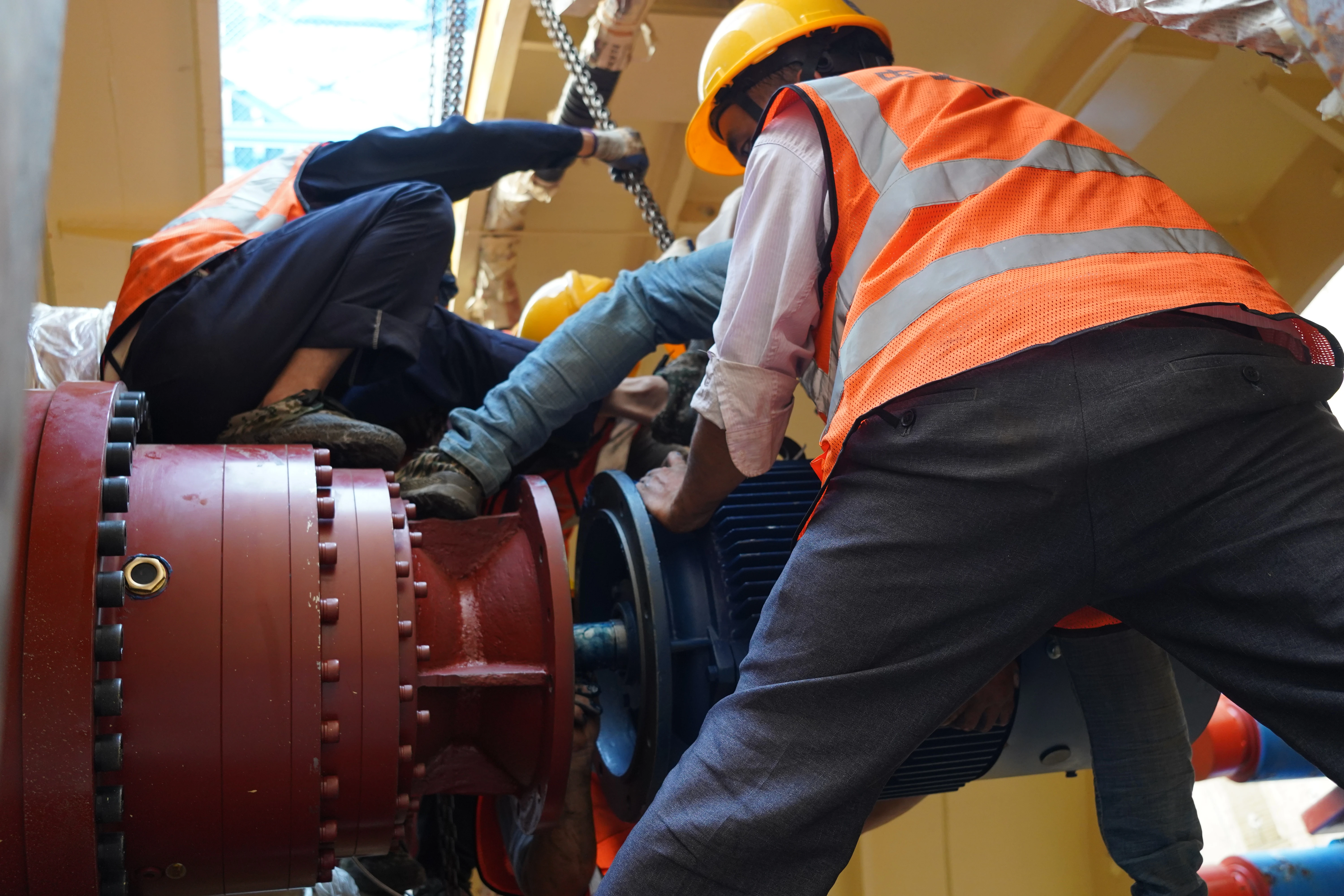
You can trust TBM tunnel pressure logs to provide clear, time-stamped records from your tunnel boring machine, offering an accurate account of what occurred during construction. TBM tunnel pressure logs can support delay claims by providing strong, objective evidence to explain project delays. CEGC recommends using TBM tunnel pressure logs alongside other project documentation to build a comprehensive case. By leveraging these logs, you gain valuable insights into the causes of delays and can present solid proof when making delay claims.
Key Takeaways
-
TBM tunnel pressure logs give clear proof of what happened and when. This helps show why there were delays. You can use these logs to support your claims. - Match pressure log data to each delay event. This helps you find out what caused the delay. It also makes your case stronger if there is a disagreement. - Use TBM logs with other project records. These can be daily reports or site photos. This makes your claim complete and easier to believe.
Understanding TBM tunnel pressure logs
What are TBM tunnel pressure logs?
TBM tunnel pressure logs help you see how tunnel boring machines work during construction. These logs keep track of important pressure information at the tunnel face and show if the ground is stable. They help you know how the machine acts in different situations. You can see the pressure numbers, which usually go from 0 to 15 bar. The logs also tell you how often the machine checks these numbers.
|
Component/Parameter |
Description |
|---|---|
|
Face Pressure |
Pressure at the tunnel face |
|
Ground Stability |
Assessment of ground conditions |
|
Pressure Range |
0-15 bar pressure |
|
Monitoring Frequency |
Continuous monitoring |
Data captured by tunnel boring machines
TBM tunnel boring machines collect lots of data while building tunnels. You can find out about advance speed, progress, cutting wheel torque, and thrust force. The machine also writes down what kind of soil and rock it finds. You get numbers for ground settlement and how much the tunnel lining moves.
-
TBM performance metrics like advance rate and cutterhead torque
-
Geological conditions such as soil type and geotechnical parameters
-
Ground settlement measurements
-
Structural measurements including tunnel convergence
TBM tunnel boring machines use sensors to make new data every second. This data shows how the machine works, how fast it goes, and if it is safe. You can use this information to make fast choices and change how you work.
Importance in construction disputes
TBM tunnel pressure logs are very important when there are problems in construction. You can use these logs to show what happened during tunnel building. The logs give you a way to check tunnel progress while building or after it is done. You can use them to prove delays or changes in the ground.
The storage and visualization of measured values acquired by sensors is crucial for TBM tunneling, allowing for real-time or post-completion tracing of tunnel construction.
You get facts from the logs that help your claim and solve problems faster.
How TBM tunnel pressure logs can support delay claims
Objectivity and credibility of logs
You can rely on tbm tunnel pressure logs to give you objective proof during tunnel construction. These logs record pressure values at the tunnel face every second. You see exactly what happened and when. The logs do not change or get influenced by opinions. You get clear numbers and time stamps. This makes your claim strong and believable.
Tip: Use tbm tunnel pressure logs as your main evidence. They show real events and help you explain delays.
You can trust tbm tunnel pressure logs because they come straight from the tbm machine. You do not have to guess or rely on memory. The logs show pressure spikes, drops, and stable periods. You can use these facts to support your delay claim.
Linking logs to delay events
You can connect tbm tunnel pressure logs to specific delay events in tunnel construction. When you see a sudden pressure spike, you know something changed at the tunnel face. Maybe the tbm hit hard rock or water. You can match these spikes with stoppages or slowdowns in the project.
-
Pressure spikes often mean tough ground conditions.
-
Drops in pressure can signal machine stoppages.
-
Stable pressure shows normal progress.
You can use a table to link log events to delay causes:
|
Log Event |
Possible Cause |
Delay Impact |
|---|---|---|
|
Pressure Spike |
Hard rock, water ingress |
Machine stoppage |
|
Pressure Drop |
Equipment failure |
Slow progress |
|
Stable Pressure |
Normal ground |
Steady advance |
You can combine tbm tunnel pressure logs with other records. Use daily reports, site photos, and schedule updates. This makes your claim stronger and shows the full story.
Demonstrating impact on project schedule
You can use tbm tunnel pressure logs to show how delays affected your project schedule. When the logs show long periods of high pressure, you know the tbm slowed down. You can compare these periods with your planned advance rate. If the tbm moved slower than planned, you can prove the delay.
Note: Always match tbm tunnel pressure logs with your project schedule. This helps you show the exact impact of delays.
You can create a timeline using the logs. Mark the start and end of each delay event. Show how much time the tbm lost. You can use charts or tables to make your case clear.
You can also use tbm tunnel pressure logs to explain why the delay happened. If the logs show repeated pressure spikes, you can prove that tough ground conditions caused the slowdown. This helps you answer questions during construction disputes.
You can build a strong claim by combining tbm tunnel pressure logs with other documents. Use site diaries, progress charts, and photos. This gives you a complete picture and helps you win your delay claim.
Using TBM logs in delay claims
Identifying delay causes
You can use tbm logs to find out why delays happen during tunnel construction. These logs show you the exact pressure at the tunnel face every second. When you see a sudden change in pressure, you know something important happened. For example, a spike in pressure can mean the tbm hit a fault zone or soft rock. These ground conditions often slow down construction progress. Sometimes, the tbm can even get stuck because of these challenges. You can also spot water coming into the tunnel by looking for drops in pressure. Systematic probing helps you predict rock bursts and manage water problems. When you use tbm logs, you get a clear picture of what caused the delay.
Attributing responsibility
You need to know who is responsible for delays in tunnel construction. Tbm logs help you do this. When you match log data with your work schedule, you can see if the delay came from the ground or from the machine. If the logs show high pressure and the tbm stopped, you can show that tough ground conditions caused the problem. If the logs show normal pressure but the tbm did not move, you might look for equipment or crew issues. You can use this information to talk with other teams or owners. This makes it easier to solve problems and keep construction progress on track.
Tip: Always keep your tbm logs organized. This helps you answer questions quickly during a dispute.
Connecting to project critical path
You must show how a delay affects the whole tunnel construction project. The critical path is the chain of tasks that decides when the project finishes. If a delay happens on the critical path, the whole project can finish late. You can use tbm logs to show when and where the delay started. Mark the time when the tbm stopped or slowed down. Compare this with your planned schedule. If the delay happened during a key part of tunnel construction, you can prove it changed the project end date. This helps you explain the impact of the delay to everyone involved.
|
Step |
Action with TBM Logs |
Result for Project |
|---|---|---|
|
Identify Delay |
Review pressure changes |
Find exact delay moment |
|
Link to Schedule |
Match log time with work plan |
Show effect on timeline |
|
Check Critical Path |
See if delay is on main tasks |
Prove project impact |
Quantifying losses
You need to show how much the delay cost your project. Tbm logs help you count the hours or days lost during tunnel construction. First, find the start and end of each delay in the logs. Next, compare the actual construction progress with your planned progress. The difference shows how much time you lost. You can use this number to calculate extra costs for labor, equipment, and materials. When you present your claim, use charts or tables to make your case clear. This makes it easier for others to understand your losses.
Note: Always use clear charts and tables when you present tbm log data. This helps everyone see the facts.
You can follow these steps to use tbm logs in a delay claim:
-
Review tbm logs for pressure changes and stoppages.
-
Match log events with your construction progress records.
-
Identify the cause of each delay.
-
Check if the delay is on the critical path.
-
Calculate the time and cost impact.
-
Present your findings with clear charts and tables.
When you use tbm logs in this way, you build a strong case for your delay claim. You show what happened, why it happened, who is responsible, and how much it cost. This helps you protect your interests in tunnel construction projects.
Examples and scenarios

Pressure spikes and stoppages
You can find delay events by checking tbm logs for pressure spikes and stoppages. If your tbm faces a sudden pressure spike, it often means the machine hit hard rock or a fault zone. The tbm might slow down or even stop. Project teams use these logs to show why the tbm could not keep moving. For example, in a metro project in Southeast Asia, the logs showed many pressure spikes. The tbm stopped several times. The team used the logs to prove that tough ground conditions caused the delay.
When you look at tbm logs, you see clear records of stoppages. These records help you show the exact time and reason for each delay.
Unforeseen ground conditions
You might find unexpected ground conditions when building a tunnel. Tbm logs help you spot these surprises. The logs show changes in pressure and how the machine acts. You can use a table to see common conditions found in other projects:
|
Condition Type |
Description |
|---|---|
|
Cavernous Conditions |
Found a cavern above the tbm, part of a fault zone with loose material. |
|
Water Inflows |
Had sudden water rushing in at 1,500 liters each second, making work much harder. |
|
Adverse Geological Conditions |
The rock was worse than expected, with more water flow and places where the ground fell in. |
You can use tbm logs to prove these conditions caused delays. The logs give you facts to support your claim.
Log discrepancies in disputes
Sometimes, tbm logs and other project records do not match. You might see that daily reports are different from the tbm log data. In one case, the tbm logs showed stoppages from water coming in, but site diaries said equipment failed. You can use tbm logs to clear up confusion. The logs give you real data. You can show what really happened and help solve problems faster.
Tip: Always check tbm logs when you have disagreements. The logs give you answers you can trust.
Best practices for TBM log management
Preserving and storing logs
You should keep TBM tunnel pressure logs safe and easy to find. Save logs on computers and make backup copies. Put each log in a folder with the project name and date. You can use cloud storage or a secure server. Save your logs right after every work shift. If you have paper logs, scan them and keep digital copies. Organize your logs so you can find any record fast.
|
Storage Method |
Benefit |
|---|---|
|
Cloud Storage |
Easy access, safe backup |
|
Local Server |
Fast retrieval |
|
Paper Scans |
Backup for originals |
Tip: Always write the project name and date on your logs. This helps you know which log is which.
Ensuring data integrity
You need to keep your TBM tunnel pressure logs correct and complete. Use systems that bring together data from different places. These systems help you keep your logs true during the project. Real-time checks help you find mistakes quickly. Predictive analytics can show if something is wrong in the data. Only let certain people change the logs. Keep a list of every change made. This makes your logs honest and ready to check.
Note: Data integrity means your logs stay correct and whole from start to finish.
Disclosure in disputes
You must share TBM logs clearly when there are problems. Show your logs in a simple and neat way. Use charts and tables to point out important events. Give all the logs needed for your claim. If your logs are digital, save them as PDF or Excel files. Always tell what each log means. This helps others see your proof.
-
Get logs ready for easy checking.
-
Point out important delay events.
-
Use clear pictures and tables for your claim.
Tip: Keeping your logs neat makes your case stronger and easier to explain.
Role of tunnel boring machines in documentation
Integration with other project records
Tunnel boring machines collect lots of data during a project. They record pressure logs, thrust forces, cutterhead torque, and drilling records. You can mix these logs with other records using Building Information Modelling (BIM). BIM puts all your information in one place. You can see how the tunnel was built step by step. This helps you check quality, plan repairs, and follow rules.
BIM makes your project records simple to read and share. You can use BIM to connect TBM logs with daily reports, site photos, and schedule updates.
You get a full picture of your tunnel project. You can track each step and see how the TBM worked. This helps you answer questions and fix problems fast.
Strengthening claims with comprehensive data
Your delay claims are stronger when you use all your project data together. TBM logs show facts about machine performance and ground conditions. When you add daily reports, site diaries, and photos, you show everything that happened. You can use tables and charts to make your claim easy to understand.
|
Data Type |
What It Shows |
|---|---|
|
TBM Pressure Logs |
Machine and ground events |
|
Daily Reports |
Crew actions and progress |
|
Site Photos |
Visual proof of conditions |
|
BIM Integration |
Complete project timeline |
You can use all your data to prove delays, show causes, and explain impacts. This makes your claim easier to believe and helps you protect your interests. 🛠️
Tip: Always keep your records neat and use BIM to connect your data. This gives you the best chance to win a dispute.
You get strong help for delay claims when you use TBM tunnel pressure logs. These logs give you real-time data from geotechnical instrumentation. You can see how the soil and structure act. Watching the numbers closely helps you find problems and fix them fast. Keep your logs neat and use them with other records. TBM logs help you keep your project safe.
-
Real-time data shows what is happening in the tunnel.
-
Careful study helps you find out why delays happen.
-
Checking often makes your claim more believable.
Try using TBM logs in your project records and claims. 🛠️
FAQ
How do TBM tunnel pressure logs help with delay claims?
You can use TBM tunnel pressure logs to show what really happened during tunnel building. These logs help you explain why delays happened when the ground was tricky.
What information do TBM logs record during excavation?
You see numbers for face pressure, how fast the machine moves, and if the ground is safe. TBM logs help you check how well the machine works and find problems early.
How should you manage TBM logs for disputes?
You need to keep your logs neat and follow your risk plans. Save your logs in a safe place and use them if you need to prove your claim.


