
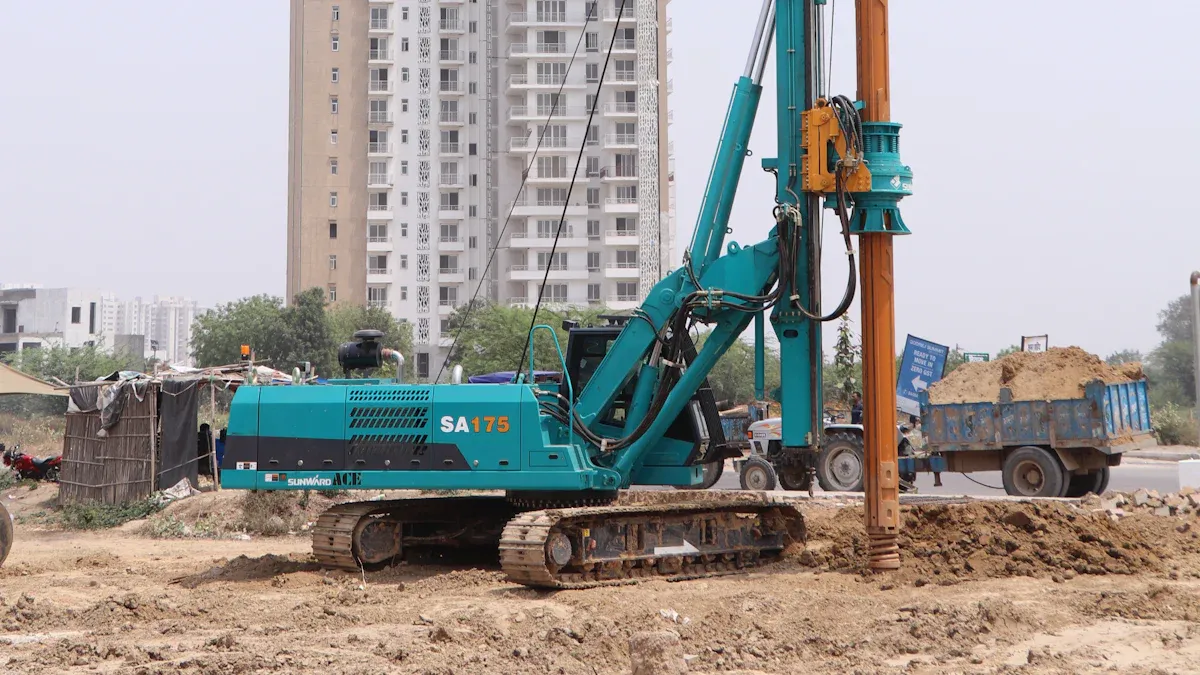
For drilling projects, precision and efficiency are paramount. The market is experiencing significant growth, expanding at an annual rate of 8.1%. However, signal interference can compromise the accuracy of drilling machines. This blog explores innovative signal technology and demonstrates how a Trenchless Drilling Rig Powerful Signal Beats Noise. By 2026, a Trenchless Drilling Rig will feature a robust signal that effectively overcomes noise, leading to enhanced and more precise drilling operations. We also highlight how CEGC contributes to advancing horizontal directional drilling.
Key Takeaways
-
Metal and electricity create signal noise. This makes trenchless drilling less accurate. It also makes it slower.
-
By 2026, new technology will be here. It will use strong signals. It will also use smart sensors. AI will be used too. This will make drilling very exact. It will also make it efficient.
-
Better signals will make drilling faster. It will be more precise. It will also be cheaper. It will be safer for workers. It will be safer for the environment.
The Problem: Signal Noise in Trenchless Drilling
What Causes Interference: The 'Noise'
Signal noise is a big problem. It affects horizontal directional drilling hdd. Many things cause this noise. Metal things cause passive interference. These include fences and pipes. Rebar and steel drains also cause it. They mess up the signal. They also mess up the magnetic field. This changes where things are. It also changes how deep they are. Active interference comes from live electricity. Power lines are a common source. Fiber optic lines also cause it. Cellular lines and generators do too. Their magnetic fields make signals weaker. They also mess up the locating system's magnetic field. Different ground types also affect signals. How much the ground resists electricity is key. Antenna reception changes with this resistance. The antenna works best. This happens when it matches the cable.
How It Hurts Work: Less Efficient and Less Accurate
Signal noise really hurts how well work gets done. It makes problems worse. This is true for directional drilling machine operators. Drills go off track more often. Crossing failures happen more. This means expensive redoing of work. It also means fines. Communication problems often happen. They come from interference. They slow down getting data. They also slow down steering changes. This directly affects how well wells are placed. These delays cause more idle time. They also cause pipes to get stuck. Torque spikes and idle time also go up. This damages rods and tools. High costs for supplies happen. Tools wear out faster. Bad fluid performance happens. The risk of frac-out also goes up. All these problems lower profits. They also make work riskier. This is true for any Trenchless Drilling Rig.
Powerful Signal Technologies for 2026: How Trenchless Drilling Rig Beats Noise
Horizontal directional drilling needs better signals. It needs to overcome interference. By 2026, new tech will help. A Trenchless Drilling Rig Powerful Signal Beats Noise. These changes will make things better. They will make drilling very exact. They will also make it very efficient.
Advanced Signal Generation and Transmission
Future horizontal directional drilling machine systems will have strong signals. They will be very clear. New ways to make signals will be used. These signals will be steady. They will be focused. They will cut through ground interference. This helps CEGC's Guidance System. It gives good data. This data helps make exact paths. New ways to send data will be used. This makes signals stronger. They will not be messed up by outside noise. Special antennas will focus the signal. This stops signal loss. It helps signals go through tough ground. Hybrid HDD rigs will be common by 2026. They will have strong signal makers. These will be made for different ground types.
Enhanced Signal Reception and Processing
Getting and understanding signals is important. By 2026, directional drilling machine systems will use smart tech. Many sensors will catch signals. They will catch them from different sides. This gives a full picture. Smart computer programs will clean these signals. This removes bad noise.
Signals often have noise. This noise can be bigger. It can be faster than the real signal. Signals have three parts. A strong direct current is one part. A weak low-frequency part is another. High-frequency noise is the third part. Pump noise causes a lot of interference. This happens when signals are sent.
New ways to filter are key. They make data clear. A two-step filter is suggested. It is for mud pulse systems. The first step uses a special filter. It separates direct current parts. The second step uses another filter. It removes high-frequency noise. This better signal helps CEGC's tracking system. It makes sure feedback is clean. It makes sure it is trustworthy. This clean data helps the Anti-Stall Powertrain. It allows for better changes. It also helps Tooling Compatibility. It makes sure paths are exact.
AI and Machine Learning for Predictive Accuracy
AI and machine learning will change things. They will make signals smarter. They will turn data into predictions. This will make things very accurate.
A Long Short-Term Memory (LSTM) network is a type of AI. It makes measurements better. It helps measure how much things tilt. This system looks at data in order. This includes sensor readings. It helps fix sensor signals. It lessens shaking from underground. It finds links between inputs and outputs. This removes noise from shaky measurements. It uses signals that are not shaky. These are used as guides.
AI makes drilling better. It looks at old drilling data. It looks at ground info. It looks at seismic data. This happens when planning. It suggests the best paths. It suggests drilling settings. During work, AI looks at sensor data. It gives smart predictions. These help engineers. They can change drilling settings. This makes work better.
Machine learning models help drilling. They are like Artificial Neural Networks (ANN). They are also like Random Forests (RF). And Support Vector Regression (SVR). They look at signals to predict. The Acoustic Emission Technique (AET) is a way to watch things. It does not touch them. It gives info about rock and drill bits. It uses sound signals. AI models use these sounds. They use other drilling settings. This predicts how fast drilling will be. This prediction is very good. This helps make choices right away. It helps change drilling settings. This makes drilling better.
|
Model |
R2 (Training) |
R2 (Testing) |
MAPE (Training) |
MAPE (Testing) |
RMSE (Training) |
RMSE (Testing) |
|---|---|---|---|---|---|---|
|
ANN |
0.844 |
0.744 |
19.92% |
36.98% |
0.123 |
0.161 |
|
RF |
0.914 |
0.816 |
17.54% |
31.54% |
0.1 |
0.142 |
|
SVR |
0.976 |
0.808 |
04.36% |
29.52% |
0.0486 |
0.141 |
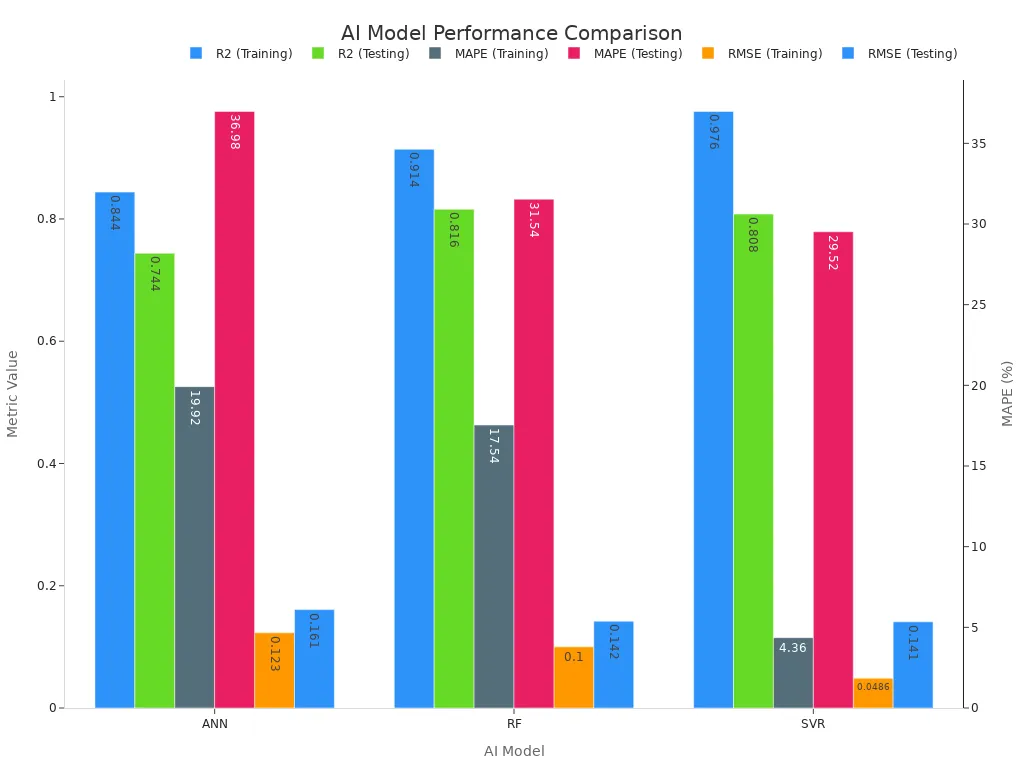
These AI ideas help CEGC's Guidance System. They make changes before problems start. They also improve the Anti-Stall Powertrain. This stops issues from happening. Automation will be big by 2026. It will use these AI features. This creates smart horizontal directional drilling hdd systems. This makes sure a Trenchless Drilling Rig Powerful Signal Beats Noise.
Real-World Impact: Beating the Noise in 2026
Better signal tech will help Trenchless Drilling Rig work. This will happen by 2026. These changes will bring many good things. They will fix old problems. Projects will finish better.
Efficiency Gains: Faster, Smoother Operations
New signal tech will make drilling faster. Wireless tools help. They make pilot holes almost 40% faster. Tripping pipe is three times faster. This makes projects shorter. Better signals also make drilling smoother. The Anti Stick-Slip Tool (AST) helps. It uses mechanical damping. It takes in extra energy. This energy comes from uneven forces. This lowers torque spikes. It also lowers shaking. New PDC cutting structures do this too. They stop shaking. They stop wasted energy. They turn big torque spikes into small bumps. This puts energy into cutting rock. These new ideas stop pipes from getting stuck. They also cut down on idle time.
Precision Accuracy: Hitting Targets
By 2026, horizontal directional drilling hdd will be very exact. Strong signals and AI guides will help. They make sure drills stay on track. This stops drills from going off course. It stops crossing failures. Projects will always hit their targets. This saves money on redoing work. It also avoids fines. CEGC's Precision Guidance & Stability System gets better. It gives good data. This data helps make exact paths.
Cost Savings and Project Profitability
Better work and exactness save a lot of money. Less redoing of work means lower costs. Fewer stuck pipes mean lower costs. Less tool wear means lower costs. Project profits go up a lot. Trenchless Drilling Rig workers will spend less on supplies. Tools will last longer. This is because work is smoother. Control is more exact.
Improved Safety and Environmental Compliance
Better signal feedback makes workers safer. Ground Penetrating Radar (GPR) shows what is underground. It helps find safe spots. This is for concrete work. It checks rebar patterns. This stops weakening structures. GPR removes blind spots. It finds and marks cables. This is done before drilling. This stops shocks. It stops cutting water lines. GPR finds buried things. These include gas lines. They include power lines. They include water pipes. This lowers the risk of hitting them. Hitting them can cause injuries. It can cause fines. It can cause delays. GPR also finds bad spots underground. These include holes. They include unstable dirt. This stops accidents. It stops ground collapse. It stops heavy machines from breaking. These technologies also lower frac-out risks. This helps the environment.
Strong signals are very important. They help horizontal directional drilling work well. By 2026, new tech will be here. It will make signals better. AI will also help. This means a Trenchless Drilling Rig Powerful Signal Beats Noise. This will make drilling faster. It will be very exact. It will cost less money. It will also be safer. CEGC helps the industry. It makes drilling smarter. It makes it more trustworthy. It also makes it better for nature. This shows a Trenchless Drilling Rig Powerful Signal Beats Noise.
FAQ
What makes signals get messed up in trenchless drilling?
Metal things, like rebar and pipes, cause problems. They make signals weak. Power lines and other live electricity also cause problems. They mess up signals too. The type of ground also changes how strong signals are.
How does AI make trenchless drilling more exact?
AI looks at information. It figures out the best ways to drill. It changes things as drilling happens. This makes sure the drill goes in the right spot. It also stops the drill from going off course.
What good things will come from better signal tech by 2026?
Better signals will make drilling faster. They will make it very exact. They will also make projects cost less. And they will make work safer. They will also be better for nature.


