
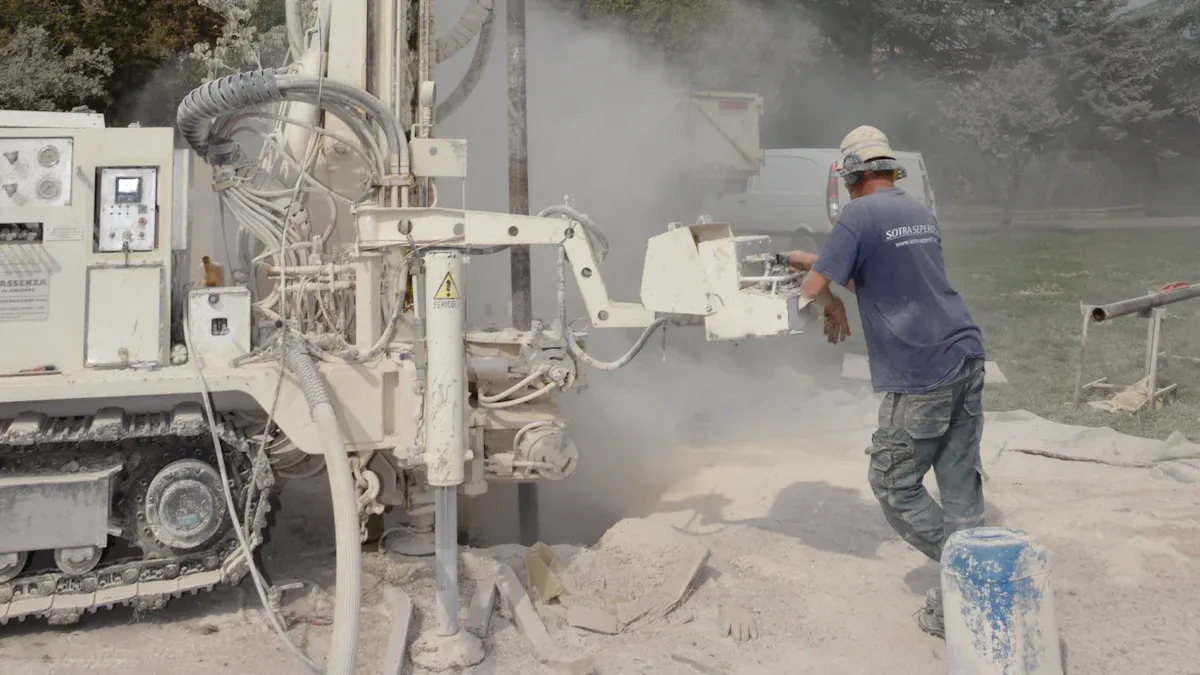
You can see how the Trenchless Drilling Rig Steel Joint Beats Stress with advanced engineering and innovative materials. CEGC offers market-standard specs and customizable options, ensuring you get fast advantages when choosing these joints for your horizontal directional drilling machine projects. Contractors and utility companies rely on this proven technology for superior performance and reliability.
Key Takeaways
-
Trenchless drilling rig steel joints are made to handle stress well. This helps stop equipment from breaking and saves money on repairs. Using strong materials like steel-titanium alloys makes the joints last longer. These materials also help the joints resist damage from use. This means the joints work better in hard drilling jobs. Good joint design and engineering are important too. Features like strong materials and flexible parts make drilling more accurate. They also make drilling safer for everyone.
Mechanical Stress in Trenchless Drilling
Stress Challenges in Drilling Rigs
When you use a horizontal directional drilling machine, you face many problems. Mechanical stress is a force on your equipment and the ground. This force changes as you drill through different soil or rock. If the stress is not even, you can have bore deviation, stuck pipe, or torque spikes. These problems can slow your work and cost more money.
-
Not cleaning the hole well causes up to 30% of stuck pipe in vertical wells and up to 80% in high-angle wells.
-
If you do not remove drill cuttings, they build up in the annulus and make pipe sticking more likely.
-
Cuttings can block the drill string, especially in directional wells where they settle on the low side.
You need to watch the stress along the pipeline. If you ignore it, your drilling rig can get damaged or delayed. Drilling in rock with natural joints and cracks can make your work less stable. The shape and spread of these joints affect how safe your drilling is.
Impact on Joint Performance
Stress affects the joints in your drilling rig. If stress is too high or uneven, joints wear out faster or break. Studies show steel-titanium drill pipe joints with double-shoulder designs seal better by over 12% under tension and almost 28% under combined loading. The right joint design helps you handle stress better during drilling.
You can lower stress by using precision guidance, stability systems, and anti-stall features. These tools help keep drilling on track and protect your equipment. The table below shows how these systems help:
|
Metric |
Description |
|---|---|
|
Drilling Accuracy Measurements |
Survey equipment keeps deviations under 1% of the total drilling length. |
|
Speed Control Mechanism |
Adjusts drilling rates to prevent deviation from planned paths. |
|
Monitoring Capabilities |
Tracks drill head position, pressure, and fluid in real time for better stress distribution. |
Using these systems makes stress along your pipeline better. Your drilling becomes safer and more efficient.
How Trenchless Drilling Rig Steel Joint Beats Stress
Steel Joint Material Strength
Strong materials help the trenchless drilling rig steel joint handle stress. The steel in these joints is not like normal steel. It has special features that make it good for hard jobs. The table below shows how this steel is different.
|
Property |
Description |
|---|---|
|
Alloyed with carbon, manganese, chromium, molybdenum, and nickel. Low-carbon design ensures weldability and toughness. |
|
|
Mechanical Properties |
Yield Strength: 135,000 - 165,000 psi; Tensile Strength: ≥ 145,000 psi. |
|
High Toughness |
Excellent impact resistance, preventing brittle fracture downhole. |
|
Fatigue Performance |
Superior resistance to alternating stress, suitable for high cyclic loads. |
|
Weldability |
Compatible with friction welding processes, ensuring strong tool joint connections. |
Some trenchless drilling rig steel joints use steel-titanium alloys. These materials last longer than regular stainless steel. They can give up to 40% better fatigue life. Titanium alloys are strong and light. This helps the drilling rig work longer. They also do not rust easily. This means your projects stay safe, even in rough ground. Using a trenchless drilling rig steel joint that beats stress gives you both strength and durability.
Joint Design and Engineering
The way a joint is made is important too. Good design helps the trenchless drilling rig steel joint handle stress from all sides. You want joints that can bend and twist without breaking. Here are some things that help:
-
High-strength steel grades let the joint handle more torque.
-
The right wall thickness keeps the joint strong but flexible.
-
Premium connections like NC50 or XT54 give higher torque and better fatigue resistance.
-
Thick tool joints make the connection stronger.
-
Abrasion-resistant bands stop the joint from wearing down.
-
Internal coatings keep the joint from rusting and help fluid move.
Research shows flexible and strong joint designs lower the chance of cracks. The table below explains how these designs help:
|
Findings |
Description |
|---|---|
|
Overall Deformation |
Deep tunnels can bend in an S-shape, but segmental design changes this to a ladder shape, lowering strain. |
|
Damage Mitigation |
Segmental structure design lowers peak stress and strain, so the joint lasts longer. |
|
Crack Distribution |
Flexible segmental tunnels have fewer cracks (33.3%) than non-segmental ones (66.6%). |
|
Anti-dislocation Effect |
Short segmental designs protect against dislocation, especially in fault zones. |
Tests and real-life cases show flexible joints control vibration and stress. This helps the trenchless drilling rig steel joint beat stress, even in hard ground.
Manufacturing for Durability
How a trenchless drilling rig steel joint is made matters for beating stress. The best joints use special steps to last longer and fight wear. Here are some ways manufacturers make them better:
-
Special interlocking joint systems mean no field butt-welding is needed. This makes the joint stronger and safer.
-
Coatings and linings give extra protection from damage.
-
Internal coatings stop rust and help fluid flow.
-
Easy access lets you fix the joint fast, so you save time.
You can pick CEGC’s trenchless drilling rig steel joint with the specs you need. CEGC lets you choose rod diameter, tool joint specs, and high-wear protection. These joints fit many horizontal directional drilling machines and tools. Picking the right joint helps your trenchless drilling rig steel joint beat stress every time you drill.
Performance and Comparison
Durability and Maintenance
You want your trenchless drilling projects to last a long time. Steel joints help your equipment work longer and break less often. These joints do not wear out quickly or get damaged easily. You spend less time fixing them and save money. You do not need to buy new parts as much. Using steel joints keeps your pipeline strong and safe for many years.
-
You pay less to fix roads because trenchless drilling does not mess up the surface.
-
You spend less on traffic control since you do not dig up streets.
-
You save money over time because your pipeline lasts longer and needs fewer repairs.
Safety and Reliability
Safety is important at every drilling site. Steel joints help stop accidents and keep workers safe. Their strong design lets them handle heavy loads and tough ground. You do not worry about sudden breaks or failures. Your drilling stays steady, and your pipeline stays safe.
Good joint design means fewer leaks and less chance of hurting the environment. You can trust your trenchless drilling rig to work well in different places.
Steel Joints vs. Alternatives
Knowing how stiff steel connections are is important in building things. Sometimes, people think connections are only pinned or only rigid. This can make designs wasteful or unsafe. If a connection is totally rigid, it passes a big bending force. This can make the joint too big. If a connection is pinned, the joint might be okay, but the beam could break in the middle because of a strong force.
When you look at steel joints compared to API, flexible, or composite joints, you see big differences. Steel joints handle stress better and keep drilling more stable. Composite joints made with carbon or glass fiber can take some stress but may not last as long in hard trenchless drilling jobs.
Tests show steel drill strings are steadier and have fewer twisting problems than aluminum ones. This means you get less sticking and smoother drilling. CEGC has steel joints that work for many ground types and project needs. You can pick the best design for your trenchless drilling rig and pipeline.
You can see that CEGC’s steel joints use strong materials and clever design to handle mechanical stress. HFMI treatment helps the joints last longer and keeps stress from building up in one spot. This means your drilling is safer, lasts longer, and saves money. Pick CEGC’s custom options for your horizontal directional drilling machine so your trenchless projects work well every time.
FAQ
What makes trenchless drilling rig steel joint beats stress important for a microtunneling job?
Strong joints are needed for microtunneling jobs. These joints help control the forces from drilling and jacking. They keep the pipeline safe and steady while drilling and jacking.
How does jacking affect drilling and pipeline safety?
Jacking pushes the pipe forward during drilling. This spreads out the stress better. It keeps the pipeline safe and lowers the chance of damage.
Why should you choose articulating joints in joint design for drilling and jacking?
Articulating joints let the pipeline bend as it drills and jacks. This helps stop cracks. Good joint design handles stress and keeps drilling and jacking easy.


