
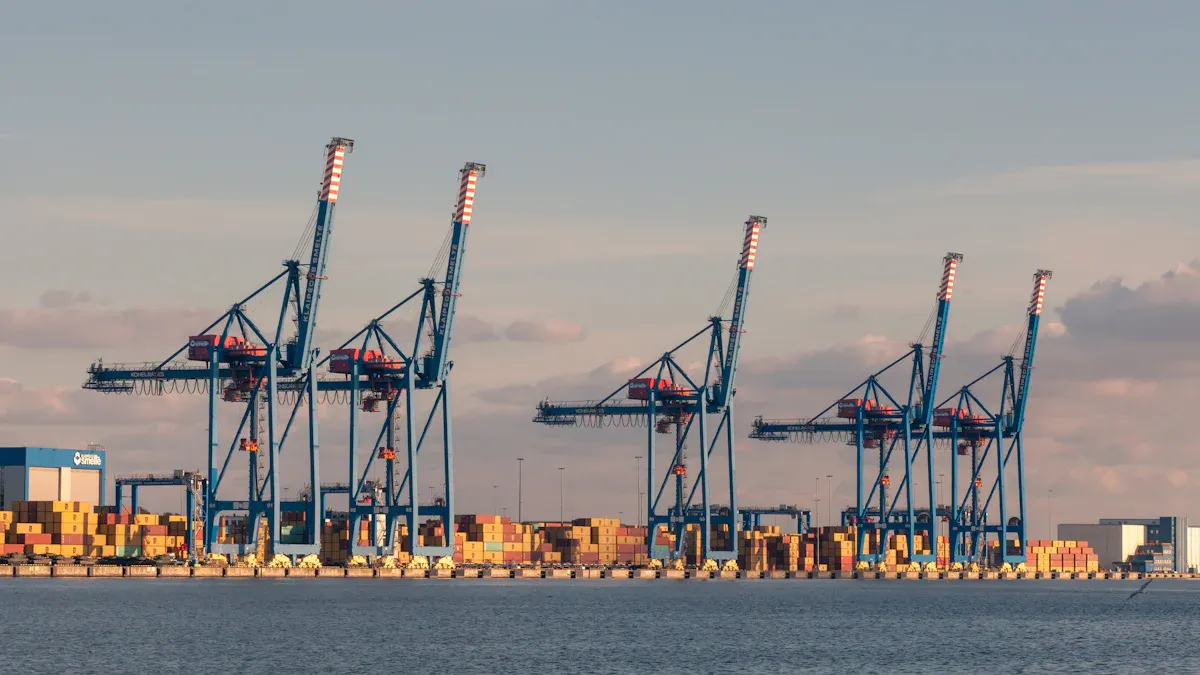
You face a big challenge when wind gusts cause load sway in container gantry crane: anti-sway in gusts. The anti-sway system from CEGC helps you keep loads stable and safe. You see faster cycle times and fewer accidents.
|
Metric |
Impact |
|---|---|
|
Cycle Time Reduction |
|
|
Spreader Landing Accuracy |
< 50mm |
|
Sway Suppression Under Wind |
5–15mm |
|
Crane Accidents Due to Sway |
23% |
Key Takeaways
-
Anti-sway systems make cranes safer and work better. They help cranes finish jobs 10% to 20% faster. Active anti-sway technology has sensors that watch the load all the time. This keeps the crane steady, even when it is windy. Training operators often helps them use cranes better. Easy-to-use controls also help stop accidents and make cranes work well.
Anti-sway systems for wind gusts
Container gantry crane: anti-sway in gusts is very important at ports. You must keep the load steady when strong winds blow. Modern anti-sway devices help you do this job. These systems use new technology to stop the load from swinging. They make crane work safer and faster.
Active and passive anti-sway technology
You can pick from different anti-sway technology for your container gantry crane: anti-sway in gusts. Active anti-sway systems use sensors and smart controls. They watch the load and change crane moves right away. This lets the crane react fast to wind and keep the load steady. Passive anti-sway systems use dampers to slow down sway. But they cannot stop it from starting. Semi-active systems mix both ways. They give some automatic help and let the operator guide.
|
Type |
Description |
|---|---|
|
Active Anti-Sway Systems |
Watch the load all the time and change crane moves to stop sway. |
|
Semi-Active Anti-Sway |
Partly automatic systems that help operators fix problems. |
|
Passive Anti-Sway Systems |
Use dampers to slow sway but cannot stop it from starting. |
Active anti-sway systems work best for container gantry crane: anti-sway in gusts. They use real-time checks and automatic changes to fight sway. This makes lifting smoother and safer. Passive systems are simple and cost less. But they do not work as well in fast or windy weather. There are also hydraulic sway damping systems. These use hydraulic parts to soak up energy. But they need more care and fixing.
Real-time sensors and load monitoring
You need real-time sensors to control your container gantry crane: anti-sway in gusts. These sensors find out how the load moves, how much it sways, and how fast the crane goes. Important sensors are laser range finders, inertial units, and position sensors with encoders. The system uses this data right away and changes what the crane does to keep the load steady.
-
Load sensors check the weight and movement of the cargo.
-
Position sensors watch the trolley and crane bridge.
-
Control algorithms guess how the load will move and change the hoist or trolley speed.
-
Actuators make the changes to stop the load from swinging.
Active anti-sway crane systems use these tools to control load swing right away. This helps stop accidents and keeps your work going well. You can also add more sensors, more automation, and safety features to fit your port.
Operator interface and training
You are important in container gantry crane: anti-sway in gusts. The operator interface gives you easy controls and feedback. This helps you move the crane carefully and lowers the chance of load sway. New interfaces show alarms, updates, and steps to follow. This makes it easier for you to learn and use the system.
You should train often to be a good operator. You need to know how to use crane tools and follow safety rules. This helps stop accidents and makes work better. With anti-sway technology, you do not have to depend only on skill. The system helps you get good results, even if you are new.
Tip: Try the guided help on your crane’s screen. Practice stopping crane swinging and keeping the load safe when wind blows.
You can also get custom features for your project. You can add more automation, crash protection, or digital controls to fit your port. Standard features for container gantry crane: anti-sway in gusts are high lifting power, fast speed, and strong safety locks. These help you move cargo safely and quickly, even when it is hard.
Sway risks and operational impact
Safety hazards and collision exposure
When you use a crane in the wind, there are many dangers. Load sway can be risky, even if you do not go over the weight limit. If you start or stop quickly, the crane feels more force. Loads can tip over if they are not steady, especially with wind or uneven weight. If you do not balance the load, side-loading can happen. This means the hoist is not in the center. Side-loading can cause crashes and slow down your work. Safety tools like overload protection and emergency stops help stop accidents. You must watch big cargo and use electrical anti-sway systems to stay safe.
-
Moving loads can make things unsafe.
-
If loads are not steady, they might tip.
-
Loads that swing can hit things.
Wind-induced sway causes
Wind can move the crane and the load. Even a small breeze can make the load swing. Strong wind gusts can push the crane and make it move a lot. If brakes are worn or controls are broken, things get worse. A load on a long rope swings like a pendulum. Air and rope friction slow it down, but it still sways. You need wind speed sensors and smart control systems to help with this. Studies show that as wind gets stronger, load sway gets worse. Anti-sway technology can help control the problem.
|
Study |
Findings |
|---|---|
|
Lee and Kang |
Wind changes how container cranes act in wind tunnels. |
|
Pasternack et al. |
Feedback controllers help stop load swings from wind. |
|
Tomczyk et al. |
Models help control loads when it is windy. |
|
Arena et al. |
Real tests show how wind affects cranes. |
Compliance and efficiency challenges
You have to follow safety rules and world standards. If you do not control load sway, accidents can happen and you might break the rules. More cargo means more chances for things to go wrong. You must watch out for dangers, especially in bad weather. Load sway makes you wait because you need to steady the load before moving. This takes more focus and slows down your work. Anti-sway and smart control systems help you work faster and safer. Cranes with sway control can move 60% faster than normal cranes. Good load balance and safety tools keep your work smooth and safe.
|
Impact of Load Sway on Efficiency |
Description |
|---|---|
|
Delays |
You have to wait for the load to stop moving. |
|
Increased Accident Risk |
Loads that sway can cause more accidents. |
|
Additional Operator Attention |
You must focus more on keeping the load steady. |
|
Benefits of Anti-Sway Technology |
Work goes smoother and you finish faster. |
You need anti-sway systems to fix these problems. These systems use sensors to keep the load steady and warn you right away. When you use the right safety tools, your work is safer and you get more done.
Anti-sway systems can cut down load swing by 88%. Safety features help keep cargo safe and protect the operator. The table below shows how automatic sway control helps your port. Faster cycle times mean you get more work done. Easy operator controls make using the crane simple.
|
Feature |
Benefit |
|---|---|
|
Automatic sway |
Makes things safer and better |
|
Faster cycle time |
Lets you work faster |
|
Operator control |
Makes the crane easy to use |
FAQ
How does a crane anti-sway system help with load safety?
You use the anti-sway system to keep the load steady. The system reduces swinging. This helps you avoid accidents and protects your cargo.
What should an operator do if the load starts to sway during crane operation?
You should slow the crane. You must check the load position. You can use the control panel to adjust the crane and stop the load from swinging.
Why do you need real-time sensors on a crane for load handling?
You need real-time sensors to watch the load. These sensors help the crane react fast. You get better control and safer crane movement.


