
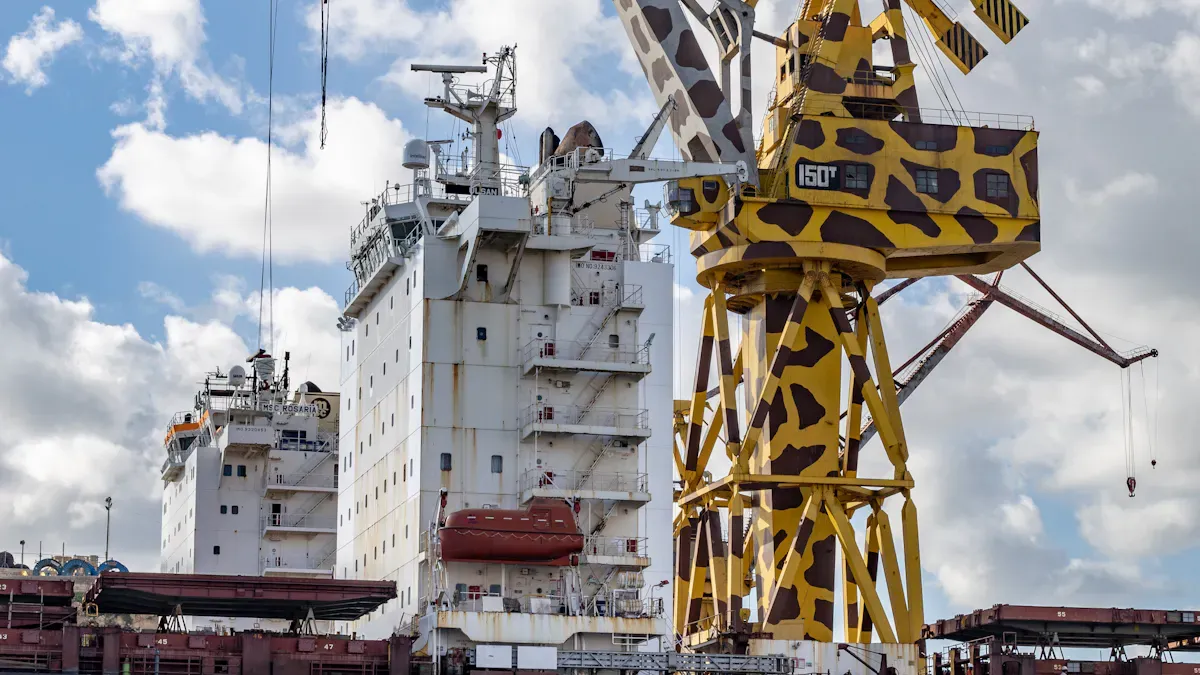
You control swing during ship crane: swing control for deck loading by thinking about safety and using smart technology. Wind, waves, and sudden ship movement can cause swing. Operator mistakes and not paying attention to weather make things more risky. Anti-sway systems from CEGC help keep loads steady and keep your crew safe.
-
Wind, waves, and ship tilt change how steady the load is.
-
Wrong crane control or not noticing conditions makes swing happen.
-
Swinging loads can break equipment and injure workers.
Key Takeaways
-
Stop swing by using anti-sway systems. Teach your team about different cargo types. This keeps loads steady. It also makes things safer.
-
Always check wind before lifting. Look at ship movement too. Change how you work based on these things. This helps stop accidents.
-
Use taglines to control load sway. Move the crane smoothly. This easy step makes operations much safer.
Causes of Load Swing in Ship Crane Operations

Why Load Swing Happens
When you use a ship crane to lift cargo, you might see load swing. The kind of cargo matters a lot. Heavy loads or odd shapes can make the crane sway more. If the load has liquids or loose stuff, the center of gravity can move while lifting. This makes the load swing even more. You need special ways to rig these loads so they stay steady. For example, steel beams with holes let you attach them safely, which helps stop swing. Concrete pieces need special anchors to keep them stable. Loads with most weight on one side need careful rigging to stop tipping and swinging. Different materials need their own ways to attach so everything stays safe.
Key Risk Factors for Swaying
Many things can make load sway worse during crane work:
-
Wind Conditions: Strong wind pushes the load. This can make containers swing and can even make the crane less stable, especially near the coast.
-
Ground Stability: If the ground is uneven or not stable, lifting can cause jolts. These jolts make the load move in ways you do not expect.
-
Operator Skill Level: Skilled operators keep loads steady better. New operators may cause more swing by moving the crane too fast or stopping quickly.
-
Weight Distribution: Uneven loads need special rigging to keep balance. If you do not fix this, the load will swing more.
-
Fragile Materials: These need extra care. If you do not handle them carefully, they can break from swinging.
Tip: Use anti-sway systems and train your team for different cargo types. This helps you control load movement and keeps your operation safe.
Ship Crane: Swing Control for Deck Loading
Operator Techniques for Controlling Load Movement
You can stop swaying by using good operator techniques. Lift slowly to keep the load steady and have more control. Make sure the load is balanced and lifted from its center of gravity. If you need more stability, use extra lifting tools to support the load from different points. Keep the area around the crane clear so nothing gets in the way.
Taglines help guide the load and keep it steady. They are useful when wind or ship movement increases. Operators hold taglines and move the load as needed. This is a main way to stop swinging and stay safe.
Tip: Always use taglines, especially with big or odd-shaped cargo. This easy step stops swaying and keeps your work safe.
Rigging Choices to Prevent Load Swing
Good rigging helps control swing during ship crane: swing control for deck loading. Pick the right sling angles and lifting points. Follow these steps to stop swinging:
-
Use correct lifting points. For concrete beams, use special inserts or anchors to balance and spread tension.
-
Use dual hoists for long beams. Dual hoists lift together and keep the load balanced.
-
Move the crane smoothly. Slow starts and stops help control swaying.
-
Use anti-sway crane controls. These systems keep the load steady while lifting.
The sling and hitch you pick change how stable the load is. See the table below for more details:
|
Hitch Type |
Description |
Capacity Impact |
|---|---|---|
|
Vertical Hitch |
Straight connection to the load, uses 100% of sling’s rated capacity. |
Full capacity (100%) |
|
Choker Hitch |
Makes a loop around the load, bends reduce strength. |
Reduces capacity to 75-80% |
|
Basket Hitch |
Sling under the load with both ends attached, lifts up to 200%. |
Capacity drops as angle gets wider |
|
D/d Ratio |
Object diameter vs. chain link diameter; low ratios can damage links. |
Minimum recommended ratio is 6:1 |
|
Sling Angle |
Wider angles make tension go up fast. |
Avoid angles below 30° for stability |
Use the right rigging and sling angles to stop swinging and keep the load steady.
Environmental Factors and Control Swaying
Weather and ship movement change ship crane: swing control for deck loading. Check wind speed and ship motion before every lift. Ports use wind sensors and stop work when wind hits 25 to 30 miles per hour. In cold weather, operators use winter hydraulic fluids and warm up systems. Ice detection and heated cabins keep cranes safe in freezing weather.
Change how you work based on weather. Always check wind and ship movement before lifting. If things change, stop and check again. This helps you stop swaying and avoid accidents.
Note: Use taglines and slow moves when wind or ship motion gets stronger. This helps you control swaying and keeps the load steady.
Anti-Sway Technology and Safety Systems
Modern ship cranes use anti-sway controls and safety systems to improve ship crane: swing control for deck loading. These systems cut down on swinging and help you place loads exactly. Anti-sway technology makes things safer, speeds up loading, and reduces operator tiredness. It also lowers equipment wear and helps in windy weather.
Here is a table showing anti-sway technology benefits:
|
Benefit |
Description |
|---|---|
|
Increased Safety |
Cuts swing, stops crashes and injuries. |
|
Faster Load Handling |
Lets you move loads quicker, so you finish faster. |
|
Reduced Operator Fatigue |
Stabilizes loads automatically, so operators worry less. |
|
Reduced Equipment Wear |
Stops rough movements, so parts last longer and cost less. |
|
Better Performance in Windy |
Makes loads steadier in tough weather, so handling is more precise. |
Safety systems in ship cranes include overload prevention, load monitoring, anti-sway technology, and collision prevention. These features help you control swaying and keep your crew safe. CEGC gives you standard specs and options for sensors, safety zones, and backup systems.
|
Safety Function |
Purpose |
Key Components |
|---|---|---|
|
Overload Prevention |
Stops lifting too much weight |
Automatic shutdown, load moment indicators |
|
Load Distribution Monitoring |
Checks weight balance |
Tension measurement, imbalance alerts |
|
Anti-sway Technology |
Handles ship movement |
Oscillation monitors, motion correction |
|
Collision Prevention |
Stops crashes with structures |
Position sensors, safety zones |
You can use anti-sway technology with operator skills to improve swing control. Systems like DynAPilot work with manual and automatic crane operations. In places with lots of load damage, these systems save money fast.
Communication and Team Coordination
Clear communication and teamwork are important for ship crane: swing control for deck loading. Keep everyone updated about conditions and what is happening. Use cameras or sensors on hooks to give operators real-time views and data. Set up clear signals, like hand signs and radios, for crane operators and ground crews.
Follow these steps for good teamwork:
-
Plan each lift ahead of time.
-
Talk to your team with clear commands.
-
Watch weather and ship movement all the time.
-
Let crew members stop work if things get worse.
The table below shows how communication helps swing control:
|
Evidence Point |
Description |
|---|---|
|
Clear Communication |
Makes sure everyone knows what is happening and can act fast |
|
Continuous Monitoring |
Watches weather and ship movement to change plans |
|
Compliance with Safety Protocols |
Follows lift plans and safe limits |
|
Active Swing Control |
Uses taglines to manage swing well |
|
Stop-Work Authority |
Crew can stop work if things get worse |
You can control load movement and swaying by using operator skill, good rigging, anti-sway technology, and clear communication. CEGC’s ship crane solutions give you standard performance and custom options for your port or terminal.
You keep lifting safe by using load monitoring and anti-sway systems. Teamwork is important for every lift. When you lift concrete beams or use double girder overhead cranes, you need to plan ahead. You must talk with your team so everyone knows what to do. CEGC gives you solutions that fit your needs. Their double girder overhead cranes help make lifting concrete beams safer.
|
Feature |
Benefit |
|---|---|
|
Keeps the load steady |
|
|
Training |
Helps you handle loads better |
|
Maintenance |
Stops the load from drifting |
FAQ
How do you reduce load swing when using a ship crane?
You use anti-sway systems to help control swing. Taglines keep the load steady and safe. Move the crane slowly and carefully. CEGC ship cranes have advanced anti-sway technology. This makes cargo handling safer and more accurate.
What should you check before lifting cargo on deck?
Check wind speed before you lift anything. Make sure the load is balanced. Look at the crane to see if it works well. Always check safety systems first. Talk with your team before you start any lift.
Can you customize CEGC ship cranes for special projects?
Yes, you can change CEGC ship cranes for your project. Pick the right capacity and span for your needs. Choose anti-corrosion grade and automation level. This helps your port or offshore platform work better.


