
Container gantry crane remote monitoring reduces blind checks by providing real-time data and instant alerts, giving you greater visibility and control over your operations. With CEGC’s advanced solutions, you can address daily safety risks, load sway, and operational delays more effectively. Container gantry crane remote monitoring reduces blind checks, helping you prevent collisions and accidents while streamlining workflow. CEGC understands the importance of minimizing blind spots in port operations, and with remote monitoring, your team stays safer and works more efficiently.
Key Takeaways
-
Remote monitoring gives live data. This means workers do not need to guess or check blindly. It makes crane work safer. Automated alerts and diagnostics show problems early. This helps workers fix things on time. It also means cranes stop working less often. Customizable monitoring systems work with port software. This makes work faster and easier.
Blind Checks in Container Gantry Cranes
What Are Blind Checks?
You might hear people say "blind lift" when using container gantry cranes. A blind check is when you have to check a lift or placement but cannot see the load or where it goes. The crane operator cannot see the container or the spot it needs to reach. This makes things dangerous. Blind checks make accidents more likely for workers and machines. You have to use radios or spotters, and this can cause mistakes.
Risks and Inefficiencies
Blind checks make your work slower. If you cannot see the load, you need to do more steps to stay safe. This means stopping the crane, waiting for signals, or checking spots again. These steps take time and lower how many containers you move each hour. Blind checks also make mistakes more likely. If someone gives a wrong signal or misses something, there could be an accident or damage. It is harder to keep everyone safe, and your team may feel more stress at work.
Industry Pain Points
Manual blind checks cost your company more than you think. You pay for extra work, longer hours, and possible mistakes. The table below shows some common costs from manual blind checks:
|
Cost Type |
Amount |
|---|---|
|
$291 |
|
|
Annual cost per worker |
$4,285+ |
|
Operational delays |
Introduces human error, causes payroll delays, and increases admin burden |
You also have more paperwork and payroll delays. These problems show why many port operators want better ways, like remote monitoring from CEGC, to cut down or stop blind checks.
Container Gantry Crane Remote Monitoring Reduces Blind Checks
Real-Time Monitoring Systems
You can make your port work better with real-time monitoring systems. These systems use sensors on your container gantry crane, portal crane, or container handler. The sensors collect data about load weight, crane position, and how fast things move. You can see this information on a human-machine interface (HMI) in the control room or on a remote device. This setup lets you get instant feedback and alerts if something is wrong.
|
Data Type |
Description |
|---|---|
|
Sensors and Feedback Devices |
Give real-time data to the PLC, like encoders, limit switches, and load cells. |
|
Human-Machine Interface (HMI) |
Shows real-time data such as position, weight, and system status. |
|
Real-Time Load Monitoring |
Warns operators about safe load limits and keeps a record for later. |
|
Operator Support and Alerts |
Uses dashboards and sounds to help keep things safe. |
|
Load Monitoring Systems |
Tracks lifting loads, movement cycles, crane speed, and stress levels. |
You do not have to guess or do manual checks. The monitoring system helps you find problems early. You can make choices faster and keep your team safe.
Key Technologies and Sensors
Digital monitoring systems use smart sensors and technology to show you what your equipment is doing. These sensors watch things like crane location and wind speed. You get correct data for every lift and move.
|
Contribution to Operational Visibility |
|
|---|---|
|
TOS (Terminal Operating System) |
Sends job orders to ECS, helping with communication and tasks. |
|
ECS (Equipment Control System) |
Breaks down job orders and tells cranes what to do right away. |
|
GPS |
Watches where the crane is for good placement. |
|
LiDAR |
Spots obstacles and makes 3D maps for moving around. |
|
Cameras |
Gives pictures for remote control and finding objects. |
|
Load sensors |
Checks container weight and balance for safety. |
|
Wind sensors |
Stops work if the weather is bad. |
|
AI and Machine Learning |
Helps make choices, finds best paths, and suggests repairs. |
You get to watch all crane actions closely. Cameras and LiDAR help you see places you cannot see well. Load sensors and wind sensors keep your team safe from heavy loads and bad weather. Digital monitoring systems also work with your terminal’s software, making your work easier.
Automated Alerts and Diagnostics
Automated alerts keep you updated all the time. Digital monitoring systems send alerts right away if they find overload, unsafe moves, or possible crashes. You hear alarms and see warnings on your screen. This helps you act fast and stop accidents.
-
Overload protection stops the crane if the load is too heavy.
-
Load moment indicators check the weight and warn you if it is not safe.
-
Smart diagnostic tools check sensors and find problems.
-
IoT and cloud-based monitoring let you see data from anywhere.
-
AI-assisted collision prediction warns you before a crash happens.
You do not have to wait for a problem to get worse. Remote diagnostics let you check your container gantry crane or portal crane from your office or somewhere else. This way, you have less downtime and your equipment works better.
Tip: Use digital monitoring systems with alerts to lower mistakes and keep your team safe.
Predictive Maintenance and Safety
Predictive maintenance uses digital monitoring systems to watch your equipment’s health. Sensors check load stress, motor temperature, vibration, and more. You get early warnings if something is wrong. This helps you fix small problems before they get big.
|
Parameter |
Description |
|---|---|
|
Load stress |
Watches how much stress is on parts |
|
Motor temperature |
Checks if motors are working well or getting too hot |
|
Hydraulic pressure fluctuations |
Finds strange changes in hydraulic systems |
|
Vibration patterns |
Spots odd vibrations that mean trouble |
|
Electrical current anomalies |
Checks for weird electrical problems |
|
Operational speed variations |
Watches speed to make sure things run right |
You can plan repairs during shutdowns, so your work is not stopped much. Fixing things early makes your container gantry crane last longer and saves money. CEGC’s digital monitoring systems have anti-sway control and safety locks. These features help keep loads steady and stop accidents. The full monitoring and remote checks give you peace of mind and help you follow safety rules.
-
Finding problems early stops big failures.
-
Real-time monitoring and remote checks help you fix things fast.
-
Watching all the time makes your port safer and keeps it running well.
With CEGC’s digital monitoring systems, you control your container handling equipment. You do fewer blind checks, make things safer, and get more work done every day.
Operational Benefits of Remote Monitoring
Improved Safety and Efficiency
Remote monitoring makes your crane work safer and faster. Operators can use cranes from far away. This keeps them safe from falling or bad weather. Wireless controls let you move around more easily. This helps your body and keeps you focused. You can put containers in the right spot every time. This stops crashes and saves time. Real-time feedback helps you see problems early and fix them fast.
|
Improvement Type |
Description |
|---|---|
|
Operator Safety |
Run the crane from far away to stay safe from heights and weather. |
|
Ergonomic Benefits |
Wireless controls help your body and keep you focused. |
|
Precision in Operations |
Put containers in the right place to stop crashes and save time. |
|
Real-time Monitoring |
Get instant feedback to make better choices and stop breakdowns. |
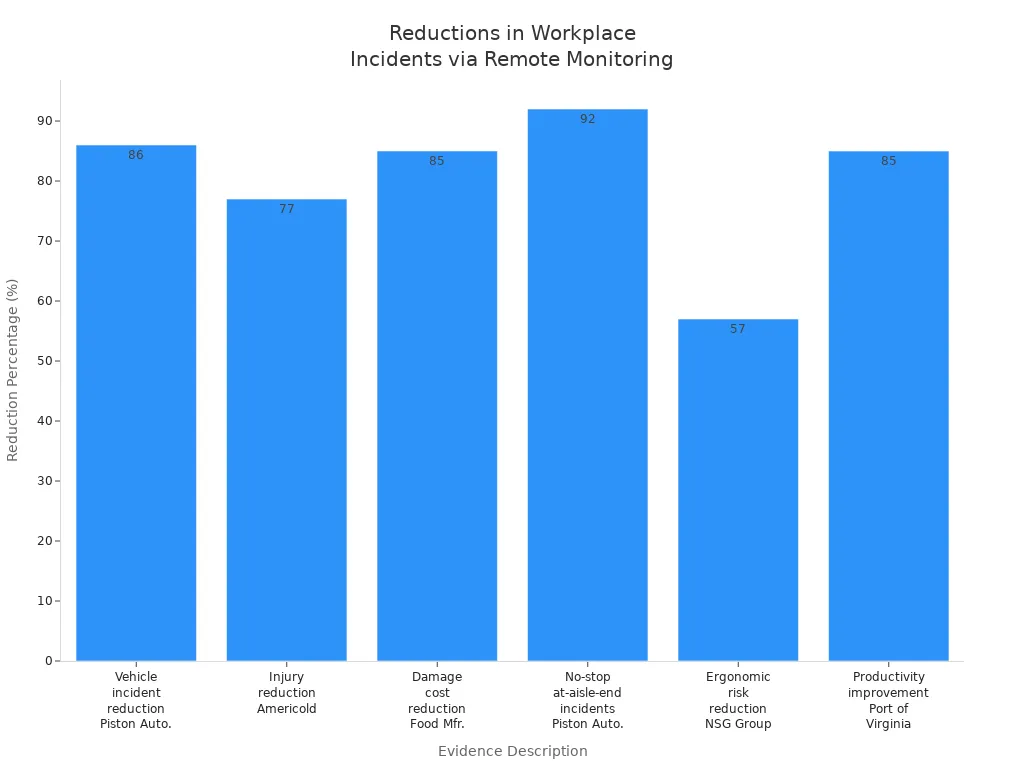
You can see these changes in real numbers. Many companies have fewer accidents and do more work after using remote monitoring.
Reduced Downtime and Costs
Remote monitoring helps you stop problems before they get big. You can see small changes in how the crane works. Early warnings let you fix things during breaks, not emergencies. This saves money and keeps your crane working longer.
-
Predictive maintenance finds problems early.
-
Real-time tracking shows small changes.
-
Early warnings help you fix things on time.
-
You plan repairs when the crane is not busy.
Companies using CEGC cranes save money over time. You use your tools better and pay less for repairs. Watching your crane’s condition keeps it working and stops big problems.
Customization and Integration
You can change CEGC’s remote monitoring to fit your port. Pick the sensors, safety zones, and how much is automatic. The system works with your port’s software. You see everything in real time and can control things from far away. Electronic work orders make jobs faster. Step-by-step help lowers mistakes.
|
Feature |
Description |
|---|---|
|
Real-time visibility |
Watch all devices and see how they work. |
|
Remote management |
Control your equipment from anywhere. |
|
Electronic work orders |
Send jobs right to the system for quick action. |
|
Guided administration |
Get step-by-step help to make changes and avoid mistakes. |
CEGC gives you standard or custom options for your cranes. You get what you need to do your job well and stay ahead.
When you use remote monitoring for your container gantry crane, you do not have to guess what is happening. This makes your work safer and helps you save money. You also get things done faster. New technology trends are IoT integration, automated controls, and cranes that work together at the same time. Some ports have problems like old equipment, worries about jobs, and rules or money issues. CEGC can help you solve these problems and keep moving forward.
FAQ
How does remote monitoring help reduce blind checks?
You get real-time data and alerts. This helps you know what the crane is doing. You can see how the load moves. You do not have to guess or check by hand.
Can you customize CEGC’s remote monitoring for your port?
Yes, you can. You pick which sensors and safety features you want. You also choose how much is automatic. CEGC helps you set up the system for your port.
Tip: Ask CEGC if it can work with your software. This makes everything run smoothly.
What equipment works with CEGC’s remote monitoring?
You can use it with container gantry cranes. It also works with portal cranes and container handlers. The system fits many kinds of port machines.


