
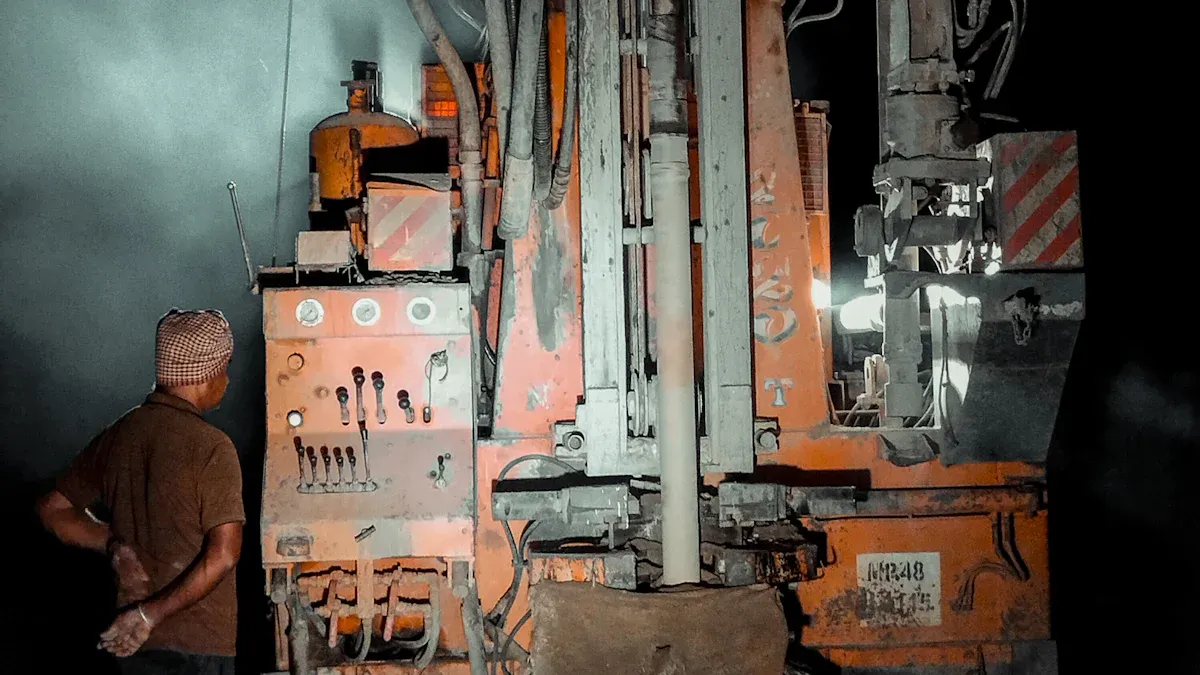
Directional Boring Machine Conquers Hard Granite
Directional boring machines can handle tough granite. They use special ways to drill. They also use strong tools and advanced equipment. Power, accuracy, and material science help these machines. They can dig through hard granite. This is very important for today's building projects. Directional drilling machines that don't dig trenches, like CEGC's, are key. The market for horizontal directional drilling is growing a lot. This is true even with difficult ground.
Key Takeaways
-
Directional boring machines drill through hard granite. They use strong power. Special tools break the rock.
-
PDC bits and strong reamers are special tools. These tools help the machines. They cut and crush hard rock. Granite is an example. They do this very well.
-
Directional boring for granite helps the environment. It does not harm the ground as much. It saves money too. This is better than old digging.
Hard Granite Drilling Is Hard:
Granite Is Very Hard:
Granite makes digging underground hard. It is a very dense and hard rock. It has minerals like quartz and feldspar. These minerals are harder than 5.5 on the Mohs scale. They wear down drilling tools fast. Rock hardness also relates to its strength. This includes how much it can be squeezed or pulled. Granite wears down drilling tools quickly. It can handle over 10,000 psi of pressure. This makes drilling through it slow and hard.
Old Ways Don't Work Well:
Old drilling ways struggle with granite. Regular grinding tools fail deep underground. Pressure from surrounding rock makes granite harder to break. It also creates more rock dust. This pressure makes breaking rock harder. It uses about 17% more energy. Pressure causes tiny cracks. But it stops big cracks from growing. This makes the rock harder to break. More pressure and deeper cuts mean more force is needed. At 9 MPa of water pressure, cutting forces go up by 50%. This makes work slow and expensive. A lot of impact energy goes to the drill rod. This breaks fragile carbide parts. This means changing tools often and stopping work.
We Need Special Directional Drilling:
We need more new buildings. This is true even where the ground is hard. This includes places needing rock drilling. Old ways are not good or cheap for these jobs. Horizontal directional drilling (HDD) is a better way. HDD jobs have money problems. These include going over budget and high repair costs. Delays from bad ground or broken tools cost more. It is hard to know what is underground. Hard rock like granite is a special problem for drilling. Special HDD tools are needed. For example, a water project in Palomar, California, used special tools. They drilled through granite. This shows we need special ways. This also applies to drilling in mixed hard ground.
Advanced Technologies for Granite Penetration:
A directional boring machine conquers hard granite. It uses special technical solutions. These make drilling possible in tough ground. They help machines work better. They also help them last longer.
High-Performance Directional Boring Machines:
Drilling in granite needs strong machines. These machines must have high torque. They also need high thrust. Torque is a twisting force. Thrust is a pushing force. Robust construction means a strong build. Worn disc cutters affect drilling. They change thrust force. They also change digging speed. Replacing worn parts makes drilling faster. It also needs less force. This can increase digging by 35%. Worn parts make machines less efficient.
Some machines are experts for hard rock. Gripper TBMs work well. They work in granite, gneiss, or basalt. These machines come in many sizes. Diameters range from 2 to 12.5 meters. Cutting head thrust and torque are key. They help choose the power system. They help the machine adapt. Forces on the cutting head are complex. They include ground stress and water. Engineers use math. They figure out needed thrust and torque. Their models are very accurate. They are 95.0% accurate for thrust. They are 92.7% accurate for torque. More thrust breaks rock. This is true if the cutting head is pointed. CEGC offers standard machines. They also allow custom settings. This matches the machine to the job.
Specialized Tooling for Abrasive Rock:
Special tools are needed. This is for drilling through rock like granite. These tools include advanced drill bits. They also include reamers. They crush and cut rock. Button bits use tungsten carbide. These bits are very durable. They resist wear better. They also drill faster. This finishes projects quickly.
PDC bits are better for hard rock. PDC means Polycrystalline Diamond Compact. These bits resist wear well. They also drill very fast. PDC cutters are tiny diamonds. Diamond is the hardest material. These cutters handle high heat. This stops them from breaking. PDC bits drill faster. They have good water flow. They also have smart cutter placement. This means faster drilling. It uses less energy. Synthetic diamond cutters are very hard. They resist heat well. This stops wear or breakage. PDC bits cut rock by shearing. This is like slicing. It uses less energy. It makes smaller rock chips. This means less machine weight is needed. It can also spin faster. This does not hurt the bit.
PDC non-coring bits use tungsten carbide. They also use alloy steel. Tungsten carbide is very hard. It resists wear. This makes the drill bit last. High-quality PDC cutters attach. They attach to a tungsten carbide body. This makes the bit reliable. It makes drilling efficient. This is true for hard rocks.
Reamers enlarge holes. PDC reamers work well. They work in softer to medium-hard rocks. They drill faster. They vibrate less. They last longer in good conditions. But they are not good in very hard rock. Tricone reamers are better. They are for hard, abrasive rocks. They have rotating cones. These cones have teeth. These teeth crush the rock. Tricone reamers are durable. They work in different rock types. But they are slower. They vibrate more. They need more upkeep. For granite, durable reamers are needed. Carbide materials are good. They handle wear and tear. CEGC offers tools. They work with many reamers. They also have a durability package. This lowers part costs. It lowers tool wear.
Precision Guidance and Stability Systems:
These systems stop the bore. They stop it from going off course. They prevent crossing failures. Ground-penetrating radar helps. It shows the drill bit. It shows it in real-time. This controls drilling direction. New rotary steering systems guide the drill pipe. They predict its movement. MEMS-based inclinometers measure ground. They send data wirelessly. Closed-loop guidance systems help bore quality. They work well in complex ground. Adjustable drill rod stabilizers improve drilling. They reduce twisting. They reduce resistance. They can be adjusted remotely. Rotary closed-loop drilling controls direction well. They improve drilling quality. CEGC uses load-matched control. This coordinates pushing and pulling. It coordinates rotating and feeding. Their machines have a strong frame. This reduces vibration. They are ready for tracking systems. This ensures accuracy.
Anti-Stall Powertrain and Overload Protection:
Sometimes, the drill pipe gets stuck. This costs money. It costs time. Torque spikes damage rods. They damage tools. Hard ground slows work. CEGC machines have high torque. They spin at many speeds. They use hydraulic load sensing. This manages pressure. They have controlled ramp-up. They have controlled ramp-down. This reduces shock. It reduces shock to rods and tools. This prevents stuck pipes. It prevents torque spikes. Their power and torque match top machines. They offer a "rock package." This has better cooling. It has better filtration. It has heavy-duty parts.
Optimized Fluid Management for Hard Rock:
Special drilling fluids are important. They cool the drill bit. They lubricate it. They remove rock cuttings. They keep the bore stable. Specialized fluid systems help. They prevent frac-out. Frac-out is when fluid escapes. They keep the bore stable. They watch downhole pressure. They use the right fluid. They plan for escaped fluid. This reduces environmental risks. Drilling fluid lubricates the drill. It stops the hole from collapsing.
Different fluids are for different ground. For shales and clays, chemicals stop swelling. For sands and gravels, fluids create a mesh. This binds loose particles. It stops the hole from collapsing. For glacial till, fluids suspend cuttings. This stops them from packing. CEGC helps with mud integration. They offer fluid solutions. This avoids frac-out risks. It prevents poor fluid performance.
Methodologies for Successful Hard Rock HDD:
This part tells how to drill sideways in granite. It covers planning. It covers doing the work. It covers handling problems.
Strategic Pilot Bore and Reaming Techniques:
First, drill a straight pilot bore. This bore makes the path. It goes from start to end. Workers must plan ahead. They guide the bore path. Tools must be special for rock. This includes drill pipe. It includes bits. It includes housings. It includes reamers. Drilling fluid needs to be thick. It needs to be strong. This moves rock pieces away. It cools the drill bit. It makes it smooth.
Hard rock, like granite, is very strong.
|
Rock Category |
PSI Threshold (MPa) |
Examples |
|---|---|---|
|
Soft Rock |
Below 4,500 psi (31 MPa) |
Sandstone, Shale, Soft Limestone, Caliche, some Coral |
|
Medium Rock |
5,000 psi to 9,500 psi (34.5 MPa to 65.5 MPa) |
some Limestone, Shale, Coral |
|
Hard Rock |
Above 9,500 psi (65.5 MPa) |
Hard Limestone, Granite, Chert |
After the pilot bore, make the hole bigger. This is multi-stage reaming. It uses many reamers. Each reamer is larger. This makes the hole much wider. Steerable reamers can make complex paths. Different reamer heads can be used. This fits different rock. Mud motors can power the reamer. They use fluid pressure. This makes mechanical energy. Steady fluid flow is key. It removes rock pieces. It cools tools. It stops clogs. Reaming works better with soft rock. It needs strong rigs. It needs the right reamer. Crew skill is also important.
A study showed multi-stage reaming works. It works well in hard rock. Researchers made a 110 mm hole bigger. They made it 284% larger. They met all goals. Drilling force stayed steady. Speed stayed steady. Torque slowly went up. The hole wall stayed strong. This shows the method works. It works in tough hard rock.
Here are the steps for multi-stage reaming:
-
Drill 6.5" Pilot Hole: Use a rotary PDC or TCI bit. Use steering. This makes the bore accurate. It affects later steps.
-
Stage 1 Ream (6.5" → 12-14"): Use a small fly cutter. Or use a compact PDC reamer. Watch torque closely. Make sure fluid flows well.
-
Stage 2 Ream (12-14" → 20-24"): Use a mid-size PDC reamer. It has 4-6 blades. Add stabilizers. Clean the hole often.
-
Stage 3 Ream (20-24" → 30-32"): Use a strong reamer. It has large cutters. It has high flow. Watch pullback. Add more mud stuff. This helps suspend things.
-
Final Ream (30-32" → 42"): Use a 42" PDC reamer. Use maximum stabilization. Adjust rig pullback speed. This keeps the bore wall strong.
-
Final Bore Cleaning & Survey: Swab or make light passes. Use a camera. Or use a caliper log. This checks quality.
PDC reamers work well. They have balanced cutters. They have good flow paths. They use tough materials. Stabilizers go above the reamer. They go below it. This keeps it centered. It keeps it accurate. Drill pipes must handle bending. They must handle pulling. Good mud care is vital. It carries big rock pieces. It cools the reamer. Steering must be accurate. This starts from the pilot stage. Cleaning passes clear debris. This is after each reaming stage. They keep the path good. Stabilizers are very important. This is for big projects. They keep things straight. They lessen shaking. They spread forces. They stop tools from moving off. They make tools last longer. This is true in mixed ground. It is true in hard rock.
Real-time Monitoring and Risk Mitigation:
Real-time data is key. It helps drill through rock. It helps steer the drill. It finds problems. It shows ground conditions. MWD tech measures things. It measures temperature. It measures pressure. It measures shaking. It sends data right away. Engineers use this info. They make choices. They steer the drill bit well. LWD tech gives details. It tells about rock formations. It measures rock properties. This includes how porous rock is. It includes density. It includes resistance. This makes drilling better. It finds underground resources. Mudlogging gives live data. It shows drilling performance. This includes depth. It includes how fast it drills. It includes fluid properties. It also checks geology. This includes rock type. It includes minerals. It includes features.
Bad ground or broken tools can happen. Good geological prediction helps. It uses deep drilling. It uses geophysical methods. These include audio magnetotelluric. They include TSP and HSP. A risk system finds water in granite.
|
Spatial Risk Classification |
Risk Assessment Level |
Water Gushing Classification |
Spatial Advanced Geological Prediction Project |
|---|---|---|---|
|
Very High Risk |
I |
>10000m3/d, large water gushing |
Short-Distance: Driving Face Sketch, Deepened Blast Holes (5m, 5 holes); Middle-Distance: Ultra-deep directional drilling (60-120m, 1-3 holes) with TSP; Long-Distance: TSP spatial prediction model (≤100m) |
Ground reinforcement makes it stable. This includes deep hole grouting. It includes pipe sheds. It includes small conduit grouting. Controlled blasting helps in granite. This is in changed areas. Drainage methods remove water. They use deep horizontal holes. Surface treatment stops water. It stops surface water. Drainage holes behind walls also help.
Project Applications and Environmental Benefits:
HDD has many uses. It installs pipes. It installs utilities. This is in granite areas. A gas company put in a pipeline. It was 24 inches wide. They drilled through 1,600 feet of granite. The project used ScarGuard. This protected the pipe coating. It stopped damage during pullback. A test showed ScarGuard worked. It protected the coating. This let the company finish. It avoided costly re-pulls. It kept the coating strong. This was in granite. This shows HDD's value. It is for important things like pipelines.
HDD helps the environment. It messes up the surface less. This is compared to digging trenches. This means less harm to land. It means less harm to nature. It avoids open cuts. This is across roads. It is across rivers. It is in sensitive areas. This saves nature. It also lessens traffic problems. It lessens noise. HDD is very precise. This makes its footprint small. This makes it a good way. It is good for cities. It is good for sensitive areas. It saves money. Projects finish faster. Repair costs are lower. This makes HDD smart. It is good for new buildings. Many projects use this. This includes water pipes. It includes sewer pipes. It includes communication lines. Each new pipeline shows its worth.
Powerful horizontal directional drilling machines make boring through hard granite efficient. Innovative tooling helps. Precise methods also help. This technology changes how we build things. It helps in tough areas. Advanced HDD technology pushes limits. CEGC offers this technology. A directional boring machine conquers hard granite. It makes sure projects succeed.
FAQ
How do directional boring machines drill through granite?
They use strong twisting force. They also use strong pushing force. Tough machines work with special bits. This helps them break hard rock.
What specialized tools penetrate hard rock?
Machines use advanced drill bits. These include PDC and carbide inserts. Reamers also crush and cut granite.
Why choose HDD over traditional methods for granite?
HDD disturbs the surface less. It harms the environment less. It also saves money. This is better than digging trenches in tough ground.


