
You make your project safer when you check that driven piles give even pressure. Spreading the load evenly stops the ground from sinking in some spots and keeps things from breaking. Driven Piles Uniform Pressure Guarantees Safety because you reach the needed strength and use safety rules. CEGC suggests these steps for strong and safe foundations.
Key Takeaways
-
Make sure driven piles spread pressure the same everywhere. This stops uneven settling and keeps the building safe. Check the lowest strength for each pile type. This helps avoid weak spots and expensive fixes later. Use safety factors when you design piles. This gives more strength and protects against sudden changes in weight or ground conditions.
Driven Piles Uniform Pressure Guarantees Safety
Uniform Pressure and Load Distribution
You keep your building safe when driven piles push down evenly. When pressure is the same, the weight spreads out on all piles. This helps the foundation stay steady and stops some parts from sinking more than others. Uniform pressure makes it easier to guess how much the building will settle and lowers risks:
-
When pressure is even, you can predict how much the ground will settle.
-
This helps stop uneven settling, which can hurt the building.
-
Uneven settling depends on things like soil type, how stiff the building is, and how the weight is spread.
If you use Driven Piles Uniform Pressure Guarantees Safety, you stop uneven weight and keep your project safe. You also make sure the ground holds up the building like it should.
Minimum Capacity and Reliability
You need to check that every pile has enough strength for your soil. This makes the foundation strong and stops weak spots. The table shows the lowest strength each pile type should have:
|
Pile Type |
Minimum Nominal Axial Compressive Resistance (kips) |
|---|---|
|
CIP 14” |
210 |
|
CIP 16” |
240 |
|
CIP 20” |
300 |
|
CIP 24” |
340 |
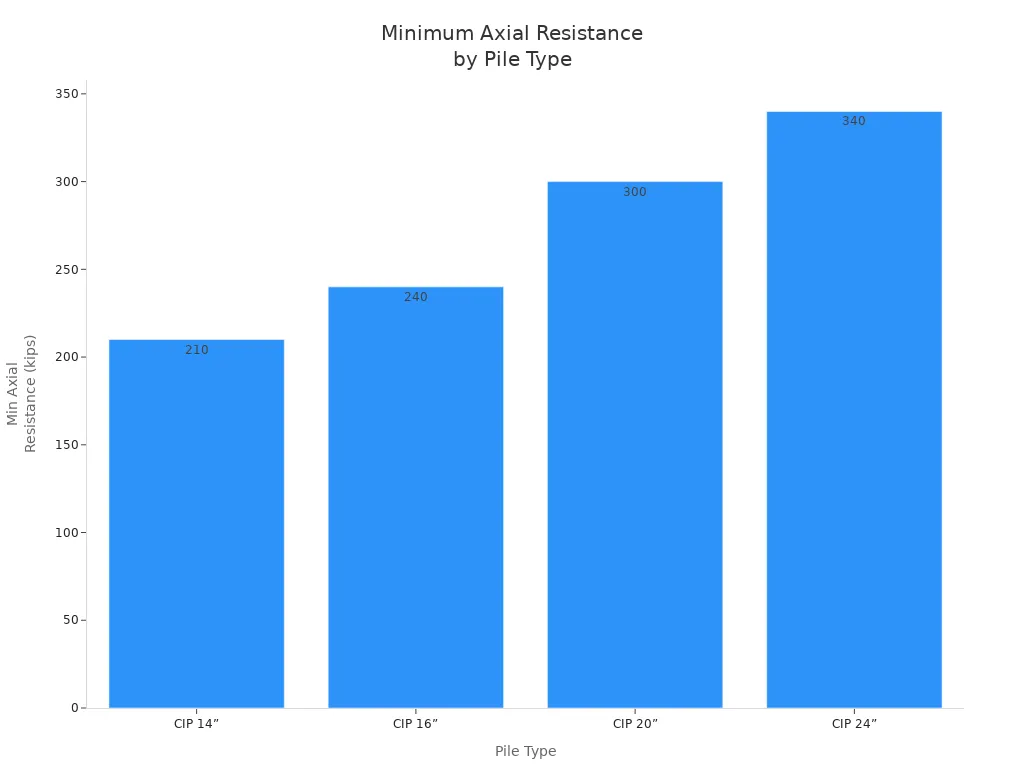
When you pick piles with the right strength, your project is safer. You do not have to pay for big repairs and you follow safety rules. Driven Piles Uniform Pressure Guarantees Safety because you use the right standards and stop weak foundations.
Having the right pile strength keeps your foundation safe. If you guess wrong, you could have problems and repairs that cost a lot. You must also follow building codes and project rules. This makes sure your foundation can hold normal and heavy loads. You need to find and measure all the weights that might be on the building at the same time. This helps your building work well.
Safety Factors in Pile Design
You add safety factors to pile design to protect against things you do not know about the ground or weight. Safety factors give extra strength if the ground or weight changes. The table shows common safety factors for pile design:
|
Load Type |
Factor of Safety Range |
|---|---|
|
Axial compression and uplift |
2.0 to 2.5 |
|
Lateral loads |
Evaluated using deflection-based criteria and structural checks |
|
Group pile systems |
Additional conservatism for load redistribution |
You use these safety factors so your foundation stays strong if things change. Driven Piles Uniform Pressure Guarantees Safety because you add extra safety and check everything carefully. You keep your project safe and strong by using the right safety factors.
Risks of Non-Uniform Pressure
Differential Settlement and Structural Failure
Big problems happen if piles do not share pressure. Some piles sink more than others. This is called differential settlement. It can hurt your building. You might see cracks in walls or floors. These cracks can get worse over time. The whole building could be at risk. The table shows risks and what they do:
|
Risk Description |
Impact on Pile Foundations |
|---|---|
|
Soil squeezing effect during pile driving |
Makes the ground rise, piles move up, and can break them. |
|
Reconsolidation settlement due to pore water pressure |
Causes less friction, lowers strength, and makes the foundation settle more. |
|
Low horizontal seismic resistance of the pile |
Makes the piles weaker during earthquakes. |
|
Soil uplift at the bottom of the foundation pit |
Can make piles float, bend, and break in groups. |
You can stop these risks by making sure piles share the load. Driven Piles Uniform Pressure Guarantees Safety by stopping weak spots early.
Soil Shear and Pile Displacement
Soil shear strength is important for pile movement. Weak soil lets piles move sideways or sink too much. The link between soil strength and pile movement is not always clear. Wet soil can make piles move more. The table explains how soil shear affects pile movement:
|
Aspect |
Description |
|---|---|
|
Shear Strength Influence |
Soil strength changes how piles resist sideways movement and settle under uneven loads. |
|
Non-linear Relationship |
The link between stress and movement changes when soil gets wet. |
|
Shear Behavior |
The curve shows how piles and soil push against each other. |
If piles move, your building can lean or become unsafe. You must check soil strength to keep your foundation safe.
Cracking and Collapse
Cracks are warning signs. Look for cracks near windows and doors. Cracks bigger than 1/4 inch need fast repairs. Sideways cracks are a big problem. Stair-step cracks in brick or block walls mean trouble. If you ignore cracks, your building could fall down. Watch for these signs to stop big problems.
Tip: Fixing small cracks early helps you avoid expensive repairs later.
Construction Control and Quality Assurance
Achieving Uniform Pressure in Practice
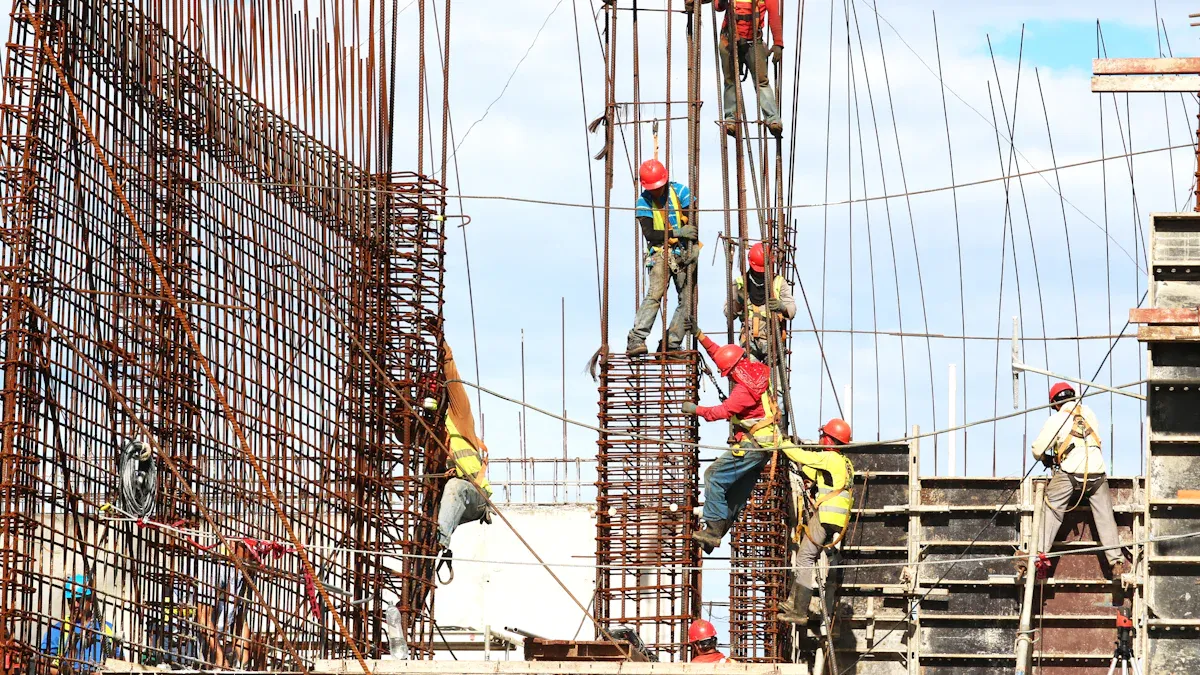
You must follow the right steps when you put in piles. Use field checks to see the pressure as you work. For example, real-time torque monitoring helps with screw piles. This shows if each pile can hold enough weight. Watch how soil pressure changes as you go deeper. These checks help you find problems early and keep the foundation safe.
Tip: Always check pressure at many depths, not just the top.
Quality Control Procedures
You need strong quality control to make sure piles work well. Quality assurance means you check piles before and after cutting. This helps you find problems that could make piles weak. You can use special tools and tests to check pile strength and movement. Here is a table of common tests and what they do:
|
Testing Method |
Purpose |
Advantages |
|---|---|---|
|
Pile Integrity Testers |
Check concrete quality |
Make sure piles are strong and solid |
|
Strain Gauges |
Measure how much piles bend or stretch |
Find problems early |
|
Load Cells |
Test how much weight piles can hold |
Prove piles meet safety needs |
|
Settlement Gauges |
Track how much piles move down |
Spot defects before they get worse |
|
Pile Load Testing |
Test piles under real loads |
Make sure piles follow rules and work as planned |
Quality control helps keep your project safe and strong.
Real-World Applications
You can see why even pressure is important in real jobs. Case studies show that even pressure makes buildings safer. The Fuller Pile® System uses small piles in a grid. This spreads the weight and lets you use shallow foundations. You do not need deep piles, so you save money and keep the building safe.
Note: Good quality control and even pressure have stopped many foundation failures in real projects.
You make building safer when you use even pressure with driven piles. Minimum capacity, safety factors, and quality control all help keep foundations strong:
|
Aspect |
Explanation |
|---|---|
|
Minimum Capacity |
Checks pile strength when put in and lowers future problems. |
|
Safety Factors |
Gives extra safety if the weight changes. |
|
Quality Control |
Makes sure piles are put in right and stops problems. |
You should always use good steps and trust skilled engineers. New studies help people build safer foundations later on.
FAQ
What happens if you do not use uniform pressure in driven piles?
You risk uneven settling. This can cause cracks or even make your building unsafe.
How do you check if piles have enough strength?
You use tests like pile load testing. These tests show if each pile can hold the needed weight.
Why do you need safety factors in pile design?
-
Safety factors protect your building.
-
They add extra strength in case the ground or loads change.


