
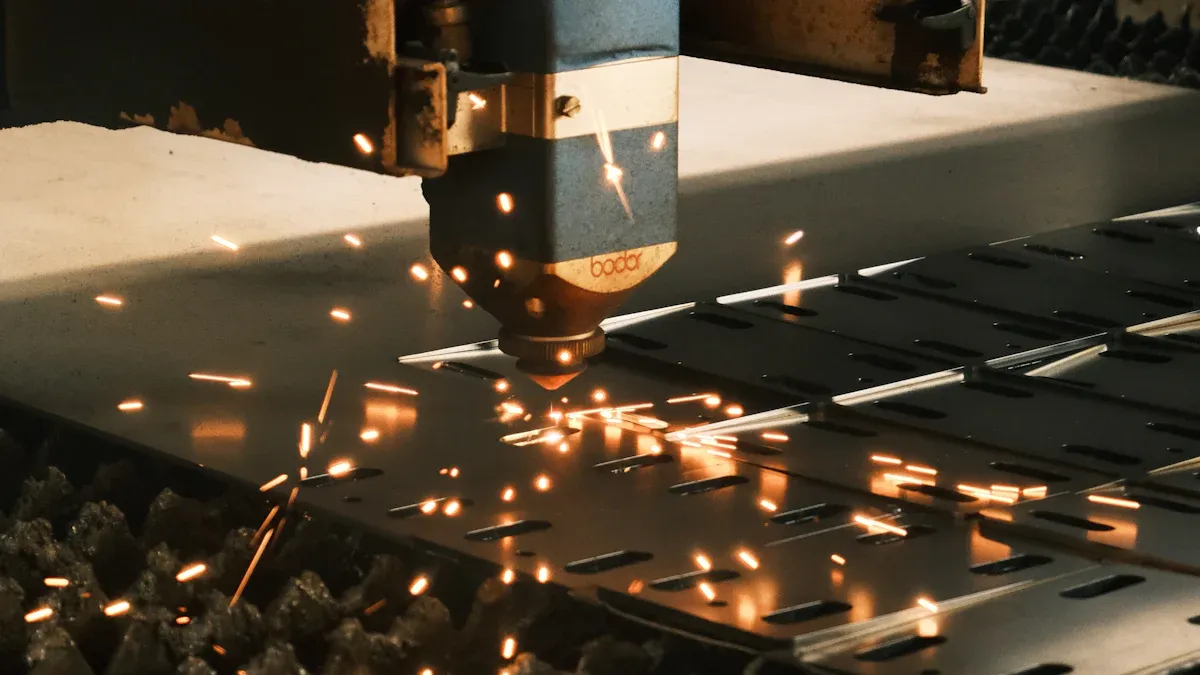
Drilling underground presents significant challenges, and horizontal directional drilling (HDD) operations inherently carry numerous risks. However, the integration of laser guides is revolutionizing this landscape. These systems offer unparalleled precision, enabling operators to execute bores with exceptional accuracy and more effectively circumvent obstacles. This advancement is crucial for modern HDD work, especially with CEGC machines. The horizontal directional drilling machine market, valued at $8.18 billion in 2024, is projected to reach $16.08 billion by 2030, indicating substantial growth. Therefore, innovative technologies like the HDD Drilling Machine Laser Guide are increasingly vital for the industry.

Key Takeaways
-
Laser guides help drillers miss things underground. They use a laser light. It keeps the drill on a very straight line.
-
This way of doing things makes drilling safer. It also makes it faster. Projects finish correctly. It saves money too.
-
Laser systems give information right away. This helps workers guide the drill well. They can avoid errors.
Challenges of Underground Obstacles
Risks of Obstacle Encounters
Drilling underground hits many things. These include power lines. Water pipes are also there. Telecom lines are common. Workers must not break them. Bad soil is another problem. This means coarse gravel. Cobbles and boulders are tough. Rocks underground are hard. Some rocks are too strong. Some rocks are bad quality. Some rocks are broken. Hitting these things is risky. Breaking power lines stops service. This causes project delays. It also costs more money. Bad ground causes delays. This makes projects cost more. Broken pipes are dangerous. They can harm the environment.
Limitations of Traditional Methods
Old ways of guiding drills are not good. They fail in tough places. Drills can go off course. They can also fail to cross. Walkover systems have limits. They only work to 30 feet deep. They cannot measure direction. They are not exact past 20 feet. They do not give good data. They do not work in mountains. They also fail in water. Magnetic tools have problems. Magnets can mess up readings. Old ways need much work. They cost a lot of money. Wires connect each pipe. Wires break easily. Old HDD guidance is not exact. It is off by +/- 100mm. Laser guidance is better. It is off by +/- 10mm over 120m.
|
Method |
Accuracy Range |
|---|---|
|
Traditional HDD Guidance |
+/- 100mm |
|
Laser Guidance (Microtunneling) |
+/- 10mm over 120m |
How Laser Guidance Systems Function
Laser guidance systems make horizontal directional drilling much more exact. They give a clear, still line underground. This helps workers steer the drill very well. It keeps the drill on its planned path. The system uses a laser beam. This beam acts like a guide wire. Sensors on the drill head find any movement. This helps the HDD Drilling Machine Laser Guide Beats Obstacles. It gives quick information.
Laser Precision Principles
A laser guidance system makes a very exact line. A laser transmitter sends out a bright beam. This beam goes along the path. The drill head has a special sensor. This sensor catches the laser light. It finds its spot. If the drill moves off center, the sensor sees it. It measures side-to-side and up-and-down changes. This information goes to the top. Workers get this news fast. They know where the drill is. This helps them steer it right.
System Components
Many parts work in a laser guidance system. First, a laser transmitter is at the start. It sends the laser beam. Second, a sensor is on the drill head. It catches the laser light. It finds its spot. Third, a data processing unit gets info. It looks at the changes. It turns numbers into clear facts. Last, an operator display shows this info. This is a screen in the drill's cab. It shows pictures and numbers. Workers see the drill's spot and way. This setup is a "Precision Guidance & Stability System." It helps control drilling well.
Real-time Feedback and Control
The laser guidance system works all the time. The drill head moves ahead. The sensor always reads its spot. It checks against the laser beam. The data processing unit checks these readings fast. It finds any changes from the path. This info then shows on the screen. Workers see these changes right away. They can then change the drill's steer. This might be thrust or mud. The system gives quick news. This helps workers fix the drill. They fix it before big mistakes. This control keeps the drill straight. It helps the HDD Drilling Machine Laser Guide Beats Obstacles. It stops costly re-drills. This checking and fixing is key. It helps in tough underground spots.
Laser Guides Help Avoid Problems
Laser guides help drillers. They avoid problems. They do this before they start. These systems use surveys. They also use 3D maps. This makes a clear path. It helps avoid problems. This planning stops issues.
Planning Before Drilling
Teams do surveys. This is before drilling. They map underground pipes. They map rock. They make a 3D model. Laser guides use this. Engineers plan the path. It avoids known problems. The path is safe. It is also fast. This means fewer surprises. The project is smoother.
Changing Direction Easily
Laser guides are exact. Operators can make changes. They can steer around things. If a rock shows up, they see it. They can change direction fast. This steering is key. A machine can turn its shovel. It can turn right or left. It can turn up to +/-11°. This helps in tight spots. It stops crashes. It keeps the project on track. This helps the HDD Drilling Machine Laser Guide Beats Obstacles.
Staying at the Right Spot
The system keeps the drill on path. It keeps it at the right depth. It keeps it straight. This avoids problems. It avoids things above and below. Laser guides are very exact. A laser system can measure. It measures side-to-side. It measures up-and-down. The error is less than 5 mm. The drill stays on its line.
A laser is set. It is at the right level. A camera lines up. It lines with a target. This target is on the drill head. The laser dot stays in the middle. It stays in the crosshairs. This means the drill is on track. Operators watch images. They watch on a screen. They make changes. This keeps it exact. It stops the drill from going off. Pilot tube boring also uses lasers. It uses laser exactness. It uses pushing force. This keeps it very close. It drills through different ground. This includes clay. It includes sand. It includes fill. The drill stays on target. This is true even in tough spots. This uses a small tube. It steers this tube. It follows a line. It follows a level. It uses a tool. This tool sets the path. This is before a bigger pipe is pushed. This makes sure it is exact. It is for pipes like sewers. It is for utility sleeves. It stops the drill from going off. It stops crossing failures.
Benefits of Laser Guidance in HDD
Enhanced Safety and Risk Reduction
Laser guides make drilling safer. They help workers miss pipes. This stops damage. It keeps people safe. Good steering means fewer crashes. This makes work safer.
Increased Efficiency and Cost Savings
These systems make work faster. They stop delays. Workers finish jobs quicker. Fewer re-drills happen. This saves time and money. Less waste saves money too.
Improved Accuracy and Project Success
Lasers help drills hit targets. This is key in tough spots. Old ways miss targets a lot. Laser systems are very exact. The drill lands very close. This helps fix problems.
Environmental Protection
Lasers help the Earth. They dig less ground. This means less mess. Good drilling stops spills. It keeps nature safe. It also saves cleanup money.
Laser guides change drilling. They help avoid underground things. This tech is in CEGC machines. It makes drilling very exact. It makes work safer. It makes work faster. It helps projects succeed. The HDD Drilling Machine Laser Guide Beats Obstacles. It is a key tool for drilling. It helps build things underground. It makes them safer. It makes them better. It saves money too.
FAQ
What is a laser guidance system in HDD?
A laser guidance system uses a laser beam. It makes a straight line underground. Sensors on the drill head find this line. This helps workers steer the drill well.
How does laser guidance prevent obstacles?
Laser guidance works with maps. These maps are made before drilling. It shows workers the path. They can steer the drill right away. This helps avoid things in the way.
What are the main benefits of using laser guidance?
Laser guidance makes drilling safer. It lowers dangers. It makes work faster. It also makes projects more exact. This tech helps the Earth too.


