
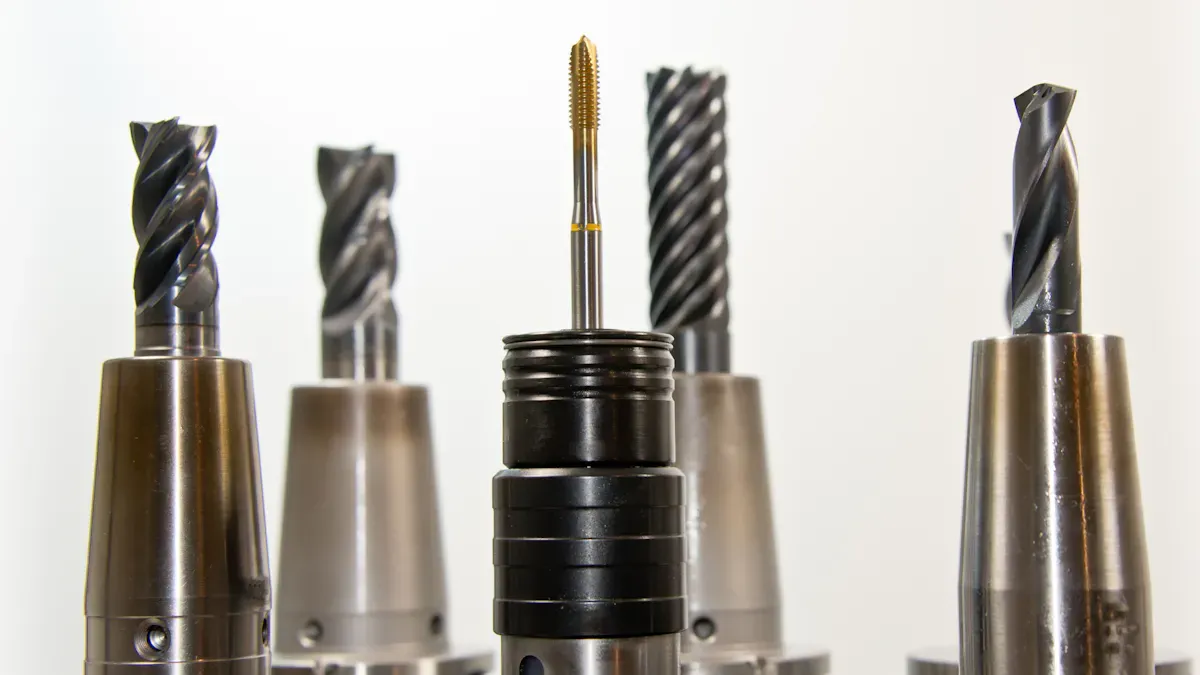
You want a hole drilling tool that works everywhere. Drill bits are the most popular, with 34% of the market. They work well in all types of rocks. CEGC gives you tools that meet market standards and special drilling equipment. These tools help you work faster. They fix problems like not lining up, getting worn out, and shaking. Technical solutions make sure the Hole Drilling Tool Handles All Formations.
Key Takeaways
-
Pick the best hole drilling tool by knowing your goal and the rock formation. This helps you work faster and better on your drilling jobs.
-
Use tough materials like high-strength alloy steel and tungsten carbide inserts for longer use. These materials make your tools last longer and work well in hard places.
-
Check your drilling speed and bit wear often. Change your settings to fit the formation. This keeps your work going well and cuts down on waiting time.
Choosing the Proper Tool for All Formations
Key Factors in Selection
There are a few important steps to pick the right tool for making holes in any formation. Every drilling job starts with a clear goal. You might want to explore, blast, test, or get samples. It is important to know how hard and what kind of rock you will drill. Water in the ground and changes with depth also matter. You need to decide the hole size, how deep it goes, and how straight it should be. Your drilling equipment must fit the torque, speed, and feed needed for the work. You have to choose the best bit type and design for your job. The tool must work with rods, barrels, and adapters. You should check how fast you drill, how long the tool lasts, and how much each meter costs to make your work better.
Here is an easy checklist for picking a holemaking tool:
-
Decide what you want to do with drilling.
-
Learn about the formation and how hard it is.
-
Set the hole size and how deep you need to go.
-
Check what your rig can do.
-
Pick the right bit type and design.
-
Make sure the tool fits with your other parts.
-
Watch and improve how well it works.
Tip: CEGC can make special drilling tools for you. You can match your tool to the ground and your project. This helps you avoid problems like crooked holes, slow work, and tool damage.
Material, Design, and Durability
The material and design of your holemaking tool change how well it works in hard and other formations. You want tools made from strong alloy steel. These tools can handle tough jobs and last longer. Tungsten carbide inserts make the tool harder and help it not wear out fast. Multi-stage heat treatment makes the tool strong and tough. This process helps stop cracks and makes the tool last longer.
|
Material Type |
Properties |
Impact on Durability and Suitability |
|---|---|---|
|
High-Strength Alloy Steel |
Handles extreme forces |
Essential for tough formations |
|
Tungsten Carbide Inserts |
Very hard and wear-resistant |
Breaks hard rock and keeps performance high |
|
Multi-Stage Heat Treatment |
Balances hardness and toughness |
Extends tool life in many conditions |
Design is also important for making holes. The face shape and inserts of DTH bits help them work better. You get better results and longer tool life if you pick the right bit. Good materials mean you do not have to stop and change tools often. CEGC’s tools use strong designs and special tooth shapes. These features help the tool last longer in hard rocks. Heat treatment can make the tool last up to 30 percent longer.
Note: You can pick modular clamping and tooling interfaces from CEGC. This lets you change your tool for different piles and ground types.
Performance Across Formations
Holemaking tools need to work well in many kinds of formations. You check how well they work by looking at cost per meter, how fast you drill, and how much you use your rig. Cost per meter tells you how much you spend for each meter you drill. Penetration rate shows how fast you can drill. Rig utilization tells you how much time your rig is drilling.
|
Metric |
Formula |
Definition |
|---|---|---|
|
(Total Drilling Costs) / (Total Meters Drilled) |
Average cost for every meter drilled, affected by geology and efficiency. |
|
|
Penetration Rate (PR) |
(Total Meters Drilled) / (Total Drilling Hours) |
Speed of drilling, shows challenges in hard formations. |
|
Rig Utilisation (RUR) |
(Actual Drilling Time) / (Planned Drilling Time) |
Percentage of time rig is drilling, impacts project timelines. |
Holemaking tools can be used with many drilling methods. Vertical drilling is good for formations under the site. Rotary drilling is common and can be changed for different rocks by using different bits and fluids. Directional drilling helps reach targets in shale and tight rocks. Dual-wall reverse-circulation drilling is faster and keeps samples clean. Electro-drilling helps protect bits from wearing out in hard rocks.
Modern holemaking tools help solve problems with drilling. You can drill faster and finish projects sooner. New tools make work easier and safer. They also help keep buildings and structures safe. You can use one tool for many types of ground. CEGC’s drilling tools work for both general and special jobs. You can change your tool for hard or soft layers.
Tip: You should watch how fast you drill and how much the tool wears out. Change your drilling settings to match the ground. This helps your tool work its best.
Comparing Holemaking Tool Types
PDC Bits, TCI Tricone, and Carbide Drills
You can pick from many holemaking tools for your project. The most used types are PDC bits, TCI tricone bits, and carbide drills. Each bit works best in certain rocks. Look at the table below to see how they compare:
|
Tool Type |
Formation Suitability |
Recommended PSI |
|---|---|---|
|
PDC Bits |
Soft to Hard Formations |
2,000 to 30,000 |
|
Three-blade PDC |
Very Soft Formations |
2,000 to 8,000 |
|
Four-blade PDC |
Medium Soft Formations |
6,000 to 11,000 |
|
Five-blade PDC |
Medium Hard Formations |
8,000 to 20,000 |
|
Six-blade PDC |
Hard Formations |
15,000 to 30,000 |
|
TCI Tricone |
Soft to Very Hard Formations |
4,000 to 40,000+ |
PDC bits drill fast and go deep quickly. You can use them in soft, medium, or hard rocks. TCI tricone bits work in many kinds of rocks. Carbide drills cut hard materials and keep a good speed.
Strengths and Limitations by Formation
You need to know how each bit works in your rock. The table below shows what each bit does well and where it has problems:
|
Bit Type |
Strengths |
Limitations |
Recommended PSI Range |
|---|---|---|---|
|
PDC Bits |
Fast, strong, steerable; works in soft and hard rocks. |
Can wear unevenly if cuttings are not cleared; needs certain RPM and WOB. |
2,000 to 30,000 |
|
TCI Tricone |
Works in many rocks; good if used right. |
Too much spin or not enough weight can make it wear out early. |
4,000 to 40,000+ |
You get the best drilling speed when you match the bit to the rock. PDC bits are fast and last long. TCI tricone bits let you drill in mixed rocks. Carbide drills cut tough rocks well.
Indexable insert drills are another tool you can use. They work for many materials. They cost less and are easy to change. They do not give as much accuracy as solid carbide drills, but you can drill big holes quickly.
How to Choose the Right Drill for Your Project
You need to pick the right drill for your job. Think about the material, hole depth, and finish you want. The table below helps you compare:
|
Factor |
Description |
Impact on Project Outcomes |
|---|---|---|
|
Material Being Drilled |
Different materials need special drill types (like HSS for aluminum, carbide for hard alloys). |
Changes how accurate and fast you drill. |
|
Hole Depth |
Shallow holes use stub drills, deep holes need parabolic flute drills. |
Decides which drill works best. |
|
Tolerance and Finish |
Some drills are for rough work, others for high precision. |
Changes how good the final product is. |
|
Production Volume |
Small jobs use cheaper HSS, big jobs use solid carbide drills. |
Changes cost and how long the tool lasts. |
Always match your bit to the rock and your job needs. CEGC gives you many choices for every drilling job. You can ask for custom bits to get the best speed and tool life. Picking the right drill saves money and helps you finish faster.
Tip: Watch how fast you drill and how much the bit wears out. Change your drilling settings to fit the rock. This helps your tool work its best.
Hole Drilling Tool Handles All Formations: Practical Guide
Selection Checklist for Contractors
You want to make sure your hole drilling tool handles all formations. Use this checklist to match tool features to your project:
-
Define your goal. You may need to drill for exploration, blasting, or sampling.
-
Study the formation. Check if you face soft, hard, or mixed layers.
-
Set the hole size and depth. Decide how wide and deep you want to go.
-
Choose the right bit. Pick pdc bits, TCI tricone, or carbide based on the formation.
-
Check your rig’s power. Make sure it matches the bit and the formation.
-
Look at bit design. Use pdc bits with the right blade count for each formation.
-
Monitor drilling speed and bit wear. Adjust settings to keep the bit working well.
-
Plan for cleaning. Good hole cleaning keeps the bit from failing.
-
Watch for shallow gas. Use diverter systems and drill pilot holes if needed.
-
Keep reserve mud ready. This helps you react fast to any influx.
Tip: Customizing your bit profile and cutter density for each formation can cut tripping time and lower costs. CEGC offers custom solutions so your hole drilling tool handles all formations with less downtime.
Common mistakes can slow you down. Weak formations may cause mud losses. Poor cleaning can make the hole unstable. If you drill too fast, you may miss signs of gas. You should control your drilling speed and use the right systems to stay safe.
Expert Tips for Versatile Drilling
You want your hole drilling tool handles all formations to work at its best. Follow these expert tips:
-
Select equipment that matches your drilling needs. Make sure your bit and rig can handle every formation.
-
Keep a regular maintenance schedule. This prevents failures and keeps your bit working longer.
-
Train your operators. Skilled workers get the most from pdc bits and other tools.
-
Use technology. Digital monitoring and automation help you adjust drilling in real time.
-
Adjust your drilling parameters. Change speed, fluid rates, and bit type to match each formation.
-
Track key numbers. Watch penetration rate, bit life, and non-productive time.
-
Maintain cooling and flushing. This stops your bit from overheating or breaking.
-
Avoid sudden tripping. Move slowly to reduce swabbing and keep the hole stable.
Note: Hybrid bit designs combine strong cutting with long life. These help you finish jobs on time, even in tough formations. DTH systems can boost impact efficiency by up to 70% and cut costs by 28% compared to rotary systems.
You can always count on CEGC for support. The table below shows how CEGC helps you make sure your hole drilling tool handles all formations:
|
Service Type |
Description |
|---|---|
|
Equipment Assessment |
CEGC designs and builds custom tools for any formation or project. |
|
Technical Consulting |
Get help with planning, tool selection, and formation study. |
|
On-Site Support |
Factory-trained staff install and test your bit and rig. |
|
Engineering Support |
Full support for trenchless and foundation projects. |
|
Training Programs |
Learn how to use, maintain, and fix your bit and rig. |
|
Parts Inventory |
Fast delivery of parts to keep your hole drilling tool handles all formations running. |
You can improve your results by choosing the right bit and keeping your team trained. Customizing your bit for each formation means your hole drilling tool handles all formations with less downtime and better speed. CEGC gives you the technical guidance and support you need for every job.
Callout: When you use pdc bits that match the formation, you drill faster and save money. Always check your bit, adjust your drilling, and ask CEGC for help if you face a new challenge.
You need a universal bit for every formation. When you choose a pdc bit, you get speed and strength. CEGC gives you market-standard performance and custom options. You can change your bit for different ground types. The pdc bit works in soft and hard layers. You save time with a strong bit. CEGC helps you finish projects faster.
-
Micro tunneling torque reserve gives extra power for tough ground.
-
You can change cutterhead and bit based on geology.
-
Good torque management keeps your bit working longer.
Use the checklist and ask CEGC experts for help with unique jobs. Your pdc bit will handle all formations.
FAQ
What makes CEGC hole drilling tools good for all formations?
You get tools with strong materials, smart designs, and custom options. These features help you drill in soft, hard, or mixed ground.
How do you pick the right bit for your project?
-
Check the ground type.
-
Set your hole size and depth.
-
Choose a bit that matches your rig and job needs.
Can you use one tool for different projects?
Yes! You can use CEGC’s modular tools for many jobs. You just change the bit or setup for each project.


