
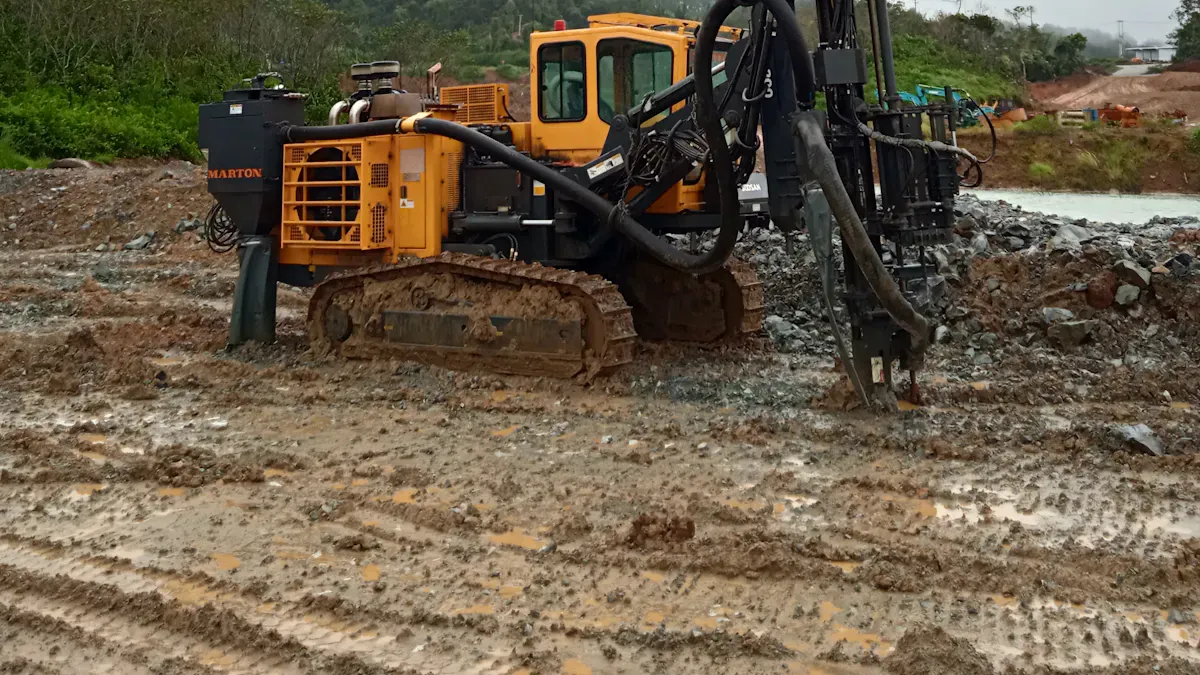
When you use CEGC Mining Drills Conquers Hard Soft Mixed Soil, you encounter a range of challenges depending on the soil type. Refer to the table below for common issues:
|
Formation Type |
Primary Challenge |
Needed Parameters |
|---|---|---|
|
Hard Soil |
High Abrasion |
Wear, strength, rotation, feed, flushing, durability |
|
Soft Soil |
Clogging |
Flushing, cutting, stability, cleaning, pressure |
|
Mixed Soil |
Variable |
Adaptability, hybrid parameters, toughness, control, efficiency |
To maximize performance, it’s essential to select the right drilling settings for each soil condition. Using incorrect parameters can lead to delays or tool damage. CEGC Mining Drills Conquers Hard Soft Mixed Soil are engineered to help you optimize settings for hard, soft, and mixed soils, ensuring efficient and reliable drilling every time.
Key Takeaways
-
Pick the best tools and settings for each soil type. This helps drilling work better and keeps tools from breaking. Check and change drilling settings often to fit the soil. This keeps workers safe and makes the drill work well. Use modular tooling and smart monitoring systems to change fast for different soil layers. This cuts down on waiting time and helps you get more done.
Mining Drills Conquers Hard Soil Conditions
Hard Soil Drilling Challenges
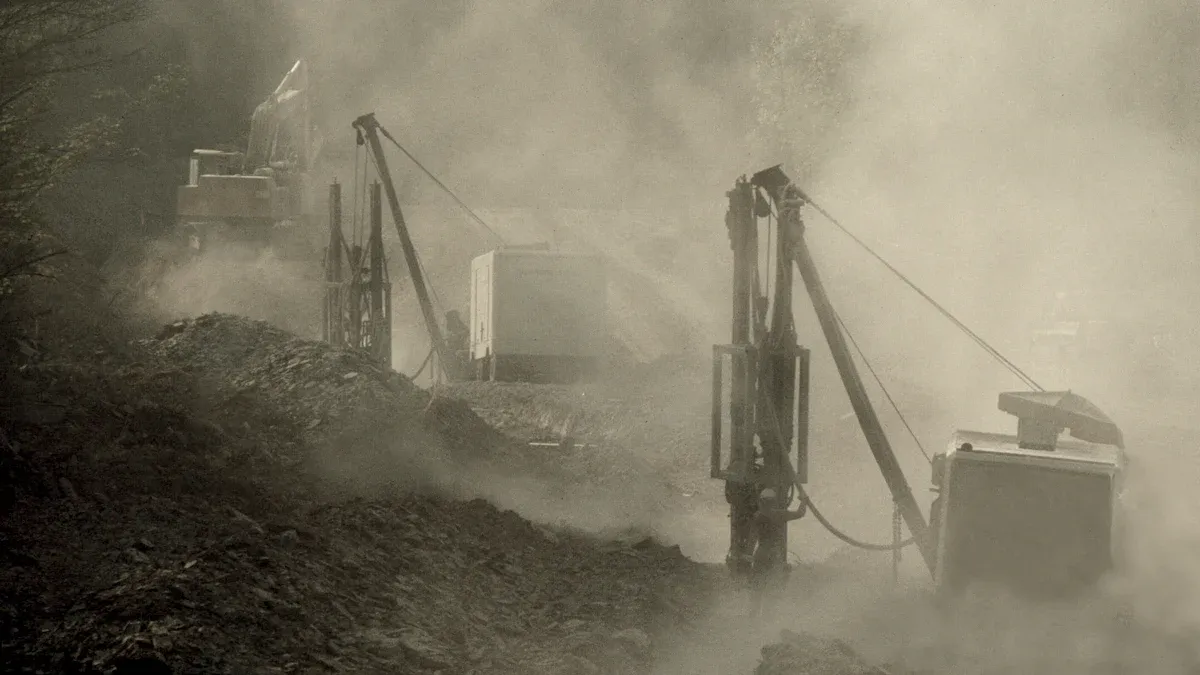
Drilling in hard soil is very difficult. You need more force and special tools for hard soil. Regular augers do not work well in hard rock. Core barrels are better because they push down hard. These tools break up the rock and clear away debris. Hard soil causes a lot of abrasion, so tools wear out fast. Drilling is slow and holes may not be even. It is hard to keep holes straight or the right size. You must change tools and try new ways to drill. You need to adjust your drilling for hard rock.
Performance Solutions for Hard Soil
You can do a few things to drill better in hard soil. Here are some good ideas:
-
Pick tools made from strong materials and use coatings that stop abrasion.
-
Use cutting fluid to keep tools cool and slow down wear.
-
Check tools often to find wear early and stop problems.
-
Change feed rate and cut depth to use the right force and protect tools.
-
Adjust rotation speed and how fast you drill for the soil.
-
Use augers and attachments made for hard soil and hard rock.
-
Set up your equipment to cut better and lower resistance.
Changing drilling settings helps you get better results in hard soil. You need to match impact pressure with feed pressure to stop sticking or idling. Too much feed pressure can bend the drill pipe and slow you down. Rotational pressure should balance with impact pressure for best results. The table below shows how these settings change drilling in hard rock:
|
Driving Parameter |
Effect on Feed Speed |
Implication for Drilling Efficiency |
|---|---|---|
|
Impact Pressure |
Must match with feed pressure to avoid abnormal conditions like sticking or idling. |
Ensures consistent feed speed and reduces tool wear. |
|
Feed Pressure |
Excessive pressure can cause drill pipe bending, decreasing feed speed. |
Requires careful optimization to maintain efficiency. |
|
Rotational Pressure |
Needs to be balanced with impact pressure for optimal performance. |
Critical for maintaining effective drilling operations. |
A down-the-hole hammer works well in hard rock. This tool hits hard and helps you drill faster in tough soil. Using the right tools and settings helps you drill in hard soil.
CEGC Drilling Equipment Features
CEGC mining drills conquers hard soft mixed soil with special features for hard soil. You get good performance and can change settings for your project. CEGC equipment has micro tunneling torque reserve, which gives more power for tunnel machines in hard ground. This helps stop restart failures and keeps your work going. Better efficiency lets you finish faster and saves money by cutting downtime. Safety features help machines restart smoothly and stop sudden shocks, making work safer.
You can change CEGC drilling equipment for your site’s soil. You pick the hole size, depth, and drilling method you need. CEGC surface drilling rigs have strong feed beams and better rotation/feed systems. These help you keep holes straight and the same size in hard rock. You also get wear management systems that make tools last longer and cost less. CEGC mining drills conquers hard soft mixed soil by giving you good tools for hard soil and hard rock. You can use down-the-hole hammer attachments and change settings for best results. CEGC helps you drill better and handle different soil types.
Drilling in Soft and Mixed Soil Conditions
Soft Soil Drilling Issues
You face many challenges when you drill in soft soil. The ground can shift or collapse, making it hard to keep your hole straight. Muddy and sandy soil can clog your auger and slow down your work. You may see your auger get stuck or even break if you do not set the right drilling parameters. Here are some common problems you may find:
-
Soft clay can clog your auger and other tools.
-
Sandy soils can cause the borehole to collapse.
-
Muddy and sandy soil can make your auger slip or lose grip.
-
Mechanical problems can happen if you do not check your auger often.
-
Borehole instability can trap your auger or cause the hole to get bigger.
-
Formation damage can lower your project’s performance.
-
Lost circulation can waste drilling fluid and raise costs.
-
Pipe sticking can stop your work and damage your auger.
You must pay attention to setting drilling parameters for each type of soft soil. If you drill in soft rock, you may need to change your auger’s speed and force. When you drill in muddy and sandy soil, you should use drilling fluids to keep the hole stable. These fluids help stop the walls from falling in and protect your auger. Sometimes, water in the soil can make clay swell. This swelling can break your auger or damage your equipment. You can use special chemicals like potassium chloride to lock the clay and keep your auger safe. You must check your drilling parameters often to keep your auger working well.
Mixed Soil Adaptability
Mixed soil conditions can change fast. You may drill through soft clay, then hit soft rock, and then find sand. Each layer needs different drilling parameters. If you use the wrong settings, your auger may not work well. You need to adjust your auger’s speed, force, and rotation as you move through each layer. Adaptive drilling parameters help you match your auger to the soil. You can use smart systems to watch how your auger works and change the settings in real time. This helps you keep your auger safe and your hole straight.
When you drill in mixed soil, you must use the right auger for each layer. Modular tooling lets you change your auger’s cutterhead or inserts quickly. You do not need to stop your work for long. You can swap out worn parts and keep drilling. Smart monitoring systems tell you when your auger needs new parts. This keeps your auger in good shape and helps you finish your project on time. You can see how modular tooling helps in the table below:
|
Feature |
Benefit for Mixed Soil Adaptability |
|---|---|
|
Modular cutterheads |
Quick changes for different soil layers |
|
Fast replacement of worn parts |
Less downtime and more drilling time |
|
Smart monitoring systems |
Real-time alerts for auger maintenance |
|
Standardized parts and processes |
Better quality and fewer mistakes |
You must keep checking and setting drilling parameters as you move through mixed soil. This keeps your auger working well and helps you handle all types of soil conditions.
Performance and Customization
You want your auger to work well in all soil conditions. CEGC mining drills conquers hard soft mixed soil by giving you tools that fit your project. You can pick the right auger, cutterhead, and drilling parameters for your job. CEGC lets you change your auger’s setup for soft soil, soft rock, or mixed layers. You can set your drilling parameters for each type of soil. This helps you get the best performance and finish your work faster.
You can use CEGC augers in many soil conditions, even in ice and permafrost soil conditions. You can set your drilling parameters for each layer. CEGC augers have modular tooling, so you can swap out parts and keep drilling. You can use smart systems to watch your auger and change your drilling parameters as needed. This helps you keep your auger safe and your project on track.
You can trust CEGC to help you with setting drilling parameters for any soil. You can use your auger in soft soil, soft rock, or mixed layers. You can change your auger’s setup and drilling parameters for each job. This gives you better performance and helps you finish your project on time.
Tip: Always check your auger and set your drilling parameters before you start. This keeps your auger safe and helps you get the best results in all soil conditions.
Ensuring Drilling Performance Across Soil Types
Soil Conditions and Rig Adaptation
You have to change your mining drills conquers hard soft mixed soil for different soils. Advanced rock drilling machines work in soft clay and hard rock. They also work in other types of soil. You need to know about the soil before you drill. The table below tells you what to check:
|
Factor |
Description |
|---|---|
|
Formation Strength and Stability |
You must know how strong the soil is to pick the right rig. |
|
Reservoir Depth and Pressure |
You need to check how deep you will drill and what pressure you will face. |
|
Fluid Properties |
You must look at the fluids in the soil to choose the best handling system. |
You can set drilling parameters for each soil layer. This helps you drill well and keeps your tools safe. You should use monitoring to watch drilling parameters as you drill. You can change them when the soil changes. This keeps drilling safe and smooth.
Operator Safety and Efficiency
You want your team to be safe and finish work fast. Modern mining drills use dust control and save energy. AI-controlled dust units take away dust and use less power. Hybrid filters catch most dust, so you stop less for cleaning. Water misting robots spray water only where it is needed. This saves water. Monitoring networks check dust levels and warn you if dust gets high. These tools help you follow safety rules and keep the site clean.
A study shows that good drilling settings make less dust and use less energy. You should keep bite depth the same and use slow rotation with high penetration. This helps you drill better and keeps your site safe.
Market-Standard Performance by CEGC
You can count on CEGC for good drilling in all soils. The torque reserve in CEGC machines stops restart problems in hard ground. Case studies show micro tunneling torque upgrades pay off fast and work well in many jobs. You can use monitoring to check drilling settings and how well you drill. CEGC lets you change drilling settings for each job. This gives you the best drilling every time. You can drill with less downtime and more safety. CEGC means strong drilling, smart monitoring, and high efficiency in all soils.
You can count on CEGC to help with any soil. You change drilling settings for each job. Modular systems let you change settings to work better. Real-time monitoring helps you set the right settings for every soil type. These tools help you work faster, save money, and keep drilling safe.
FAQ
What makes CEGC mining drills suitable for different soil types?
You can use CEGC mining drills in many kinds of soil. The equipment works well in hard, soft, and mixed layers. This helps you get steady results every time.
How do you maintain drilling efficiency in changing soil conditions?
You should watch drilling settings as the soil changes. Adjust the settings to match the new soil. This keeps your drilling safe and working well.
Can you customize CEGC surface drilling rigs for unique project needs?
Yes. You can pick features and setups that fit your project. CEGC gives choices for different depths, sizes, and ways to drill.


