
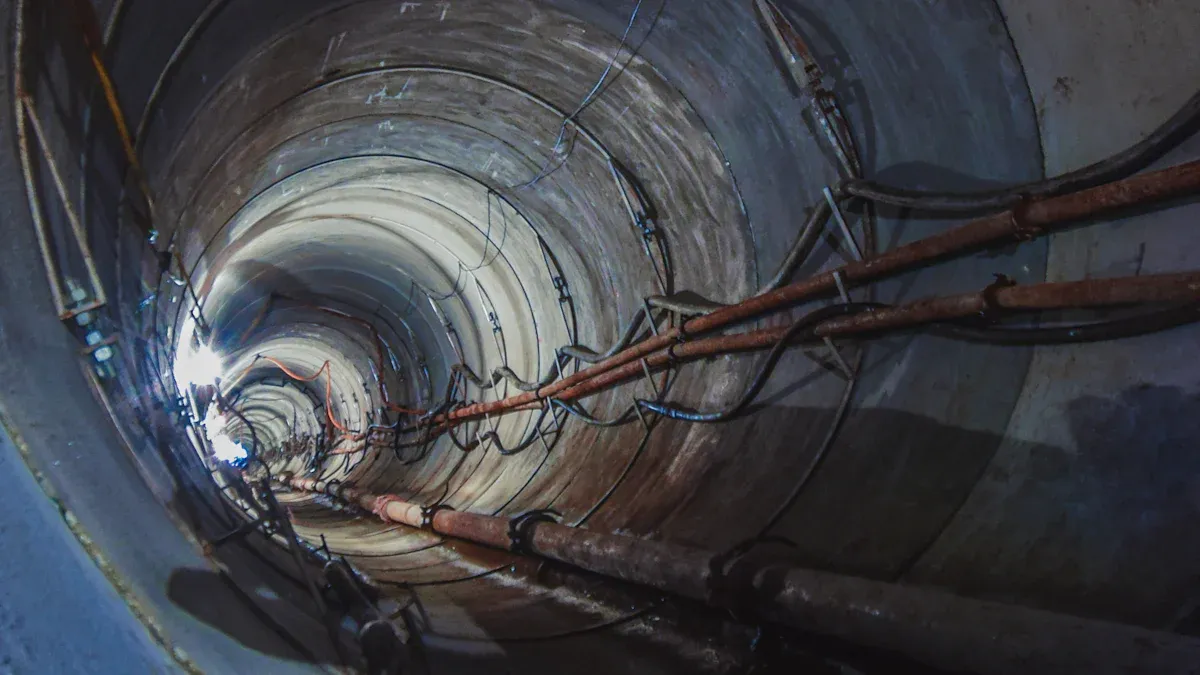
A horizontal directional boring universal ground tool is a useful attachment. It is important for putting utilities underground. This tool works in different kinds of dirt. It makes holes for pipes and wires. Horizontal directional drilling is a new way to do this. The HDD market will grow a lot. It will be worth $16.08 billion by 2030. CEGC helps with utility projects.
Key Takeaways
-
The horizontal directional boring universal ground tool works in many types of soil. It helps put pipes and wires underground.
-
CEGC's machines offer exact guidance. They prevent pipes from getting stuck. They also make tools last longer.
-
CEGC's machines help manage drilling mud. This keeps the ground stable. It also stops problems like frac-outs.
The Horizontal Directional Boring Universal Ground Tool: Design and Function
Universal Adaptability for Diverse Ground Conditions
The horizontal directional boring universal ground tool works well. It works in many types of soil. It handles clay. It handles sand. It handles gravel. It even handles hard rock. This makes it very useful. It is good for different projects. Universal tools help with problems. These problems are found underground. For example, they have modular attachments. They have quick-change adaptors. These help when the ground changes. They also have custom options. These are for specific project needs. This helps in tough ground. It makes drilling work well.
Key Design Features for Optimal Drilling Performance
The tool's design is important. It helps with drilling. Its materials are strong. Cutting parts are tough. Carbide teeth are tough. Reamers are tough. They cut through hard ground. Steering is also key. The tool can stop slipping. This is true on sloped ground. This helps make paths straight. Anti-slippage methods help. They make friction better. They use magnets. These help the tool grip. Connection parts also help. They make it fit different machines. AutoTrac™ Universal uses hubs. It uses attachments. This helps it work with machines. This modular way helps. It helps with putting things together. New materials make tools better. They last longer. They work better. Stronger materials help tools. They handle more stress. They resist wear. How things are made also matters. 3D printing helps. It makes custom designs. These designs are lighter. They are stronger. Heat treatments make materials tougher. All these things help the tool. They make it work better. They make it last longer.
The Boring Process: Tool's Role in Each Stage
The horizontal directional boring universal ground tool is important. It helps in each step. It helps in the drilling process. First, it makes the pilot bore. This is a small hole. The tool guides itself. It follows the planned path. Next, it helps with reaming. Reaming makes the hole wider. Different reamers are used. This depends on the soil. Finally, the tool helps pull back. This is when the pipe is pulled. It goes into the bigger hole. The tool makes sure it works well. It makes sure it is smooth.
CEGC's Horizontal Directional Drilling Machines: Solutions for Core Challenges
CEGC knows the tough needs. These are for putting utilities underground. Our horizontal directional drilling machines fix common problems. They help contractors finish jobs better. We focus on being exact. We focus on power. We focus on being dependable.
Precision Guidance for Accurate Drilling and Bore Path
One big problem is keeping the bore path exact. This is in horizontal directional drilling. Bores that are off cost money to fix. They can also cause fines. Busy underground areas mean more risk. Existing utilities can get damaged. It is hard to deal with power lines. It is hard to deal with metal. These can mess up guidance tools. Steering is tricky. It needs careful watching. This is for the drill head's direction.
CEGC's machines offer good solutions. They have load-matched control. This system works together. It controls thrust. It controls pullback. It controls rotation. It controls feed. A strong frame helps. Carriage alignment reduces shaking. This also stops the machine from moving. Our machines are ready for tracking. They can work with data logging. They can work with process control. This helps compare paths. It shows any differences. Being very exact is often needed. Bores must be within one inch. This is of the planned line. If not, the bore might be left. This can lead to digging a trench. CEGC's specs show good accuracy. They show good control. This is for their type. We offer custom torque. We offer custom thrust. We offer custom rod systems. We offer custom control packages. Tracking can be changed. This is for each bore length. This is for geology. This makes sure it is exact every time. This is for roads. This is for rails. This is for rivers. This is for utility crossings.
Anti-Stall Powertrain for Preventing Stuck Pipe and Torque Spikes
Stuck pipe is a big problem. It costs money to fix. It causes delays. Torque spikes hurt rods. They hurt threads. They hurt tools. Hard ground slows down work. Mixed ground slows down work. Using a drilling hole opener wrong can cause jams. It can also cause stuck pipe. Other problems include getting too hot. Cutters can break. Welds can crack. Strings can get damaged. Bearings can wear out fast. Seals can wear out fast. These problems slow down drilling. They make replacement costs higher. They make downtime longer.
CEGC's horizontal directional drills fix these problems. Our machines have high torque. They also have a wide RPM range. Hydraulic sensing helps. Pressure management prevents problems. Controlled ramp-up helps. Controlled ramp-down helps. This reduces sudden shocks. This protects rods. This protects swivels. This protects tools. Warning signs are important. Sudden torque increases are one. Less penetration is another. Pump pressure spikes are one. Unusual shaking is another. Our machines handle these conditions. Their power and torque are good. They are like other rigs. An optional “rock package” is available. This has better cooling. It has better filtration. It has more torque reserve. It has heavy-duty parts. This helps stop stuck pipe. This helps stop torque spikes.
Tooling Compatibility and Durability for Reduced Wear
Fast reamer wear costs more. Fast cutter wear costs more. This is per meter. Tools that do not match cause bad hole cleaning. They can also cause small bores. This makes pullback risky. Changing tools often means less machine use. Reusing big housings can cause bad thread fits. It can also strain drill rigs. Housings without enough fluid channels can overheat. They can overheat the transmitter. They can also cut less well. Not matching parts to the job reduces performance. It makes operations riskier. Using a soft ground tool in hard rock will break it. Bad fluid flow can cause overheating. It also makes tools wear out faster.
CEGC's drilling machines ensure tools work together. They work with blade reamers. They work with fluted reamers. They work with rock reamers. They work with barrel reamers. Our machines give smoother torque. This reduces shaking. This reduces uneven wear. Easy access helps with maintenance. This means less downtime. Our specs include standard interfaces. These are for parts that wear out. We offer custom rod diameter. We offer custom tool joint specs. High-wear protection can be added. This matches the geology. This matches the preferred tools. This approach lowers costs. It makes tools last longer.
Mud Integration for Optimal Fluid Performance and Frac-Out Prevention
Low flow or pressure increases torque. It also increases the risk of stuck pipe. Losing returns creates problems. Frac-out creates problems. Unstable mud makes the bore less stable. If cuttings are not held up well, they gather. They gather around the drill pipe. This can stop circulation. This can cause a “frac out.” It can also cause loss of the instrument. Bad drilling fluid management causes slow drilling. It also causes equipment wear. Mud loss means cuttings cannot be removed. This can stick the drill bit. It can stick the pipe. It can also harm the environment.
CEGC provides solutions for mud. We offer pump sizing help. This looks at flow. It looks at pressure. It looks at length. It looks at diameter. It looks at formation. Our machines are ready for circulation. They are ready for filtration. We stress good mud programs. This includes mixing goals. It includes regular changes. Keeping a minimum ESD of 10.5 ppg is important. This keeps the wellbore stable. Using a mud weight (MW) and ECD above 12.0 ppg helps. This is for the production hole. This reduces risk. This is true when drilling through unstable ground. Our machines work with electric mud pumps. They work with diesel mud pumps. We offer custom pump packages. Filtration upgrades are available. Cooling upgrades are available. Site-specific fluid solutions are also given. This helps stop frac-outs. It keeps the bore stable.
The horizontal directional boring universal ground tool is very important. It helps with modern trenchless technology. It works well. It can do many things. It is good for the environment. CEGC's Horizontal Directional Drilling Machines fix problems. They meet industry standards. They offer custom options. These help projects succeed. They help projects be sustainable. These tools are key. They are for putting utilities underground. This is for the future.
FAQ
What is a Horizontal Directional Boring Universal Ground Tool?
This tool is an attachment. It helps put utilities underground. It works in different soils. It makes holes for pipes. It makes holes for cables.
How do CEGC's machines prevent stuck pipes?
CEGC machines stop pipes from sticking. They have a special engine. It senses hydraulic load. This keeps pipes moving. It also saves tools.
Can CEGC's machines work in different ground types?
Yes, CEGC machines can change. They use different reamers. They have custom tools. This works for many ground types.


