
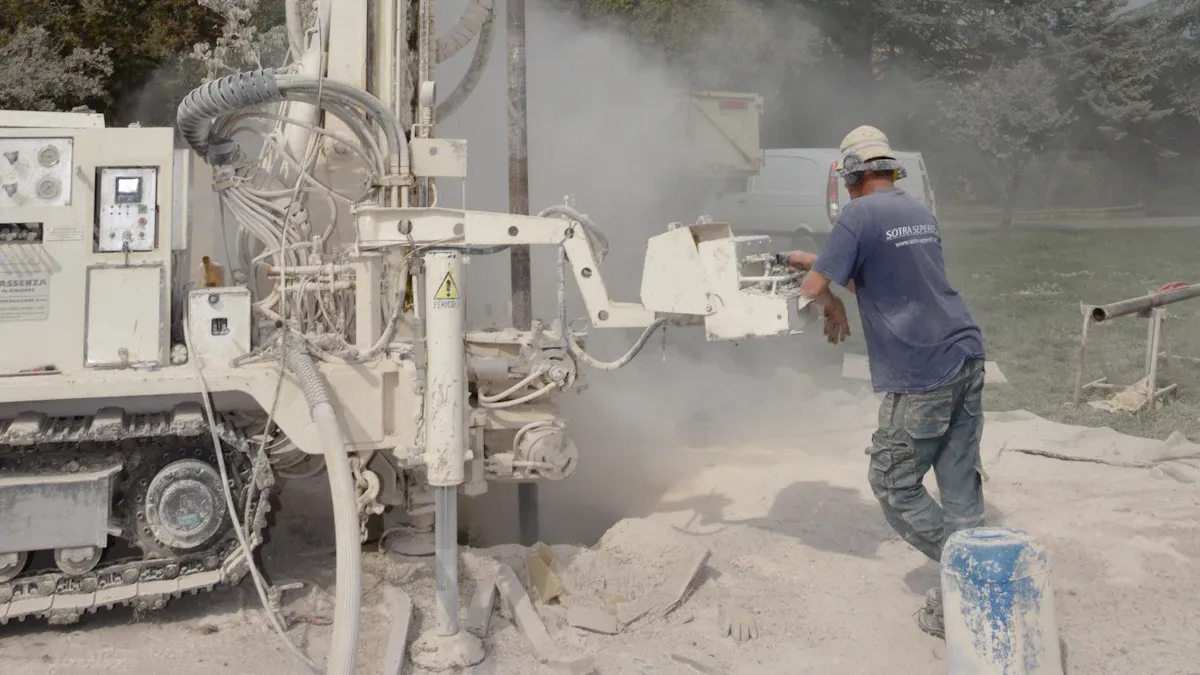
The CEGC Well Drilling Rig Conquers Bedrock to Marsh, demonstrating its exceptional versatility across diverse geological conditions. This rig excels at drilling through hard rock formations as well as soft, wet ground. Its adaptability stems from specialized drilling techniques and configurable equipment. Meticulous planning is integral to every drilling operation. How does a single rig achieve such broad capability? The answer lies in its advanced fluid management system. The drilling fluid is a critical component, ensuring optimal drilling performance. CEGC rigs precisely control this fluid, tailoring its properties for both challenging bedrock and delicate marsh environments. The effective management of drilling fluid is paramount to successful operations.
Key Takeaways
-
Modern drilling rigs can work in very different places, from hard rock to soft, wet ground.
-
Special tools and methods help rigs drill through hard rock and keep the hole straight.
-
In soft, wet areas, rigs use wide tracks to stay stable and special liquids to keep the ground safe.
Well Drilling Rig: Conquering Bedrock Extremes
The well drilling rig conquers bedrock to marsh by changing its ways. This part shows how these rigs handle the hardest rock. They work in tough spots.
Bedrock Drilling: Techniques and Equipment
Well drillers first go through soft layers. These layers are called overburden. Overburden has gravel and sand. This layer is usually 10 to 20 feet deep. Then, they hit hard bedrock. The goal is to drill deeper into this strong bedrock. Water often flows in rock cracks. Getting this water needs strong tools.
Special ways are key for hard rock drilling. Hammer drilling, DTH drilling, and other strong methods are common. These are good for mining and building. DTH drilling is best for deep holes. It makes straight paths in hard rock. Rotary hammer drilling also works well. It uses strong hammer systems. Tough drill bits send power well. Diamond core drilling is another good way. It makes clean cuts. It also gets rock samples. This helps learn about the ground. Down-the-hole (DTH) hammer drilling is great for hard rock. It hits and turns at the same time. This breaks rock into small pieces fast. Air then blows these chips away. This is better than old rotary drilling in hard rock.
Key tools help with this work. Mud motors help steer the drill. Strong drill bits are for very hard rock. This rock can handle 25,000 psi or more. Smart guide systems keep the drill straight. Monitors check drilling fluid pressure. They also check hole strength. Strong drill rigs are needed. Big, powerful HDD units with 300,000 pounds of pull or more are common. Knowing bedrock depth helps plan drilling. A bedrock model uses different facts. This model helps understand bedrock. Hole data gives important details for this. The drilling fluid cools and cleans.
Managing Torque and Downforce in Hard Rock
Drilling hard rock needs strong turning power. High-torque drill rigs are a must. They break through tough stuff. This includes hard rock and packed dirt. If a drill rig is not strong enough, the drill bit can get stuck. It can also go slow. This makes drilling much less good. CEGC drill rigs have good power heads. These make strong and steady turning power. This makes them work best in different rock and dirt. How much a drill rig can turn affects what it can drill. This includes big rocks, hard rock, and gravelly dirt. The drilling fluid helps lower rubbing.
Pushing down well is also very important. Friction Kelly bars help control pushing down. They touch guides in a controlled way. This sends turning power evenly. This helps keep things straight. It makes turning smoother. This helps with steady pushing down. It also helps drill accurately. Weight on Bit (WOB) is the main way to control bit life. It also controls how fast it drills. WOB comes from the weight of the rods. It also comes from pushing down from hydraulic parts. Drill rig controls show feed cylinder pressure. WOB can be found by checking hydraulic pressure. Compare the pressure when the bit is up to when it is down. This pressure difference, times the cylinder area, gives the force or WOB. Too little WOB can cause 'polishing'. This means the bit rubs without cutting. Too much WOB can wear the bit fast. It does not make it drill much faster. In air rotary drilling, both turning push and hitting push are used. A hammer above the hole hits. A turning drill head, or 'top drive', turns. The drilling fluid helps clear out bits.
Preventing Bore Deviation in Stable Formations
Keeping the hole straight is very important. A crooked hole can cause trouble. Many ways stop this during drilling.
First, make sure tools are level. Set the drill rig turntable right. Set the base with a total station. This makes sure the lifting pulley is straight. It also lines up the kelly bar center and pile spot. Check straightness every 4-5 meters of drilling. Making drill tools better is also key. Check kelly bar straightness often. It should bend less than 0.1%. Fix worn drill bits. Use drill tools with stabilizers. These stop wobbling in hard rock. Controlling the process is another step. Drill slowly (20 rpm or less) where soft and hard areas meet. Fill in probe stones. Make them flat before drilling. Use the 'backfill and re-punch method'. This fixes the hole wall when hitting. The drilling fluid helps keep the hole steady.
Fixing tools help when it goes crooked. Sweep hole fixing moves the drill bit up and down. This happens in the bent part. Change drilling pressure and speed. Use sound waves to guide it. For very crooked holes, fill and re-drill. Use a mix of hard gravel and clay. Fill to 0.5 meters above the bent part. Pack it down. Then use a small drill bit. This fixes the bend. Make the hole bigger in steps. Machines can also help. Put in hydraulic straighteners or guide frames. These push the drill bit back to where it started. This works well for deep hole fixes. It works for holes over 30 meters deep. Down-The-Hole (DTH) hammer drilling makes holes less crooked. It sends hitting power to the bottom of the hole. This makes it less likely to go crooked. It makes deep holes straighter. The drilling fluid helps remove bits and keep the hole steady. The drilling fluid also helps cool the bit. The drilling fluid is very important for good drilling. The drilling fluid makes things run smoothly. The drilling fluid keeps the tools safe. The drilling fluid is a main part. The drilling fluid must be handled well.
From Bedrock to Marsh: Adapting Drilling Rigs
The well drilling rig conquers bedrock to marsh. It changes how it works. This part shows how drilling rigs switch. They go from hard rock to soft, wet marsh. It talks about different problems. It also shares special fixes for marsh drilling.
Navigating Marsh: Stability and Fluid Management
Working a drill rig in a marsh is hard. The ground is often soft. It is not steady. This needs good plans. It needs special tools. Companies use certain ways. This makes the rig stable. Jack-up barges help with waves. They help in deep water. Small drill rigs are also used. Underwater tests get data. They work in tough spots.
Handling soft dirt is key. Tools must be right. They collect data in these places. Gentle test methods are better. Push cores are an example. Toe berms make slopes stronger. Building things in steps helps. Using special fabrics helps soil. It gets stronger. It can hold more weight.
Special cars are vital for marsh work. Marsh buggies are for soft, wet areas. They have wide tracks. They put little pressure on the ground. This spreads weight out. It stops the rig from sinking. These buggies are important. They help with drilling in wet places. Water and land tools also help. They work on land and water. This makes them flexible. They move through mud easily. They do not harm nature much.
The drilling fluid is very important. This is true in marsh areas. It stops frac-out. Frac-out is when drilling fluid leaks. It goes into the soil. This can hurt nature. The drilling fluid also keeps the hole strong. It keeps the hole steady. This is for soft, loose soil. Good drilling fluid care helps. It makes the job work well. It keeps nature safe.
CEGC's Anti-Stall Powertrain for Tough Ground
CEGC's Horizontal Directional Drilling Rigs are strong. They work in tough spots. They have an anti-stall powertrain. This system stops the drill pipe from getting stuck. It also handles sudden power boosts. This happens often. It is when drilling through mixed ground. For example, hard clay after soft marsh. The powertrain gives strong turning power. It also has many speeds. Hydraulic sensors are key. Pressure control is also key. They make it run smoothly. The system controls power. It goes up and down. This lessens stress. It protects drill rods and tools. This is good when going from soft marsh to hard parts. It keeps work steady each day. This is true even in tough ground. This strong design helps. It stops costly delays. It protects valuable drilling tools.
Precision Guidance for Trenchless Drilling Rig Operations
Good guidance systems are a must. They are for trenchless drilling. They make things more exact. They lower dangers. This is true in busy underground spots. Hitting pipes is a big risk here. Good steps include 'white lining'. This marks the path. It shows pipes needing care. This is before drilling. Walking the path helps plan. It shows what is in the way. Knowing different problems is key. It helps tools work right.
Operators watch the drill head. They see its direction. This is for exact turns. They use electronic tracking. They use HDD guidance systems. Both walkover and wireline systems send data. It goes from the drill head to the top. This lets them watch in real-time. Setting safe distances is vital. It avoids hitting pipes. Reports before and after are key. They check the plan. Showing pipes confirms their size. It confirms their depth. These steps stop risks. They make sure the project works.
CEGC's Horizontal Directional Drilling Rigs use good guidance. These systems have gyro tools. They measure the bore's spot well. They work even with magnetic problems. Magnetic steering systems are also used. They check Earth's magnetic field. This tells the drill bit's direction. Mud pulse telemetry sends data. It comes from sensors below. It uses pressure in the drilling fluid. EM telemetry uses waves. It sends data faster.
Good locating tools are also important. These include walk-over locators. Gyro-based systems are also used. They make sure the drill head is in place. Walk-over systems are for shorter bores. They are for shallower bores. A transmitter sends a signal. It is behind the drill head. A receiver on top gets it. This shows the drill head's spot. It shows its turn. It shows its estimated depth. Wire-line navigation is for longer bores. It is for deeper bores. A tool and inclinometer are behind the drill head. They connect to the top by wire. This figures out the drill head's spot. These systems make things much more exact. They give more check points. This helps avoid hitting things. It helps avoid project failure.
Tooling Compatibility and Durability for Varied Geology
Going from bedrock to marsh needs flexible tools. Tools must work with different ground types. Picking the right drill bits is key. For example, different bits are needed. They are for hard rock versus soft soil. Matching bits to ground types is important. This includes hardness. It includes how rough it is. It includes its structure. Project goals also affect bit choice. Some projects want speed. Others want good core samples.
Tools must work with the drill rig. Checking the real cost is also key. This is often cost per meter. Using the right settings is important. This makes it work best. CEGC's Horizontal Directional Drilling Rigs have flexible tools. They can use many reamer types. These include blade, fluted, rock, and barrel reamers. Smoother power delivery lessens shaking. This makes tools wear evenly. Easy access for service helps. It means less waiting time. The rigs use standard parts. Rod size and tool joint specs can change. Extra wear protection can be added. This matches the ground. It matches preferred tools. This makes drilling work well. It saves money. This is true for all ground types.
The modern well drilling rig works well in many places. It can drill through hard rock and soft marsh. New drilling technologies help with this. These include special drilling fluids and strong drill bits. They make drilling faster and better. Special drilling tools are important. Careful planning is also key. Skilled workers are needed for good drilling. This helps us get to resources. CEGC offers strong drill rigs. They meet standards. They can be changed for hard drilling jobs.
FAQ
How do well drilling rigs penetrate hard bedrock?
Well drilling rigs use strong methods. One is Down-The-Hole (DTH) drilling. They use tough bits. They also use strong turning power. This breaks hard rock. Special liquids help them drill.
What adaptations make a drilling rig stable in soft marsh environments?
Rigs use wide tracks. These are called marsh buggies. They spread out weight. This stops sinking. Good fluid control also helps. It makes drilling steady.
How do CEGC rigs prevent issues like stuck pipes during drilling operations?
CEGC rigs have a special engine. It stops pipes from getting stuck. It controls power. Good guidance systems help too. They make drilling smooth. Live information helps workers.


