

When you use a horizontal directional drilling ultra strong joint, your machine gets stronger and more reliable. These joints help stop bore deviation, stuck pipe, and tool wear. CEGC’s specs and customization help with your hardest projects.
|
Parameter |
API Joint Performance |
|
|---|---|---|
|
Tensile Strength |
+10.65% |
Baseline |
|
Torsion Strength |
+62.5% |
Baseline |
|
Bending Strength |
+2.75% |
Baseline |
|
Compression Strength |
+52% |
Baseline |
|
Tension Compression Fatigue Life |
+1.19 times |
Baseline |
|
Bending Fatigue Life |
+1.74 times |
Baseline |
|
Torsion Fatigue Life |
+550 times |
Baseline |
|
Composite Fatigue Life |
+28.79% |
Baseline |
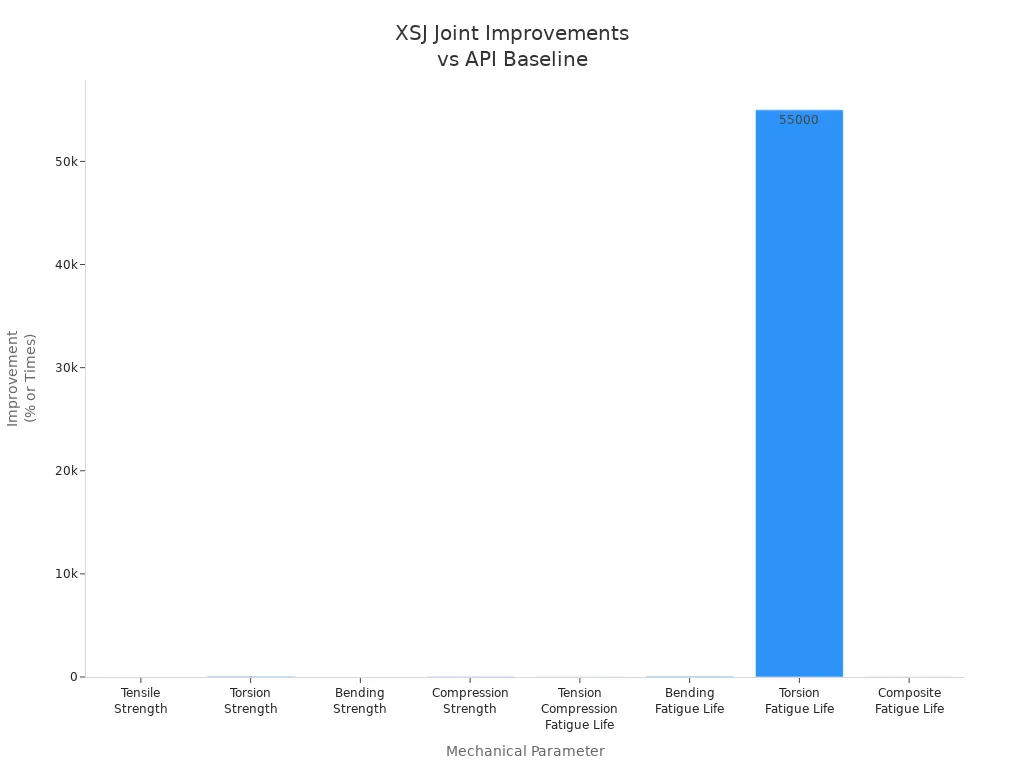
You get fewer failures and finish jobs faster with a horizontal directional drilling ultra strong joint. This joint handles heavy loads and tough ground.
Key Takeaways
-
Ultra strong joints make horizontal directional drilling machines stronger and more reliable. They help stop failures and let projects finish faster.
-
Regular maintenance means checking joints and putting oil on threads. This makes drill rods last longer and stops expensive delays.
-
Picking the right joint depends on soil type and bore length. This is important for good drilling and keeps pipes from getting stuck.
Ultra Strong Joint Features in HDD
Strength and Durability
Horizontal directional drilling machines need strong joints. These joints must hold up under heavy loads. They also need to work in hard ground. CEGC makes ultra strong joints with high tensile and torsion strength. You get more bending and compression strength too. This helps your machine last longer and work harder. High-rigidity frames keep your machine steady. This cuts down on vibration and keeps the bore straight. You do not have to worry about thermal-mechanical deformation. That means fewer problems when drilling. A higher natural frequency in the frame stops resonance. Your joints work better and your drilling stays on target.
There are many drill pipes you can buy. GP HDD drill pipe, TerraBrute CR, and Certa-Lok PVC are some examples. Double-shoulder pipe joints are even stronger. These joints last longer and do not wear out fast. You finish jobs quicker and avoid losing time and money.
Sealing and Fatigue Resistance
You want joints that seal well and do not get tired. Good sealing keeps mud and fluids inside the pipe. This protects your bore and stops leaks from happening. The DS50 double-shoulder joint seals 27.6% better. You also get better fatigue resistance. This means your joint lasts longer under stress. Titanium alloy drill pipes are very strong and do not rust. You use these pipes for very deep wells. Steel-titanium joints can handle tough loads. You do not get cracks or leaks, even when working hard.
-
Titanium alloy drill pipes do not rust.
-
3D elastoplastic models help engineers check stress in steel-titanium joints.
-
DS50 double-shoulder joints seal better and last longer.
Your drilling machine keeps running well. You do not get tool wear or stuck pipe. Your project stays on schedule.
Joint Integrity During Pullback
Pullback is an important step in drilling. Your joints must stay strong during pullback. CEGC makes joints that handle high tension and compression. You do not get failures when pulling pipes through hard ground. Load-matched control systems help your machine work together. You get smooth pullback and less shock on rods and tools. Anti-stall powertrains protect your machine from torque spikes. You do not get stuck pipe and your project keeps moving.
You pick pullback methods that fit your ground and bore length. CEGC lets you choose specs for each job. You pick rod size, joint specs, and extra protection. Your joints stay strong and do not break during pullback. You finish crossings under roads, rivers, and utilities with good accuracy.
Tip: Always check your joints before pullback. Look for any wear or damage. This helps you avoid problems and keeps your machine safe.
You trust ultra strong joints for every pullback. You get better accuracy, less downtime, and safer work. Your drilling rig works as it should. You finish projects with confidence.
Horizontal Directional Drilling Ultra Strong Joint Design
Engineering Principles
It is important to know how joint design changes drilling results. Engineers make joints that can handle strong forces and keep pipes safe. Hydraulic joints are special because they move jacking forces smoothly between pipes. These joints act in ways you can predict. You can measure stress and see how the joint will respond. Hydraulic joints use full-face pressure transfer. This spreads force across the whole joint. You do not get stress peaks, even when drilling sharp angles. Eccentric loading is less, so the joint does not bend or twist wrong. Articulated joints can cause uneven force problems. Hydraulic joints keep the load balanced. You can drill tighter curves and keep your bore straight. Many hydraulic joints have monitoring systems. These systems check fluid pressure and the gap between joint faces. You can see if the joint has too much stress. You can fix problems before they get worse.
Materials and Technologies
You want joints that last long and do not break easily. Makers use advanced materials for ultra strong joints. High-grade steel gives strength and toughness. Composite alloys, like high-entropy alloys, give more benefits. These alloys reach about 1152 MPa tensile strength. They can stretch up to 28% before breaking. Mechanically interlocked networks inside these alloys spread out stress. This makes the joint stable and less likely to fail. PVC is used in some joints for lighter jobs. The way joints are made matters too. Friction welding joins metal parts without melting them. This makes a strong bond and keeps the metal’s structure safe. Precision machining shapes each joint to exact sizes. You get a perfect fit every time. This helps stop leaks and wear. These technologies work together to make joints handle tough drilling.
-
High-grade steel stops bending and breaking.
-
Composite alloys give flexibility and strength.
-
Friction welding and precision machining make joints last longer.
HDD Pullback Methods
You need the right pullback method to finish your project safely and on time. Joint design supports different hdd pullback methods. Ultra strong joints let you handle higher loads during pullback. Using the best drilling fluid is important. Strong oil-based mud carries cuttings out of the bore. This lowers downhole torque and keeps pipes from getting stuck. Managing pipe buoyancy is another key step. Letting drilling mud flow in and around the pipe lowers friction during pullback. This makes moving big pipes easier. You can change the flow inside the pipe and around it. This helps control buoyancy and reduces drag. These methods give smoother pullback and stop common problems like stuck pipe or high friction. CEGC lets you customize joint design for each project. You can pick the right size, material, and features for your ground and bore length. This flexibility helps you finish crossings under roads, rivers, and utilities with confidence.
Tip: Always plan your pullback steps before starting. Check your fluid system, joint condition, and pipe alignment. Good planning keeps your project on track and protects your equipment.
You can trust the right joint design and pullback method. You finish your horizontal directional drilling job with fewer delays and better results.
Selection and Maintenance for HDD Joints
Choosing the Right Joint
You need to match your joint to your drilling conditions. Look at the soil type, bore length, and the size of your horizontal directional drills. For rocky ground or long crossings, choose joints with high tensile and torsion strength. CEGC offers customization, so you can select the right rod size, joint type, and extra protection for each project. Always check if your joint can handle the expected pullback force. This helps you avoid failures during pullback and keeps your project on track.
Maintenance Best Practices
You can extend drill rod longevity with regular care. Follow these steps to keep your joints strong:
-
Rotate the lead rod in the rack every week. This reduces wear from underground materials.
-
Monitor and lubricate the threads on each drill rod often.
-
Use thread gauges and visual checks to spot wear early.
-
Inspect the upset, sub saver, and drive chuck to prevent damage.
Tip: Good maintenance means fewer problems during pullback and less downtime.
Addressing Common Pain Points
You may face bore deviation, stuck pipe, or tool wear. CEGC’s technical solutions help you solve these issues. Use load-matched control to keep your bore straight and stable. Anti-stall powertrains protect your rods from torque spikes during pullback. Choose joints that work with your preferred reamers and mud systems. Proper fluid management lowers the risk of stuck pipe and makes pullback smoother. Plan your pullback steps and inspect your joints before each job. This keeps your equipment safe and your project moving forward.
Ultra strong joints help you drill with better accuracy, less downtime, and more safety.
-
You finish projects faster and avoid costly problems.
-
CEGC gives you market-standard specs and custom options for every job.
Tip: Choose the right joint and keep it well maintained for the best results.
FAQ
What makes an ultra strong joint important for HDD?
You get better strength and longer life. Ultra strong joints help you avoid stuck pipe and bore deviation. Your drilling projects finish faster and safer.
How do you choose the right joint for your project?
You look at soil type, bore length, and machine specs. CEGC lets you pick custom joints that match your job needs.
How often should you inspect HDD joints?
You should check your joints before every job. Look for wear, cracks, or damage. Regular checks help you avoid failures and keep your equipment safe.


