
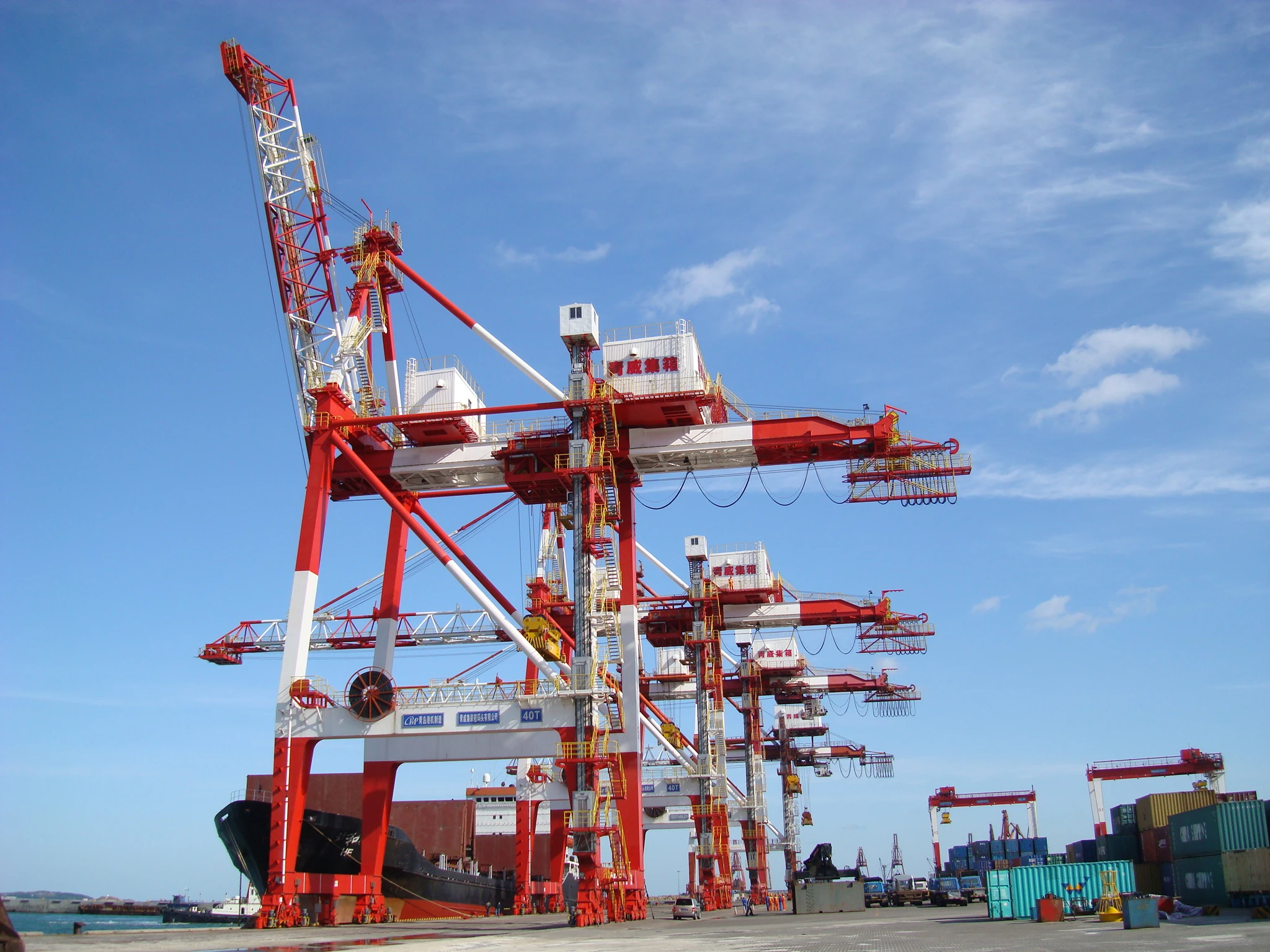
You can see how a port crane boosts moves per hour without risk by utilizing smart automation, anti-sway systems, and numerous safety controls. New terminals in China and Singapore achieve more than 35 moves each hour, while some ports in the Netherlands reach 41 moves per hour. CEGC cranes play a crucial role in stopping load sway and avoiding crashes, enabling operators to work more efficiently and feel confident in their tasks.
Key Takeaways
Anti-sway systems make things safer. They cut down on load swing. This helps workers move cargo faster and safer.
Automation in port cranes makes work more efficient. It lets workers do more moves each hour. It also lowers mistakes and accidents.
Predictive maintenance stops downtime. It finds problems before they get worse. This keeps work going and saves money.
Safety Systems for Cargo Handling Efficiency
Anti-Sway and Collision Prevention
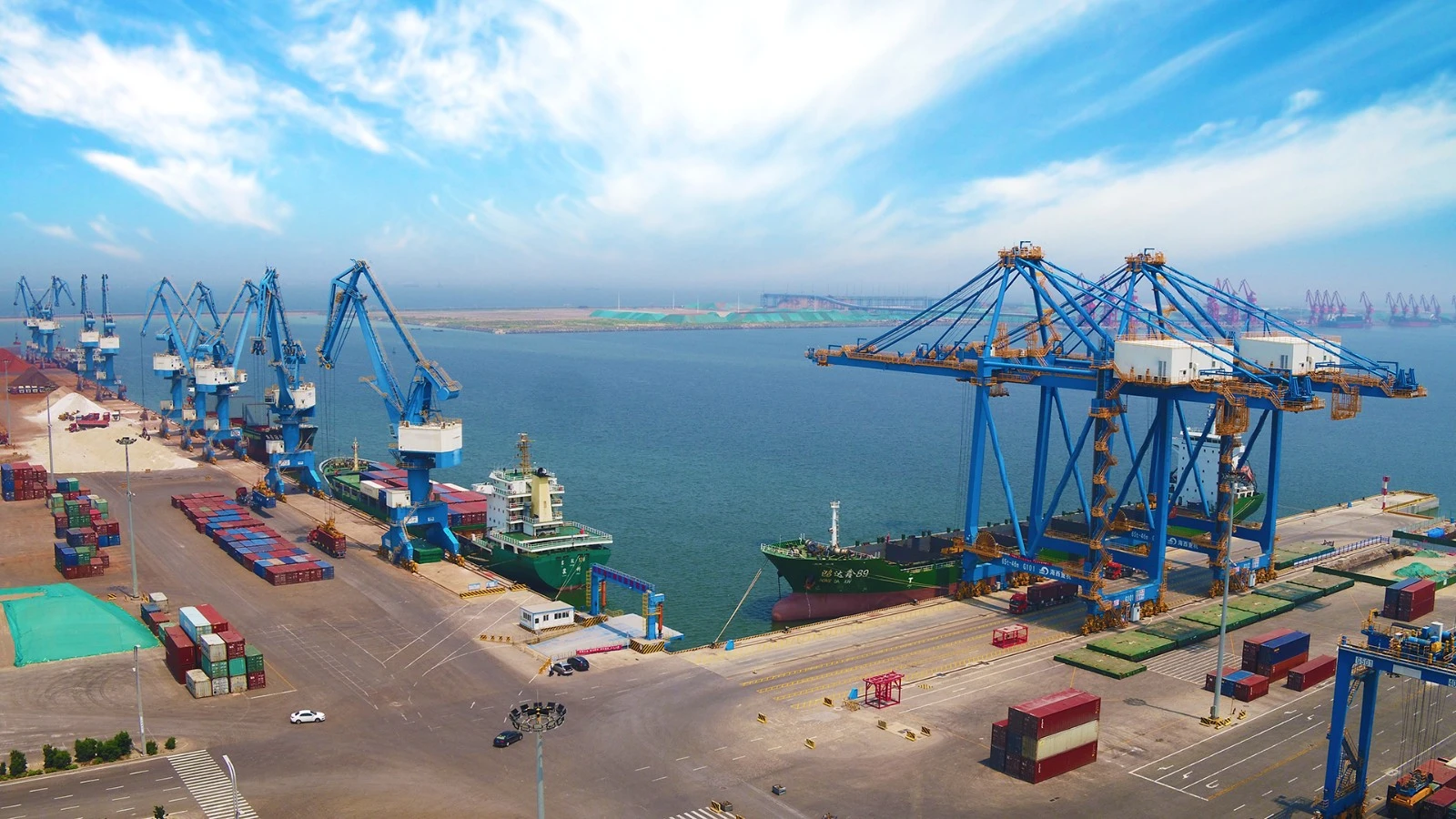
Anti-sway systems help cranes move cargo better. They stop the load from swinging too much. This makes each move safer and faster. Anti-sway technology can cut down load swing by more than 90%. You do not have to wait long for the load to stop moving. This helps you finish work faster. It also lowers the chance of accidents or broken cargo. Modern collision prevention uses sensors like LIDAR and cameras. These sensors watch for things in the way. They help you avoid crashes, even when the yard is busy. Using both anti-sway and collision prevention keeps cargo moving safely.
Anti-sway systems make crane work safer by stopping load sway.
They save time and help move cargo faster.
Sensors and alerts let you stop crashes before they happen.
Multi-Layer Safety Interlocks
Multi-layer safety interlocks keep people and machines safe. They use limit switches, overload protection, and emergency stops. These tools make sure every step happens in the right order. This helps stop mistakes and keeps everyone safe. New interlocks let you watch the system in real time. They also help you fix problems before they get worse. You can set up these systems to fit your port. This makes them a smart way to manage cargo flow.
Benefit |
Description |
|---|---|
Improved Safety |
Lowers the chance of accidents and injuries. |
Increased Efficiency |
Makes work faster and cuts down on waiting. |
Reduced Maintenance |
Stops damage and saves money on repairs. |
Operator-Centered Controls
Operator-centered controls help you work better and safer. Clear screens and alarms show what the crane is doing. Standard controls make it easy to use different cranes. This means fewer mistakes and faster learning for new workers. Good controls help you see what is around you. Training programs teach you how to handle problems and care for equipment. When you use all these features, you move cargo faster and get more done.
How a Port Crane Boosts Moves per Hour Without Risk
Motion Coordination and Speed Optimization
A port crane can do more moves each hour without risk by using smart motion coordination and speed optimization. When you use container cranes, you want every move to matter. Advanced marine cargo systems help you control the hoist, trolley, and gantry at the same time. This means less wasted movement and smoother handling. AI helps you plan moves so you do not waste time or energy. You get faster loading and unloading, which means more containers move through the terminal.
Here is a table that shows how technology helps you make cranes work better and improve terminal efficiency:
Evidence Description |
Key Points |
|---|---|
Optimizes resource allocation, sequences crane moves, and predicts demand. |
|
Reduces idle time |
Minimizes unnecessary container moves, increasing containers handled per hour. |
Automation benefits |
Reduces manual handling errors, improves safety, and enhances throughput. |
You can use load-dependent speed profiles. These profiles change the speed of container cranes based on weight and wind. This keeps handling safe and steady, even when you work fast. When you use dynamic rescheduling and AI-driven replanning, you can make up for lost time and keep your schedule on track. The table below shows how these strategies help you balance speed and safety:
Strategy |
Description |
Impact on Speed and Safety |
|---|---|---|
Dynamic Rescheduling |
Adjusts sailing speeds and berth windows to recover lost time. |
|
AI-Driven Replanning |
Uses algorithms to optimize quay productivity. |
Improves throughput by 5-10%. |
Joint Scheduling |
Coordinates vessel and service provider schedules. |
Balances workloads and reduces delays. |
You get better container handling and better performance from your ship-to-shore cranes. This is how a port crane does more moves per hour without risk and helps modern container terminals.
Workflow Integration and Automation
You can connect container cranes to automated stacking yards and other systems. This lets you share data and events with everyone who needs it. When you use automated operations, you have fewer handovers and faster decisions. Full automation keeps handling steady, even when things get busy. You can track every container and make sure it goes to the right place.
Here are some ways workflow integration and automation help you:
You cut down on idle time and keep containers moving.
You make the terminal work better by sharing real-time data.
You get more containers through the terminal with less waiting.
You make handling safer and more reliable.
You may have some problems with automation, like high starting costs and the need to train workers. You also need to protect your systems from cyber threats. If you plan for these problems, you get the most from your automated crane and container cranes.
Predictive Maintenance and Energy Efficiency
You can keep your container cranes working longer with predictive maintenance. Sensors check the health of motors, structures, and moving parts. AI and data analytics help you find problems before they cause downtime. This means you can plan repairs and avoid sudden breakdowns. You save money and keep handling steady.
The table below shows how predictive maintenance works in container cranes:
Evidence Source |
Key Insights |
|---|---|
Port Equipment Predictive Maintenance Market |
Monitors structural integrity, motor health, and cycles for timely interventions and fewer failures. |
Machine Learning-Based Predictive Maintenance |
Uses AI to analyze logs, predict failures, and optimize maintenance schedules. |
Arbitration Involving Predictive Port Crane Maintenance |
Uses IoT sensors and analytics to reduce downtime, enhance safety, and extend crane life. |
Energy efficiency is also important for how a port crane does more moves per hour without risk. When you switch from diesel to electric container cranes, you spend less on energy and lower greenhouse gas emissions. This helps the environment and helps you reach your green goals. You also see lower costs and better safety.
Here is a chart that shows the benefits of energy-efficient technologies in container cranes:
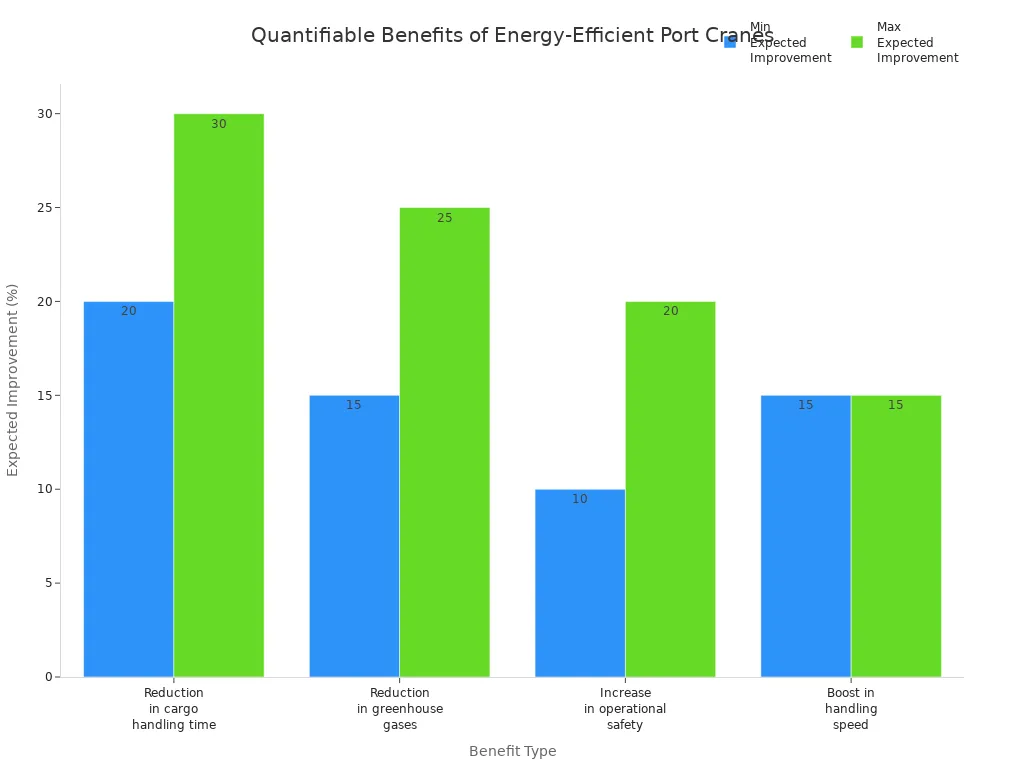
You can see a 20-30% drop in cargo handling time, a 15-25% drop in greenhouse gases, and a 10-20% increase in safety. You also get a 15% boost in handling speed. These gains show how a port crane does more moves per hour without risk and helps the terminal work better.
When you use advanced marine cargo systems, automation, and predictive maintenance, you get the best from your container cranes. You handle cargo better, move more containers, and keep your port running well. This is how a port crane does more moves per hour without risk and gives real improvement for your terminal.
Results and Port Efficiency
Throughput Gains and Cycle Time Reduction
Advanced crane systems help ports work better. Modern cranes can lift heavy loads. Some can lift two or four containers at once. This makes it easier to move more cargo. You need fewer cycles to finish the job. Many ports see handling time drop by 10–20%. More vessel moves happen each hour. Ships can leave the port faster. Joint scheduling and smart planning help even more. Terminal efficiency can go up by 15–20%. Some ports use deep learning to save time. They can cut operation times by up to 12%. These changes help keep turnaround times short. Overall productivity gets better.
Safety Metrics and Case Studies
You can check success by looking at safety and smooth work. Ports with advanced cranes have fewer accidents. Operators have better control and make fewer mistakes. For example, one port has ten quay cranes. They can move 300 containers each hour when working their best. If productivity drops by 10%, unloading takes much longer. This shows why high productivity is important. Short vessel turnaround times matter a lot. Good safety systems help avoid costly delays.
Customization for Project Needs
You can pick the best crane system for your port. The table below lists some choices:
Crane Type |
Automation Option |
Key Considerations |
|---|---|---|
Fully Automated |
Automated STS cranes |
High efficiency, less labor |
Automated stacking cranes |
Good for busy terminals |
|
Manual Operation |
Manual cranes |
Best for smaller operations |
Modular Systems |
KBK crane rails |
Flexible for changing needs |
You can add remote controls or explosion-proof features. Anti-corrosion coatings are also an option. Customizing cranes helps you reach your goals. It makes your terminal work better. You can handle many cargo types and stay productive. This flexibility helps you adjust to changes. Turnaround stays smooth.
You can make more moves each hour without risk. This happens when you use advanced safety and efficiency systems. Automation helps your port work better and safer. Remote monitoring lets you watch everything from far away. IoT integration helps your port get smarter. Look at the table below to see how these features help your port.
Key Takeaway |
Description |
|---|---|
Automation |
Automation makes port work faster, safer, and more reliable. |
Reduced Human Error |
Fewer mistakes mean more moves and safer work. |
Remote Monitoring |
You can control things from far away to keep your team safe. |
IoT Integration |
IoT lets you collect data and plan repairs for smarter ports. |
Think about checking your crane systems now. Upgrading to new specs or adding custom features can help you reach your goals. If you want more information, talk to a trusted port equipment provider.
FAQ
How does a port crane improve safety during cargo handling?
Anti-sway systems and safety interlocks help keep people safe. These tools stop accidents and protect workers.
What is the main benefit of automation in port cranes?
You can move containers faster and make fewer mistakes. Automation lets you do more work and keeps things steady.
Can you customize a port crane for special needs?
-
Yes, you can pick:
Different lifting strengths
Special surface coatings
Advanced control systems


